

John B. WATSON
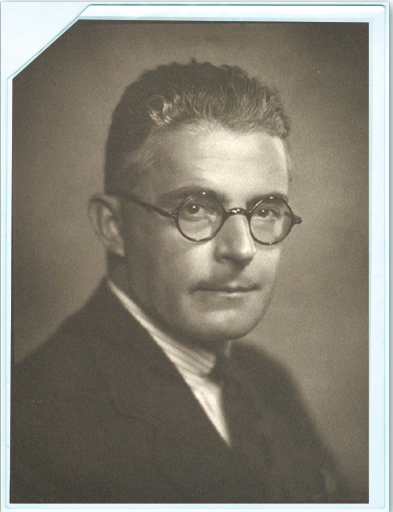
1878-1958

John B. Watson (1878-1958) was an American psychologist known as the founder of the school of behaviorism.
Who is John B. Watson?
John Broadus Watson was born on January 9, 1878 in South Carolina in the United States. Watson received his early education at Furman University before moving on to the University of Chicago, where he earned his doctorate. Early in his academic career, Watson studied under the influence of functionalism, a school of thought that focused on the functions of mental processes. However, his interest soon shifted to behaviorism, which aimed to establish psychology as an objective and experimental science.
Behaviorism
In the early 1900s, Watson became an important figure in American psychology. He was particularly critical of introspection methods and the subjective nature of psychology as it was understood at the time. He argued that psychology should focus on observable behaviors that could be objectively measured, and that internal mental states (such as thoughts and emotions) were too vague to be studied scientifically. In 1913, Watson published his famous manifesto "Psychology from the Behaviorist's Point of View". Watson's manifesto laid out the principles of behaviorism and gave impetus to the behaviorism movement in psychology.
Watson's behaviorism was heavily influenced by Ivan Pavlov's work on classical conditioning, which showed how stimuli could be associated with specific responses. Watson believed that behavior was shaped by environmental stimuli and that it was possible to shape human behavior through conditioning. One of Watson's most famous and controversial experiments was the "Little Albert" study he conducted with his graduate student Rosalie Rayner in 1920. In this experiment, Watson and Rayner conditioned Albert, a 9-month-old baby, to fear a white mouse by pairing the sight of a mouse with a loud, frightening sound at the same time. After a few pairings, Albert started crying when he saw the mouse, showing that emotions like fear can be conditioned. The study was important because it showed that emotional responses such as fear could be learned through environmental stimuli and supported Watson's behaviorist views.
In addition to his academic work, Watson applied behaviorism to advertising and marketing. Using his knowledge of psychology, he created successful advertising campaigns aimed at manipulating consumer behavior. Watson believed that behaviorism could be used not only to control individual behavior, but also to influence broader societal trends.
Influence and Legacy
Watson continued to research and promote behaviorism throughout his career, but its influence waned as new schools of thought began to emerge, such as cognitive psychology in the 1930s. Nevertheless, Watson's work laid the foundation for the development of behavior modification techniques as well as the broader field of applied psychology. John B. Watson died on September 25, 1958 at the age of 80. His contributions to the science of psychology, especially to empirical research and the scientific study of behavior, were groundbreaking. Although behaviorism was criticized for ignoring cognitive and emotional processes, Watson's insistence on a more objective, objective and scientifically based approach to psychology influenced not only psychology but also education, training, therapy and behavioral research in the years that followed.
Request a Call
Share
Creation Date: January 09, 2025