

Alois ALZHEIMER
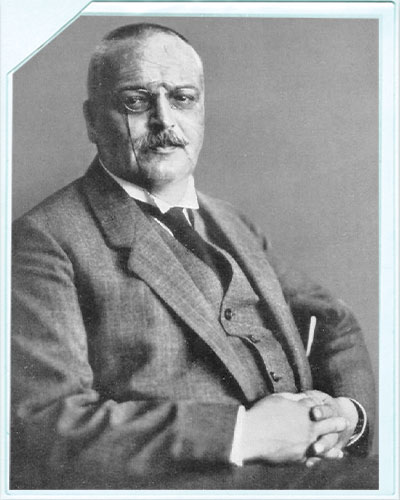
(1864 – 1915)

Alois Alzheimer (June 14, 1864 - December 19, 1915), German neuropathologist and psychiatrist.
Who is Alois Alzheimer?
Alois Alzheimer was born on June 14, 1864 in the town of Marktbreit in the Kingdom of Bavaria, Germany. He came from a well-educated family, his father was a teacher and his mother a housewife. His early education in Bavaria laid the foundation for his future medical career.
Alzheimer studied Medicine at the University of Würzburg. During his studies he developed an interest in psychiatry and neurology. After completing his medical studies in 1887, he moved to Frankfurt, where he began working with renowned psychiatrists.
Medical Career
After graduating, Alzheimer worked in various medical institutions, where he gained important insights and findings about mental disorders and the complexities of the human brain. During this time, he developed a keen interest in neuropathology, the study of brain diseases. His early research focused on understanding the pathological anatomy of various mental illnesses, especially those associated with old age. Alzheimer made important contributions to the study of dementia, syphilitic brain damage and generalized paralysis due to insanity (general paresis), which were common psychiatric diseases at the time. Alzheimer's work also led him to study the anatomy of the brain in individuals with neurological disorders, and he began to study structural changes in the brains of people suffering from progressive dementia.
In 1895, Alzheimer moved to Munich and became director and professor of the Clinic of Psychiatry and Neurology at the University of Munich. In Munich, Alzheimer worked closely with several important neurologists and psychiatrists, including his mentor Dr. Emil Kraepelin, with whom he would later collaborate in dementia research. Alzheimer's work in Munich cemented his place as a leading figure in the then-nascent field of neurodegenerative disease research.
Discovery of Alzheimer's Disease
In 1901, Alzheimer encountered a 51-year-old woman named Auguste Deter who showed signs of early dementia, including severe memory loss, paranoia and behavioral changes. This case is now one of the most famous in the history of neurology. Alzheimer closely monitored the patient's cognitive decline, and after the patient's death in 1906, with the necessary permissions, he examined the patient's brain. Using advanced microscopy, he detected amyloid
he discovered significant pathological changes such as plaques and neurofibrillary tangles. These findings led Alzheimer to publish his seminal paper in 1906, in which he described in detail the brain changes he had observed in the case of Auguste Deter. Upon this development, his teacher Dr. Emil Kraepelin, with whom he studied, named the disease 'Alzheimer's Disease'.
Contributions and Legacy
In addition to his work on Alzheimer's disease, Alois Alzheimer continued to study the pathological anatomy of the brain and made important contributions to the understanding of many different neurological disorders. He was particularly interested in the effects of aging on the brain and contributed to early research on senile dementia. His pioneering work in neuropathology laid the foundation for future research into the biological basis of Alzheimer's disease.
Although Alzheimer's disease was not widely recognized as a distinct disease for many years after its initial description, today it is one of the most researched neurodegenerative diseases in the world. Alois Alzheimer died on December 19, 1915 at the age of 51. Today, Alzheimer's disease is one of the most widely recognized neurodegenerative diseases and his pioneering work is remembered with respect and gratitude around the world.
Request a Call
Share
Creation Date: January 08, 2025