

Üsküdar University Makes a Difference with the Presence of Clinical and Practical Fields in Nursing

What is the Department of Nursing?
Nursing is a health care profession consisting of science and art, which serves to protect and improve community health, and to carry out necessary treatment and care practices in case of illness, continuously developing its services in line with scientific, social, and technological developments.
Nurses are the most numerous and needed health professionals among health disciplines in protecting and improving the health of individuals, families, and society, and in meeting health care needs.
As a major force in the health system, the importance of nurses is increasing day by day due to their contribution to strengthening the health of individuals and helping them lead a healthy life by providing qualified care and rehabilitation services based on scientific foundations.
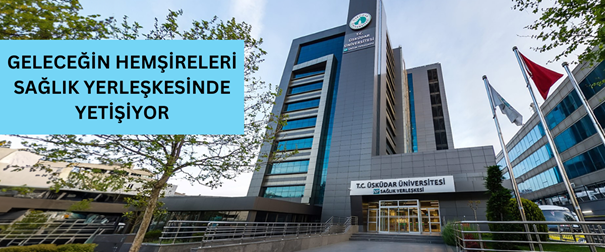
Our department is one of the first educational programs opened under the Faculty of Health Sciences of Üsküdar University in 2012. Since its establishment, our department aims to train nurses who possess a holistic and humanistic philosophy, are compatible with teamwork, can communicate effectively, adapt to change, possess the philosophy of accessing new information and lifelong learning, and adopt the principle of reflecting evidence-based practices into care.
The department's undergraduate program is structured in accordance with national and international standards, consisting of theoretical and practical courses, and an "Integrated System"-based curriculum has been applied from the beginning. The integrated education program is structured based on the core concepts of nursing, which are "human, health/disease, environment, and nursing," moving from simple to complex, from health to disease, from society to individual, and according to the life cycle from birth to death.
What are the Courses Taken in the Nursing Department?
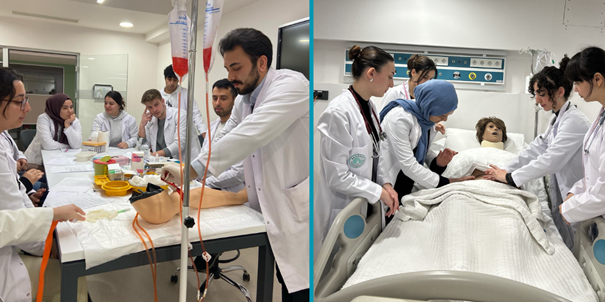
Undergraduate education consists of basic biological, social, and medical sciences courses (such as anatomy, physiology, psychology, nutrition, biochemistry, microbiology, pharmacology, etc.), as well as profession-specific courses and laboratory and field practices related to relevant areas. In addition, there are courses aimed at developing students' nursing roles and responsibilities, such as Research Methods, First Aid and Emergency Care, Communication in Nursing, Teaching in Nursing, Management and Leadership in Nursing, Ethics in Nursing, Informatics in Nursing, Innovation, Climate Change and Health, Health Quality Standards, and Patient Safety. In the final semester (8th semester), there is an intensive field practice (Internship practice) aimed at consolidating all acquired knowledge and skills.
In the professional courses of the program, it is aimed that students first learn the healthy functional characteristics of individuals in all life stages, and in later periods, the individuals whose health status has deteriorated and care practices, based on the Functional Health Patterns Model, which is a nursing care model.
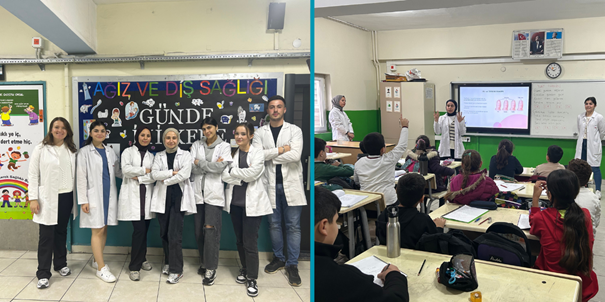
To achieve the educational program objectives, theoretical courses are supported by laboratory work with our expert and experienced academic staff, and students are guided in practice areas. The practices of the courses in the department are mainly carried out in public hospitals affiliated with the Provincial Health Directorate, NP Health Campus affiliated with our University, other private health institutions, Family Health Centers, Care and Rehabilitation Centers, Schools, and Nursing Homes, accompanied by faculty members.
The Department of Nursing has bilateral agreements with various countries at the international level within the scope of academic and student exchange programs such as ERASMUS+, FARABİ, and MEVLANA through its International Relations Office.
What are the Fields of Work for Graduates?
Graduates of the Üsküdar University Faculty of Health Sciences Department of Nursing can work as clinical nurses, administrative nurses at various levels, and educational nurses in private or public hospitals, Family Health Centers, Care and Rehabilitation Centers, Schools, Nursing Homes, Elderly Care Homes, Workplaces, Health Centers, Health Directorates, institutions related to health tourism, and home care centers where preventive, therapeutic, and rehabilitative health services are provided. After completing their undergraduate education, they can participate in graduate education programs to obtain master's and doctoral degrees and work as academics at universities. In addition, by receiving post-graduation training, they can work as specialized nurses in specialized fields with titles such as oncology or diabetes nurse.
In our department, in addition to undergraduate education, Master's (2013) and Doctoral (2015) programs are ongoing within the body of the Health Sciences Institute. Graduate education is carried out under the Department of Nursing, specific to nursing specialization areas, with competent nursing faculty members from each specialization area.
Click for the YÖKATLAS 50% Discounted page.


