


What is Bioengineering?
Bioengineering is a field that uses engineering principles, methods, and basic sciences such as mathematics, physics, and chemistry to solve problems in biology and medicine.In the second half of the twentieth century, with the discovery of semiconductor electronics and the improvements in computer science bioengineering build a bridge between technology and life sciences, leading to the development of diagnosis and treatment methods based on scientific objective rather than subjective interpretation of physicians.
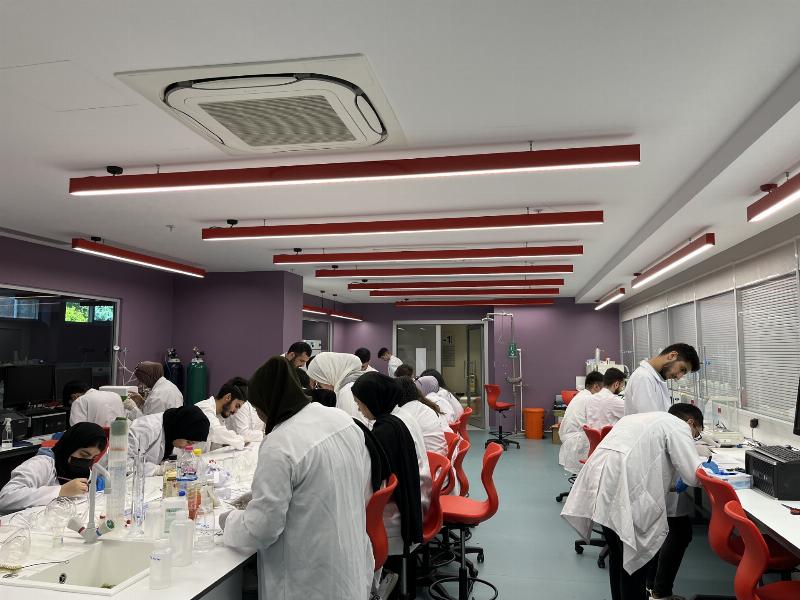
What is the Department of Bioengineering?
We aim to educate our students as entrepreneurial individuals who are self-confident, distant from imitation, think multi-dimensionally and independently, have social responsibilities and ethical values required by their profession, have productive goals, and adhere to teamwork and lifelong learning.
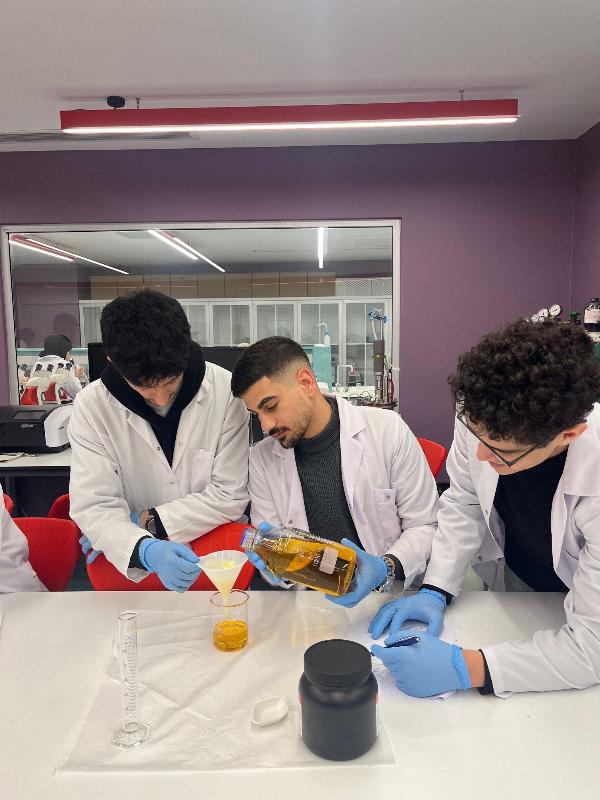
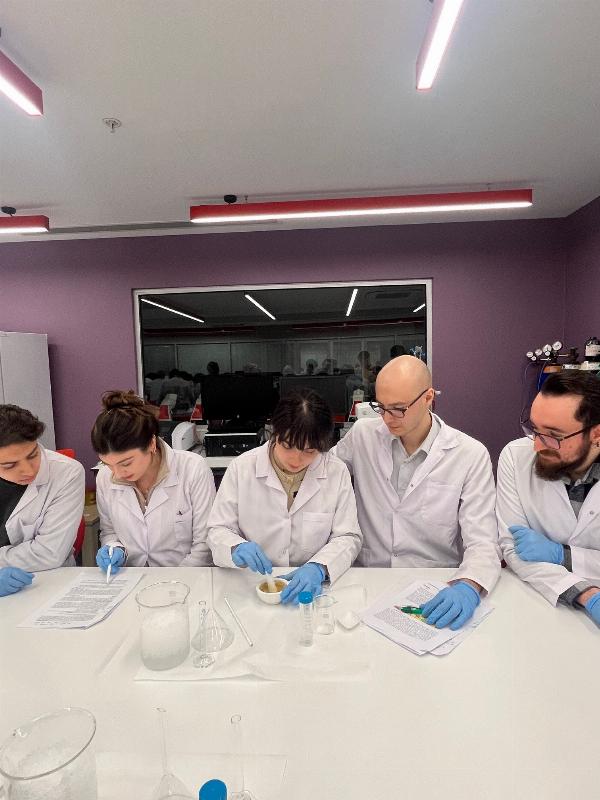
A Bridge Between Bioengineering, Technology and Life
Since the second half of the 20th century, bioengineering has served as a bridge between rapidly advancing technology and living organisms. Just as it plays a key role in solving problems within all living systems, it also leads the way in developing diagnostic and treatment methods based on scientific and objective data, particularly in understanding and repairing the human body.
The Department of Biomedical Engineering aims to nurture students into well-rounded, independent thinkers who possess a sense of social responsibility and the ethical values required by their profession; who have productive goals; who embrace teamwork and lifelong learning; and who are inquisitive, entrepreneurial individuals with an awareness of patent and trademark issues.
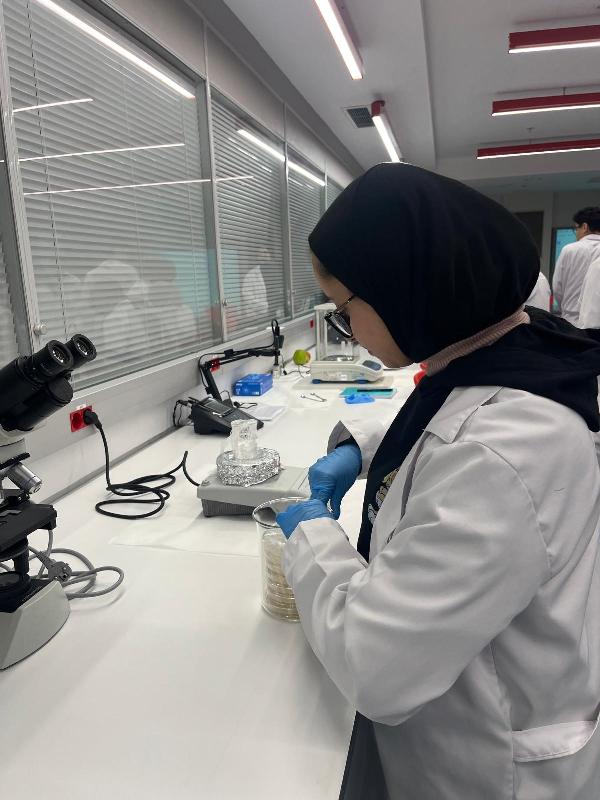
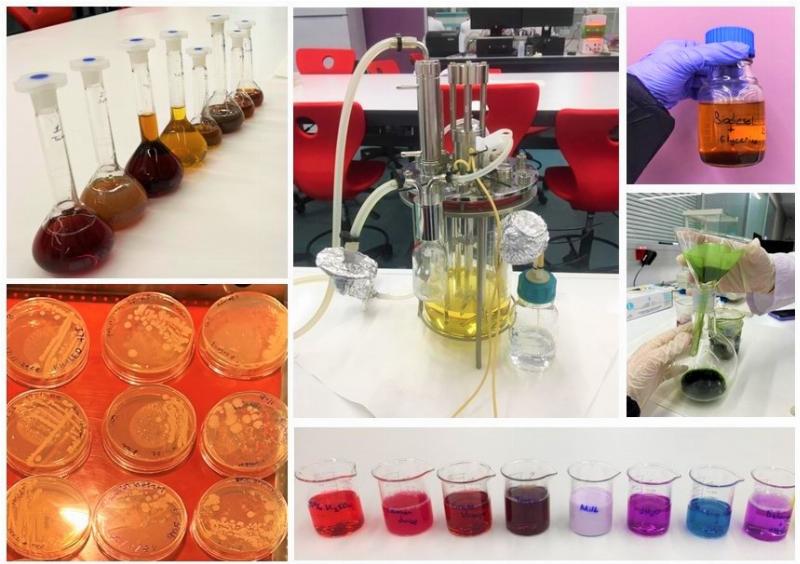
In line with these goals, our students are provided with the opportunity to practice the applied courses they take within the framework of their curriculum during their four-year undergraduate education in various laboratories equipped with the necessary devices. In addition, our students can take part in research projects and carry out their experiments in our laboratories. Furthermore, our graduate students can carry out their thesis studies, projects or research in our laboratories.
Laboratories
- Bioengineering Basic and Application Laboratory
- Basic Biology and Microscope Laboratory
- Chemical Engineering Laboratory
- Physics Laboratory
- Mac Laboratory
Program Content of Bioengineering
The goal of bioengineering is to provide education on basic medical sciences, technologies used in biology, and engineering principles. In addition, our goal is to educate students to develop new technologies inspired by biological systems and processes and to have the ability to bridge between medical sciences and engineering. With Turkey's leading elite and successful teaching staff, the purpose of the bioengineering program is to graduate students with the consciousness of national and spiritual identity.
The period of this study is 4 years plus a one-year foreign language preparatory class. The language of instruction is English.
Job Opportunities for Bioengineering Graduates
Graduates may be involved in production, research, and development activities in various industries such as the pharmaceutical industry, medical devices, genetics, biotechnology, energy, agricultural processes, environmental rehabilitation, as well as the academic field.
The Curriculum of Bioengineering Department
At Üsküdar University, Faculty of Engineering and Natural Sciences, Department of Bioengineering, students take many courses such as Physics, Calculus, Fundamentals of Chemistry, Organic Chemistry, Introduction to Bioengineering, General Biology, Stoichiometry, Physical Chemistry, Introduction to Programming for Engineers, Cell Biology, Differential Equations, Biochemistry, Statistics, Bioengineering Laboratory, Fluid Mechanics and Applications, Kinetics and Reactor Design, Heat and Mass Transfer, Introduction to Algorithms and Programming, Human Physiology, Bioinformatics, Genetic Engineering, General Microbiology, Biomaterials, Biopolymers, Engineering Economics, Bio-CAD Modeling, Biotransport Process, Bioreactors, Mathematical Modeling, Downstream Processes, Biothermodynamics, Bioprocess Engineering, Introduction to Biotechnology, Special Topics in Bioengineering, Medicinal Chemistry, Nanoneurobioscience, Metabolic Engineering, Bioelectromagnetic Interactions, Molecular Techniques in Bioengineering, Genomics, Computational Bioengineering, Parallel Algorithms for Bioengineers, Protein Engineering and Synthetic Vaccines, Tissue Engineering, Molecular Modeling, Quantum Chemistry, Basic Principles of Animal Experiments, Artificial Intelligence Techniques in Bioengineering, Modeling in Process Safety, Introduction to Biomechanics.
What are the Working Areas of Bioengineering Graduates?
Graduates may be involved in production, research, and development activities in various industries such as the pharmaceutical industry, medical devices, genetics, biotechnology, energy, agricultural processes, environmental rehabilitation, as well as the academic field.


