


Developing Solutions by Identifying Problems
What is the Medical Laboratory Techniques Program? The Medical Laboratory
Techniques Program trains qualified professionals who have internalized the concepts and principles of their field, base their practice on universal science and education in medical laboratory services, and can combine theoretical knowledge with practice. These professionals are capable of using methods, obtaining and organizing findings, and sharing/utilizing data related to diagnostic needs (such as Pathology, Biochemistry, Microbiology-Parasitology, and Cytogenetics). They are equipped to serve in institutions providing medical laboratory services within the systematics of business structure and organization in the medical and healthcare sector.
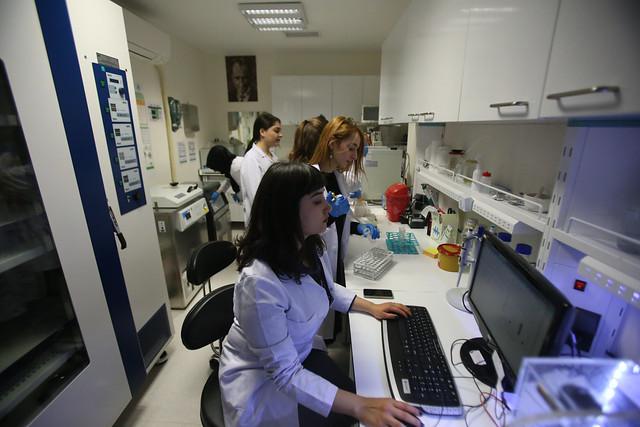
Instilling a Sense of Lifelong Learning
The Medical Laboratory Techniques Program aims to raise individuals who possess a sufficient infrastructure in their field, can interpret and evaluate data using the core knowledge and skills acquired, and can develop solution proposals by identifying problems.
Among the objectives is also to train professionals who can determine and effectively use the methods, technical services, and technologies required for applications; produce solutions to unforeseen problems encountered in practice; take responsibility in working groups as well as possess the ability to work independently; communicate effectively; and are tolerant, patient, and proficient in a foreign language at a level to follow innovations in their field.
Within the scope of the program, it is aimed to educate individuals who possess universal and cultural values along with professional ethical competence; monitor sectoral developments in science and technology with a lifelong learning consciousness in personal and professional fields to continuously renew and improve themselves; and hold knowledge, skills, competence, and awareness regarding safety, health, and environmental protection measures.
What are the Courses Taken in the Medical Laboratory Techniques Program? First-Year Courses in the Medical Laboratory Techniques Program: Basic Anatomy and Physiology, Laboratory Safety, Basic Mathematics, General Pathology, Positive Psychology and Communication Skills, University Culture I, Knowledge of Diseases, Principles of Atatürk and History of the Revolution I, Turkish Language I, English I, Biochemistry, Introduction to Hematology, Medical Biology and Genetics, General Chemistry, Basic Microbiology, Use and Maintenance of Laboratory Instruments, University Culture II, Principles of Atatürk and History of the Revolution II, Turkish Language II, English II.
Second-Year Courses in the Medical Laboratory Techniques Program: Clinical Biochemistry, Basic Laboratory Applications I, Clinical Microbiology I, Elective Course, First Aid, Professional Ethics, Parasitology, Basic Laboratory Applications II, Clinical Microbiology II, Basic Immunology.
The Medical Laboratory Techniques Program is among the programs where a Double Major Program (ÇAP) can be pursued:
- Food Technology
- Laboratory Technology
- Pathology Laboratory Techniques
- Autopsy Assistantship
What are the Employment Fields for Medical Laboratory Techniques Graduates? Medical laboratory technicians can work in hospitals, faculties of medicine, private diagnostic laboratories, research centers of other healthcare institutions, public health institutes, food industry enterprises, and institutions and organizations conducting research and development studies in the medical field.
For those wishing to pursue a career in different fields, there is also the opportunity to transfer to Biology, Molecular Biology and Genetics, Bioengineering, Nursing, and Nursing and Health Services departments via the Vertical Transfer Exam (DGS).
The Medical Laboratory Techniques Program allows graduation transfers to the following undergraduate programs through the Vertical Transfer Exam (DGS):
- Biology
- Molecular Biology and Genetics
- Bioengineering
- Nursing


