


Demand for Technicians in the Field of Orthopaedic Prosthetics and Orthotics is Growing
What is the Orthopaedic Prosthetics and Orthotics Programme?
A prosthesis is an artificial organ used in cases of organ or limb loss. An orthosis, on the other hand, refers to assistive devices applied to parts of the body that require support, protection, stabilisation or correction for any reason.
An Orthopaedic Prosthetics and Orthotics Technician works on the manufacture of artificial organs (prostheses) designed to partially replace the functions of lost limbs such as hands and feet, or on the manufacture of assistive devices (orthoses) applied to parts of the body that require support, protection or correction.
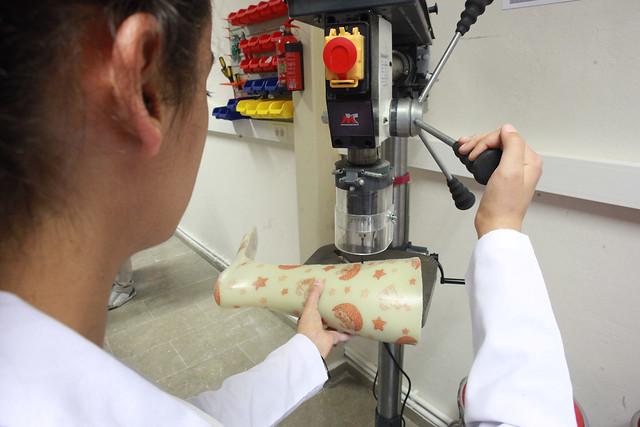
Manual Dexterity is of Great Importance in This Field
Those wishing to become Orthopaedic Prosthetics and Orthotics Technicians must be meticulous and attentive individuals with good manual and finger dexterity, as well as the ability to perceive spatial relationships. People working in this profession must not have allergies to dust or chemicals.
Orthopaedic Prosthetics and Orthotics Technicians work in workshops attached to the rehabilitation departments of hospitals.
What Courses Are Taught in the Orthopaedic Prosthetics and Orthotics Programme?
In the first year of the Orthopaedic Prosthetics and Orthotics programme, core courses include Basic Anatomy and Physiology, Kinesiology and Biomechanics, Materials Science I-II, Professional Technology I-II, Design and Modelling, Introduction to Prosthetics, Introduction to Orthotics, First Aid, Positive Psychology and Communication Skills; in the second year, Orthotic Analysis and Assessment, Prosthetic Analysis and Assessment, Professional Ethics, Communication in Healthcare Settings, Biomedical Technology, Clinical Conditions in Prosthetics and Orthotics, Prosthetics I-II and Orthotics I-II are covered both theoretically and practically. In addition, students undertake a placement at the end of the programme.
What are the career prospects for graduates of the Orthopaedic Prosthetics and Orthotics Programme?
There are permanent positions available for Orthopaedic Prosthetics and Orthotics Technicians in hospitals as Healthcare Technicians. There is also a demand for qualified staff in private sector organisations operating in this field. Furthermore, professionals in this field have the opportunity to set up their own businesses.
As Orthopaedic Prosthetics and Orthotics is a constantly evolving field, the demand for professionals in this area is steadily increasing.
Double Major Programs:
Students enrolled in the Orthopedic Prosthetics and Orthotics program may pursue a double major in Physical Therapy or Dental Prosthetics Technology, provided they meet the necessary requirements.
Programs Eligible for Transfer via the VTE Exam:
Associate degree holders in Orthopedic Prosthetics and Orthotics can transfer to four-year bachelor’s degree programs in the fields of health and engineering through the Vertical Transfer Exam (VTE). The primary transfer programs include Orthotics and Prosthetics, Physical Therapy and Rehabilitation, Occupational Therapy, Health Administration, and Biomedical Engineering.


