

Üsküdar Üniversitesi Faculty of Health Sciences Social Work Department held a program titled “Ministry of Family, Labour and Social Services and Women's Services.” Remziye Algın, Deputy Provincial Director responsible for Kırklareli Women and Children's Services, who participated as a speaker in the program, stated that all forms of violence are human rights violations and added that violence does not come from afar, but from our closest ones.
Content
Violence Comes from Our Closest Ones…
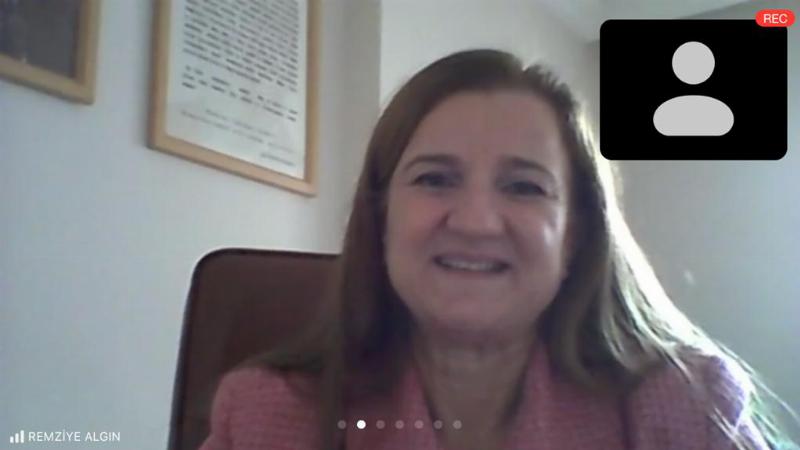
In the program moderated by Dr. Abdulhakim Beki, Assistant Dean of Üsküdar Üniversitesi Faculty of Health Sciences, Beki stated, ‘‘Violence and deaths against women are a painful reality in our country. Our Ministry considers women's rights and children's rights and continues its work. Social Work is also a profession that advocates against rights violations.’
“Violence does not come from afar, it comes from our closest ones”
Remziye Algın, Deputy Provincial Director responsible for Kırklareli Women and Children's Services, Ministry of Family, Labour and Social Services, addressing the prevention of violence against women, said, ‘‘This is a choice and a person's defense mechanism. All forms of violence against women should be the responsibility of all humanity. One in three women worldwide experiences sexual and physical violence. 89% of individuals who have experienced violence do not report it anywhere; they are either afraid or endure it in silence. Let's not forget, violence does not come from afar, it comes from our closest ones.’
“All forms of violence are human rights violations”
Algın, speaking about the effects of violence on individuals, stated; ‘‘High impacts such as feeling worthless, guilt, shame, loneliness, neglecting abuse, and substance addiction can be observed in the individual. There are also effects on children. In domestic violence, children are the most serious victims. These are strong effects such as experiencing communication problems, academic failure in school life, and withdrawal. All forms of violence are human rights violations.’
‘‘We have violence prevention and monitoring centers’’
Remziye Algın, drawing attention to protective measures, stated; ‘‘The preventive measure is the most commonly applied decision. We have institutions within the Ministry that can be applied to. We have violence prevention and monitoring centers, which operate on a 24/7 basis. When a woman or individual comes to us, we first identify the problem; if it's a problem concerning different institutions, we direct them to those institutions. We offer services such as psycho-social support, economic assistance, legal support, and referral to shelters. With the Alo 183 Social Support Line, we are as close as a phone call to victims of violence. We aim to say stop to violence against women.’
Share
Update Date: February 27, 2026
Creation Date: December 11, 2020
Request a Call
Other News
- Prof. Nevzat Tarhan: “Those with a mental filter are not afraid of the digital”
- Artificial intelligence doesn't eliminate the translator, it transforms their expertise!
- Social responsibility courses moved to the field
- Erasmus+ Orientation Week completed at Üsküdar
- Prof. Nevzat Tarhan: “Brain secretes ‘dark glue’ in social media lynchers!”