

Üsküdar Üniversitesi Faculty of Health Sciences, under the leadership of Prof. Dr. Sevda Asqarova, Head of the Occupational Therapy Department, organized the “World Autism Awareness Day Symposium.” Üsküdar Üniversitesi Founding Rector Prof. Dr. Nevzat Tarhan and expert speakers addressing autism spectrum disorder from various disciplines participated.
Content
Üsküdar Üniversitesi Occupational Therapy Department Sheds Light on Autism
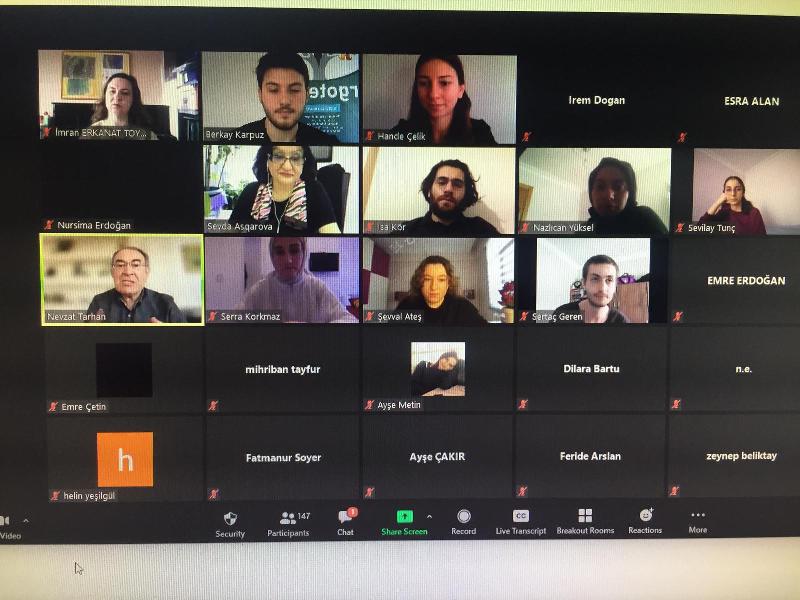
Berkay Karpuz, President of the Occupational Therapy Club, moderated the symposium, which saw intense participation.
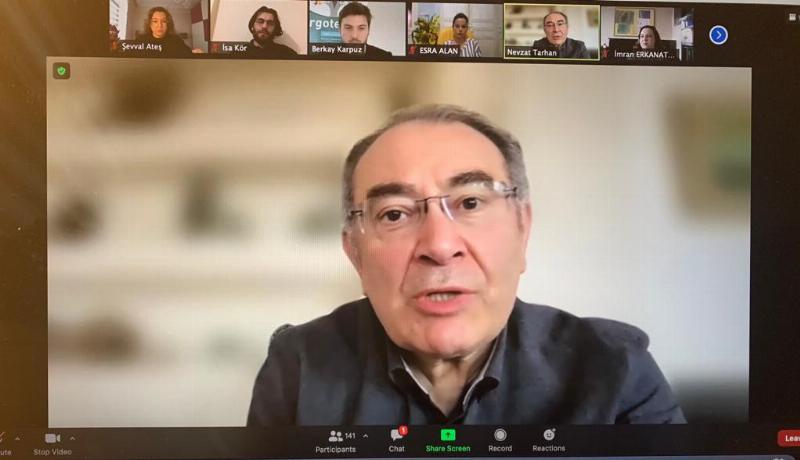
“We conducted a treatment using occupational therapy and magnetic stimulation therapy simultaneously”
Üsküdar Üniversitesi Rector Prof. Dr. Nevzat Tarhan, speaking about the importance of occupational therapy in autism spectrum disorder, said; “Occupational therapy, together with Üsküdar Üniversitesi, is truly advancing as an adaptation therapy and scientifically reaching better places. Sensory integration therapy has started to attract more attention during the pandemic period. While fine motor and gross motor skills are usually observed as a learning test in a child, emotional skills can also be observed with occupational therapy. Autism can be observed even if there is no genetic predisposition. Better outcomes are achieved if autism spectrum disorder is detected early. At our NPİSTANBUL Brain Hospital, as a scientific research project, we conducted a treatment by simultaneously using occupational therapy and magnetic stimulation therapy. We also received a very positive result from the protocol. This situation clearly shows that autism is a serious brain issue. The brain can always be intervened. This is not a disease. Let's not label them as 'patient.' The learning interventions for these individuals are different. Adaptation is supported with various treatments. Mirror neurons are weak in these children. Teaching at a young age, being able to focus their attention, when a common attention area is found, mirror neurons start to activate. When we try to develop this, the brain exercises. In this way, new pathways and new connections are established,” he said.
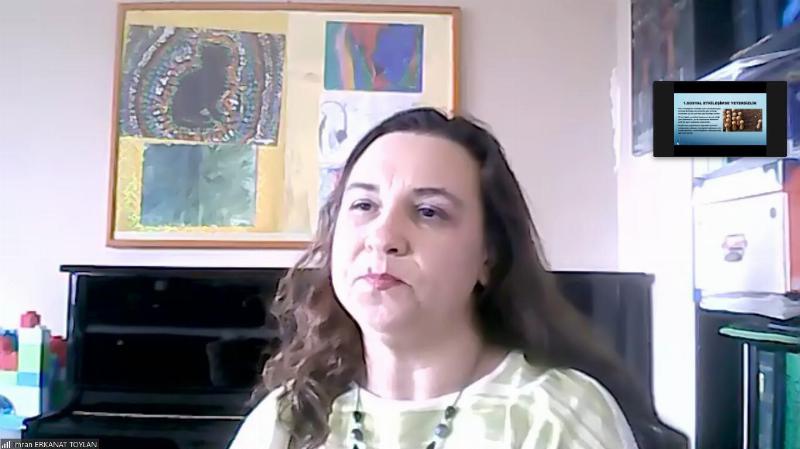
“We must make eye contact with children”
Specialist Physiotherapist İmran Erkanat Toygar, speaking about communication skills in children on the autism spectrum, said; “In autism spectrum disorder, we can describe it as deficiencies in social interaction skills, communication and play, obsessions, and other symptoms. Repeating things over and over, assuming children don't understand, shuts down communication. It is very important for our body postures to be clear during communication. The better we use body language, the better the child will understand us. When we play games that can attract their attention, we eventually initiate communication.” she said.
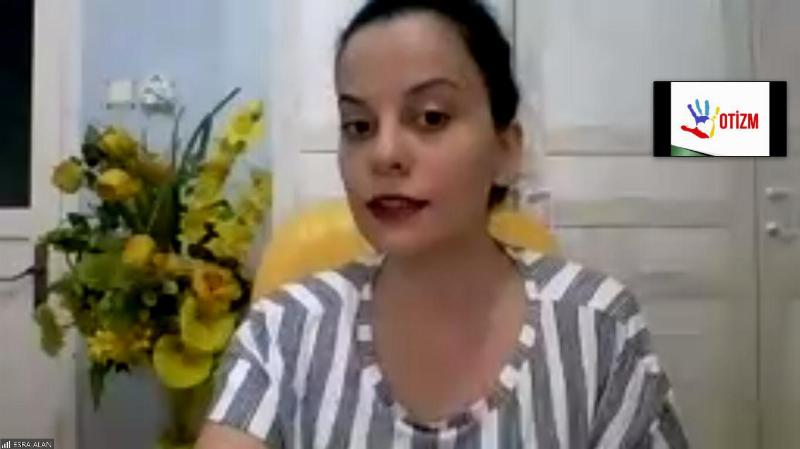
“Families' lives change during this process”
Occupational Therapist Esra Alan, addressing psychological resilience in families with autistic children and occupational therapy interventions for families, stated; “Families experience anxiety during this period. Then they begin researching. After this, a life cycle begins. Children become the focal point of the cycle, and parents make sacrifices. Families should use stress coping methods for themselves, deal with their current emotional state, and be aware of the situation.”
“Autism stems from differences in brain development and function”
Occupational Therapist İsa Kör, expressing his views on adapting to autism spectrum disorder, said; “We see that neural connections in the temporal lobe are fewer and weaker. The cells that support neurons (glia) are very active. The cerebellum has a large number of neurons in the brain, but in individuals with autism, this structure is reduced by half. Deficiencies in communication stem from this region. Families try to impose roles on the child. In fact, we see that children's freedom is taken away. The more peacefully it can be viewed, the better. I believe that societal awareness needs to be created,” he said.
“Sensory integration problems manifest as sensory-based motor disorders”
Specialist Physiotherapist Onur Aşkar, addressing physiotherapy-based assessment and intervention in autism, said; “In early childhood, sensory stimulation and motor activity shape neurons and connections to form sensorimotor processes. Sensory integration problems manifest as modulation discrimination and sensory-based motor disorders. It leads to problems such as balance issues, difficulty in speech and learning, concentration difficulties, and disorganization.” he said.
“Every individual with autism is not the same”
Occupational Therapist Hande Çelik, speaking under the title “Diagnosis or Child?” at the event, said; “The important thing in intervention is correct assessment. When conducting an assessment, it is important to gather information from the family, observe the child, and use appropriate scales. One should not focus solely on the diagnosis. Instead of getting stuck on the diagnosis, we should evaluate the child very thoroughly. Since the 0-2 age range is open to learning, it requires very effective intervention. If a child has a diagnosis and is not taught anything, their symptoms tend to increase further,” she said.
The Role of Sensory Problems in Autism
Intern Occupational Therapist İrem Doğan, speaking about the role of sensory problems in autism, said; “The vestibular system receives information about whether we are moving or not, the position of our head, and at what speed we are moving. Tactile sensation is related to pain level, pressure, rough-smooth, hot-cold perception, beyond superficial touch of our skin. The proprioceptive system (deep sensation) provides information about the body's position and movements. Visual sensation organizes information coming from the environment. Interoceptive sensation is our sense that allows us to process information from internal organs. Auditory sensation makes sense of sounds in the environment, while taste-smell sensations work in an integrated manner with each other,” she said.
“Sensory activities applied during therapy have a specific purpose”
Intern Occupational Therapist Dilara Bartu, speaking about providing occupational therapy support at home to individuals with autism during the pandemic, said; “A child with weak sensory processing struggles to produce appropriate responses related to learning and behavioral processes. All sensory information helps create a body image in the child's brain. Sensory integration activities at home should not be seen as a method applied only by therapists. Many sensory activities applied during therapy have a specific purpose,” she stated.
“The sibling situation of the client should not be overlooked”
1st-year occupational therapy students Emre Çetin and Nursima Erdoğan, generally addressing autism spectrum disorder, spoke as follows:
“Sensory processing disorder can be found in 80% of children with autism. Sensory processing disorder affects our ability to perceive the world and acquire information through our senses. When preparing an occupational therapy treatment program, information must be obtained from the individual's parents. Work should be done with the family, teacher, and caregiver. The most important and often overlooked point in a treatment program can be siblings at home. It has been researched and confirmed with necessary tests that siblings are a very important factor in autism-related therapies. Siblings play an important role in initiating and maintaining an activity (treatment). If present, the client's sibling situation should never be overlooked. If the sibling also has autism, this does not pose an obstacle to playing together.”
Share
Update Date: February 27, 2026
Creation Date: April 05, 2021
Request a Call
Other News
- The book that read today's digital threats in 2014: Being a Conscious Family
- Experts warn: 'Instead of memorizing letters, teach pencil grip, scissor use, and coloring'
- School fear and school love both start in the family!
- Family is not merely transforming, it is being battered under a serious assault
- Artificial intelligence opens the door to early diagnosis in autism!