

Üsküdar Üniversitesi Faculty of Humanities and Social Sciences History Department commemorated our national poet Mehmet Akif Ersoy in a panel organized on the 100th anniversary of the adoption of the National Anthem. Researcher journalist Ömer Erbil, screenwriter of the “Akif” documentary, which explored unknown aspects of Mehmet Akif Ersoy's life, spoke about the little-known segments of the national poet's life and his role in the struggle for independence. Stating that Mehmet Akif Ersoy, known to be born in Fatih, Istanbul, was actually born in Bayramiç, Çanakkale, Ömer Erbil said, “During Akif's childhood, his father had his population registration moved to Bayramiç district of Biga sanjak. He was born in Istanbul, but his registration appeared as Bayramiç.” Ömer Erbil stated that his father İpekli Tahir Efendi, who wanted his son to be educated in a boarding school in Istanbul, had his population registration moved to Bayramiç. Ömer Erbil noted that President Erdoğan also recited the national poet's poem “Resmim İçin” in the “Akif” documentary.
Content
Unknown Aspects of Our National Poet Mehmet Akif Ersoy Discussed

In the panel titled “Our National Anthem and Mehmet Akif Ersoy on its 100th Anniversary,” held online due to the pandemic, researcher journalist Ömer Erbil and History Department Faculty Member Assoc. Prof. Dr. Hadiye Yılmaz Odabaşı discussed the unknown aspects of the national poet Mehmet Akif Ersoy and the historical period in which the National Anthem was written. The panel was moderated by the Head of the History Department, Dr. Lecturer Uygar Aydemir.
In his speech, researcher journalist Ömer Erbil, talking about the “Akif” documentary he scripted and which narrates little-known details from Mehmet Akif Ersoy's life, mentioned interesting details from the national poet's life.
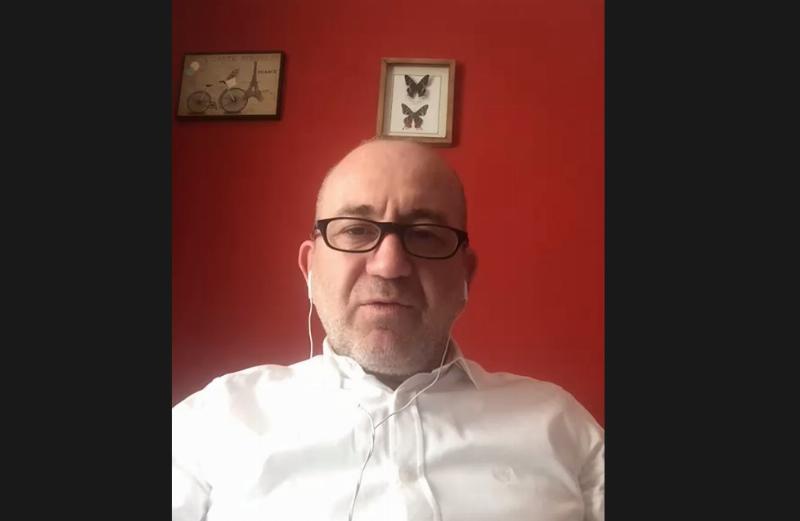
Ömer Erbil: 'Mehmet Akif Ersoy Gifted the National Anthem to His Nation'
Reminding that 2021 marks the centennial of the adoption of the National Anthem, Ömer Erbil said, “Our National Poet Mehmet Akif Ersoy gifted that poem to his nation, a poem that made us all proud, sent shivers down our spines, and whose words were as heavy and powerful as cannonballs, when he said, 'May Allah never again let this nation write a National Anthem.' He did not include this poem in his own book, Safahat. If we recall the period when he gifted the National Anthem to the nation, it was a time when, as he stated in his Gallipoli epic, seven powers attacked our geography, our independence, and our freedom. In the years when a handful of devoted people in Ankara, united as one, fought for the independence and freedom of this country, he penned the lines of that national anthem, those beautiful words that caressed the soul of the nation and the soldiers at the front, gave them courage, and enabled this nation to protect its homeland and its land. Subsequently, the National Anthem, first greeted with applause by the Great Leader Mustafa Kemal Atatürk in the parliament and causing everyone to stand up when recited, was presented to the nation.”
Ömer Erbil: 'Our Youth Do Not Appreciate the Value of Those Periods'
“We have gone through very difficult days and periods. Unfortunately, we also approach history very differently,” said Erbil, adding, “We try to read and criticize the past and history from today's perspective, which is why our youth do not appreciate the value of those periods. They criticize the history of the past very easily. They say 'if only it were like this, if only it were like that,' but when we consider the conditions and circumstances of that day, we see that it was not easy at all.”
Ömer Erbil: 'We Know Very Little About Akif'
“While making the Akif documentary, we tried to explore an unknown, different side of him,” said Ömer Erbil, narrating the documentary's origin story: “As we all know, Mehmet Akif Ersoy was born in Sarıgüzel Neighborhood of Fatih district, Istanbul. We see this in interviews he gave to newspapers a few months before his death. However, AK Party Group Deputy Chairman and Çanakkale Deputy Bülent Turan said about two years ago, 'Akif was born in Bayramiç, Çanakkale.' We know Akif to some extent, and all sources indicate he was born in Fatih, Istanbul. Mr. Turan took out and showed his identity card. Indeed, his place of birth was written as Bayramiç district, Çanakkale. I was greatly surprised. Subsequently, he asked me to research whether a documentary could be made. The story of the documentary actually began like this. We looked at the population records; indeed, the place of birth was written as Bayramiç. However, all sources, including Safahat, showed his birthplace as Istanbul. Ottoman records were also examined. As you know, the Ottoman Empire was a very good archivist state; it recorded everything. We looked at the Sicil-i Umumiye (General Registry) prepared for Ottoman officials. It also stated Bayramiç in those records. We started researching this astonishing and stereotype-breaking information.”
Ömer Erbil noted that this information was first put forward by Prof. Dr. Kaya Bilgegil in the 1960s but was not pursued much afterward, adding that he saw Prof. Dr. Uğur Derman had touched upon this subject in a few articles previously.
Ömer Erbil: 'Born in Istanbul, but Registered as from Bayramiç'
Stating that they found interesting information about Mehmet Akif Ersoy when they started their research, Ömer Erbil said, “His father, known as İpekli Tahir Efendi, who immigrated from the İpek district of Albania, studied as a boarder in a madrasa in Istanbul. He served as an imam and gave sermons. Just within the 3-4 months when Mehmet Akif was born, he was appointed to Bayramiç. One of the main reasons Tahir Efendi was sent to Bayramiç was that he knew Albanian, and a large number of Bosnians and Albanians had been settled there as immigrants. With the thought that the people there could be reached more easily, Tahir Efendi was appointed as an imam to Bayramiç. At that time, Çanakkale was a district (kaza), and Biga was a sanjak. During Akif's childhood, his father had his population registration moved to Bayramiç district of Biga sanjak. He was born in Istanbul, but his registration appeared as Bayramiç.”
Noting that they focused on understanding why İpekli Tahir Efendi did this, Ömer Erbil said, “We found texts written by both Mithat Cemal and Eşref Edip Fergan regarding Akif's Bayramiç issue. Eşref Edip used to say about this topic, 'There was a child in El Ensar, he was from Bayramiç.' He called him his townsman. We learned that his childhood was spent in Bayramiç, he learned to swim and tasted tahini halva there for the first time, and loved it immensely. Bayramiç has been a place where tahini halva is made since the 17th century, and we actually encountered the fact that Turkey learned tahini halva from Bayramiç. This tradition still continues. Akif learned and tasted halva there.”
Ömer Erbil: 'His Father Wanted Mehmet Akif to Receive a Good Education'
Ömer Erbil, stating that Assoc. Prof. Dr. Hayrettin Parlakyıldız from Cyprus University recently conducted research on this subject, said, “We reached out to him. He had contacted the wife of Eşref Bey, whom Akif called his townsman in Egypt. We could not reach Firdevs Hanım because she passed away 1 year before we started our research. Our esteemed Professor Hayrettin spoke with Firdevs Hanım and listened directly. Firdevs Hanım said, 'Eşref Bey came home in the evening. Do you know, our teacher Mehmet Akif was from Bayramiç? He called me his townsman, and I was honored.' A question arose here. Why did İpekli Tahir Efendi register Akif in Bayramiç despite him being born in Istanbul? The answer to this question, according to our professors and expert historians, aligned with our assessment. The condition for studying in a boarding school in Istanbul at that time was to be born outside Istanbul. Such a situation existed, and those born outside Istanbul could easily enroll in boarding schools in Istanbul. We believe this was the reason why İpekli Tahir Efendi registered Akif in Bayramiç, Çanakkale. Tahir Efendi was a very valuable scholar. He was a preacher knowledgeable enough to later ascend to the pulpit of Fatih in Istanbul. Mehmet Akif Ersoy's father sent him to a boarding school. His later transfer to a veterinary school occurred after his father's death. His father tried to raise a child who knew the value of boarding school and education.”
Ömer Erbil: 'Istanbul Could Not Show Its Loyalty'
Ömer Erbil noted that Mehmet Akif Ersoy spent his childhood in Bayramiç until he was about 4-5 years old, adding, “Subsequently, during Ramazan months, as schools and madrasas in Istanbul were on holiday, we can say that Tahir Efendi went to Bayramiç every holiday period to preach and inform the local people. We encountered the fact that Mehmet Akif Ersoy had a history in Bayramiç until he was 9-10 years old. The house where Akif stayed in Bayramiç was found. Unfortunately, this house was demolished in 1996 by the decision of the Protection Board on the grounds that it posed a danger. Old photographs were found. The plot remained as it was. Çanakkale Deputy Bülent Turan Bey took ownership, found sponsors. Without burdening the state in this regard, and with the support of Bayramiç Municipality, it was restored close to its original form and revived. It became a Mehmet Akif Ersoy museum there. The opening of the Mısır Apartment as a museum was held today; his last years spent there can be seen as a gallery. This is pride-inducing because Istanbul, unfortunately, could not show this loyalty. The house where we knew he was born in Fatih no longer exists; a huge apartment building has been erected in its place. A sign that read 'Mehmet Akif Ersoy was previously born in a house here,' which is completely unfitting for Mehmet Akif Ersoy, was hung at its door. Burdur and Kastamonu also did not claim Mehmet Akif Ersoy. In fact, there should be a reverence for Akif and an ownership befitting that great man's honor in these places, similar to Bayramiç, Çanakkale.”
Stating that Mehmet Akif Bey's fame, glory, and renown extended far beyond the lands of Anatolia, Ömer Erbil said, “People in the Far East, Africa, and Arabia, as well as people in the Turkic world, know Akif very well and follow his writings. Indeed, his title as 'Poet of Islam' comes from this.”
Ömer Erbil: 'It Would Be Impossible Not to Feature the Verses Narrating the Gallipoli Epic'
Ömer Erbil, stating that the documentary also featured Mehmet Akif's verses narrating the Gallipoli Epic, said, “It would have been impossible not to include those beautiful verses. Mehmet Akif never saw the Battle of Gallipoli. Many literary figures were taken to Gallipoli under the leadership of hat mecmuası and at the request of Enver Pasha to write heroic poems, but Mehmet Akif Bey did not go. This was because Mehmet Akif Bey, due to his organizational identity and being an excellent orator, had another duty in those years. He had a trip to Berlin. The reason for his trip to Berlin was to persuade the Muslim Germans there who were fighting against us and the Germans on the British and French fronts; Mehmet Akif Bey was taken to Berlin to convince the prisoners captured from there. This is because the British and French brought Muslims from their colonies to the front by saying, 'The Caliph was captured by the Germans; we are fighting to save the Caliph.' When the Germans suffered great defeats on these fronts, they invited Mehmet Akif Bey with the idea of explaining to the captured prisoners that this was not the case, telling them the truth, and sending them back to their own countries to tell the truth. Mehmet Akif Bey gladly went to Berlin.”
Noting that Mehmet Akif Ersoy went to Arabia after his Berlin mission to persuade the tribes rebelling against the Ottomans, Ömer Erbil said, “He received the good news of the Gallipoli Victory in the deserts of Arabia. He also began writing the Gallipoli Epic in the deserts of Nejd. We also included this fact in the documentary. We concluded with the finale of Mehmet Akif's poem 'Resmim İçin' and the recording of his funeral ceremony at Beyazıt Mosque.”
Ömer Erbil: 'President Erdoğan Recited the Poem 'Resmim İçin''
Ömer Erbil, stating that President Recep Tayyip Erdoğan also recited Ersoy's poem “Resmim İçin” in the documentary, said, “Our President, Mr. Recep Tayyip Erdoğan, recites poetry very beautifully. We requested him to read the poem 'Resmim İçin.' He accepted after evaluating the film's story and situation. He honored us greatly. He personally read that poem to us, and this was a first. Our President recited a special poem in a documentary film for the first time. As his time was limited, he could only watch a certain part in the parliament and asked us for a copy. When he watched it with Emine Hanım in the evening, he reportedly said, 'The most beautiful legacy I will leave to my grandchildren.' ”
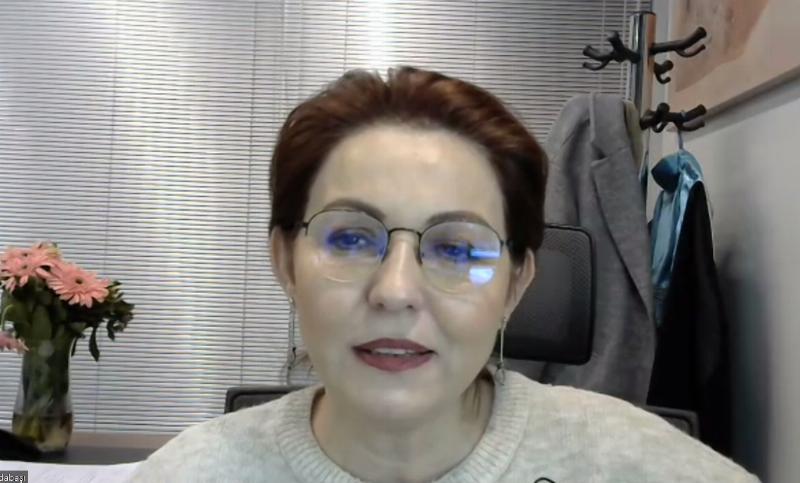
Assoc. Prof. Dr. Hadiye Yılmaz Odabaşı: 'Anthems are the Symbol of Our Being'
Üsküdar Üniversitesi Faculty of Humanities and Social Sciences Vice Dean and History Department Faculty Member Assoc. Prof. Dr. Hadiye Yılmaz Odabaşı spoke about the symbolic meanings of anthems and their psychological effects. Assoc. Prof. Dr. Hadiye Yılmaz Odabaşı noted that national anthems and symbols have been a very important unifying element for communities and states throughout history, stating that the National Anthem is the symbol of our country's existence, unity, and independence.
In her speech, Assoc. Prof. Dr. Hadiye Yılmaz Odabaşı, who revealed the motivations behind such symbols, especially the National Anthem, said, “Our symbols like the National Anthem are essentially products, or in a sense, inventions of the 19th century. They are symbols of the unity and solidarity of human communities, especially national anthems. The need for unity and solidarity is the symbol of our being.”
Assoc. Prof. Dr. Hadiye Yılmaz Odabaşı: 'Self-Esteem Increases with the Feeling of Belonging'
Referring to the motivation behind human communities choosing symbols from past to present, Assoc. Prof. Dr. Hadiye Yılmaz Odabaşı said: “Humanity has experienced this psychology from the oldest times to the present. Some of us are moved when the National Anthem is recited, some cry, some tremble. These are similar emotions experienced by all citizens who have no ideological or political issues. Humans are social beings. From the very beginning, we are part of many social groups. We also have broader groups: our ethnic group, our religious group. From the 19th century onwards, that group will be called the nation-state, it will be our national group. Within these groups, these symbols are extremely important for ensuring that sense of unity, togetherness, and 'us-ness.' Because through these symbols, this sense of community will first emerge. There is also an interaction between the group and the individuals who make up that group. Therefore, the more prominent the group we are in becomes, the more the individual's self-esteem actually increases with that feeling of belonging. Consequently, we feel happy. We feel safe. As individuals, as we generate these emotions within the community, we also channel the same emotion to the entire group. While the existence of the group enhances our self-perception and self-esteem, our collective identity strengthens with the increase in each member's self-esteem.”
Share
Request a Call
Other News
- The book that read today's digital threats in 2014: Being a Conscious Family
- Experts warn: 'Instead of memorizing letters, teach pencil grip, scissor use, and coloring'
- School fear and school love both start in the family!
- Family is not merely transforming, it is being battered under a serious assault
- Artificial intelligence opens the door to early diagnosis in autism!