

Led by Prof. Dr. Sevda Asqarova, Head of the Department of Ergotherapy at Üsküdar Üniversitesi Faculty of Health Sciences and Director of the Music Therapy Application and Research Center (MÜTEM), the “Music Therapy in Sensory Integration” event was organized. In the event, which saw intense participation, the importance and place of “Music Therapy” in treatments were explained.
Content
The Third Music Therapy Event in Sensory Integration Was Held
The Third Music Therapy Event in Sensory Integration Was Held
Led by Prof. Dr. Sevda Asqarova, Head of the Department of Ergotherapy at Üsküdar Üniversitesi Faculty of Health Sciences and Director of the Music Therapy Application and Research Center (MÜTEM), the “Music Therapy in Sensory Integration” event was organized. In the event, which saw intense participation, the importance and place of “Music Therapy” in treatments were explained.
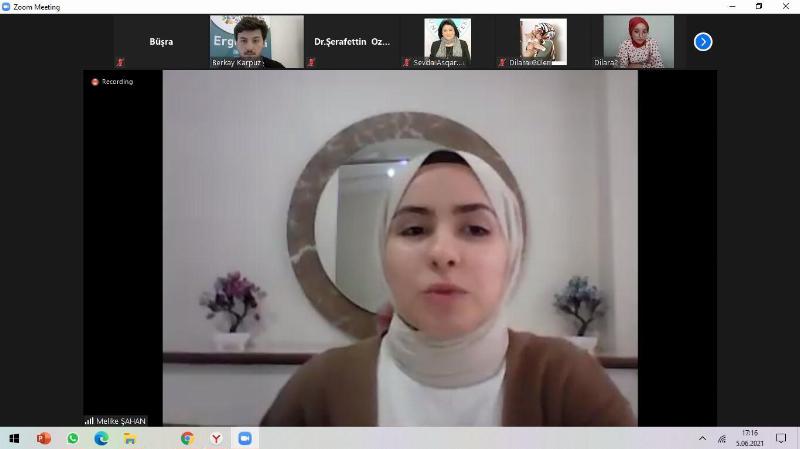
In the program moderated by Melike Şahan, President of the Üsküdar Üniversitesi Ergotherapy Club, the topic “Music Therapy in Sensory Integration” was addressed by expert names: Music Therapist Funda Ceylan, Specialist Dr. Şerafettin Özdoğan, Child Development Specialist Melisa Akköse Kaya, Ergotherapist İbrahim Erarslan, and Intern Ergotherapist Dilara Güler.
“People find ways to discover themselves with the help of the music they listen to”
Melike Şahan, President of the Üsküdar Üniversitesi Ergotherapy and Sensory Integration Club, delivered the opening speech, stating, “As the Ergotherapy and Sensory Integration Club, we work very closely with the Music Therapy Application and Research Center (MÜTEM) and organize events together. I want to briefly talk about the relationship between sensory integration and music. Music is very effective in teaching attitudes and behaviors to individuals with special needs. Engaging in music activities reduces the stress levels of children with special needs, helps them have a good time, and prevents the emergence of negative behaviors. It helps increase their self-esteem and motivation, allowing children to enjoy themselves and rest mentally and physically. Thanks to music activities, the attention skills, hand-eye coordination skills, auditory perception, and language use skills of children with special needs improve. Furthermore, such activities contribute to the development of verbal and non-verbal communication skills in children with special needs.”
“Music is one of the effective methods used in the education and rehabilitation of the hearing impaired”
Music Therapist Funda Ceyhan, addressing the topic of “Music Education and Music Therapy in Individuals with Hearing Impairment,” said, “Early diagnosis, early device provision, and early education are very important for children with hearing impairment. A child not diagnosed early will not be able to benefit from early device provision and early education opportunities. Music has been shown to support the mental development of individuals with hearing impairment, improve their verbal expression skills, enhance their language development, facilitate listening skills, foster self-confidence development, support social and emotional development, and increased attention and self-confidence problems. Knowing which communication method individuals with hearing impairment use and using that communication is important.”
“Music affects many centers in the brain.”
Specialist Dr. Şerafettin Özdoğan, addressing the question “Does music therapy relax muscles?”, stated, “Nerve cells in the brain can form new connections through a learning process involving ample repetition and concentration. Utilizing rhythm and music during exercises both increases motivation and can stimulate recovery, as most natural movements are rhythmic. Music is frequently used as part of speech therapy for aphasia patients who cannot speak after brain injury. Therapeutic singing and melodic intonation therapy yield successful results. Furthermore, music listening interventions are an effective tool in reducing muscle tension in patients with neurological disorders suffering from hypertonia.”
“Music relaxes children's mental structure and reduces their stress levels”
Child Development Specialist Melisa Akköse Kaya, addressing the topic of “The Effect of Music on Development in Children with Autism Spectrum Disorder,” stated, “Music is a form of communication through which people convey their emotions and thoughts. It has a calming role for children starting from infancy, especially before regular sleep. By supporting language development, it encourages positive behaviors in children. Since there are problems with distant connections in the brain in autism, music helps establish these connections. It is observed that responses to music in autism are more active than responses to speech. Music has the potential to improve social interaction by increasing motivation in autism. Music, which enhances the quality of life in autism, allows for a significant reduction in the severity of autistic symptoms.”
“The Homunculus is a structure that provides a very important guide to therapists”
Ergotherapist İbrahim Erarslan, addressing the topic of “The Importance and Role of Music in Sensory Problems, a Door to Communication,” said, “Before starting music therapy applications, just as in ergotherapy, it is necessary to learn the client’s cultural, mental, and physical characteristics, identify their predispositions, and then create a personalized intervention plan based on these analyses. Music is used in many fields, especially in psychiatry, pediatrics, oncology, and intensive care units. The purpose of applications in these areas is to help acquire knowledge and skills in mental, emotional, perceptual, physical, and social domains and to develop functional behaviors. Music therapy methods can be broadly categorized into two main types: active music therapy and passive music therapy. If we, as therapists, can enable the child to immerse themselves in the joy and fun of music without realizing they are undergoing treatment, we will both increase motivation and improve social communication skills.”
“In individuals with brain injury, music therapy interventions integrate the sense of self.”
Intern Ergotherapist Dilara Güler shared information about music therapy interventions and their importance in facilitating emotional adaptation at our event. Güler stated, “In individuals who have suffered traumatic brain injury, the event is not a situation anticipated by the patient or family. Trying to adapt to the existing situation of the new process brings emotional crises against the acute event. The first impression seen after neurological damage is the patient’s ‘shock’ response. Anosognosia, observed alongside emotional crises, reduces compliance with the neurological rehabilitation process. Music therapy interventions address adaptation problems by providing a safe and supported environment for the patient, offering an instinct to manage their emotions more accurately and positively.”
Share
Update Date: February 27, 2026
Creation Date: June 08, 2021
Request a Call
Other News
- Social responsibility courses moved to the field
- Erasmus+ Orientation Week completed at Üsküdar
- Prof. Nevzat Tarhan: “Brain secretes ‘dark glue’ in social media lynchers!”
- Prof. Nevzat Tarhan: “Every segment of society should be able to say, ‘This constitution is my constitution!’”
- OHS releases guide for safe operation of industrial robots