

Üsküdar Üniversitesi Faculty of Health Sciences Social Work Department organized the event “The Role of Civil Society in Working with the Homeless”. The guest of the event, held via Zoom, was Dr. Ahmet Türker, President of the 'Çorbada Tuzun Olsun' Association. Türker emphasized that 80% of homeless individuals have a family and a social circle, and that the real problem for the homeless, often seen externally as a housing issue, is actually an inability to find shelter. He stated that, as an association, they aim to fill the trust gap experienced by the homeless.
Content
Their Only Goal is to Fill the 'Trust Gap'…
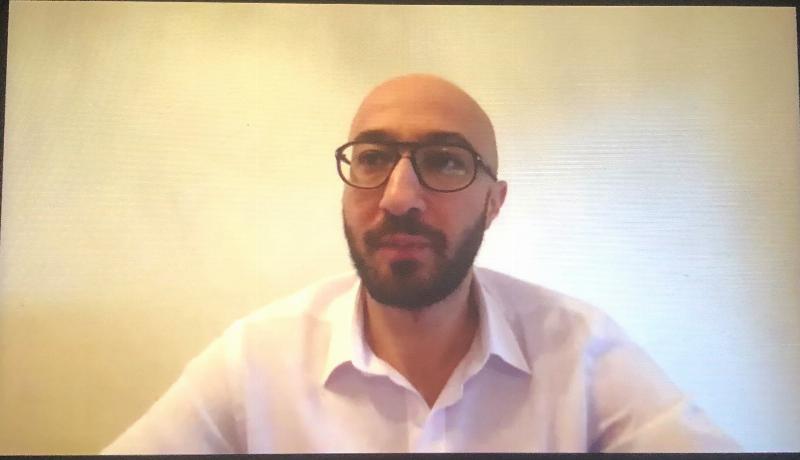
“Our difference from civil society workers is that we work within the scope of social services”
Sharing insights about the 'Çorbada Tuzun Olsun' Association, Türker said; “As an association, we usually distributed humanitarian aid. Towards the end of 2016, we decided that we needed to go beyond these aids. We somehow had to expand these aids. We thought about producing more fundamental solutions. In this context, we expanded our work. As an association, we communicate with the homeless in the field regarding their basic needs. Generally, civil society workers operate in this area, but our difference from them is that after establishing communication, we work within the scope of social monitoring and social services,” he stated.
“80% of Homeless Individuals Have Families and Social Circles”
Türker pointed out that homelessness is often perceived externally as a housing problem, but it is actually a problem of inability to find shelter; “80% of homeless individuals have a family and a social circle. Despite this, they live on the streets. Among those living on the streets are people ranging from Yeşilçam actors to those who were once very wealthy but fell onto the streets due to a traumatic event or went bankrupt. They adopt this lifestyle due to a very severe traumatic event. Another issue is the feeling of liberation people experience. Especially among small children, there are those who run away to the streets for that feeling of freedom and excitement. There are actually psychological reasons there,” he stated.
“Not Every Homeless Person is a Substance Addict, but Every Homeless Person is Addicted”
Türker stated that everyone experiences traumatic events in life, but these events are somewhat more severe for the homeless; “Neurologically, imagine a serious void in your mind. We fill this void especially with addiction. Not every homeless person is a substance addict, but every homeless person is addicted. Because they all share the same thing: the trust gap. By going out into the streets every day and communicating with them, we try to fill that trust gap in individuals isolated from society, and we try to reintegrate them into society. Homelessness is one of the simplest among global and economic problems, which is why approaches to solutions remain somewhat slow,” he explained.
Share
Update Date: February 27, 2026
Creation Date: December 18, 2020
Request a Call
Other News
- The book that read today's digital threats in 2014: Being a Conscious Family
- Experts warn: 'Instead of memorizing letters, teach pencil grip, scissor use, and coloring'
- School fear and school love both start in the family!
- Family is not merely transforming, it is being battered under a serious assault
- Artificial intelligence opens the door to early diagnosis in autism!