

Üsküdar Üniversitesi Faculty of Health Sciences Occupational Therapy Department Head Prof. Dr. Sevda Asqarova led the organization of the "II. Touch and Change Boundaries with Occupational Therapy" symposium, which was held in 3 sessions. Many expert speakers participated in the event.
Content
The 2nd 'Touch and Change Boundaries with Occupational Therapy' Symposium Was Held
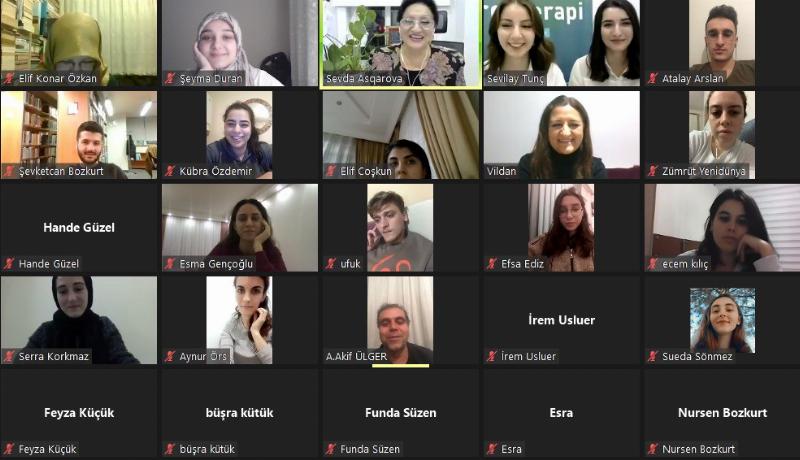
"The II. Touch and Change Boundaries with Occupational Therapy Symposium has now become a tradition"
Sevilay Tunç, President of Üsküdar Üniversitesi Cerebral Palsy and Occupational Therapy Club, and Yağmur Erol, Vice President, undertook the moderation and opening speeches of the online symposium.
Tunç stated that as the Cerebral Palsy and Occupational Therapy Club, they have organized many wonderful events since its establishment, expressing her happiness in realizing the second symposium.
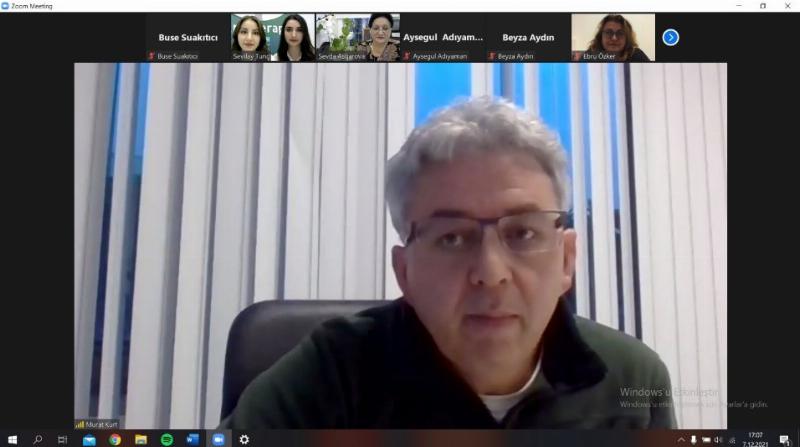
Murat Kurt: "The education of individuals with disabilities cannot be prevented under any pretext"
Referring to the "Educational Rights of Children with Special Needs", Kurt said: “The educational rights of individuals with special needs are universal. There are fundamental constitutional provisions for individuals with disabilities. I would like to emphasize that every citizen of the Republic of Turkey must comply with the constitution. I want to talk about Article 50 of the Constitution, 'Working Conditions and the Right to Rest'. We can explain Article 50 as: 'No one can be employed in jobs that do not suit their age, gender, and strength. Minors, women, and those with physical and mental disabilities are specially protected in terms of working conditions.' We can explain Article 61 of the Constitution, 'Those Who Need Special Protection in Terms of Social Security', as: 'The State takes all kinds of measures to integrate children in need of protection into society. For this purpose, it establishes or has established the necessary organizations and facilities.' The importance of this article for individuals with disabilities is significant. Article 15 of the Law on Persons with Disabilities legislation, 'The education of individuals with disabilities cannot be prevented under any pretext,' is also an article that should be considered regarding the educational rights of individuals with disabilities. The process for special education for children with disabilities begins with obtaining a 20% disability health report. Families/caregivers of individuals with disabilities and those who will receive education must be informed about their educational rights.”
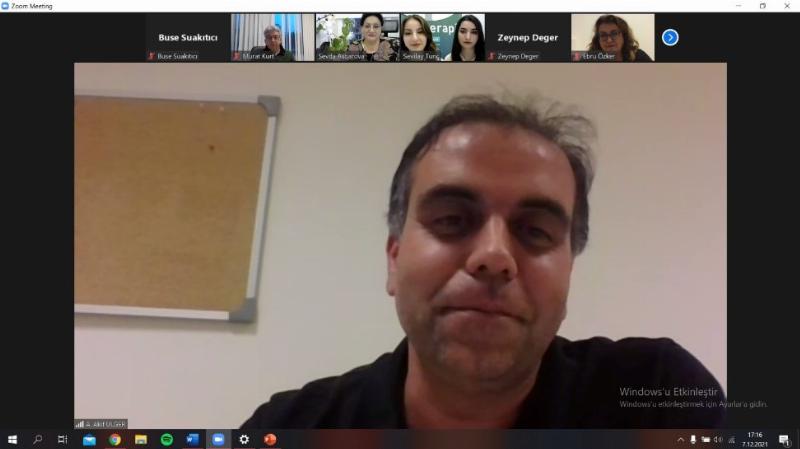
Akif Ülger: "The role and importance of Occupational Therapists in the field of education for individuals with disabilities is immense"
Speaking on the topic of education for individuals with disabilities, Ülger said; "When education for individuals with disabilities is mentioned, questions come to mind such as: which types of disabilities, how, when, where, and by whom will this education be provided? It is important to proceed with appropriate studies addressing these questions. In our school, we generally provide education to individuals with mild and moderate disabilities. The place and importance of Occupational Therapists in the field of education for individuals with disabilities are very significant and valuable. For example, from an Occupational Therapist's perspective, for a child with mild intellectual disability, academically; for a child with moderate intellectual disability, dressing and self-care; and finally, for a child with severe intellectual disability, we can learn from occupational therapists about the activities that can be done for their basic concepts and the necessity of developmental evaluation. While all these are being done, warm and humane bonds must be established between the therapist and the child.”
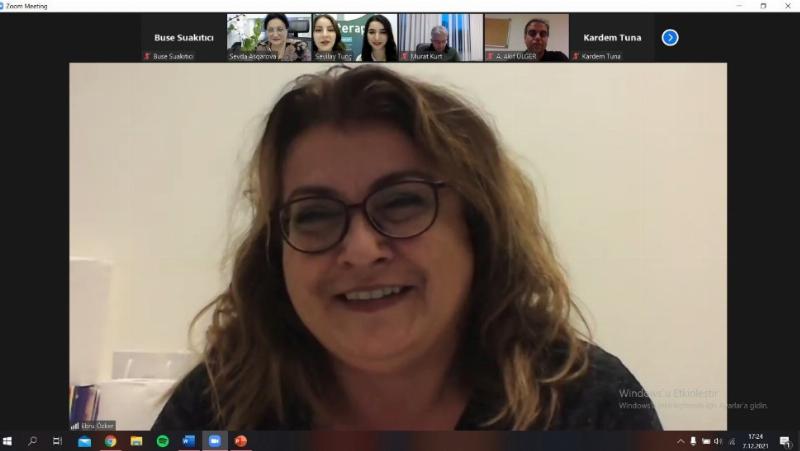
Physiotherapist Ebru Özker: "It is our duty to provide them with the appropriate environment"
Physiotherapist Ebru Özker, emphasizing the importance of the physical arrangement of educational environments, said; "School provides different experiences, every child provides different experiences. All of them may have different needs. It is our duty to provide them with the appropriate environment. The school is the most social environment for children. We are lucky that occupational therapists and physiotherapists can be found in our school; unfortunately, these opportunities are limited in other schools. As you know, primary problems for students with cerebral palsy can include postural disorders, vision problems, reaching-grasping, orthopedic, and neurological issues. Every child needs different adjustments. The learning process can be negatively affected by these. By collaborating with teachers, we aim for a holistic approach, as well as increasing learning, quality of life, and functionality. Increasing teacher awareness is important. While we strive to improve the quality of life for children, they actually improve our quality of life; we learn a lot from them, and what we learn continues as a legacy to other children. Seeing the transfer of learned information to other children will make us very happy.”
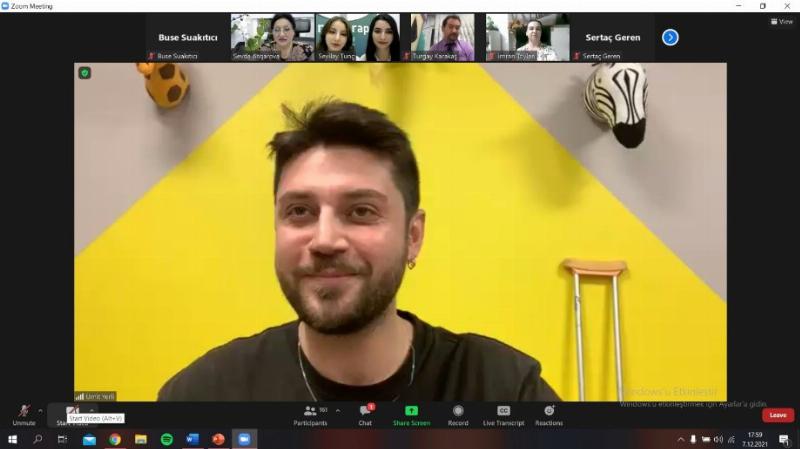
Spec. Audiologist Ümit Yerli: "We cannot even accept ourselves with our differences"
Expert Audiologist Ümit Yerli, who gave a presentation on "The importance of including individual differences in the therapy process and early intervention on the path to change," said; "My reason for choosing this topic was observing life from this perspective after starting to use crutches a few weeks ago due to a torn ankle. Afterwards, I wondered: Do we prioritize individual differences, or is it just talk? Is the necessary information for individuals with disabilities truly accessible? I believe the answers we give to these questions are important. When looking at a child, when guiding them in their daily life, can we accept them as they are? We cannot even accept ourselves with our differences. Individual differences are very important in our therapy program. Neural plasticity in the brain is a process that continues after the age of 0-3, and all specialists, as a team, should enter the child's life as soon as possible and intervene at the right time, taking into account their individual awareness."
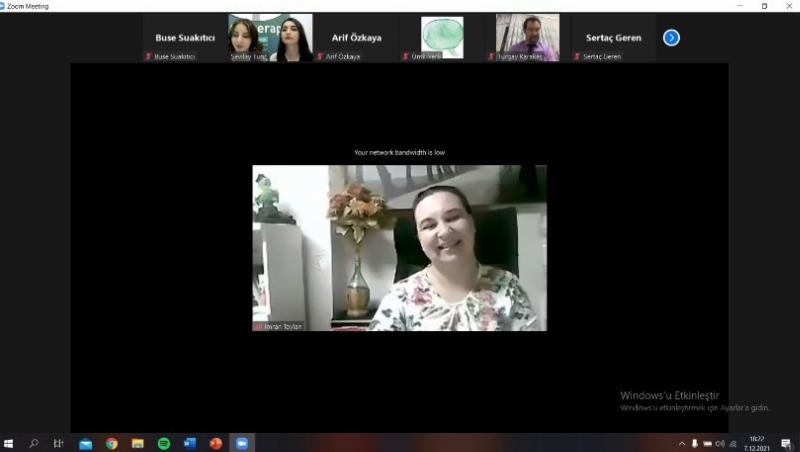
Expert Physiotherapist İmran Erkanat Toylan: "Animals are living beings with whom children can establish relationships and bonds"
Toylan shared her evaluations on "Overcoming Boundaries with Animal-Assisted Therapy in Children with Different Developmental Paths"; " Animal-assisted therapies are defined as a clinical intervention method aimed at establishing natural and healing bonds between humans and animals, addressing both preventive and therapeutic needs. Children can also react intuitively to animals. Animals are living beings with whom children can establish relationships and bonds. When therapy is conducted with an animal, the following developments can be achieved: development of motor skills and movements, increased self-confidence and verbal communication, etc., which can help children learn empathetic and nurturing skills. Sometimes, families starting therapy also adopt pets, and individuals state that they feel more liberated with animal-assisted therapies. Especially in children with weak social interactions, we can achieve positive results from their interactions with animals. We can observe that the use of animals in the company of children with developmental disorders significantly increases their verbal and non-verbal communication.”
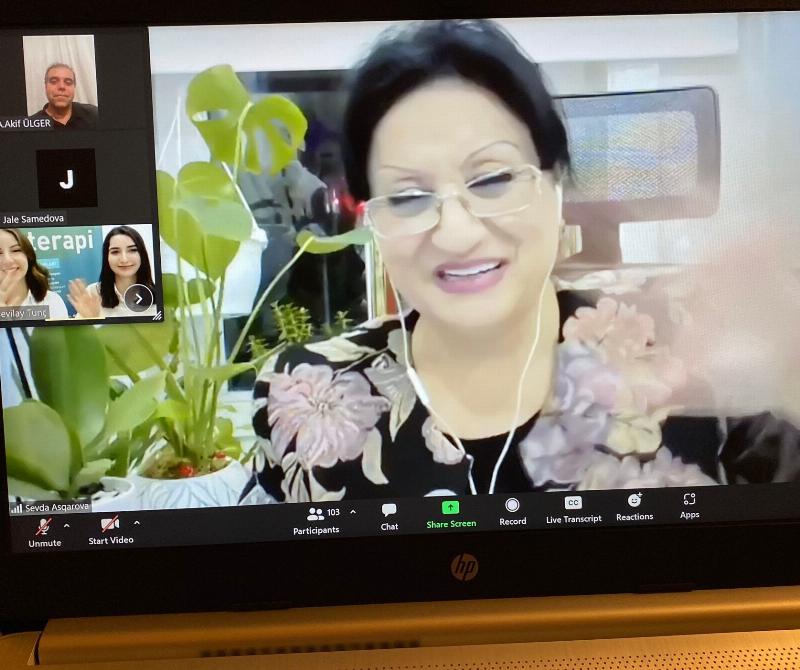
Prof. Dr. Sevda Asqarova: "The meaning and importance of World Disability Day are immense"
Prof. Dr. Sevda Asqarova, Head of the Occupational Therapy Department at Üsküdar Üniversitesi Faculty of Health Sciences, chaired the 2nd Session. Asqarova made a thank-you speech, addressing the meaning and importance of World Disability Day. Asqarova said; "As the Occupational Therapy department, just as we organize many events, I am very happy to be together with our valuable speakers and dear students on this special day. On this meaningful day, I would like to thank our presenters, our club president Sevilay Tunç and our club vice president, all our valuable speakers, and our students, who worked to organize a productive symposium.”
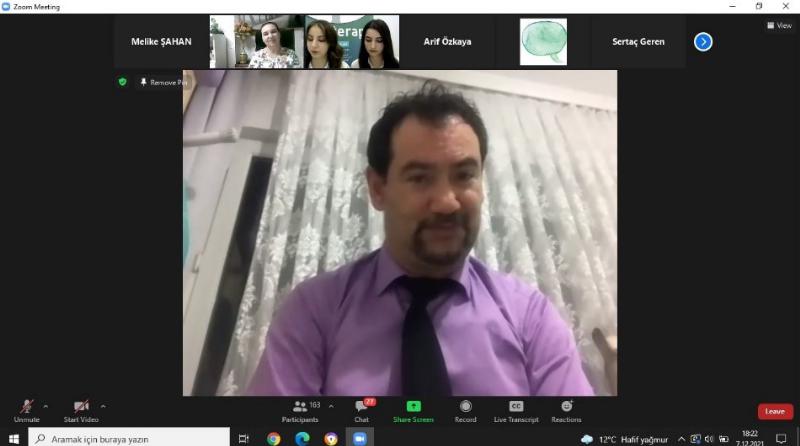
Turgay Karakaş: "I would like to express my heartfelt thanks to the occupational therapists who taught us about life"
Karakaş, sharing his life story regarding "A Perspective on Occupational Therapy from Cerebral Palsy," said: “I serve as the Chairman of the Board of SERÇEV. I couldn't walk or talk until I was six years old, and during my own school years, as an individual with Cerebral Palsy, I experienced many difficulties. However, I didn't want to see these as obstacles. I focused on my academic achievements, became second in Turkey in 1994, and got into Ankara University's Space Sciences department. I would like to say that I am the only person to minor in three fields and the first space engineer in Turkey. My interest in space stems from the excitement I felt when I looked at the sky at the age of nine when I first managed to stand on my own two feet. Now, I work as a space engineer in the defense industry at TÜBİTAK. The reason I am telling all this is that I want to be a source of inspiration for diagnosed individuals like myself, nurturing their hopes for life and themselves. I want to conclude my speech with Mustafa Kemal Atatürk's words: 'There is not a single individual to be sacrificed in education.' ”
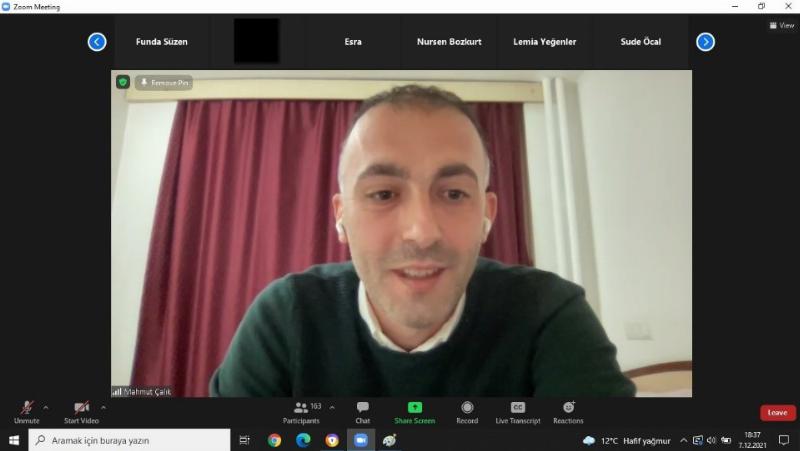
Expert Physiotherapist Mahmut Çalık: "More opportunities should be given to individuals with disabilities and they should be encouraged."
Emphasizing the importance and necessity of sports for individuals with disabilities, Expert Physiotherapist Mahmut Çalık said; "I have been working in the field of sports for individuals with disabilities since 2015. With my team, we have won European championships, European second places, and European third places. There are 2.5 million individuals with disabilities across Turkey. However, a very small percentage show social participation. The relationship of a large majority with society is weak. I believe that more opportunities should be given to individuals with disabilities and they should be encouraged for social participation. There is definitely a suitable sport for every individual with a disability who has an interest and talent in sports. At this point, it is very valuable for professional groups reaching out to individuals with disabilities to encourage them to participate in sports to the extent they can. The successes of the Turkish national disabled team are an inspiring example on this matter.”
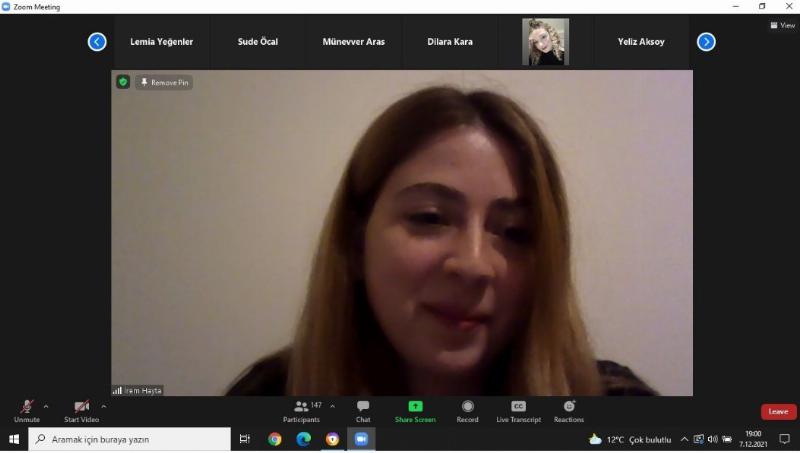
Occupational Therapist İrem Hayta: "Optimal functionality occurs within the context of a supportive family and community"
Occupational Therapist İrem Hayta, speaking about "The Importance of Occupational Therapist Support for Families of Individuals with Special Needs," said; "Diagnosis, daily living activities, instrumental daily living activities, transfer, functional mobility, safety training, caregiver body mechanics, emotional support and resources, and finally, follow-up recommendations are the cornerstones of occupational therapist support. It is important to explain the situation to families who are in a panic upon receiving the initial diagnosis in a simple, clear, and understandable manner. There can also be conscious families. In the rehabilitation plan, we should first ask how they perform daily living activities and seek answers. After performing the analysis, teaching strategies to families is of great importance.”
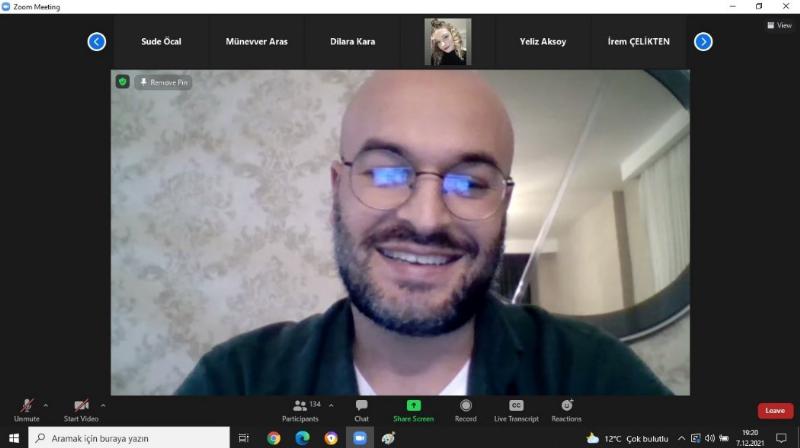
Occupational Therapist Mehmet Küçük: "Water has effects on the senses"
Occupational Therapist Mehmet Küçük, sharing his knowledge on "An Intervention Approach in Children with Special Needs: Aquatic Activities," said; "Participation in activities is very important for special needs. Aquatic activities provide mental, cognitive, and physical benefits for individuals with autism spectrum disorder. If individuals with autism spectrum disorder have an interest in water, they should be guided. Both the evaluation of the individual and the provision of necessary information to the family ensure this guidance. Water has effects on the senses. We can use these effects according to the needs of individuals. It can be used for activities that increase muscle strength and active participation. Motor planning and bilateral integration can be developed in water.”
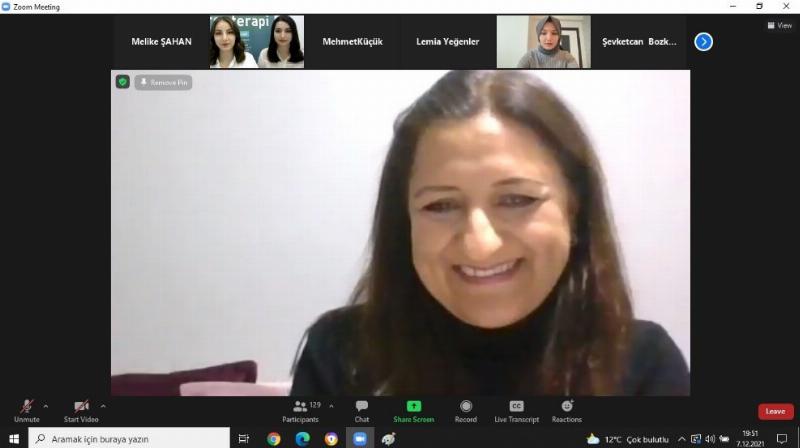
Dr. Lecturer Vildan Kandemir: "The employment area for Occupational Therapy needs to be increased in our country"
Dr. Lecturer Vildan Kandemir, International Elderly Care and Nursing Home Consultant for Okyanus Elderly Care Centers, gave a presentation titled "Let's Push the Boundaries in Elderly and Disabled Care with Occupational Therapy" in the 3rd Session. Kandemir stated that occupational therapy is an internationally recognized field. She explained that 9% of our population consists of the elderly population and expressed that the burden of chronic diseases reduces the financial sustainability of SGK (Social Security Institution) and that payable services in hospitals need to be re-evaluated. Kandemir said, "If an elderly individual is at the forefront with their illness, there are disciplines that will undertake that care/treatment, but if they need to participate in social life and manage a life worthy of human dignity, a multidisciplinary perspective and Occupational Therapy are important. Occupational therapy demonstrates a person-centered approach specific to the individual, the elderly, and the disabled in cognitive, functional, care, and physical areas. The employment area for Occupational Therapy needs to be increased in our country.”
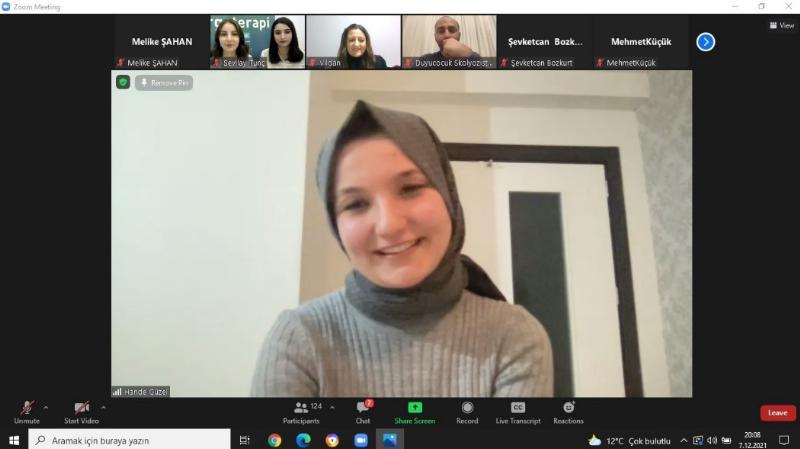
Speech and Language Therapist Hande Güzel: "Occupational therapists can provide support in voice therapy, therapies for individuals with hearing impairment"
Speech and Language Therapist Hande Güzel delivered her presentation titled "Speech Therapists and Occupational Therapists in the Field of Rehabilitation" in the 3rd Session of the symposium. Güzel stated; "If a child has difficulty understanding what others say in receptive language or expressive language, this is a language disorder. A secondary language disorder means that a language disorder accompanies an existing impairment. Assessment and therapy are carried out under the supervision of a multidisciplinary team. We carry out this process together with occupational therapy, ensuring enjoyment during this process.”
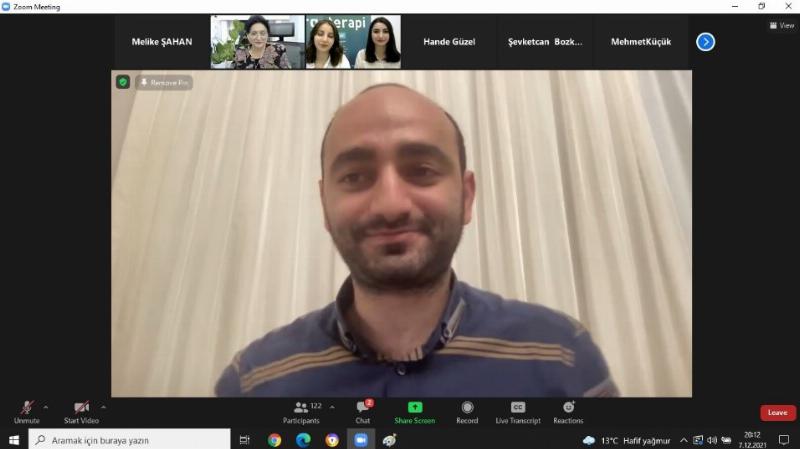
Expert Physiotherapist Onur Aşkar: "Occupational therapy and psychology are the professions that best provide sensory adaptation"
Onur Aşkar, evaluating "The Basic Principles of Transition to Occupational Therapy from a Physiotherapist's Perspective," said; "For us, for a person to fit the definition of healthy, we need to look at these three points: behavior, learning, and independence in daily living activities. The professions that best provide sensory adaptation are occupational therapy and psychology because the sympathetic or parasympathetic systems in the central nervous system always need sensory systems. When brain functions are complete and balanced, body movements are adaptable, learning is easy, and good behavior is a natural outcome; here, the role of occupational therapists is very valuable." He concluded his presentation with these words.
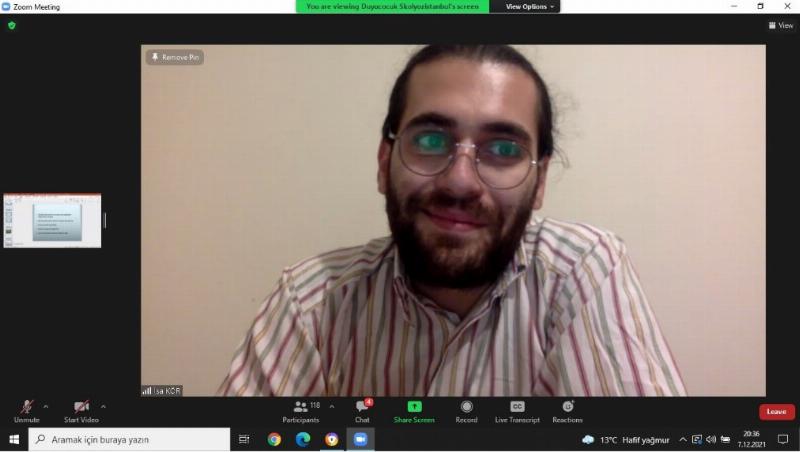
Occupational Therapist İsa Kör: "Those who are more resilient can cope better with life's problems"
Occupational Therapist İsa Kör, answering the question "How Can We Increase the Activity Performance of Individuals with Disabilities?", stated in his 3rd Session: "Resilience is an individual process that enhances survival and protective processes initiated by larger systems to provide individuals with opportunities to cope under stress. Those who are more resilient can cope better with life's problems, alleviate the burden of challenges, and show greater flexibility, resulting in a better quality of life. Many research findings indicate that families with a child with disabilities are under more stress due to time, energy, economic, and psychological conditions compared to families without an individual with disabilities. Having a child with disabilities leads mothers to experience problems in family and social life. Psychological and physical burdens cause parents to experience personal difficulties and imbalances, leading to depression and anxiety, which is why our intervention plan must be systematic and planned.”
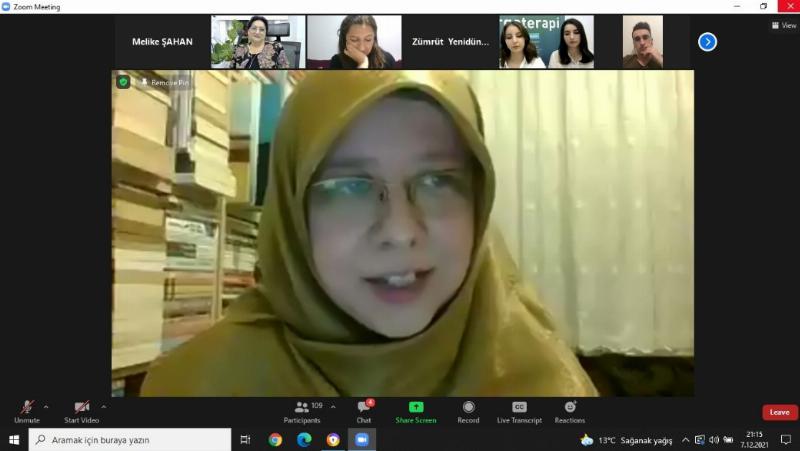
Lecturer Elif Konar Özkan: "In fairy tales and metaphors, we appeal to emotions, overcoming obstacles and touching boundaries"
Lecturer Elif Konar Özkan said; "As someone who has conducted fairy tale activities with children with leukemia, insulin-dependent, and visually impaired children in the physical therapy department, I held a fairy tale activity with a patient who could only communicate with her eyes and facial expressions, and she finally reacted with a wonderful smile. We embarked on an adventure together in the book Taşlangoz, and she conveyed her emotions to me. In fairy tales and metaphors, we actually appeal to emotions, and together we overcome obstacles and touch boundaries. We show many emotional changes in both the world of emotions and the world of the mind, and we make many discoveries; our dreams are also in our bag.”
The symposium concluded with Prof. Dr. Sevda Asqarova's presentation of thanks and closing remarks.
Share
Update Date: February 28, 2026
Creation Date: December 10, 2021
Request a Call
Other News
- The book that read today's digital threats in 2014: Being a Conscious Family
- Experts warn: 'Instead of memorizing letters, teach pencil grip, scissor use, and coloring'
- School fear and school love both start in the family!
- Family is not merely transforming, it is being battered under a serious assault
- Artificial intelligence opens the door to early diagnosis in autism!