

Üsküdar Üniversitesi Faculty of Humanities and Social Sciences Sociology Department Dr. Lecturer Tuğba Aydın Öztürk made evaluations regarding the concept of shadow pandemic and shared important statistical information.
Content
Shadow pandemic points to social problems
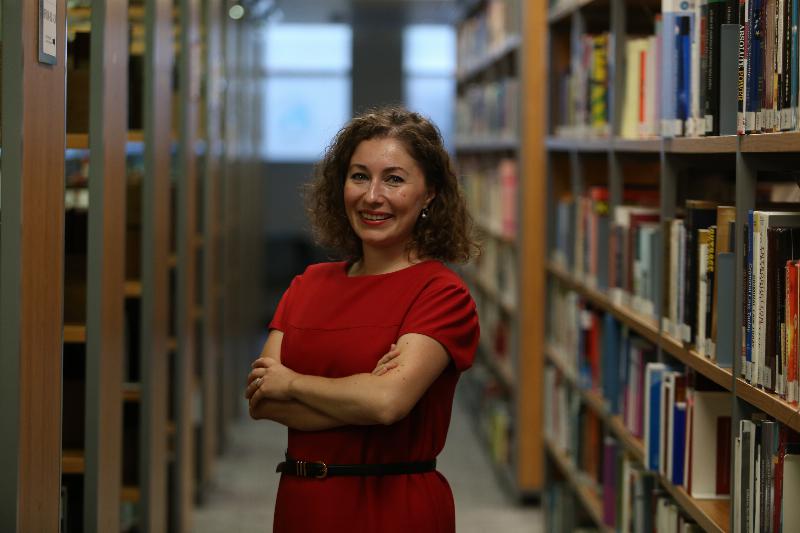
The concept of “shadow pandemic,” initially defined by UN Women as ‘increased domestic violence due to pandemic-related economic and social problems,’ continues to be used by UNICEF with an expanded scope. Experts point out that the phenomenon of violence has increased globally after the pandemic, emphasizing that women and children, in particular, are affected by this situation. Experts state that the concept of shadow pandemic points to social problems and that even if it is fully brought under control, its impact on our social life could last for many years.
The meaning of the shadow pandemic term has been expanded
Stating that the term shadow pandemic was first used last year by the United Nations to draw attention to domestic violence, Dr. Lecturer Tuğba Aydın Öztürk said, “UN Women explained the increased domestic violence due to pandemic-related economic and social problems with the term shadow pandemic. Recently, UNICEF further expanded the meaning of the term shadow pandemic and re-used it to describe the socio-emotional losses of children and young people. As of today, the term is emerging as a phrase whose use will become widespread to express the social problems caused by the pandemic.”
Violence increased after the pandemic
Öztürk stated that scientific research draws attention to the global increase in violence after the pandemic, emphasizing that women and children, in particular, are affected by this situation, saying, “During the pandemic, many women lost their jobs worldwide, and cybercrimes, especially those targeting girls online due to increased social media use, are also part of this violence. All of these are problematic areas permeated by the pandemic.”
The pandemic will continue to show its effect
Dr. Lecturer Tuğba Aydın Öztürk continued her words by saying, ‘As we are now in the second year of the Covid-19 pandemic, as a society, we are not only concerned with the health dimension of the pandemic:'
“The social and economic dimensions of the issue are very much at the center of daily life, as much as medical topics such as vaccination efforts, bed capacities, and the number of recovered patients. Even with the best-case scenario, where vaccination efforts are completed rapidly worldwide, the devastation caused by the epidemic seems likely to continue to show its effects for at least a few more years, from family life to school life, from the economic order to community mental health. We explain this situation with the term post-pandemic, which we use to mean after the pandemic.”
5 years needed to bring the epidemic under control
Öztürk stated that according to the World Health Organization, a period of 5 years is needed to bring the epidemic under control, adding, “World-renowned American epidemiologist Dennis Carroll, meanwhile, points out that epidemics like Ebola, bird flu, or swine flu have already been in our lives for the last 15 years, adding, ‘This will be our new normal from now on.’ Given this situation, we can say that realistic and qualified projects to be developed and implemented by governments, research institutes, academies, private and public institutions, and NGOs will gain importance for the post-pandemic process.”
Social problems can lead to permanent damage
Emphasizing that the concept of shadow pandemic was also included in the report prepared by UNICEF, Dr. Lecturer Tuğba Aydın Öztürk said, “This report underlined that the socio-emotional losses, particularly among children and young people, which have increased with the pandemic, will be very difficult to compensate. Dozens of social problems that will manifest themselves in the post-pandemic era can be listed, such as school dropout, students unable to access distance education, victims of domestic violence, negative future expectations of children and young people growing up in disadvantaged families, economic inequalities, psychologically-based disorders, and technology addiction. These social problems are among the primary issues that have emerged in the shadow of the pandemic and can lead to permanent damage if no solutions are produced.”
Inequalities surrounded social life
Öztürk stated that inequalities are not only seen on the basis of gender; she added that inequalities also surrounded work, school, and social life, and shared important statistical information:
- According to the Eğitim-Sen report, 4 million students in Turkey could not participate in education at all during the pandemic.
- According to the 2021 data from the Ministry of Family and Social Services, violence against women in Turkey increased by 32 percent during the pandemic.
- According to the United Nations Report on Cyber Violence against Women and Girls; girls and women experienced cyber violence 27 times more often than men.
- Psychological disorders caused by the economic difficulties created by the pandemic increased worldwide and in our country, and suicide rates rose.
The pandemic's impact on our social life will last for many years
Stating that the list could be extended at both national (Turkey) and global levels, Dr. Lecturer Tuğba Aydın Öztürk concluded her words: “It is seen that even if the pandemic is fully brought under control as a health issue, its impact on our social life will be with us for many years. After 2020 and 2021 spent in the shadow of the pandemic, we urgently need to consider how many more years we will be pregnant with epidemics triggered by inequalities.”
Share
Update Date: February 27, 2026
Creation Date: July 05, 2021
Request a Call
Other News
- Social responsibility courses moved to the field
- Erasmus+ Orientation Week completed at Üsküdar
- Prof. Nevzat Tarhan: “Brain secretes ‘dark glue’ in social media lynchers!”
- Prof. Nevzat Tarhan: “Every segment of society should be able to say, ‘This constitution is my constitution!’”
- OHS releases guide for safe operation of industrial robots