

Üsküdar Üniversitesi Faculty of Health Sciences Head of Occupational Therapy Department and Director of Music Therapy Application and Research Center (MÜTEM) Prof. Dr. Sevda Asqarova led the “Sensory Integration and Music Therapy 2” event. The role of music therapy in occupational therapy was explained at the event, which saw high participation.
Content
Second Sensory Integration and Music Therapy Program Held
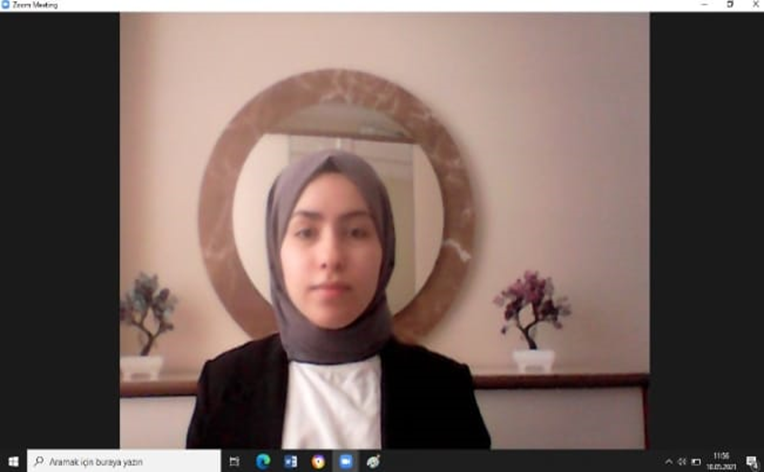
In the program moderated by Melike Şahan, President of Üsküdar Üniversitesi Occupational Therapy Club, sensory integration and music therapy topics were discussed by expert names; Mus. Hakan Sezgin, OTR. Merve Arı, Mus. Kadir Akpınar, OTR Kadriye Yağmurcu.
“Music is the clearest language of our emotions”
Melike Şahan, President of Üsküdar Üniversitesi Occupational Therapy and Sensory Integration Club, who delivered the opening speech, said: “The aim of our club is to focus on the relationship between sensory integration and occupational therapy, and to transfer knowledge to both ourselves and all individuals interested in this field through various events we organize. We have carried out various events throughout the year and continue to do so without slowing down. As the occupational therapy and sensory integration club, we work very closely with MÜTEM and organize events together. I would like to briefly talk about the relationship between sensory integration and music. Music enhances aesthetic, creative, and constructive thinking capacities. Engaging with music is quite beneficial for perceiving the visual world, forming mental images of objects, grasping their differences, and for the foundation of spatial intelligence. Music lessons train the nerves, enabling perceptual development in the brain. Music therapy helps in establishing emotional connections, reducing behavioral problems, increasing the use of verbal and physical language, developing and reinforcing motor skills, and regulating impaired motor development. People find ways to discover themselves with the help of the music they listen to.”
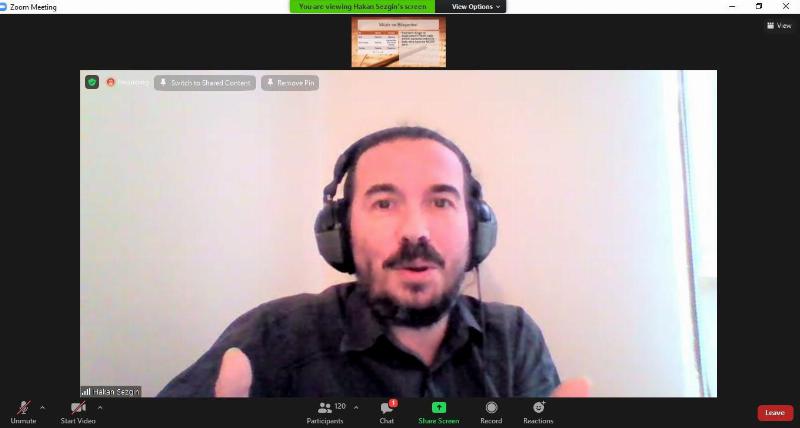
“The benefits of music therapy are numerous”
Mus. Hakan Sezgin, addressing the topic of Pedagogical Music and Dance Benefits, said: “The parameters of dance consist of time, energy quality, and space. Music therapy can take the form of people expressing their feelings and thoughts with melody in rhythmic or arhythmic structures. During this, gains are made in terms of social development, emotional development, motor skills development, cognitive development, language development, motor skills, and coordination. In short, therapy begins with being in the moment, here and now. From a therapeutic perspective, we should work after establishing an emotional connection with the person opposite us. After a strong relationship is established, existing errors are corrected.”
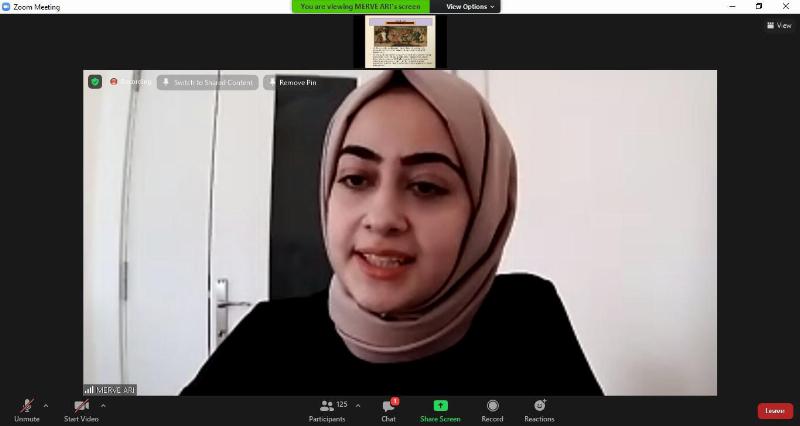
“Music therapy is a complementary treatment in many anxiety-provoking situations”
OTR. Merve Arı, speaking about the effect of music therapy on anxiety, stated: “The fundamental theory underlying music therapy is that music has a distracting effect. It can redirect attention from negative stimuli such as pain and anxiety to pleasant and hopeful things. Anxiety is accompanied by both mental and physical symptoms. Recent studies have determined that patients receiving music therapy experienced a reduction in pain intensity and had lower anxiety scores compared to patients who did not receive it.”
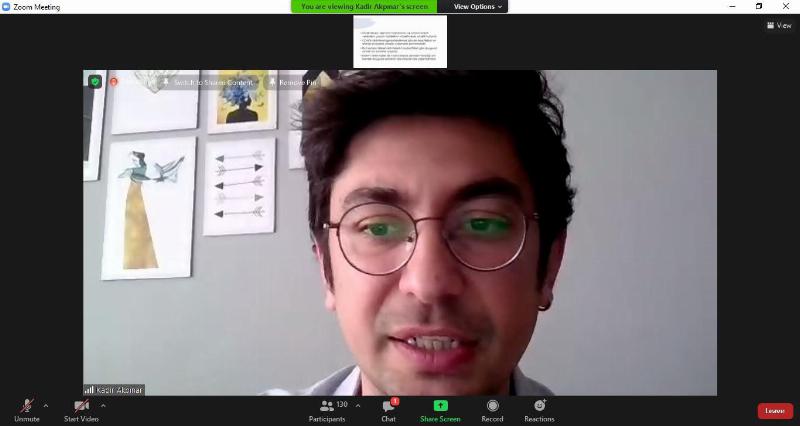
“Music enables dementia patients to connect with past memories”
Mus. Kadir Akpınar, speaking about music therapy in neurorehabilitation, stated: “Degenerative brain injuries are categorized as Alzheimer's, Huntington's, and Friedreich's Ataxia. Music therapy aims to improve the quality of life for dementia patients and their caregivers. 30 minutes of rhythm exercises per day positively affect the memory of dementia patients. It is also beneficial for the caregiver to be present during the session. Because the relationship established with the caregiver has a positive effect. By increasing the quality of life for both, it significantly reduces the patient's agitation rate.”

“In dance therapy, layers of improvised movement, body, and mind are reprocessed”
OTR. Kadriye Yağmurcu, speaking about the importance of music and creative movement exercises in occupational therapy, said: “Music therapy is about a music therapist working with a client or group to develop and facilitate communication, dialogue, learning, mobilization, expression, organization, and other related therapeutic goals to address their physical, emotional, mental, social, and cognitive needs. Muscle memory, in children, is directly linked to how a gross motor skill is learned. This affects our ability to reinforce and reproduce our memory.”
Share
Update Date: February 27, 2026
Creation Date: May 10, 2021
Request a Call
Other News
- Experts warn: 'Instead of memorizing letters, teach pencil grip, scissor use, and coloring'
- School fear and school love both start in the family!
- Family is not merely transforming, it is being battered under a serious assault
- Artificial intelligence opens the door to early diagnosis in autism!
- Artificial intelligence doesn't end engineering, it transforms it!