

Üsküdar Üniversitesi Human-Centered Communication Application and Research Center (İLİMER) and the Faculty of Communication Journalism Department jointly organized the “Science Communication and Open Science Symposium”, where experts in the field made important evaluations.
Content
“Science Communication and Open Science Symposium” Held
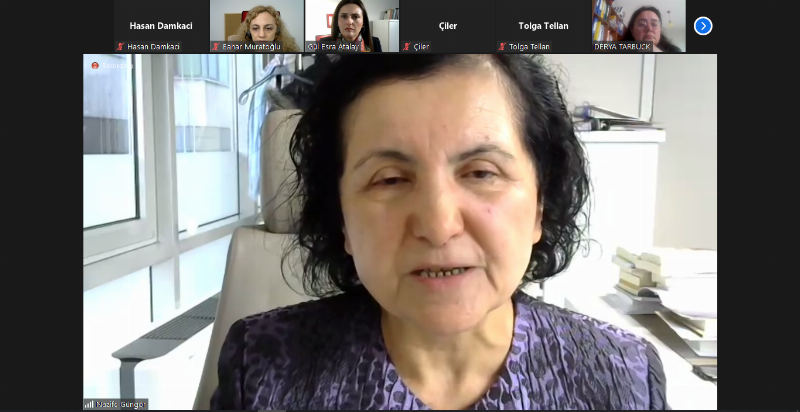
Prof. Dr. Nazife Güngör: “This is İLİMER’s Second or Third Symposium”
Prof. Dr. Nazife Güngör, Dean of Üsküdar Üniversitesi Faculty of Communication and Director of İLİMER, delivered the opening speech of the symposium, which was held in two online sessions. Güngör, emphasizing the importance of language communication, said: “Thank you very much, welcome. I congratulate İLİMER. This is İLİMER's second or third symposium. Of course, we held them in previous years, but this is the second symposium within one year. It continues with extremely important topics. These are, of course, good contributions to the research era, the academic era, and the period ahead. Language communication is an important topic. I don't want to delve too much into science communication right now. It will be discussed throughout the day here. On this occasion, I just wanted to greet you.”
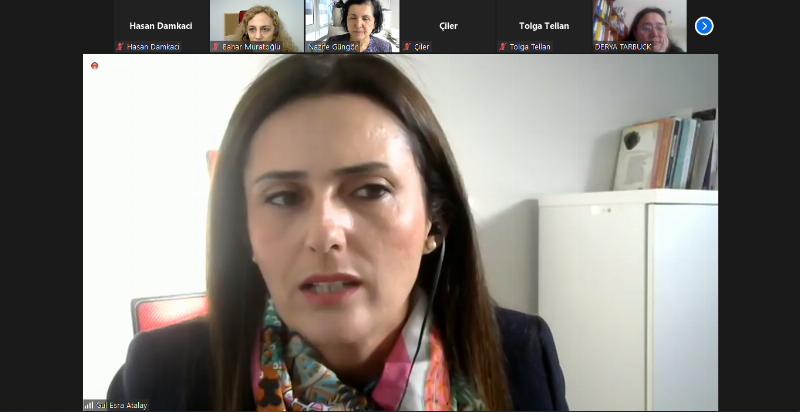
Assoc. Prof. Dr. Gül Esra Atalay: “We took over this duty in the last year”
Assoc. Prof. Dr. Gül Esra Atalay, faculty member of Üsküdar Üniversitesi Faculty of Communication, New Media and Journalism Department, who moderated the first session, said: “İLİMER was established in 2014 by our dean, Prof. Dr. Nazife Güngör. We took over this duty in the last year. Along with my colleagues on the Center's Executive Board, we continue the various activities initiated by our esteemed Professor Nazife. İLİMER supports the organization of 'Üsküdar Üniversitesi International Communication Days,' which many of you are aware of and has become a tradition. In addition, we organize various research studies, interviews, workshops, and symposiums. Today, both as İLİMER and the Journalism Department, we came together to discuss another topic we deem very important: 'Science Communication and Open Science.' We have very valuable guests working on this topic.”
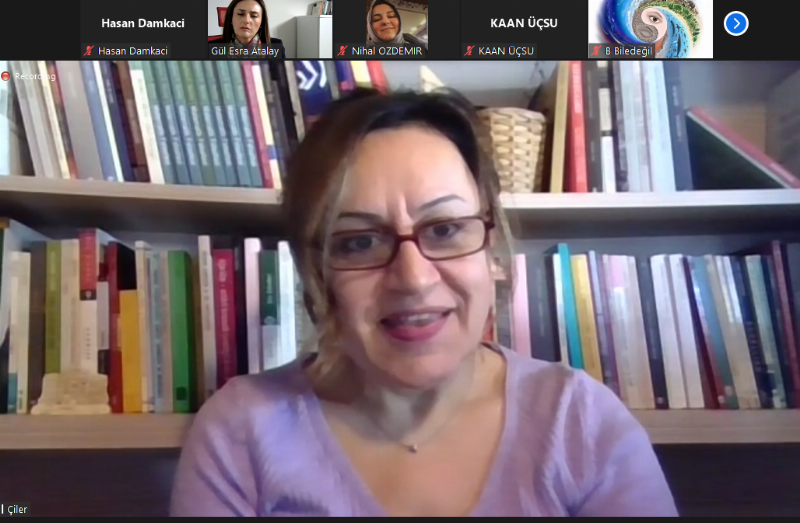
Prof. Dr. Çiler Dursun: “We live in a system of capitalism that encompasses our lives in every respect”
Prof. Dr. Çiler Dursun, faculty member of Ankara Üniversitesi Journalism Department, speaking about the form of sociality and how science is conducted within this social form, said: “I believe we know that the activity of science itself has been an area of activity established within the framework of a closed power relationship since the periods it first emerged. Therefore, when faced with new understandings related to how science is conducted, shared, and circulated in different ways, along with pleasing concepts such as openness, transparency, accessibility, and participation, we immediately embrace them as a recipe for solving some existing problems, adopting them very quickly. However, there is something we must not forget. We talk about what we live in and what kind of social and political sphere we live in by putting it in parentheses. This is not right; we are fiercely living in a system of capitalism that encompasses our lives in every respect, becoming savage, dehumanizing. This is a form of sociality. We conduct science within this. It imposes its own understanding of power, dictating what and how we should do things.”
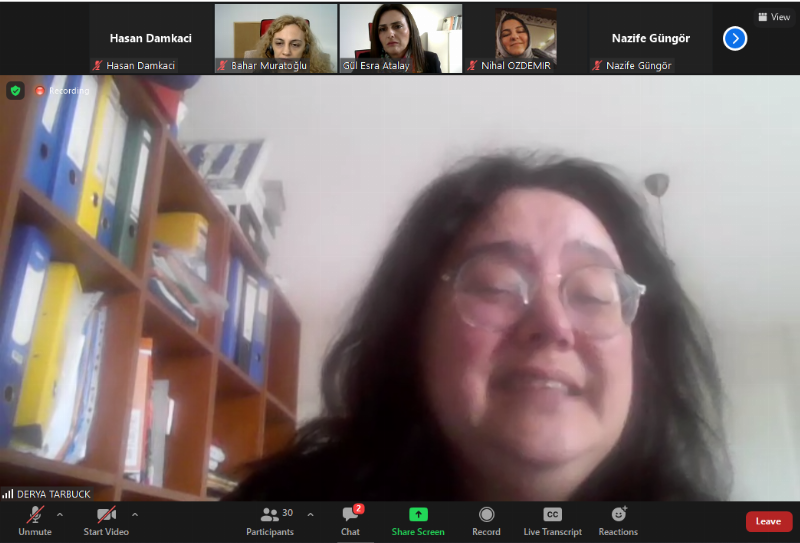
Dr. Derya Gürses Tarbuck: “Methodology books sold incredibly well in the 18th Century”
Author Dr. Derya Gürses Tarbuck, talking about the need to discard the previous understanding of science and implement a new scientific ideology, and how well we need to market this construct, said: “It is possible to use various methods to establish credibility. This may or may not be within the framework of popularity or open science. If Newton and his followers were trying to legitimize their understanding of science, they resorted to two methods when they considered what the answer would be. One of them is to popularize new physics concepts in a way that everyone can understand. That is, methodology books for children, methodology books for women, in other words, methodology books for everyone, sold incredibly well in the 18th century. Therefore, the aim here is not just to innocently produce an argument through science, but at the same time, to discard the previous understanding of science and implement a new scientific ideology. Therefore, we need to market this construct very well. This marketing issue falls under the title 'for everyone.' How can we provide credibility and also legitimacy, meaning that this is now the generally accepted understanding of science, and everyone will accept it this way?”
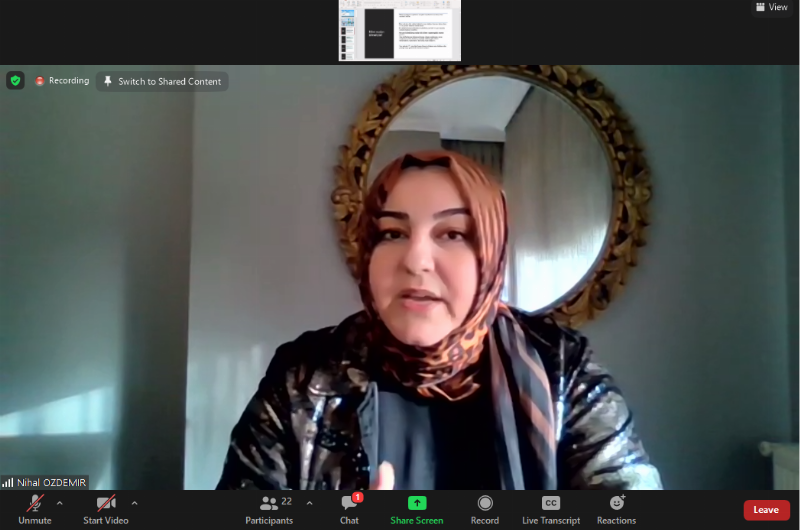
Dr. Nihal Özdemir: “Science is not just a power, but also a powerful method of thinking”
Fatih Sultan Mehmet Vakıf Üniversitesi faculty member Dr. Nihal Özdemir, talking about how we are searching for ways to live longer and healthier lives recently, said: “The first part is about science. I wanted to delve a little into why the reliability of science has been discussed so much. The abstractions of scientific research and application affect almost every aspect. And through science, from the first civilizations to the present day, although there have been different paths and methods, our main goal has actually been our desire to control nature, our desire not to surrender to fate, and our desire to make predictions. Therefore, with this opportunity, our lives are more comfortable and safer. Recently, we see that we are looking for ways to live longer, healthier lives. The tools we use every day when we look at our lives. It shows the importance of science in our lives. Our phones, our computers, all the tools we can dream of in this struggle—all these show how rapidly science's applications in technology are changing our world. This is no longer exclusive to scientific circles; we must also know what scientific thinking is. That is why this has become an intellectual necessity for all of us. Science is not just a power, but also a powerful method of thinking. It requires certain discipline. Those who have acquired this discipline must know that thinking is a starting point, always be geared towards reality and respectful of facts, be as cautious as possible in their judgments, and avoid sweeping generalizations not based on facts; the measure of validity is the existence of reliable research data. Today we will talk about science communication, but each of our definitions for the word 'science' within it would probably be different. Is a common definition of science possible? Actually, this is power. Science is not a dull or static subject.”
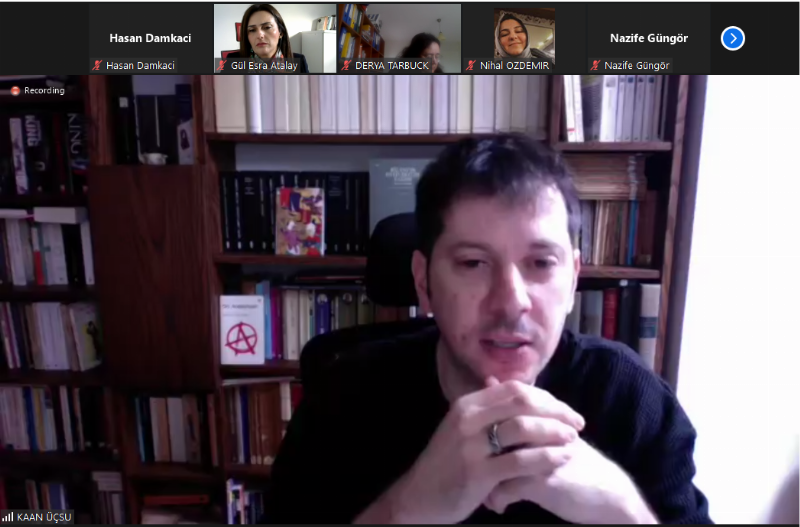
Res. Asst. Kaan Üçsu: “Communication is a mutual exchange. It requires being on the same level.”
Istanbul Üniversitesi Res. Asst. Kaan Üçsu, speaking about communication being a mutual exchange and requiring being on the same level, said: “Acceptance of one-sided transmission will prevent the achievement of things that are more the purpose of science communication. For this reason, if the contributions of people to scientific production can be taken into account, if what people do can be seen, they will be able to know what they can do today. Therefore, I believe it is more beneficial for science communication that all segments of society know that science is actually a very fundamental part. For this reason, I emphasize the value of doing science history from below today. If we can develop this, communication will also develop. Communication is a mutual exchange. It requires being on the same level. I believe that people's own potentials and what they do can be beneficial for a more liberal and democratic scientific world and future.”
After the first session of the 'Science Communication and Open Science Symposium' organized by İLİMER ended, the second session was held. The moderation of this session was carried out by Assoc. Prof. Dr. Bahar Muratoğlu Pehlivan, faculty member of Üsküdar Üniversitesi Journalism and Cartoon and Animation Department.
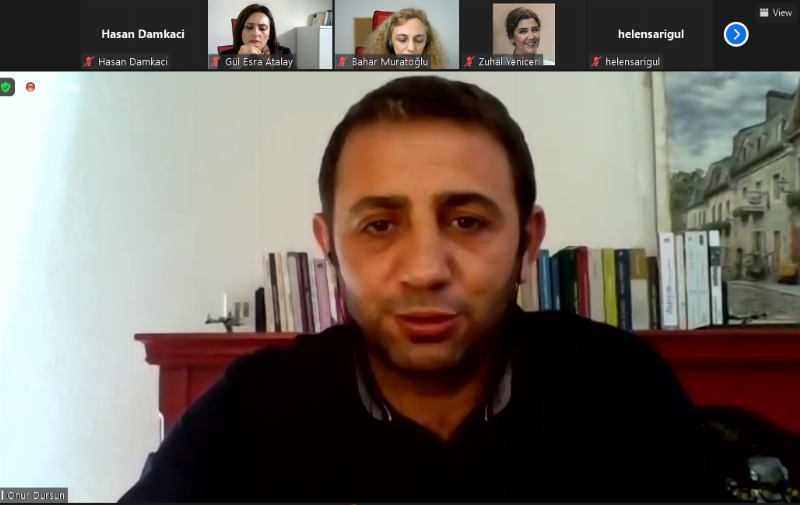
Assoc. Prof. Dr. Onur Dursun: “Society should also be included in the science process”
Assoc. Prof. Dr. Onur Dursun, faculty member of Çukurova Üniversitesi, touching upon the issue that we cannot solve most problems due to partial emphasis in social life, said: “In the 1930s, Bertolt Brecht wrote a play titled 'Life of Galileo' and included the following thought: 'In my opinion, the sole aim of science is to lessen the toil of human existence. If scientists limit themselves to merely collecting information, science will remain crippled, and new discoveries will only bring new troubles. Over time, you can discover everything that can be discovered. But your progress will be progress distant from humanity. The gap between you and people can grow so large that the excitement you feel over a new discovery could be met with a universal cry of horror.' There is a situation where science serves only technology, neglecting other dimensions of humans as social beings. This is the point I will carefully focus on. We also need to address what we can cause with technology produced under the name of science and what we cannot. Due to partial emphases in social life, we cannot solve most problems. For example, freedom of thought and expression, freedom of the press. Why can't these be explained scientifically? Or why can't they be publicized under the name of science communication? Or why are they not emphasized enough? These need to be considered. For example, scientific research is being done on divorce. But which of these appears on social media? None. There are two approaches. It started with England. The first of these is 'Public understanding of science.' Explaining science to society up to a point. A second approach developed, which is to include society in this process. Now, rather than a third approach, citizen science has also emerged. I believe recent developments are important in socially overcoming these problems. Science should not exclude the citizen.”
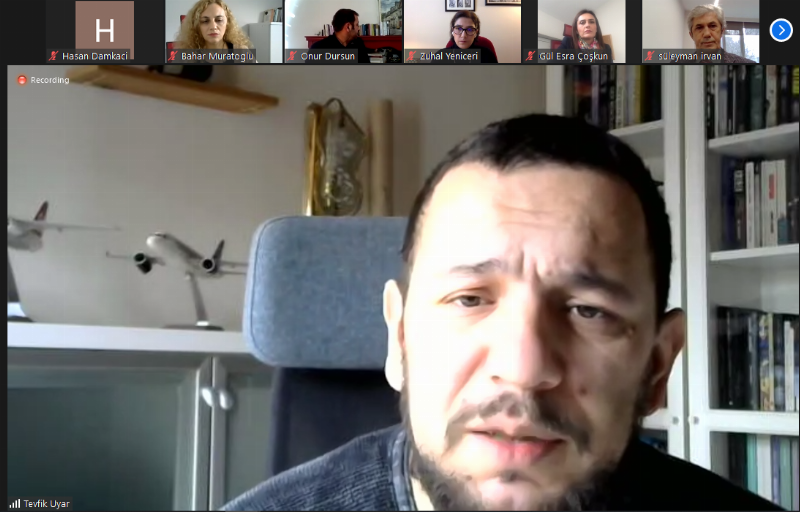
Dr. Tevfik Uyar: “Information produced during the pandemic led to the questioning of science's reliability”
Author Dr. Tevfik Uyar, stating that for the first time, the process of scientific knowledge production took place before everyone's eyes, said: “There is more opportunism in pseudoscience. There is a concealment behind the claims put forward by pseudoscience. The second is universality. That is, if the information produced by scientists is scientific information, it must be independent of the personality of the person who produced it, the society it belongs to, and its origins. For the first time, the process of scientific knowledge production took place before everyone's eyes. The pandemic emerged, and this concerns all of us. A lot of scientific information was produced. It was said that there was no need to wear masks. Then it was said that masks should be worn... etc., many examples. Normally, people who learn the results through the media fall upon the most reliable information, filtered and isolated after all the confusion, chaos, and conflict are over. Because this knowledge production process took place before everyone's eyes, it led to a decrease in people's trust in science and the questioning of science's reliability.”
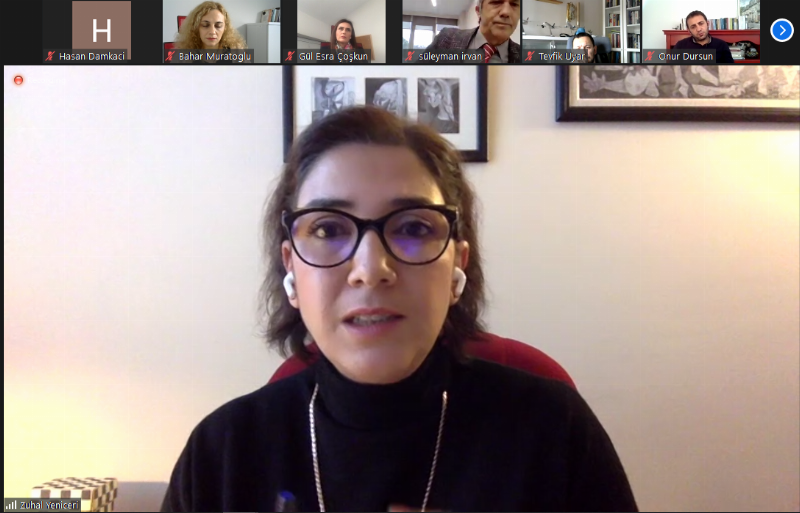
Dr. Zuhal Yeniçeri: “We need social science!”
Dr. Zuhal Yeniçeri from Başkent Üniversitesi addressed science communication from a sociological perspective, stating: “As we come into the world, we are born into a world of uncertainties while trying to adapt to a completely different world and environment. Therefore, our need for science must be very prominent in all our cognitive, physiological, and biological developmental stages. Because to survive, to hold on to life as a species, we need information that we will acquire from many sources. The stage of civilization we have reached today tells us how important learning is.” Yeniçeri added: “Trust in science will always exist. However, when public policies regarding the dissemination of scientific information on these issues are not managed very carefully, unfortunately, science itself is harmed, but the public is the one truly harmed. Just as we need natural sciences, we also need social sciences.”
Share
Update Date: February 28, 2026
Creation Date: December 23, 2021
Request a Call
Other News
- Üsküdar University participated in an international exhibition with a child rights perspective
- Solidarity Bazaar for Palestine from Üsküdar Residents
- In additional placements, don't just choose a department, choose the profession of the future!
- 52 Erasmus students from 15 different countries at Üsküdar University
- Visit to Prof. Nevzat Tarhan from the Global Confederation of Civil Society Organizations