

Üsküdar University Rector Psychiatrist Prof. Dr. Nevzat Tarhan stated that daytime TV shows harm family values and that those who continue these programs are under a great moral responsibility. The scandals staged in TV series and daytime programs, which are contrary to societal values, lead to moral degradation.
Content
Prof. Dr. Tarhan: Daytime TV shows harm the sense of trust that holds families together
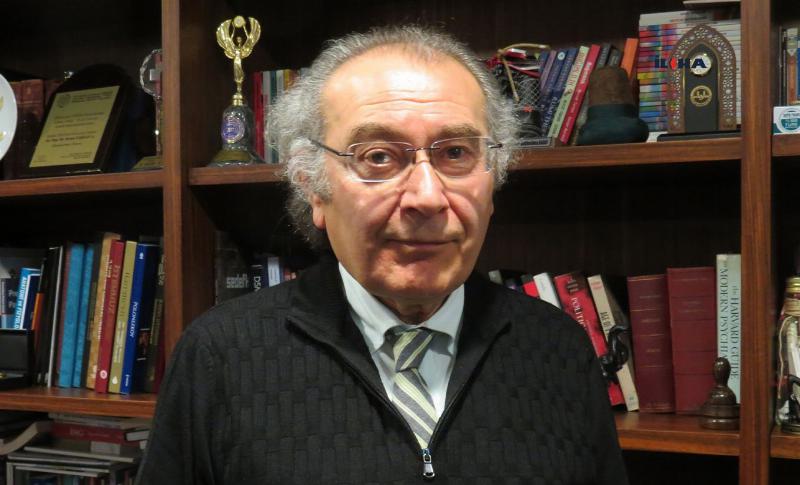
Some television series and programs continue to irreparably destroy society's faith and moral values. Especially some programs, referred to as 'daytime TV', which primarily target women, are deeply shaking spiritual and moral foundations. Üsküdar University Rector Psychiatrist Prof. Dr. Nevzat Tarhan made statements to İLKHA correspondent regarding the issue.
"It creates fear regarding marriage, suspicion about spouses among people in society, and shakes the fundamental values that hold families together"
Tarhan stated that daytime TV shows are especially high-rating programs that attract a lot of interest, and said, "These programs awaken people's sense of curiosity. Because they awaken a person's curiosity, two types of situations emerge. One is to create benevolent interactions when curiosity is aroused, and the other is to create malevolent interactions. In these programs that increase curiosity, astonishment, and interest; whether their effect is benevolent or malevolent changes according to the program's impact. There are crucial values that uphold society. For instance, these values include sharing, cooperation, trust, loyalty, and family values within the family. These programs severely damage the sense of trust, which is the fundamental emotion that holds families together. When a rare, limited event happening somewhere in society is taken, exposed, and generalized; doubts and suspicions arise among family members towards each other. These events were not very visible in the past. Television programs increase the visibility of malevolent situations and, by generalizing them, instill fear about marriage, suspicion about spouses in people in society; and shake the fundamental values that hold families together. These programs are therefore like a virus, but like AIDS. The characteristic of the AIDS virus is that it enters the body and causes illness 5-10 years later. Why? Because it enters the body, and by making the immune system sick, the immune system becomes ill, diseases spread throughout the body; the body is unaware. By the time it spreads and appears, it's too late. These programs are also like a social virus. They awaken malevolent feelings, but they have the effect of a pleasant entertainment, like poisoned honey. These programs are attractive, like honey, but like poisoned honey. They enter the body and slowly destroy it." he said.
"Those who continue these programs are under a serious moral responsibility"
Pointing out that household fragility has increased in Turkey in the last 15-20 years according to statistics, Tarhan said, "What does this mean? Five-person households decreased, and single-person households increased. This is what TÜİK (Turkish Statistical Institute) statistics indicate. If we ask what caused the increase in household fragility in society, the primary witness is the situations arising from the exposure and display of such malevolent events. Those who continue these programs are under a serious moral responsibility. They are the cause of increasing corruption, evil, lies, distrust, and fear in society. America could not cope with this and has now initiated open marriages. This is being done under the name of freedom; they can no longer cope. What is an open marriage? Both married parties have lovers. They accepted this, saying 'This is normal, what's wrong with it?'(!). If we want such a society, our future is heading in this direction. If decision-makers and social policy setters in Turkey accept this as normal, then let it continue. If we do not accept this as normal, if we anticipate such a danger in our future… For example, currently in statistics, the marriage rate in Turkey is 2.09 percent, but in Scandinavian countries, Northern Europe, the Netherlands, and France, the out-of-wedlock birth rate is over 50 percent; Iceland is 69 percent, Norway, Sweden 59 percent, and France is also 59 percent. 59 out of every hundred children born are out of wedlock. The world is moving in this direction; they now accept this as normal. Currently in Northern Europe, they don't write mother-father names for newborns; they write 'parent 1, parent 2'. They don't use the concept of a mother because most children grow up in state institutions. In Norway, there are heated baby boxes so that newborns don't die from the cold; the babies are left there. If we accept such a society as natural, if our social policy allows it, then let's do it," he stated.
"Keeping these programs in the daytime slot is, in my opinion, an extremely serious act of harming society for the sake of ratings"
Reminding that human curiosity is a weakness, Tarhan said, "Why is curiosity a weakness? There are measurements made regarding the human brain. When the brain decides on positive events, it generates an action potential of 300 milliseconds, which is called a P300 wave. The brain responds to negative events after 50 milliseconds, which is called an N300 wave. It has been measured in our brain that our brain notices negative events 5 times more, and we perceive noisy negative events around us 5 times earlier. Our brain has such a weakness to protect itself. This is now something with a scientific basis. Keeping these programs in the daytime slot is, in my opinion, an extremely serious act of harming society for the sake of ratings. As a psychiatrist who personally deals with such cases, I can say; after seeing such cases, many people tend to accept them by saying 'this happens, it's normal' and internalize them, leading to their spread. Old social norms no longer exist in society. There is no longer societal protection. Previously, there was neighborhood control, social control, and extended families. Grandmothers and grandfathers, all together, would immediately put young people who went astray back on track without causing any harm. Now family ties, social bonds, and social support systems have weakened. In such situations, with all kinds of malevolent programs freely available, then let's not dream for future generations," he said.
"When a child watches violence, they perceive it as real, and fear emerges"
Underlining that games would never be accepted without violent films, Tarhan said, "Violence is not an event to be denied; it exists in society, but it varies by age group. In the 0-6 age group, abstract thinking has not developed. When a child watches violent events, they perceive them as real, and fear emerges, but if they watch under parental supervision, they can analyze it. The most adverse effect of violence is the violence that is witnessed. A child looks at their mother and father out of the corner of their eye. If the mother and father say 'this is a film, don't believe these, watch it as a film', it doesn't harm the child as much. But if they experience violence at home, a live example is more dangerous than films. If there is an environment at home that approves of violence and sees violence as a problem-solving method, and then virtual violence or violence in films is added, this violence increases in society. The most important aspect in combating violence is the fight to eliminate domestic, live violence. That's what should be focused on. Violence in films that do not approve of the perpetrator of violence is not as harmful, but films that approve of violence committed by the perpetrator; films that approve of violence by saying 'I committed violence for justice, for the homeland' are more dangerous. You kill innocent people for the homeland, you kill people by putting yourself in the place of the state; this is violence, and violence is approved. This is much more dangerous. There needs to be controlled supervision in depicting unapproved violence without overstating it, as long as screenwriters do not encourage it. In films from developed countries, violence against children and domestic violence incidents are definitely not properly reported, or identities are heavily concealed. Its harms were seen so much that people in our country read about these situations, which appear as 'third-page news' (sensational news), because it awakens curiosity and attracts interest. This is the vital food of the media, but it is also a very dangerous thing. It has always been ethically debated whether one should film someone suffering in the media or help them. Gaining ratings by causing suffering to society and pursuing profit through it is not ethical," he said.
Addressing RTÜK officials, Tarhan used the expressions, "I tell RTÜK members to ask their consciences; if they cannot sit and watch those films with their children - if they can, I have nothing to say - they have the right to say no to them, let them use it."
Share
Update Date: February 28, 2026
Creation Date: January 24, 2022
Request a Call
Other News
- Üsküdar University participated in an international exhibition with a child rights perspective
- Solidarity Bazaar for Palestine from Üsküdar Residents
- In additional placements, don't just choose a department, choose the profession of the future!
- 52 Erasmus students from 15 different countries at Üsküdar University
- Visit to Prof. Nevzat Tarhan from the Global Confederation of Civil Society Organizations