

Üsküdar Üniversitesi Faculty of Health Sciences Midwifery Department organized a symposium titled “For a Sustainable Future; Midwives Everywhere” on May 5, International Midwives’ Day. Üsküdar Üniversitesi Founding Rector, Psychiatrist Prof. Dr. Nevzat Tarhan, highlighting the importance of the midwifery profession, said, “The life journey begins with a child's sense of secure space and secure attachment. The first touch in their life is the midwife's touch at that moment.” Emphasizing the great importance of natural birth for infant health, Prof. Dr. Nevzat Tarhan stated, “In children born by C-section, the brain secretes more stress hormone after birth. In children born vaginally, who experience the birth process, the brain secretes less stress hormone.” Prof. Dr. Nevzat Tarhan added, “The struggle a child shows to pass through that canal becomes their first experience against stress they will encounter in life and after birth. With a C-section, we take that experience away from the child.”
Content
Prof. Dr. Nevzat Tarhan: “The midwife makes the first touch in a child’s life”
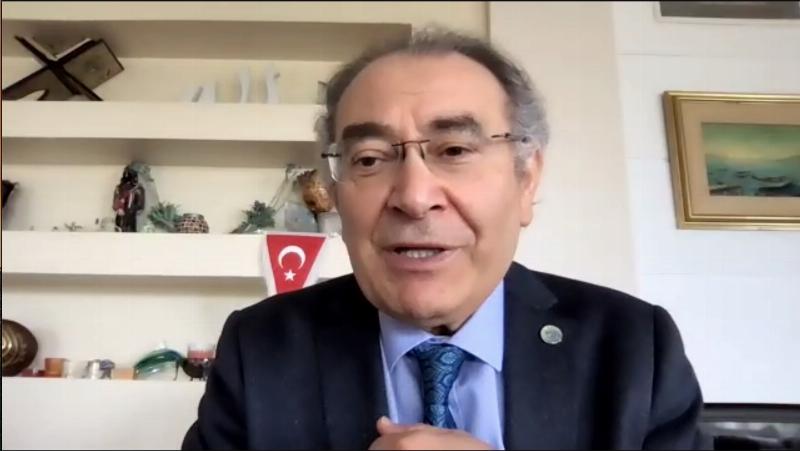
The May 5 International Midwives' Day Symposium, organized online due to pandemic conditions, brought together students studying in this field and expert names.

Prof. Dr. Güler Cimete: “Midwifery is a profession that works with the most sensitive groups”
Prof. Dr. Güler Cimete, Head of the Midwifery Department at Üsküdar Üniversitesi Faculty of Health Sciences, who also chaired the symposium, stated in her opening speech that they were happy to organize such a symposium during Mother and Baby Mental Health Week and on May 5, International Midwives' Day, and thanked the presidents of the Midwifery Associations attending the symposium. Prof. Dr. Güler Cimete stated that they determined the symposium's theme as sustainability, saying, “Because health development goals, among which health goals hold an important place, are sustainable. Other goals also directly or indirectly affect health. Midwives have significant responsibilities in these target areas, and their role is significant through the services they provide. This year, the International Confederation of Midwives has chosen the theme 'Follow the Data, Invest in Midwives'. Services such as protecting and improving maternal health, ensuring births in healthy environments, monitoring during the postpartum period, monitoring the growth and development of children aged 0-6 in our country, and immunization have also been assigned to midwives. Therefore, midwifery is a profession that works with the most sensitive groups.” she spoke.
Prof. Dr. Güler Cimete: “Midwifery has a contribution of up to 80% in preventing maternal and infant deaths”
Prof. Dr. Güler Cimete noted that the International Confederation of Midwives recommends setting policies and investing in midwives to provide the best possible public health services, stating, “The State of the World's Midwifery Report, published in 2014, revealed the place and importance of midwives, especially how effective they are in reducing maternal and infant deaths. Midwifery services contribute up to 80% in preventing maternal and infant deaths.” she said. Prof. Dr. Güler Cimete added, “If the number of midwives is increased, their education level is raised, and suitable working conditions are provided, 41% of maternal deaths, 39% of newborn deaths, and 26% of stillbirths could be prevented by 2035. This means preventing the deaths of an average of 2.2 million people annually. Therefore, midwifery interventions are very important.” she spoke.
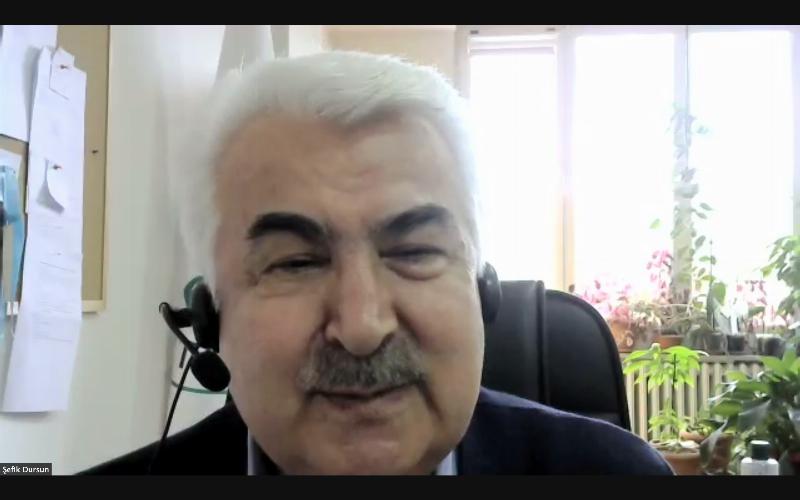
Prof. Dr. Şefik Dursun: “Health policies related to the midwifery profession have grown in the last 10 years”
Prof. Dr. Şefik Dursun, Dean of the Üsküdar Üniversitesi Faculty of Health Sciences, stated in his opening speech that midwives are highly valued in our society and other societies, saying, “In the last 10 years, health policies related to the midwifery profession have been expanded and developed in an acceptable and valuable way. As Üsküdar Üniversitesi, we graduated students last year. Nursing and midwifery are the departments that deal most with people. Others also deal with them, of course, but midwifery and nursing are different.” he said. Prof. Dr. Şefik Dursun, stating that they strive to do their best as a university, added, “Üsküdar Üniversitesi has also reached a very good point through teamwork.” he said.
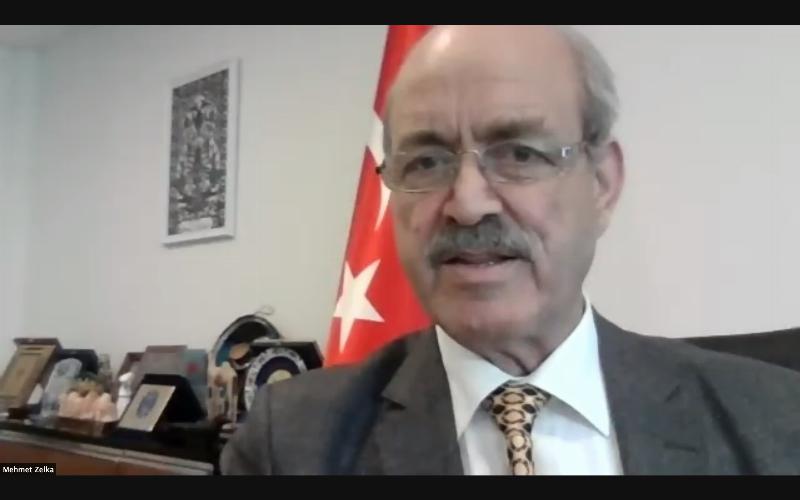
Prof. Dr. Mehmet Zelka: “Increasing importance is given to health all over the world”
Üsküdar Üniversitesi Acting Rector Prof. Dr. Mehmet Zelka, in his opening speech, stated that countries today are increasingly giving importance to health, noting that the ongoing pandemic process has also played a role in this. Prof. Dr. Mehmet Zelka also mentioned that today there is a recommendation decision by the World Health Organization, advising countries to allocate at least five percent of their gross national product to the health sector.
Prof. Dr. Mehmet Zelka: “We are striving for qualified midwifery education”
Prof. Dr. Mehmet Zelka stated that the increasing importance given to health has led to regulations related to health and healthcare systems, noting that education in the field of health has also gained importance. Prof. Dr. Zelka pointed out that Üsküdar Üniversitesi, a young university at 10 years old, was established as the first university with a thematic structure in behavioral sciences and health, saying, “One of our 6 faculties currently existing at our university is the Faculty of Health Sciences. Looking at the Faculty of Health Sciences, it is one of the faculties with the most departments in Turkey. In this faculty, which has 13 departments, one of them is the midwifery department. To sustain qualified education in this department, all our colleagues, both as management and academic staff, are making serious efforts.” he said.
Prof. Dr. Nevzat Tarhan: “Children born by C-section show high stress levels”
Üsküdar Üniversitesi Founding Rector Prof. Dr. Nevzat Tarhan stated in his opening speech that they were among the first universities to open a midwifery department and that they attach great importance to midwifery.
Prof. Dr. Nevzat Tarhan noted that two facts have emerged from recent scientific studies, saying, “There are two pieces of scientific information that show how important natural birth is. Immediately after birth, a needle is pricked into the heels of children born naturally and those born by C-section, and a stress test is performed on them. There is the stress hormone ACTH secreted by the brain. It is the body's first response to stress, the hormone that initiates the fight-or-flight response. After pricking the needle, they immediately measure the level of that hormone in the blood. In children born by C-section, the brain secretes more stress hormone when a needle is pricked after birth. In children born vaginally, who experience the birth process, the brain secretes less stress hormone. This is called prenatal psychology. There are psychologists who work specifically in this field. The struggle a child shows to pass through that canal becomes their first experience against stress they will encounter in life and after birth. With a C-section, we take that experience away from the child.”
Prof. Dr. Nevzat Tarhan: “The midwife makes the first touch in a child’s life”
Prof. Dr. Tarhan stated that the second reaction of a child when born is crying, saying, “Why does a child cry? The mother's womb is a very comfortable space. There's no need to breathe at all, everything is ready, a warm environment. Sometimes it moves, and when it moves, it feels loved from the outside. From an environment where it plays and moves comfortably, it suddenly emerges into daylight, into a cold area. In such a situation, the child's first reaction is fear. When there is fear, midwives immediately wash and clean the baby and give it to the mother. After a while, a safe space is formed for the child. In the human brain, a safe space is not physical; a safe space is mental. If there is a happy and warm environment, our home is a safe space. If there is a warm environment where we work, it is a safe space. If there is a stressful environment, it is an unsafe space and causes fear and stress hormones. The life journey begins with a child's sense of secure space and secure attachment. The first touch in their life is the midwife's touch at that moment.” he said.
Prof. Dr. Nevzat Tarhan: “More antibodies are observed in children born by natural birth”
Tarhan stated that the second study conducted in this field is more of a microbiological research, saying, “The infection rate and antibody levels of children born naturally and those born by C-section are measured. In children born by C-section, many antibodies from the mother are found to be zero. In children born through the normal canal, more antibodies appear compared to children born by C-section. The microbes we need are what we call probiotics and prebiotics in the body. These are part of the body's immune system. Today, millions of probiotic bacteria are encapsulated and sold. They are living and beneficial bacteria in the intestines.” he said.
Prof. Dr. Nevzat Tarhan: “Children born acquiring the microbiota are stronger in the first 6 months”
Prof. Dr. Nevzat Tarhan stated that in children born through the normal canal, beneficial microbes from the mother's body are transferred to the child's mouth and nose as they pass through the vaginal canal, saying, “The child takes it and swallows it. The first things it swallows are actually the probiotic structure, which is in balance within the body in the natural microbial environment of the mother's vaginal canal. In this scientific study, they say if you give birth by C-section, apply the fluid from the mother's vaginal canal to the child's mouth and nose. That becomes the child's first immunization. In the first case, they learn the stress vaccine, and in the second, they introduce the body to natural microbes. They work to ensure the child immediately receives natural biological vitamins in the body against new infections until the child's immune system works in harmony with the mother's. The microbiota in the intestines produces many vitamins in the body, such as Vitamin K. If the child receives that natural and beneficial microbiota from the mother, they are more fortunate and stronger in the first 6 months.” he spoke.
Prof. Dr. Nevzat Tarhan: “Anti-C-section sentiment may begin soon”
Tarhan, stating that a lot of scientific information has accumulated, said, “I think anti-C-section sentiment will begin soon. Anti-smoking campaigns started. The first ones to initiate this were doctors. The cause-and-effect relationship regarding lung cancer between smokers and non-smokers was so high that they started it. Currently, there is a tremendous awareness about smoking in the world. The same awareness does not exist for C-section births. Unfortunately, between C-section birth and natural birth, obstetricians sometimes prefer C-sections. Of course, labor has no day or night, no specific time. When an obstetrician has performed many surgeries at night, is tired, and then their patient they are monitoring calls at three in the morning saying labor has started, their life is turned upside down. They see labor approaching and say, 'Let's do a C-section' because it's easier. There is already a fear of labor pain in people.” he used the expressions.
Prof. Dr. Nevzat Tarhan: “Approximately 50% of births are C-sections”
Prof. Dr. Nevzat Tarhan, noting that approximately 50% of births in Turkey are currently C-sections, continued his words as follows:
“This is not in line with our internal biological rhythm and biological nature. A thesis topic, etc., can be given on these matters. Since we have graduates, we can also open a master's program. A thesis can also be given to a preclinical psychologist. Communication between the child and the mother begins not with physical contact but with emotional contact. The mother's tone of voice, subliminal emphasis in her words, and lullabies are very important in this contact. Because it is spring, everything bloomed and became green in a week. There are two periods when our brain blooms and retreats inwards in a short time; the first period is between 0-3 years old, and the second period is adolescence. Synaptic firings occur there. After that, the environment and people prune it. In autistic individuals, because there is no pruning, their brains become very disorganized. The tracts and pathways in the brain become very confused. The brain does not develop because there is no emotional and social learning.”
Four sessions were held at the symposium
After the opening speeches, the sessions began. In the first session titled “Maternal Health with Current Research,” Ayça Demir Yıldırım, Lecturer at Üsküdar Üniversitesi Midwifery Department, presented “Antenatal Midwifery Care in Line with Current Approaches”; Dr. Tuğba Yılmaz Esencan, Lecturer at Üsküdar Üniversitesi Midwifery Department, presented “In Line with Research; Midwives Touching Birth.” In the first session, Prof. Dr. Fatma Deniz Sayıner, Head of the Midwifery Department at Osmangazi University, presented “Midwifery Care in the Postpartum Process; What Do Research Say?”
In the second session of the symposium, titled “Neonatal and Child Health with Current Research,” Nasibe Üzel, Head of the Anatolian Midwives Association and a midwife, presented “The First Hands Touching the Newborn.” In this session, Günay Arslan, Lecturer at Üsküdar Üniversitesi Midwifery Department, presented “Midwives for Healthy Children of a Healthy Future.”
In the third session of the symposium, titled “Maternal and Infant Mental Health,” Prof. Dr. Gül Eryılmaz, Psychiatry Specialist at Üsküdar Üniversitesi Faculty of Medicine, Department of Mental Health and Diseases, NPİSTANBUL Brain Hospital, contributed with her presentation titled “Midwives in Supporting Couples’ Mental Health in the Preconception Period.” In the third session, Assoc. Prof. Dr. Songül Aktaş from Karadeniz Technical University, Department of Obstetrics and Gynecological Nursing, presented “Midwives in Supporting Maternal Mental Health”; while Prof. Dr. Güler Cimete, Head of Üsküdar Üniversitesi Midwifery Department, presented “Midwives in Supporting Child Mental Health.”
In the third session titled “Guiding Midwifery,” Prof. Dr. Sema Dereli Yılmaz, Head of Selçuk University Midwifery Department, presented “Why Focus on Midwifery Education?” and Research Assistant Ebru Sağıroğlu from Üsküdar Üniversitesi Midwifery Department, presented “Specializing in Midwifery.”
The program concluded with the awarding of prizes for the photography competition.
Share
Request a Call
Other News
- Social responsibility courses moved to the field
- Erasmus+ Orientation Week completed at Üsküdar
- Prof. Nevzat Tarhan: “Brain secretes ‘dark glue’ in social media lynchers!”
- Prof. Nevzat Tarhan: “Every segment of society should be able to say, ‘This constitution is my constitution!’”
- OHS releases guide for safe operation of industrial robots