

Stating that the greatest fear preventing the development of elderly people is 'fear of novelty,' also known as neophobia, Psychiatrist Prof. Dr. Nevzat Tarhan, warned, 'Someone with neophobia does not leave their comfort zone at home. They constantly sit in the same places; even if they go out, they always take the same routes, eat the same things, and continue with the same habits. Elderly people need to be open to new experiences. If they do not adopt being open to new experiences as a behavior model, they become neophobic in old age and rapidly decline.' Tarhan stated that humans are beings with the potential to produce until their last breath and noted that individuals with neophobia cannot develop or improve their minds because they are not open to new experiences.
Content
Prof. Dr. Nevzat Tarhan: 'Humans Are Beings with the Potential to Produce Until Their Last Breath.'
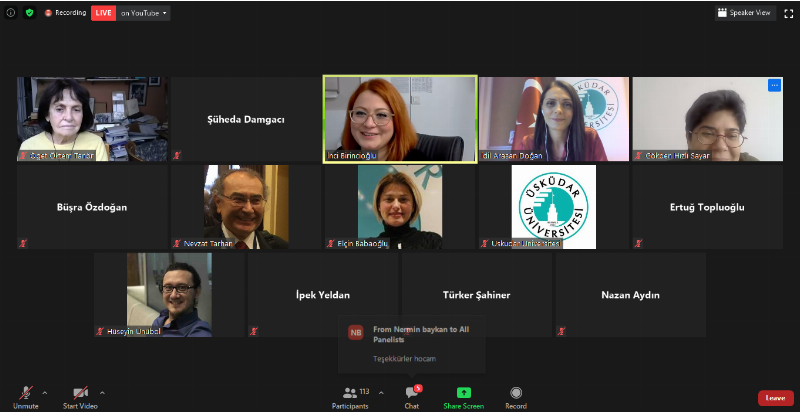
Üsküdar Üniversitesi Institute of Social Sciences brought together experts in the field with the 'Psychology of Aging Congress' organized by. The congress aims to examine aging as a developmental process, and the changing brain mechanisms and psychological changes during this process.
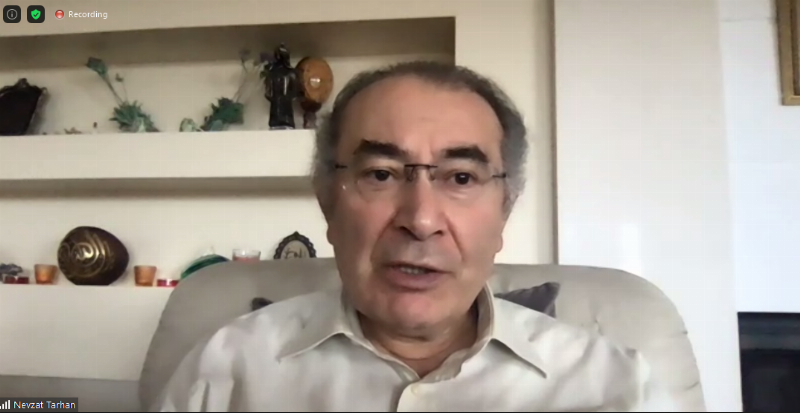
Prof. Dr. Nevzat Tarhan: 'We Had Our First Antidepressant Case at Age 70…'
Üsküdar Üniversitesi Founding Rector and Honorary President of the Congress, Psychiatrist Prof. Dr. Nevzat Tarhan, stated in the opening speech of the congress, which was held online due to pandemic conditions, that older individuals were previously regarded as people who had worked but no longer produced, consumed, and needed care, saying, 'The elderly are seen as disadvantaged people in society. In fact, this needs to be discussed at this congress. The definition of old age needs to be addressed. Elderly people are not disadvantaged people. We experienced this difficulty during the Covid-19 period. They had to confine themselves to their homes. Despite many of our objections based on scientific reasons, these were not taken into account, and currently, we see an acceleration in the deterioration of Alzheimer's patients in neurology clinics. Being in isolated environments, changes in their social controls, and many other reasons prevented them from carrying out their usual activities; they stayed at home, and many physical ailments recurred. We had our first antidepressant case at age 70. All of this stems from society viewing the elderly as disadvantaged and needy people. However, elderly people continue to produce. Their production is mostly intellectual production.'
Prof. Dr. Nevzat Tarhan: 'In Societies Where Intellectual Production Is Valued, the Elderly Are Respected…'
Prof. Dr. Nevzat Tarhan, noting that the experiences of older individuals should be utilized, said the following: 'Grandchildren need the knowledge of their grandparents. They have life experiences; their greatest gain is their wisdom. They are waiting to pass on their wisdom to the youth. Incorrect attitudes regarding this need to be corrected, and this issue needs to be emphasized. We had a professor from the USA, Norman Moore. We had also given him an honorary doctorate. Norman Moore was working at the university at the age of 70; he had a chair. We then asked him if his active work at that age complied with his country's rules. He said that in American universities, there is no discrimination based on gender, racism, or age, and if a person is producing, they are not cast aside just because they are old, and they are encouraged to produce. The attitude towards old age is very important. If there are grandmothers and grandfathers at home, they are not people waiting for death; they are people who can be useful to others until the end of their lives. But their usefulness comes more from their minds than their energy. The intellectual production they generate is not to be underestimated. In societies where intellectual production is valued, the elderly are respected. However, in societies based on physical labor, the elderly may not be given importance. If we are a society with a high level of development, we should pave the way for productive people, regardless of their age.'
Prof. Dr. Nevzat Tarhan: 'Humans Are Beings with the Potential to Produce Until Their Last Breath…'
Prof. Dr. Nevzat Tarhan stated that the greatest fear preventing the development of elderly people is the fear of novelty, adding, 'This is called neophobia. Someone with neophobia does not leave their comfort zone at home. They constantly sit in the same places; even if they go out, they always take the same routes, eat the same things, and continue with the same habits. The pathways in these people's brains also atrophy. The brain works on a 'use it or lose it' principle. If not used, it loses its functionality after a while. Elderly people need to be open to new experiences. To learn that they need to leave their comfort zone where they feel safe, they should have received this education at a young age. If one does not adopt being open to new experiences as a behavior model, they become neophobic in old age and rapidly decline. That's why among retirees, there are those who retire from their profession and also retire from life. When they retire from life, they withdraw from everything. They live in fear. It is more accurate to use 'aging' as a process rather than 'old age' as a state. Humans are beings with the potential to produce until their last breath, and by producing, a person can be happy. We always call contributions to a person's material well-being 'production,' but production that also contributes to a person's spiritual well-being is important. Education that serves a person's peaceful life, usefulness among people, and many psychological, social, and spiritual maturities are also wisdom trainings.'
Prof. Dr. Nevzat Tarhan: 'Emotional Intelligence Skills Are Developed in Advanced Age'
Prof. Dr. Nevzat Tarhan noted that older individuals have high emotional intelligence, stating, 'There is an example from emotional intelligence studies. Parents are fighting at home; there's constant noise. The grandmother comes home, intervenes, and the fight ends. So how does a grandmother who can't even use the TV remote do this? This is entirely emotional intelligence. Emotional intelligence skills can also be gained through life experience as one ages. Emotional intelligence skills are developed in advanced age. Because intelligence is not singular but plural, not fixed but variable, and open to education and development. Emotional intelligence means the emotional training of the brain.'
Prof. Dr. Nevzat Tarhan: 'It Is Necessary to Work to Combat Neophobia'
Prof. Dr. Nevzat Tarhan pointed out that concepts a person values tend to reside more in the brain and are permanent, saying, 'People with neophobia, those who live in fear, cannot develop because they are not open to new experiences. They cannot improve their minds. However, our mind is beyond what is inside our head; it wanders in the quantum universe. We dream, we do everything. It is necessary to work to prevent this from being lost in the elderly. Being able to exercise our minds more within the boundaries of the imaginary world develops our minds. Mind theory studies have shown this.'
Prof. Dr. Nevzat Tarhan stated that another issue to be addressed in this congress is loneliness among the elderly, and said, 'It is necessary to address this need of older individuals. Calling them, being cheerful and warm towards them, asking how they are, even if they complain, is the most beautiful gift to give them. Instead of expecting from them, we need to strive to include them in social life.'
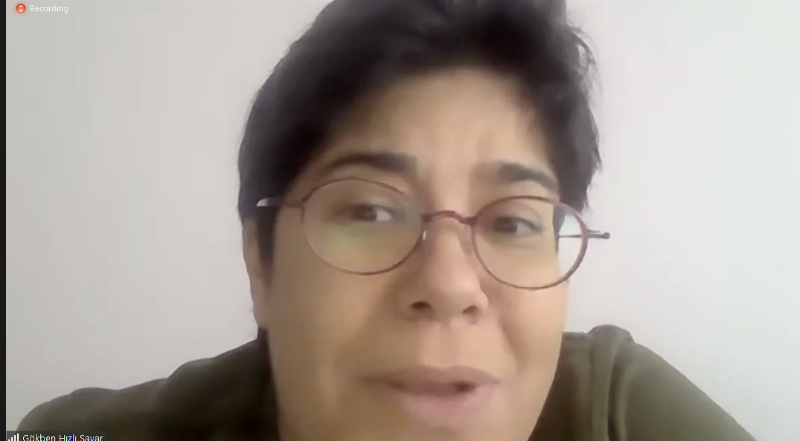
Assoc. Prof. Dr. Gökben Hızlı Sayar: 'The Foundations of Good Aging Are Laid in the Early Years of Life'
Assoc. Prof. Dr. Gökben Hızlı Sayar, Director of Üsküdar Üniversitesi Faculty of Medicine, Institute of Social Sciences, and President of the Congress, stated that they used the term 'psychology of aging' instead of 'psychology of old age' for the two-day congress, saying, 'Because people start aging from the moment they are born. Our age begins to advance. In fact, old age, defined as 75 in the literature as a limit, can manifest with the foundations of good aging being laid in the early years of life. The elderly population in Turkey and worldwide is rapidly increasing. Over these two days, we will address many issues such as neurological diseases, psychological problems, care opportunities, psychotherapy options that can be offered to them, what can be done to improve their quality of life, how well-being can be increased, and how positive aging can be achieved, for elderly people who constitute a significant part of the population.'
Psychologist Büşra Özdoğan, President of the Student Council, stated that they received very positive feedback after the congress presentations and wished for the congress to be fruitful.
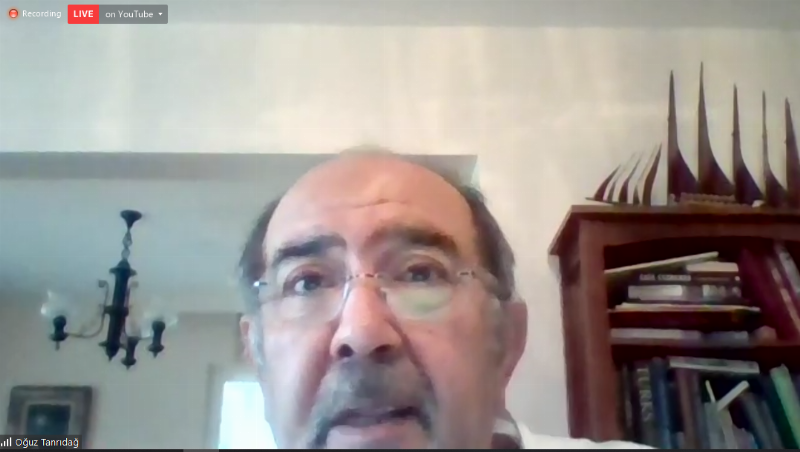
Prof. Dr. Oğuz Tanrıdağ: 'An Active and Social Life is Needed for Super-Aging'
Prof. Dr. Oğuz Tanrıdağ, Head of the Neurology Department at Üsküdar Üniversitesi Faculty of Medicine and Neurologist at NPİSTANBUL Brain Hospital, stated in his presentation titled 'Brain and Aging' that there is a two-way interaction of genes and environment in brain aging.
Tanrıdağ stated that the 'super-aging theory' has come to the forefront in recent years to prevent brain aging, adding, 'Super-agers are individuals over 80 years old who perform at a 50-55 year old level in memory tests. These individuals generally have an active lifestyle, are social, occasionally indulge themselves, and are optimistic about life and events. It might come as a surprise, but most of them consume alcohol and tobacco, and their IQs are within the normal age average. Super-aging appears to be a group where genetic factors are more dominant, and environmental factors integrate this.'
Tanrıdağ: 'Acquire New Hobbies and Step Outside Your Comfort Zone to Delay Aging'
Prof. Dr. Oğuz Tanrıdağ stated that some problems are encountered in individuals with early brain aging, saying, 'These include difficulty learning new information, trouble adapting to new conditions, prolonged traumatic effects of past events, difficulty making plans and programs, forgetting names and numbers, and anger control disorder. In super-agers, however, no adaptation difficulties are experienced due to their positive and optimistic personality structure, and the learning of new information continues. Books are written, projects are carried out, and paintings are made at 85 years old. Super-aging involves memory from before the age of 25-30. Therefore, they continue to make plans and programs.'
Prof. Dr. Oğuz Tanrıdağ listed his recommendations for super-aging as follows: 'Read and write more, develop your hidden talents; for example, new hobbies like taking ebru art classes or piano lessons after the age of 50 can be learned. Spend time with groups different from your own age group, and one needs to be able to step outside the comfort zone, which is the environment created by values such as the security, status, opportunities, and money in one's pocket provided by one's age.'
Prof. Dr. Oğuz Tanrıdağ: 'Menopause and Chronic Depression Are Effective in Women's Early Aging'
Prof. Dr. Oğuz Tanrıdağ, stating that men wear out more than women, leading to an increase in cerebrospinal fluid and atrophy in the Parieto-occipital region, which in turn causes faster aging of the male brain, listed the factors threatening women's brains in terms of early aging as menopause, which alters the neurohormonal and neurochemical balance of the brain and activates brain wear-and-tear factors, and the higher incidence of chronic depression, considered a sign of early aging. Tanrıdağ also emphasized that the problems women face due to economic, cultural, and social difficulties worldwide are another factor that further triggers and increases brain aging in women.
Psychology of Aging, Discussed in All Its Aspects
The first 'Psychology of Aging Congress,' organized this year in cooperation with Üsküdar Üniversitesi Faculty of Humanities and Social Sciences and the Student Council, will last two days. On the first day of the congress, Üsküdar Üniversitesi Lecturer İnci Birincioğlu presented 'Cognitive Remediation Therapy in Geriatrics,' Lecturer İdil Arasan Doğan presented 'Personal Well-being at 65 and Over,' Assoc. Prof. Dr. Ürün Özer presented 'Aging and Grief,' Prof. Dr. Nazan Aydın presented 'Interpersonal Relationships in Old Age,' Dr. Lecturer Hüseyin Ünlübol presented 'Happy Aging,' Dr. Lecturer Elçin Babaoğlu presented 'Elderly Care Models Applicable in Clinical and Home Care,' nurse Ayşe Uğuş presented 'Kadıköy Alzheimer Association Experience,' and Yunus Ayyıldız presented 'Darülaceze Experience.'
On the second day of the congress, Social Service Specialist Cengiz Çelikçi presented 'Kadıköy Alzheimer Center Experience,' Prof. Dr. İpek Yeldan presented 'Exercise and Mental Health in the Elderly,' Dr. Lecturer Remziye Keskin presented 'Positive Aging,' Alzheimer's patient relative Harika Işık Alper presented 'Kadıköy Alzheimer Association Patient Relative Experience,' Prof. Dr. Öget Öktem Tanör presented 'Normality and Disturbances of Normality in Old Age,' Prof. Dr. Türker Şahiner presented ''Internet and Alzheimer' 'Online Cognitive Monitoring Opportunities,' Dr. Lecturer Celal Şalçini presented 'Early Diagnosis in Alzheimer's Disease,' Dr. Lecturer Zeynep Gümüş presented 'Elderly Care,' and Social Services Manager Öznur Sarıahmetoğlu presented 'Home Health Services.'
Share
Request a Call
Other News
- The book that read today's digital threats in 2014: Being a Conscious Family
- Experts warn: 'Instead of memorizing letters, teach pencil grip, scissor use, and coloring'
- School fear and school love both start in the family!
- Family is not merely transforming, it is being battered under a serious assault
- Artificial intelligence opens the door to early diagnosis in autism!