

Üsküdar Üniversitesi Faculty of Health Sciences Social Work Department organized a social work activity with substance-dependent children. The program, which addressed the problems experienced by substance-dependent children, was moderated by Mahir Han, Director of Kemerburgaz - Ağaçlı Protection, Care and Rehabilitation Center.
Content
Problems of Substance-Dependent Children Discussed
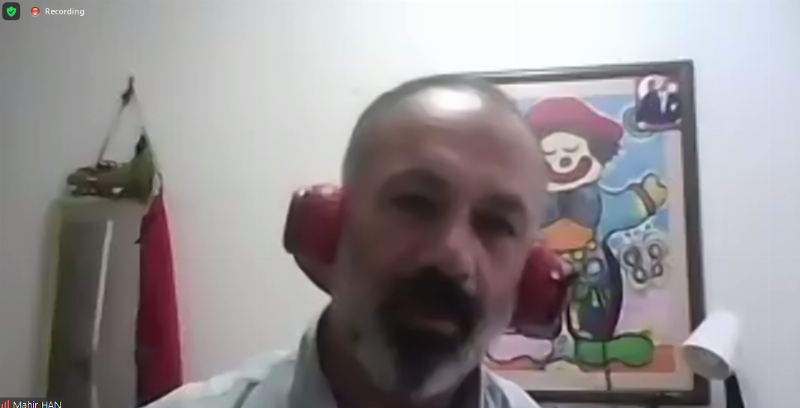
Han: “Every effort made is very important for us”
Speaking about the work carried out with substance-dependent children in the online program titled “Ministry of Family and Social Services, Social Work with Substance-Dependent Children; Istanbul / Ağaçlı Example”, Mahir Han said: “Every effort made is very important for us. Even a ten-minute interview with each child is of great importance. What we are trying to do here is; if one of the parents uses substances while the child is with them, we take that child from there and bring them to the institution. Even keeping children there should be perceived as a success. If a child stays there and we believe they will relapse into substance use if they leave the institution without permission, we prevent them from escaping. This criterion for success needs to be understood differently. Caring for them until the age of 18, and then enabling them to build a life and achieve a normal standard of living after 18, is actually easy, but unfortunately, there is no follow-up system for this in Turkey. The child is in contact with us until they become a civil servant, but all contact is severed from the moment they become a civil servant or start working as a laborer. Most of them save themselves at that point.”
Barış: “When we start taking precautions, we solve a significant part of the problem”
Speaking about the necessary precautions, Assoc. Prof. Dr. İsmail Barış said: “This is the beginning of the system we mentioned. If we start with preventive measures, many remaining problems are solved before they even emerge. When we start taking precautions, administer vaccinations on time, and prevent the disease from emerging or becoming chronic, we already solve a significant part of the problem. But we cannot do this yet.”
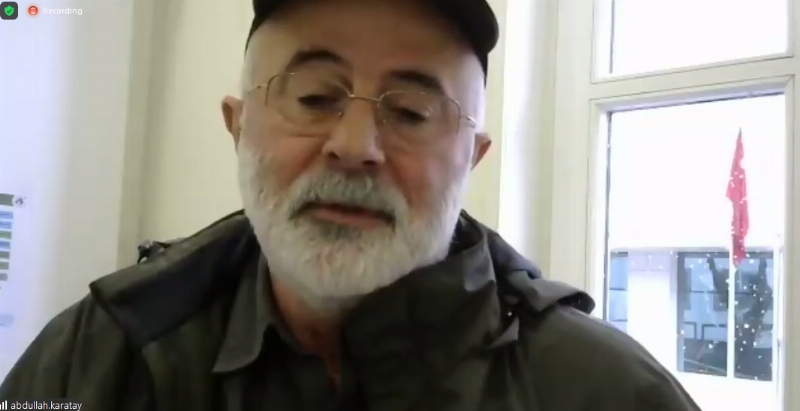
Karatay: “They need to be isolated from the people they emulate”
Prof. Dr. Abdullah Karatay stated that children who leave the institution without permission should not be considered as a single, homogenous type, saying: “Some have indeed made unauthorized departure from the institution a continuous behavior, to the extent of being diagnosed with a behavioral disorder. However, some are in a state where they can be reintegrated into the system with follow-up. Therefore, with the same logic, some children in our residential institutions may genuinely require a closed system. They need to be isolated from those they live with, those who transfer behavior to each other, and those they emulate.”
Share
Update Date: February 26, 2026
Creation Date: November 05, 2020
Request a Call
Other News
- The book that read today's digital threats in 2014: Being a Conscious Family
- Experts warn: 'Instead of memorizing letters, teach pencil grip, scissor use, and coloring'
- School fear and school love both start in the family!
- Family is not merely transforming, it is being battered under a serious assault
- Artificial intelligence opens the door to early diagnosis in autism!