

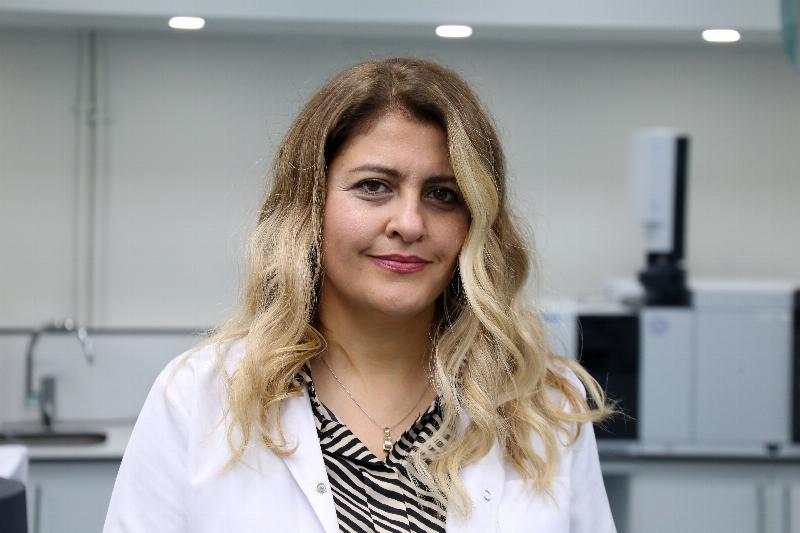
Üsküdar Üniversitesi Vocational School of Health Services (SHMYO) Dr. Lecturer Sultan Mehtap Büyüker made evaluations regarding the Mucilage that has occurred in the Sea of Marmara in recent days.
Content
Mucilage Caused Serious Ecological Damage in the Sea of Marmara
The thick, sticky substance defined as “Mucilage,” formed by plants and microorganisms on the surface of the Sea of Marmara in recent weeks, has become a significant environmental problem. Experts state that mucilage has caused serious ecological damage in the Sea of Marmara and emphasize that domestic and industrial waste also contributes to the formation of this pollution. Experts point out that mucilage has led to questions among the public regarding swimming in the sea and consuming products like fish and mussels, and they say that ecological analysis is necessary to answer these questions.
Üsküdar Üniversitesi Vocational School of Health Services (SHMYO) Dr. Lecturer Sultan Mehtap Büyüker made evaluations regarding the Mucilage that has occurred in the Sea of Marmara in recent days, stating ;
The answers to these questions are being wondered: Is it safe to swim in the sea? Should fish and mussels be consumed? She answered these questions.
Increasing Sea Temperature Also Causes Mucilage
Dr. Lecturer Sultan Mehtap Büyüker, stating that the mucilage problem observed in the Sea of Marmara has deeply saddened everyone, said: “Mucilage is also known as sea snot. We define mucilage as the thick, sticky substance formed by plants and microorganisms. The mucilage problem has actually been present in Marmara for a long time. Looking at the causes of mucilage formation, mucilage can form when suitable biological and chemical environments occur. Factors such as increasing sea temperature, excessive pollution of the seas, and reduced sea movement can cause mucilage formation.”
Clear Information Can Be Provided with Analysis Results
Naturally, this situation has led to some question marks among the public, Büyüker stated: “To be able to answer questions such as ‘Can we swim in the sea?’ and ‘Can we consume seafood like fish and mussels?’, it is first necessary to take samples from mucilage-affected areas, seawater, and the mucilage itself, and conduct ecological analyses. Without analysis results, it is not correct to make statements like ‘mucilage creates a toxic effect, it can cause poisoning’ or ‘there is harm in eating seafood like fish, mussels; poisoning may occur.’ However, we can say this after toxicological analyses.”
Domestic and Industrial Waste Cause Pollution
Dr. Lecturer Sultan Mehtap Büyüker stated that, apart from toxicity, since mucilage forms due to sea pollution, there is a significant amount of human life around the Sea of Marmara, and she concluded her words as follows:
“The discharge of domestic and industrial waste into the sea has created this pollution over time, and currently, serious ecological damage is being experienced. As a result, living organisms either abandon an environment where they cannot survive or they die. We can speak of decay and decomposition here. Naturally, and due to decomposition, a microbiological environment is likely to form. This means that from a microbiological perspective, swimming in the sea might currently be hazardous, but a clear answer to all these questions can only be given after microbiological and toxicological analyses are performed. It is not appropriate to state anything definitive without conducting these analyses.”
Share
Update Date: February 27, 2026
Creation Date: June 09, 2021
Request a Call
Other News
- The book that read today's digital threats in 2014: Being a Conscious Family
- Experts warn: 'Instead of memorizing letters, teach pencil grip, scissor use, and coloring'
- School fear and school love both start in the family!
- Family is not merely transforming, it is being battered under a serious assault
- Artificial intelligence opens the door to early diagnosis in autism!