

Üsküdar University Faculty of Humanities and Social Sciences Head of Philosophy Department, Environmental Philosophy Specialist Prof. Dr. İbrahim Özdemir made important evaluations regarding the mucilage problem, which has particularly affected the Sea of Marmara recently, and the issue of environmentalism.
Content
Love-based environmentalism can end mucilage
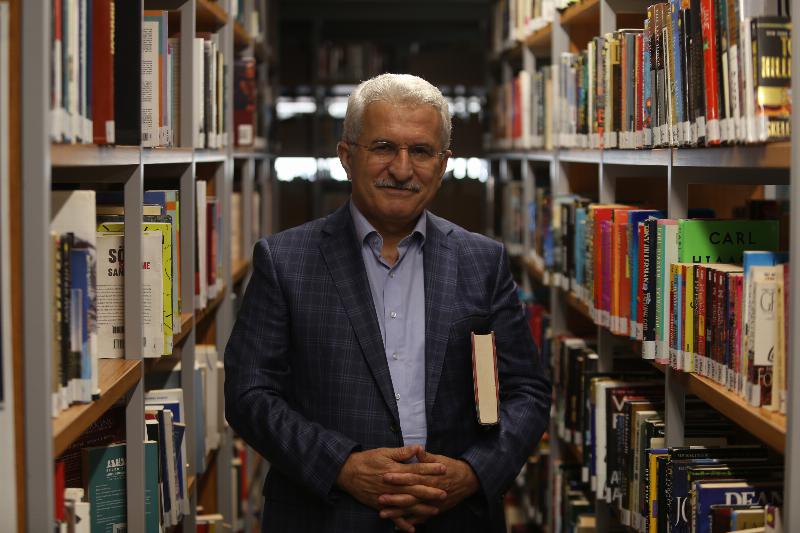
Experts, pointing out that the biggest cause of the mucilage, which has been particularly effective in the Sea of Marmara in recent months, is the human factor, underline the need for a love-based environmental understanding. Stating that we primarily need to re-evaluate our lifestyle and consumption habits, the experts assess, “If we can be modest, we can also reduce the damage we inflict on nature and the environment. It is not possible for us to solve this problem without compromising our unconscious consumption-oriented lifestyle.”
We need love-based environmentalism
Özdemir, stating that the biggest cause of mucilage formation is the human factor, said, “When we look at the main factors in the pollution of seas and the formation of sea snot, especially household and industrial waste, inadequate treatment levels, overfishing, destruction of coastlines, seabed dredging and discharge activities, and intense ship traffic stand out. All of these are human-induced. The foundation of everything is love and passion. We need a love-based environmentalism.”
Prof. Dr. İbrahim Özdemir stated that mucilage, which has been spreading since March, virtually halted fishing activities and caused public anxiety, is threatening the Sea of Marmara, and said, “We are facing many problems originating from pollution in the Sea of Marmara, which is the source of this issue seen on and below its surface. Our scientists define mucilage as 'the secretion released by microscopic plants called phytoplankton, which constitute the first step of biological production in the sea, as a reaction to certain conditions arising from their excessive proliferation in the environment.' Generally, when we look at the main factors in the pollution of seas and the formation of sea snot, especially household and industrial waste, inadequate treatment levels, overfishing, destruction of coastlines, seabed dredging and discharge activities, and intense ship traffic stand out.”
Blindness, like an epidemic, engulfed society
Özdemir, stating that nature, with its streams, rivers, lakes, and seas, is a living whole, said the following:
“We have known since the 1960s that all of nature is affected by our negative behaviors and consumption patterns. American scientist Rachel Carson warned us back then with her book 'Silent Spring'. This book became the handbook for environmental movements worldwide. However, industrial organizations polluting waters, rivers, lakes, and seas turned a deaf ear to these warnings. Farmers using pesticides also did not consider the long-term consequences of the agricultural chemicals they used. Over time, environmental awareness developed. Ministries of Environment were established. Environmental legislation evolved. Environmental awareness began to grow all over the world. However, the greed for money, or rather the ambition to earn more, and a blindness regarding the future, prevented us from seeing potential problems. We knew that the marine ecology, a living organism, would be degraded by all kinds of chemical waste, especially industrial waste that we dump or pour into the sea; and that this would affect marine life and related sectors. But we feigned ignorance. Except for some environmentally sensitive people, scientists also did not or could not adequately perform their warning duties. Industrial organizations did not incur the cost of installing filters for waste. The state and citizens also did not do what was necessary. Especially citizens who unconsciously used pesticides should have been aware of their responsibilities. Those who made a living from seafood also did not raise their voices enough regarding the polluted and deteriorating marine ecology. In short, we are facing a situation almost like in 'Blindness', the most famous novel by Jose Saramago, the winner of the 1998 Nobel Prize in Literature. We ignored the environmental massacres happening around us for years, especially the death of the Sea of Marmara. Blindness, like an epidemic, engulfed society.”
Mucilage reduces light entering seawater
Özdemir emphasized that mucilage was first observed in the Sea of Marmara in September-October 2007, and stated, “Its being as dense and persistent as it is currently in the Sea of Marmara is not natural. There are many human-induced reasons for this. Two years ago, I personally witnessed the darkening and death of coral reefs in the Maldives, which I visited. Corals are living beings. However, with the pollution of the oceans, they too have started to die. In many regions, especially Australia, many coral reefs have disappeared compared to 50 years ago. Scientists say that the biggest reason for this is human-induced activities that do not take ocean ecology into account. When we look at the emergence of sea snot, the discharge of industrial and household waste into the sea without any filtering or with insufficient filtering stands out as the most important factors. We can also add to this the mixing of unconsciously used agricultural pesticides with the sea through rain and floods. The mucilage formed in the sea reduces the light entering the seawater. The inhibition of photosynthesis leads to cascading problems in marine ecology. Due to the sudden and intense mucilage development in a marine ecology consisting of very delicate balances, the death of living creatures in the sea becomes inevitable. Furthermore, the ecosystem's resilience, that is, its capacity to renew itself, decreases and it is seriously damaged. This will have both short-term and long-term consequences.”
We need love-based environmentalism
Özdemir stated that it is a fact that we have been affecting nature since the beginning of the human-nature relationship; “In pre-industrial societies, nature could repair the damage inflicted upon it by humans. The real problem began with the discharge of industrial and chemical waste into nature in quantities that nature could not repair itself. For example, a piece of plastic does not decompose even after a thousand years and continues to harm nature. At this point, if we can first re-evaluate our lifestyle and consumption habits; if we can be modest, we can also reduce the damage we inflict on nature and the environment. It is not possible for us to solve this problem without compromising our unconscious consumption-oriented lifestyle. Just as we sacrificed some of our habits to combat the pandemic; we were confined to our homes, wore masks, adhered to physical distance, and got vaccinated. Likewise, we must first approach nature with great respect and and love. People protect what they love. Is it possible to protect the environment without loving the streams, seas, oceans, magnificent mountains, deep valleys, and vast plains, and the thousands of species of plant and animal diversity within them? The foundation of everything is love and passion. We need a love-based environmentalism.”
Share
Update Date: February 27, 2026
Creation Date: June 22, 2021
Request a Call
Other News
- Social responsibility courses moved to the field
- Erasmus+ Orientation Week completed at Üsküdar
- Prof. Nevzat Tarhan: “Brain secretes ‘dark glue’ in social media lynchers!”
- Prof. Nevzat Tarhan: “Every segment of society should be able to say, ‘This constitution is my constitution!’”
- OHS releases guide for safe operation of industrial robots