

Üsküdar Üniversitesi Faculty of Communication gathered academicians from various universities around the world at the International Communication Days, held for the 8th time this year under the theme of “Crisis Communication in the Digital Age”. Prof. Dr. Simon Cottle from Cardiff University, in his speech addressing pandemic journalism in the media, said, “Covid-19 is not just a temporary and fatal case; in fact, it should be a wake-up call for the ongoing global crisis connected with different areas today.” Communication scientist Prof. Dr. Ümit Atabek, on the other hand, stated that there will still be news in the future, but it will not be presented as it is in today's journalism, adding that the concept of 'journalist' might be replaced by the concept of 'media producer'.
Content
How Should Pandemic Journalism Be in the Media?
The main theme of the 8th International Communication Days, organized annually by Üsküdar Üniversitesi Faculty of Communication with a different theme, was determined as Crisis Communication in the Digital Age. Nationally and internationally renowned guest speakers took part in the symposium, which was held online due to the pandemic.
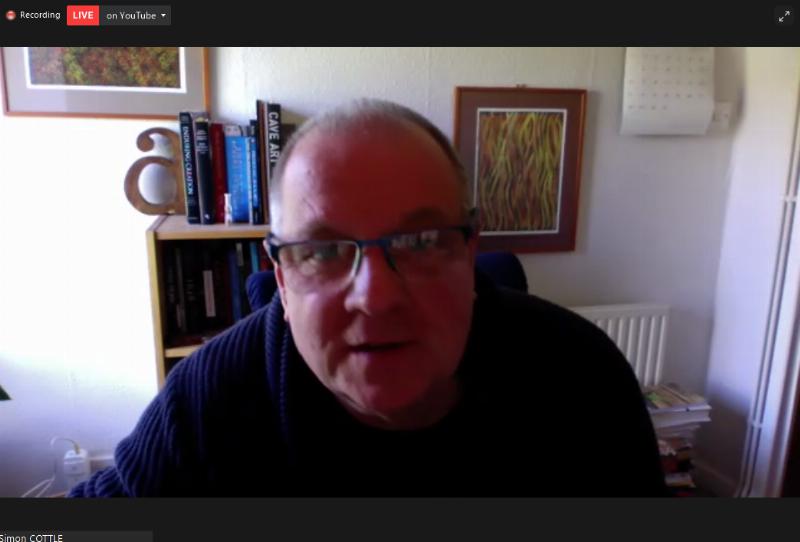
Prof. Dr. Simon Cottle: “We must start rethinking journalism for global crises”
Prof. Dr. Simon Cottle from Cardiff University, who participated as a guest speaker on the second day of the symposium, stated in his speech titled “Pandemic Journalism in the Media” that the current pandemic should be a wake-up call for the entire world.
Prof. Dr. Simon Cottle said, “I believe we have had difficulty understanding many crises we have faced over the last 10 years. We are currently living in an unprecedented period in human history, signifying the collapse of world civilization, and in this context, along with everything else, we need to start rethinking journalism for global crises. Covid-19 appears as a public health crisis. In this vein, the necessity to educate wider populations about the risk of Covid-19 arises.”
Prof. Dr. Simon Cottle: “All global crises are interconnected”
Noting that the global crises we are currently facing cannot be evaluated in isolation, Prof. Dr. Simon Cottle said, “We see them as separate disasters, but we observe that these diseases, including Covid-19, arise in many ways from humanity's relationship with nature. We must not forget that these crises are interconnected. Crises do not exist in isolation. They emerge within a social, economic, and political context, and unfortunately, crises feed each other. We need to focus on this. 10 years ago, even the term 'global crisis' was not in use. The devastating effects of crises will transcend the boundaries and mechanisms of nation-states and will necessitate cooperation in a transnational context, involving civil society and governance systems.”
Prof. Dr. Simon Cottle: “Media and communication will be platforms where peace and environmental justice are demanded”
Highlighting the importance of media and communication in combating global crises, Prof. Dr. Simon Cottle said, “The devastating effects of global crises, in particular, will impact the world's ecology and all life forms on Earth, including humans. Media and communication will emerge as platforms where peace and environmental justice are demanded, especially as conflicts and divisions worsen with global crises. The impact of media and communication in this area will be very important. Covid-19 is not just a temporary and fatal case; in fact, it should be a wake-up call for the ongoing global crisis connected with different areas today.”
Prof. Dr. Simon Cottle noted that pandemics have been anticipated for many years, stating that pandemics like Covid-19 actually emerge from the destruction and degradation of nature. He emphasized that this crisis will trigger different crises and therefore needs to be addressed more extensively by journalists.
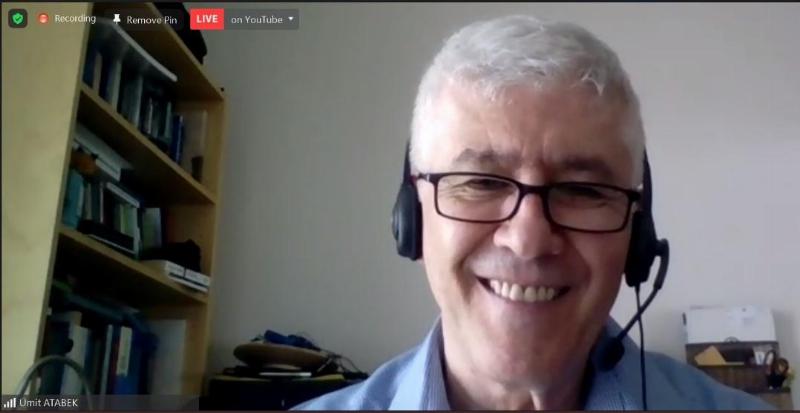
Prof. Dr. Ümit Atabek assessed the effects of new technologies
In the session moderated by Prof. Dr. Halil Nalçaoğlu from Istanbul Bilgi University, Prof. Dr. Ümit Atabek from Yaşar University, in his presentation titled “Communication in the Age of Crises: Do New Communication Technologies Work?”, drew attention to the changes in the media field in our country and worldwide, and pointed to the consequences of these changes.
Prof. Dr. Ümit Atabek compared Babıali and İkitelli journalism
Prof. Dr. Ümit Atabek noted that significant changes have occurred in the media with technological developments since the beginning of the 21st century, and that the entry of high technology into the workplace would bring more labor exploitation.
He stated that consequently, wages would fall, and working conditions would deteriorate, citing similar processes observed in Turkey's transition from Babıali journalism to İkitelli journalism. Prof. Dr. Ümit Atabek said, “Babıali journalism is a symbolic term for journalism that uses classic, conventional standard technology. İkitelli journalism, on the other hand, refers to journalism that utilizes more modern technology. With the integration of high technology into our lives, or with the increase in technological opportunities in İkitelli plazas, we observe a decline in journalistic quality. We see this in İkitelli journalism. Wages are low, and there is a significant difference between star journalists and standard journalists. Generally, a large portion of journalists work for low salaries, but we see that star journalists receive higher wages. There is no unionization, and we observe a decline in their self-respect. We also see job losses.”
Prof. Dr. Ümit Atabek also cited Amazon Mechanical Turk as a global example, noting that a large technology company offering a service like Amazon's has been criticized for using the lowest quality labor for the lowest wages.
Prof. Dr. Ümit Atabek: “In the future, 'media production' will replace the journalist”
Prof. Dr. Ümit Atabek stated that there will still be news in the future, but it will not be presented as it is in today's journalism, adding that the concept of 'journalist' might be replaced by the concept of 'media producer'. Prof. Dr. Ümit Atabek said, “The focus will be on content production. Most likely, the term 'journalism' may be used less frequently within 20 years.”
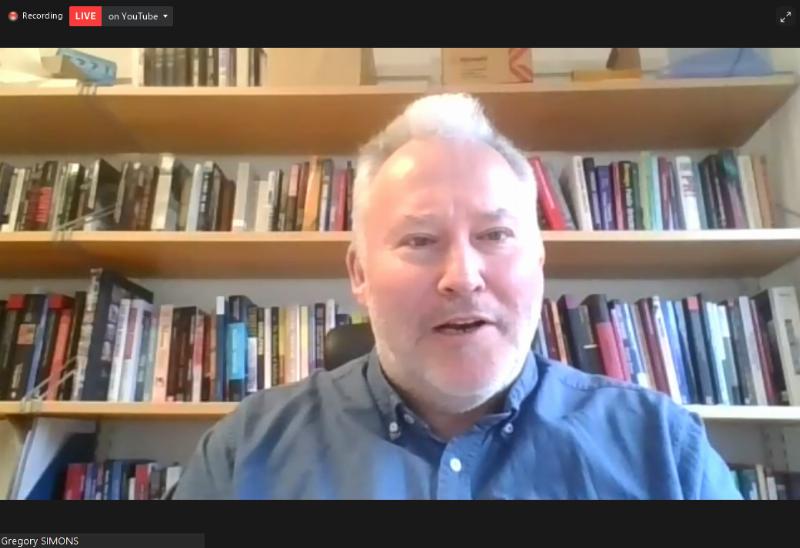
Assoc. Prof. Dr. Gregory Simons: “Wealth was redistributed during the pandemic”
Assoc. Prof. Dr. Gregory Simons from Uppsala University evaluated the effects of the pandemic on the world in his speech titled “Digital Resistance Against the Compulsory Coronavirus Isolation Narrative from a Crisis Communication Perspective”. Assoc. Prof. Dr. Gregory Simons noted that the pandemic first significantly increased geopolitical competition, stating, “This geopolitical competition particularly corresponded to a period with a unipolar US-led governance approach, and from there, there is a transition to a multipolar non-Western world. Secondly, there is a redistribution of wealth. The rich got richer, and the poor got poorer. When we look at the figures for the US, we see that the richest Americans earned more than 3 trillion dollars as a result of this crisis, while the poor lost around 3 trillion dollars. We particularly see that the WHO suggested considering lockdowns as a last resort solution rather than a standard practice.”
Assoc. Prof. Dr. Gregory Simons: “Individual freedoms were negatively affected”
Assoc. Prof. Dr. Gregory Simons noted that individual rights and freedoms were negatively affected during this period, stating that fear became a more commonly used and resorted-to tool in countries that define themselves as democratic.
You can follow all other sessions of the symposium, where more than 300 presentations were made in 30 sessions, to be held on Friday, May 28, at the following address, and watch the broadcasts by clicking the Zoom links at the top of the programs: https://ifig.uskudar.edu.tr/uploads/content/files/ifig-2021-program-kitapcigi-v4.pdf
Share
Request a Call
Other News
- The book that read today's digital threats in 2014: Being a Conscious Family
- Experts warn: 'Instead of memorizing letters, teach pencil grip, scissor use, and coloring'
- School fear and school love both start in the family!
- Family is not merely transforming, it is being battered under a serious assault
- Artificial intelligence opens the door to early diagnosis in autism!