

Üsküdar Üniversitesi Faculty of Communication discusses the reflections of the ongoing pandemic process in various areas of life during the 8th International Communication Days. In the session titled “Crisis in Communication Sciences,” Assoc. Prof. Dr. Feride Zeynep Güder, Head of the New Media and Communication Department at Üsküdar Üniversitesi Faculty of Communication, evaluated the effects of the prominent psychological series Masumlar Apartmanı and Kırmızı Oda on viewers during the pandemic. Assoc. Prof. Dr. Feride Zeynep Güder stated that these series became too heavy for many viewers when combined with pandemic conditions, and pointed out that one reason for the criticism was their ‘drama porn’ narrative.
Content
How Do Psychology-Themed TV Series Affect Our Psychology?
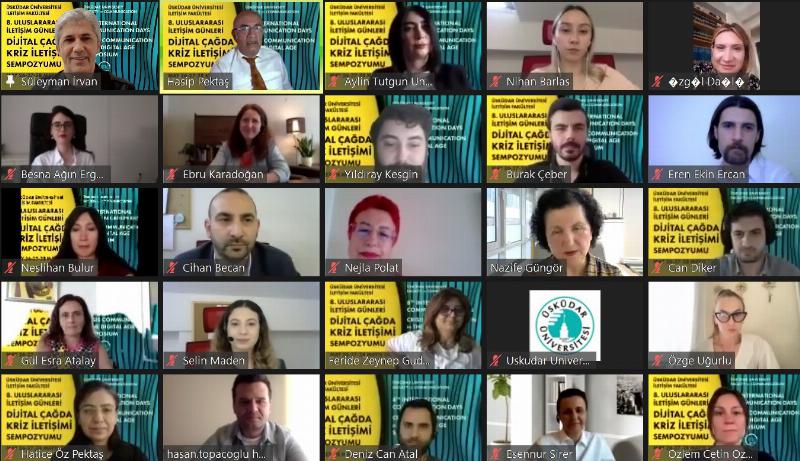
On the second day of the 8th International Communication Days, organized annually by Üsküdar Üniversitesi Faculty of Communication with a different theme, a presentation was made on the psychology-themed series Masumlar Apartmanı and Kırmızı Oda, which were popular during the pandemic, in the session titled “Crisis in Communication Sciences.”
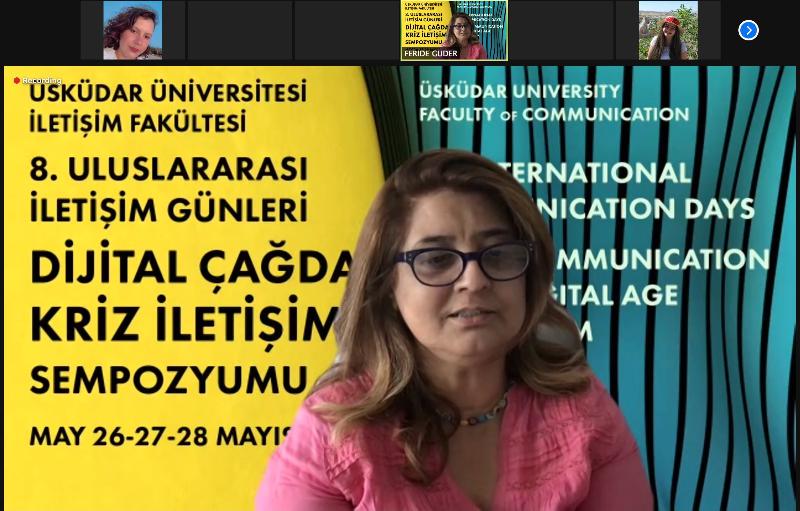
Assoc. Prof. Dr. Feride Güder: “These series became too heavy when combined with pandemic conditions”
Assoc. Prof. Dr. Feride Zeynep Güder, Head of the Media and Communication Department at Üsküdar Üniversitesi Faculty of Communication, evaluated the psychology-themed series that became popular and widely discussed during the pandemic in her presentation titled “Psychological Counseling Through Digital Media in the Covid-19 Pandemic: An Analysis of “Kırmızı Oda” and “Masumlar Apartmanı” TV Series.”
Assoc. Prof. Dr. Feride Zeynep Güder stated that viewers were interested in psychology-themed series due to the chaotic nature of the pandemic period, saying, “Series like Masumlar Apartmanı and Kırmızı Oda were watchable because they offered a new theme when watched for a few episodes. However, under pandemic conditions, people's psychology was more worn out than ever, and thus watching series with this theme became too heavy for many. If we base this on the Uses and Gratifications theory, people use television or the internet to escape their daily problems, but these types of heavy and emotionally traumatic works they encounter can be triggering for the psychology of many individuals.”
Assoc. Prof. Dr. Feride Zeynep Güder: “The storytelling in the series is challenging”
Assoc. Prof. Dr. Feride Zeynep Güder reminded that psychology-themed series, in this aspect, faced criticism from psychologists and viewers, especially on social media, saying, “We all understand what Gülseren Budayıcıoğlu is trying to do. She tells stories to people by sharing her experiences and her patients' stories without revealing names, intending to give advice subtly. However, the filming techniques used in the series, camera focuses on very close faces and expressions, the gloomy color palette, and the general way the story is conveyed can be challenging for people's psychology. All these factors are overwhelming in periods like this, when the infrastructures belonging to the disciplinary society and biopolitical pressures due to the pandemic have increased even further.”
Assoc. Prof. Dr. Feride Zeynep Güder: “One reason for the criticism is the ‘drama porn’ narrative”
Noting that the dramatic language used in these series was also criticized, Assoc. Prof. Dr. Feride Zeynep Güder said, “Disciplinary society sets boundaries to make people live in fear; a connection can be established between disciplinary society and popular media content. One reason for the criticism of these themed series on social media is their ‘drama porn’ narrative. The intense portrayal of personal tragedies to the audience has a very high potential to alter the perception of dramatic events normally experienced socially or individually. However, content using humor during this period could have had a more emotionally empowering effect.”
YouTube content changed during crisis periods
On the second day of the symposium, in another session titled “Pandemic and Social Media,” the increasing use of social media applications during the pandemic and their effects on our lives were discussed.
Content related to Covid-19 and conspiracy theories attracted attention
Research Assistant Neslihan Bulur and Research Assistant M. Emin Fidan from Üsküdar Üniversitesi emphasized the intersection points of social media and society and the characteristic of social media to create new agendas in their presentation titled “A Research on the Social Impact of YouTube in the Covid-19 Pandemic.” Research Assistant Neslihan Bulur stated that the content on YouTube changed according to the agenda during the Covid-19 pandemic. Analyzing channels producing conspiracy theory-themed videos about the virus during the pandemic and the comments they received, Research Assistant Neslihan Bulur said, “The comments below the videos contain discourses related to the country's agenda, independent of the topic, and comments on the presenter's style in the video stand out.”
Pandemic added new concepts to literature
Dr. Eda Turancı from Ankara Hacı Bayram Veli Üniversitesi, on “Social Media Fatigue,” a new concept in communication literature, said, “There is a connection between social media addiction and social media fatigue. Although social media use among people decreased during the pandemic, social media fatigue increases as its compulsory use for work and education increases.”
What do celebrities' social media posts say?
Assoc. Prof. Dr. Zeynep Özarslan from Çukurova Üniversitesi and Research Assistant Aylin Berna Zamandar Başoğlu from İstanbul Rumeli Üniversitesi shared the findings of their research on celebrities' social media posts and audience during the pandemic.
Health communication was also discussed during the pandemic
In the session titled “Pandemic and Health Communication,” Prof. Dr. Hatice Öz Pektaş, Prof. Dr. Hasip Pektaş, Dr. Lecturer Fadime Canbolat, Dr. Lecturer Sadi Kerim Dündar, and Assoc. Prof. Dr. Dinçer Atlı from Üsküdar Üniversitesi contributed with their presentations titled “Virtual Reality in Health Communication.” Dr. Lecturer Fadime Canbolat, providing information on the use of virtual reality applications in healthcare, stated that Üsküdar Üniversitesi is carrying out studies on the “Istanbul XR Academy (IXRA) project” with the support of the Istanbul Development Agency.
Share
Update Date: February 27, 2026
Creation Date: May 31, 2021
Request a Call
Other News
- Experts warn: 'Instead of memorizing letters, teach pencil grip, scissor use, and coloring'
- School fear and school love both start in the family!
- Family is not merely transforming, it is being battered under a serious assault
- Artificial intelligence opens the door to early diagnosis in autism!
- Artificial intelligence doesn't end engineering, it transforms it!