

Communication and media have become prominent fields with developing technology. Experts state that radio, television, and cinema communication tools have been mediating communication for a hundred years and are now guiding new media. They add that students studying in this field get familiar with the sector while still in school through seminars, interviews, and practical workshops. Experts emphasize that students of the Radio, Cinema, and Television Department can pursue double majors and also have the opportunity to study for one semester in European countries with Erasmus.
Content
Guiding the New Media…
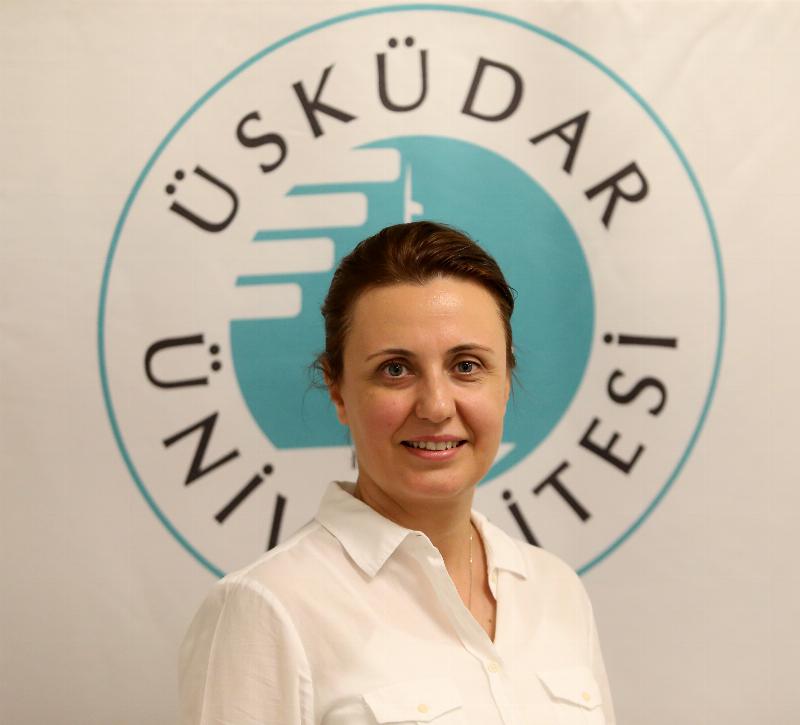
Üsküdar Üniversitesi Faculty of Communication Head of Radio, Television, and Cinema Department Assoc. Prof. Dr. Esennur Sirer spoke about the importance of studying in the Radio, Television, and Cinema Department in the age of communication.
Developing technology brought communication and media to the forefront
Emphasizing that communication and media have become prominent fields with developing technology, Assoc. Prof. Dr. Esennur Sirer said, “Radio, television, and cinema communication tools, accessible to everyone, have been mediating communication for a hundred years. The field of radio, television, and cinema, where a great deal of experience and knowledge has accumulated, is also guiding new media in the new century, starting with the year 2000. Recently, content produced via social media also shows similar characteristics to content produced for radio, television, and cinema.”
They can pursue double majors or minors in many departments
Assoc. Prof. Dr. Esennur Sirer stated that students who complete their education in the Radio, Television, and Cinema Department receive a diploma valid abroad, saying, “During their studies, students can also pursue a double major or a minor in any of the departments of Health Management, Social Work, Philosophy, History, Sociology, Psychology, Political Science, and International Relations. Thus, their achievements are crowned.”
Students specialize through the courses they take
Sirer stated that through relationships established with stakeholders from the industry, students are aimed to be prepared for professional life, saying, “The goal is for department students to take their place in the sector, mastering knowledge and technique by undertaking a graduation project in their desired field. In this context, they take courses in camera, editing, sound, lighting, directing applications, radio and television programming, radio and television journalism, scriptwriting, film production and management, short film production, documentary film production, and cinema. Furthermore, they can choose courses from departments other than their own in their area of interest. Thus, upon graduation, they complete their education by specializing in their chosen field.”
They have Erasmus opportunities in Europe
Sirer stated that advisor lecturers guide students in the department through internships, Erasmus, and graduation projects, saying, “In addition to their compulsory internships during their studies, students also have the opportunity for voluntary internships where their insurance is covered by the school. Students who wish can also do internships at media organizations or related institutions abroad. They can study for 1 semester or 1 year through the Erasmus program at one of the 12 universities abroad with which the Faculty of Communication has agreements, such as Romania, Spain, Lithuania, Portugal, Slovenia, Poland, and the United Kingdom.”
They get familiar with the sector through practical training
Assoc. Prof. Dr. Esennur Sirer concluded her words by stating that they support their knowledgeable and experienced academic staff with professional trainers in their field to offer a contemporary education:
“Additionally, throughout the year, we invite guests from the media sector. We hold seminars, interviews, and workshops with students. During these events, we strive to enable students to meet, socialize with, and later work with professional experts. To train the bright cadres of the communication age, we provide students with practical training starting from their second year. Students can carry out production and broadcasting activities in two separate studios equipped with the latest technology still used in the sector. At the same time, they can benefit from the camera, sound, lighting, editing, and directing facilities offered by the university throughout the year, even outside of school periods.”
Share
Update Date: February 28, 2026
Creation Date: August 17, 2021