

Üsküdar Üniversitesi Faculty of Humanities and Social Sciences Head of the Philosophy Department Prof. Dr. İbrahim Özdemir, was a guest on the Ailece program broadcast on TRT Radyo1.
Content
The Family is a School Where We Learn Social Rules
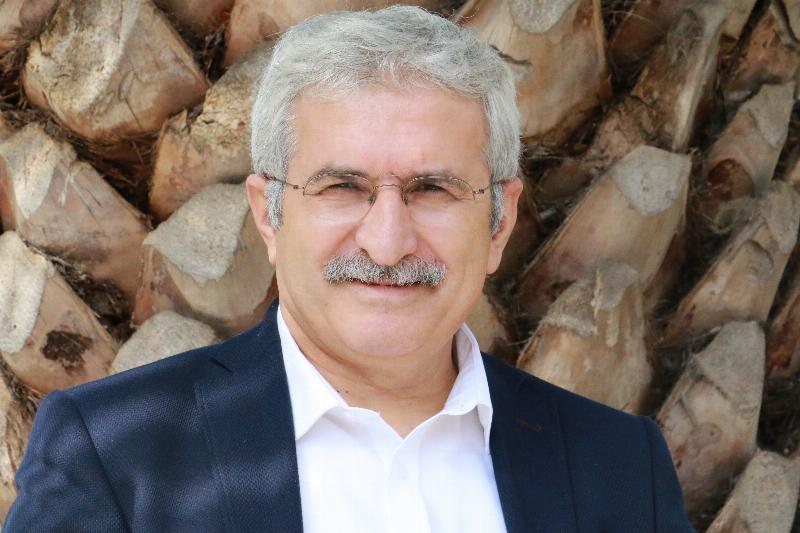
Prof. Dr. Özdemir, speaking on the topic of “The Impact of Social Rules on Our Lives”; “The family is a school where we learn social rules. Some rules cannot be learned elsewhere, or if they are, it's too late. That's why, in the school of family, we learn how to treat our elders and our family. The family educates us; we acquire these values as a whole within the family.” he stated.
“Rules encompass life as a whole and enable us to become human”
Prof. Dr. İbrahim Özdemir stated that social rules are present in every aspect of our lives from the moment we leave our homes, saying, “When we speak of social rules, we understand our humanization. We are social beings. From a philosophical perspective, philosophers have perceived socialization as the criterion and measure of being human. That is, if we look at our historical artifacts and heritage as a book, from Göbekli Tepe to the Hittites, thinkers, philosophers, and established civilizations everywhere show that humanity began to humanize from primitivism through socialization. As Aristotle said, humans are social beings. From the moment we step out of our homes, our social duties and rules begin. Some of these are legal, and some are moral. The most important aspect here is the moral dimension. In the mornings, I see young women and gentlemen going to work on their way from home to the university. Women, being more numerous, carry food for cats and other animals in their bags. As you can see, social rules are not just for humans. When we leave our homes, we have duties towards our neighbors, people we encounter, and animals we live with. Also, looking at ancient cities like Istanbul, Konya, Bursa, and Edirne, our ancestors did not just build homes for themselves. They also built birdhouses for birds. They fulfilled social duties for animals left behind, apart from migratory ones. In short, social rules encompass life as a whole and enable us to become human.” he said.
“As we learn, we mature, and thus discover our duties towards others”
Özdemir stated that a person can become virtuous and honorable by adhering to social values and rules, saying, “In both philosophy and psychology, when defining humans, it is said that a human is a selfish being. They only think of themselves and try to survive. This is why humans face a phenomenon we call 'tahakküm' (dominance) and 'tekâmül' (evolution), which means perfecting oneself through learning. Thus, we become aware that we have certain duties towards ourselves, our family, our neighbors, and the people we live with, and we make sacrifices. There is no law requiring someone to give up their seat for an elderly or sick person on public transport. However, we see this as a duty due to our culture. In some places, people say, “My child, you sit; you're coming from school with a bag on your back; I can manage.” We see that their compassion and mercy are sometimes more dominant than the respect of our young friends. This way, we learn the feelings of mercy and compassion. Why can't animals establish states or create art? Other animals have very beautiful voices, but they cannot compose music. This is all related to being human. A Muslim thinker, Ibn Miskawayh, who lived in the 10th century, asks the question: “If we were to retreat to a cave, could we become a virtuous person?” A person can only become virtuous and honorable within a social context, by adhering to social rules, and moral and religious rules. Morality has both religious and rational foundations. As we learn, we mature, and thus we discover our duties towards other people. In essence, it is about our humanization.” he explained.
“Our social rules stem from our culture”
Prof. Dr. İbrahim Özdemir underlined that we are starting to lose our social culture with the lifestyle offered by modern life. Özdemir said; “For instance, a French traveler who came to Anatolia in the 18th and 19th centuries. What did this traveler observe? I researched what he admired in our society that did not exist in his own. One of our greatest characteristics he admired was our altruism, meaning we are not selfish. This selflessness is not just towards oneself and one's family. We also feel responsibility towards our neighbors. Someone goes to the grocery store, takes the debt book, and says, ‘I'll pay for all of it.’ This doesn't exist in Western society. In our society, just as a doctor asks questions about our family when we go to the hospital, wondering if it's a hereditary disease. Our social rules come from our culture. It's in our genes. We are losing this with the new lifestyle brought by modern life.
Travelers say that Muslim communities living in Anatolia think of others besides themselves. They built hospitals for animals. They built healing centers for people with mental and spiritual problems. All of these arise from social sensitivity. Looking at their foundations, there is no legal enforcement. They do this entirely out of a religious feeling and respect for people. These have many dimensions, such as faith and the afterlife, and they look at life as a whole,” he explained.
“The family is a school where we learn social rules”
Prof. Dr. İbrahim Özdemir emphasized that the institution of family educates us with certain rules and prepares us to integrate into society, saying, “I have met young people who grew up abroad and love their homeland. They think like a German or an American regarding some social rules. That's why the family is a school where we learn social rules. Some rules cannot be learned elsewhere, or if they are, it's too late. That's why, in the school of family, we learn how to treat our elders and our family. The family educates us; we acquire these values as a whole within the family.
“Their incomes are good, but they are lonely and unhappy…”
Özdemir, stating that Scandinavian countries are in a very good position in terms of national income, but when you talk to individuals, they are lonely and unhappy, said, “A Ministry of Happiness was established in England, and Finland is discussing this. They say young people should visit nursing homes. Because when a person becomes selfish, they ask, 'Why should I tolerate the problems of the elderly?' There are problems that come with modernization. Currently, people want to be free and live alone. But a human being is not capable of living alone. We felt this very strongly during this pandemic period. People bonded with each other. We need to pay more attention to these social rules and responsibilities during this pandemic. If we don't protect ourselves and infect others, there is truly a great moral responsibility for this. From a religious perspective, we are obliged to protect our health. Secondly, it is our duty to protect the health of other people. By being careful, we will overcome this epidemic with the least damage.” he stated.
Share
Update Date: February 26, 2026
Creation Date: September 04, 2020
Request a Call
Other News
- Experts warn: 'Instead of memorizing letters, teach pencil grip, scissor use, and coloring'
- School fear and school love both start in the family!
- Family is not merely transforming, it is being battered under a serious assault
- Artificial intelligence opens the door to early diagnosis in autism!
- Artificial intelligence doesn't end engineering, it transforms it!