

In daily life, certain sounds can cause discomfort in individuals. Experts state that individuals experiencing hyperacusis, defined in audiology literature as a sound loudness perception disorder, can be significantly bothered by sound levels that normally do not cause discomfort. Experts point out that hyperacusis can lead to problems such as headaches, balance issues, and sensitivity to smell and light in individuals, and negatively affects many aspects of life.
Content
Caution if normal sound levels cause discomfort!
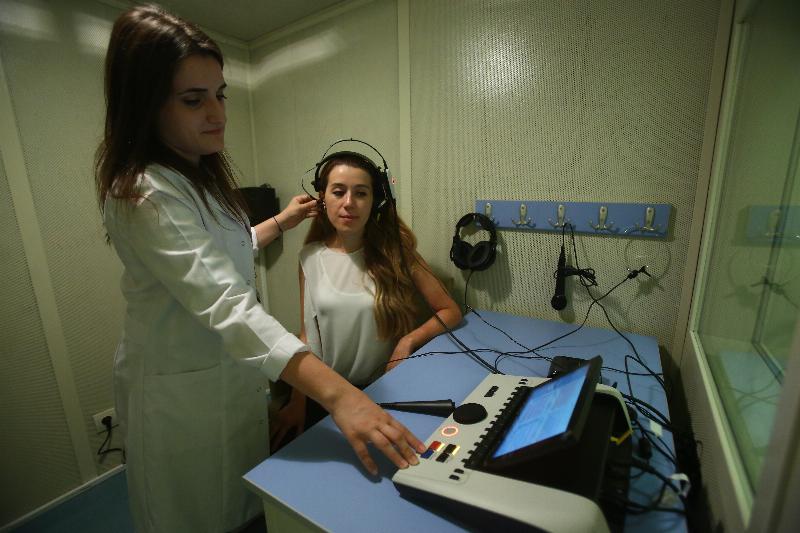
Üsküdar Üniversitesi Faculty of Health Sciences Department of Audiology Research Assistant Mina Gök and Research Assistant Busemnaz Avşar shared important information about hyperacusis, defined as a sound loudness perception disorder where sounds become intolerable.
Normal sounds can cause discomfort
Stating that hyperacusis is among the most frequently used terms in audiological literature, Department of Audiology Research Assistant Mina Gök said, “Hyperacusis is a sound loudness perception disorder in which sounds normally considered harmless become intolerable, and it is quite common. Sounds that do not bother healthy individuals can be perceived as very loud, even painful, by individuals with hyperacusis. Hyperacusis is often confused with phonophobia and misophonia due to their similarities. However, hyperacusis is a disorder originating from the auditory system. In misophonia, individuals show sensitivity only to certain specific sounds. Phonophobia, on the other hand, is a fear of sound, and both are disorders related to the brain region where emotions are regulated.”
It reduces quality of life
Pointing out that hyperacusis can reduce quality of life by affecting social, psychological, academic, and economic aspects of life, Gök stated, “In severe cases, the condition can lead to self-confinement at home. Individuals experiencing hyperacusis cannot tolerate daily and normal sound intensity levels; some environmental sounds become torture for them. Additionally, patients may experience complaints such as headaches, balance problems, and sensitivity to smell and light. When patients were asked about the sounds causing discomfort, they reported being bothered by a wide range of sounds, from low-frequency and high-pitched sounds to traffic noise. Noise is only one of the discomfort factors. The sounds and situations causing difficulties due to hyperacusis vary among patients.”
Hyperacusis can be a harbinger of tinnitus
Research Assistant Mina Gök stated that tinnitus complaints were observed in approximately 90 percent of patients with hyperacusis and continued: “Therefore, it is thought that hyperacusis may be a harbinger of tinnitus, and both conditions may stem from similar mechanisms. Tinnitus and hyperacusis can be exacerbated by anxiety and stress. Furthermore, we can say that the likelihood of depression is quite high for both conditions. Despite being a common condition, although there is no universal consensus on how hyperacusis develops, exposure to loud noise emerges as the most common cause. For this reason, occupational noise exposure and noise-induced hearing loss are shown as the main risk factors. Studies show that professional musicians, especially those who play pop/rock music and expose themselves to high-intensity sound for extended periods, are more likely to develop hyperacusis.”
Risk factors are being investigated
Research Assistant Busemnaz Avşar, stating that a detailed patient history is the first step in audiological evaluation, said, “When investigating possible risk factors for hyperacusis, conditions such as the presence of a psychiatric illness, noise exposure, and a history of acoustic trauma must be reviewed. There are several methods used in the diagnosis of hyperacusis. These are loudness discomfort level (LDL) scaling techniques performed by audiologists. The loudness discomfort level (LDL), measured in decibels, defines the point at which a person perceives a sound as uncomfortably loud. In patients with hyperacusis, this sound level is much lower compared to the general population, where the average level is 100 dB HL. Without the effect of hearing loss, hyperacusis affects all frequency bands. Thus, in the audiometric findings of patients, the LDL level is similarly observed to decrease across all frequencies.”
Caution should be exercised in audiometric tests
Avşar, emphasizing the importance of performing audiometric tests with utmost care, stated, “The point to note here is that the initial test tone given to the patient by audiologists should be kept at a carefully determined level. Otherwise, exposing the person to a stimulus that will cause discomfort carries the risk of increasing this distress and worsening the condition, rather than helping. Other tests that might exceed the discomfort threshold should also be avoided.”
Imaging techniques should be used if neurological symptoms are present
Avşar, stating that imaging techniques should be used in cases such as the presence of neurological symptoms when unilateral symptoms and audiological findings are observed in hyperacusic patients, said, “When choosing an imaging method, the patient’s condition should always be taken into consideration. For example, quieter methods such as computed tomography (CT) should be used compared to MRI scans.”
The popularity of Tinnitus Retraining Therapy is increasing
Research Assistant Busemnaz Avşar, stating that surgical intervention may be necessary for some inner ear-related hyperacusis conditions and that Ear, Nose, and Throat physicians decide on the operation after examinations, said, “Hyperacusis treatment aims to alleviate the psychological burden caused by the disease and generally seeks to eliminate physical symptoms.”
Avşar listed the hyperacusis treatment methods as follows:
- Cognitive Behavioral Therapy (CBT) is one of the most effective methods. It has been shown to increase LDL levels, bringing them closer to normal, and reduce the severity of hyperacusis.
- Tinnitus Retraining Therapy (TRT) aims to inform the patient about their condition, and its use for hyperacusis is becoming increasingly popular.
Alternative treatments can also be preferred for hyperacusis. Approaches such as vitamin supplements, acupuncture, exercise, yoga, meditation, massage, relaxation therapy, and hypnosis can be applied.
Share
Update Date: February 27, 2026
Creation Date: January 28, 2021
Request a Call
Other News
- The book that read today's digital threats in 2014: Being a Conscious Family
- Experts warn: 'Instead of memorizing letters, teach pencil grip, scissor use, and coloring'
- School fear and school love both start in the family!
- Family is not merely transforming, it is being battered under a serious assault
- Artificial intelligence opens the door to early diagnosis in autism!