

Üsküdar University Faculty of Communication Department of New Media and Journalism's Assoc. Prof. Dr. Aylin Tutgun Ünal spoke to Journo Medya. Ünal, commenting on the recent rise of citizen journalism and celebrities venturing into journalism through live broadcasts from incident scenes, stated that the social impact of celebrities' social media posts is inevitable. Ünal said; “In extraordinary situations such as disasters, the need for information sharing and receiving news increases. In traditional journalism, gatekeepers, filters, and editorial control provide oversight. On social media, however, citizens receive news directly from opinion leaders. For this reason, the social impact of well-known individuals' social media posts is inevitable.”
Content
Assoc. Prof. Dr. Aylin Tutgun Ünal: "The Social Impact of Celebrity Posts is Inevitable"
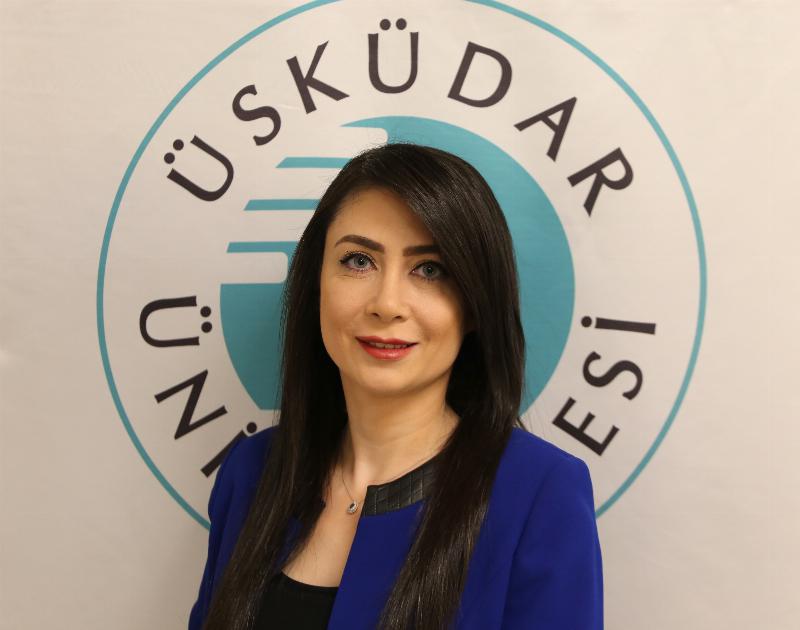
Ünal stated that during disasters, the need for information sharing increases along with shared emotions, and that people's need to receive news increases at such times. Ünal said; “In extraordinary situations such as disasters, the need for information sharing increases. At such times, individuals have a greater need to receive news. In traditional journalism, there are gatekeepers, filters, and editorial control. On social media, however, citizens leave their mark firsthand. As a result, social media is highly accepted by society as the primary medium for receiving news.”
“Posts by Opinion Leaders, Not News Agencies, are Popular”
Ünal stated that today, news published by opinion leaders rather than news agencies is popular, adding that individuals with a high number of followers are considered opinion leaders. Ünal said; “A more mosaic structure has emerged where journalists, including professionals and news agencies, participate in the work with both news and private posts, alongside citizens' shares. In this structure, the posts of those we can call opinion leaders are more widely accepted by society. Opinion leaders include politicians, artists, influencers, academics, authorized spokespersons for official institutions and organizations, community leaders, in short, those with high follower or view counts. The posts of these individuals reach broad audiences on social media.”
“Opinion Leaders Should Post with a Sense of Responsibility”
Ünal stated that opinion leaders should post with a sense of responsibility; “Opinion leaders are individuals whose actions are emulated in society. In this regard, it is their responsibility to publish content that sets an example and provides benefit. Irresponsible posts, made under the guise of ‘my personal account,’ will lead to social chaos and debates. In such situations, individuals divide into two groups and engage in discussions on social media. One group defends the post, while the other shows more sensitivity and focuses on the negative consequences arising from errors in the post. While the person who made the post is expected to provide an explanation regarding social sensitivity, due to the powerful impact of the post, the explanation given might not show its effect quickly.”
“Negative News Spreads Faster”
Ünal stated that negative news content spreads four times faster than positive content on social media, adding that expressions of negative emotions show a stronger impact. Ünal said; “If you are engaged in journalism on social media, you should know that negative content spreads four times faster than positive content. Negative expressions, emotional states, and attitudes have a stronger impact. Experimental and sociological research has shown that emotional spread on social media has a strong effect up to three degrees. Accordingly, when you make a post, the emotions it contains strongly affect your friend, your friend's friend, and their friend. If you are sad, angry, or unhappy, this emotion spreads through your posts, by the power of dissemination, to those around you. When considered with a high follower count, even after you move past that emotional state, the spread continues, demonstrating a global impact.”
“Generation Z Loves Story Journalism”
Ünal stated that unlike other generations, the younger generation does not read news in-depth but has a habit of scanning, noting that Story Journalism appeals to Generation Z. Ünal said; “Generation Z primarily has a habit of scanning and moving on. In other words, story journalism appeals more to younger generations. The new generation, thanks to evolving and widespread technology, has the habit of accessing desired information quickly. This generation even obtains health-related information from Instagram and YouTube. The most suitable channel to reach this generation is YouTube. In our research covering second-level primary school students, we found that they spend most of their time on YouTube. A group of children who follow people called YouTubers also want to become YouTubers. Therefore, delivering the message intended for children through influencers on YouTube would be quite effective, considering that the behavior will be imitated.”
Share
Request a Call
Other News
- Social responsibility courses moved to the field
- Erasmus+ Orientation Week completed at Üsküdar
- Prof. Nevzat Tarhan: “Brain secretes ‘dark glue’ in social media lynchers!”
- Prof. Nevzat Tarhan: “Every segment of society should be able to say, ‘This constitution is my constitution!’”
- OHS releases guide for safe operation of industrial robots