

Üsküdar University Faculty of Communication, Department of Advertising organized an event titled “Visuals in Advertising from Traditional to New Generation and Dynamics of Advertising Photography.” The event, moderated by Dr. Lecturer Cihan Becan, hosted İbrahim Yoğurtçu from Argos Reklam ve Tanıtım as a guest.
Content
Advertising Photography Explored at Üsküdar Communication
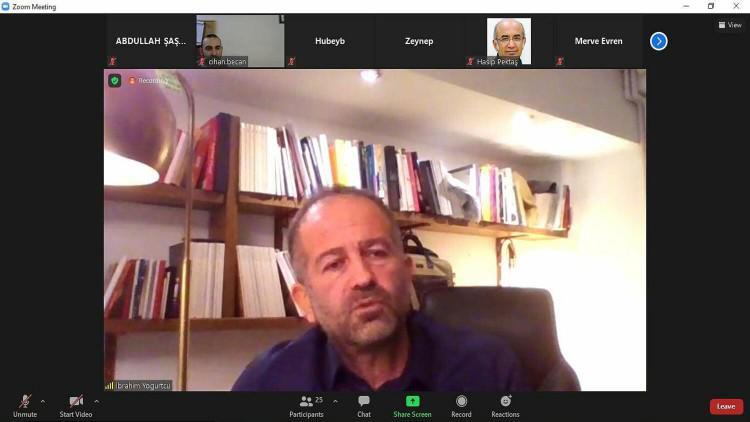
İbrahim Yoğurtçu from Argos Reklam ve Tanıtım was a guest at the event organized by Üsküdar University Faculty of Communication, Department of Advertising. İbrahim Yoğurtçu shared his experiences in the advertising sector with the students. 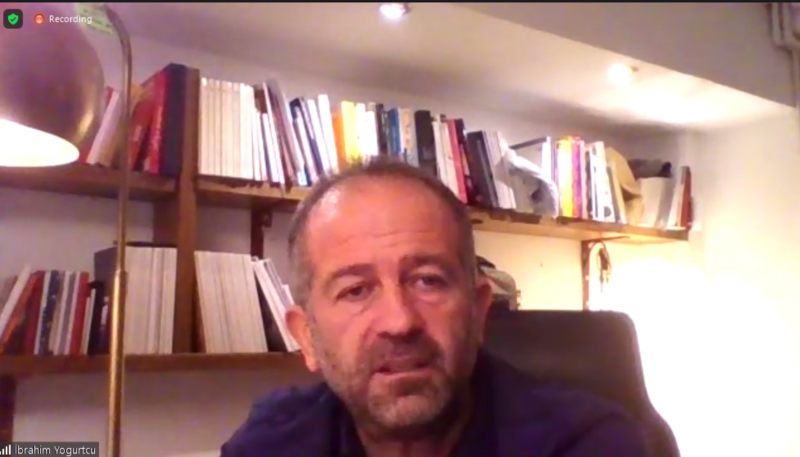
"In advertising, we make decisions based on the target audience"
Touching upon the importance and technique of advertising shoots, İbrahim Yoğurtçu stated the following regarding the subject: “In some companies, decisions are made based on the target audience and who we want to address. What I primarily want to emphasize when making this decision is that, in advertising photography, we transform a pre-determined design – set by the agency and the creative director, and including the client – a dream, into a visual. We convert a ready topic into a visual. In fact, we achieve things by using technique. So, what is the photographer's place in this process? How much does the photographer contribute to this process? Ultimately, advertising films, cinema films, and photography are technical processes and technical jobs. We often see this in short film scenarios with student friends. Writing is a dream. We write our dream as a story. But we face problems when it comes to shooting it. In this story, in advertising photography, and in an advertisement film, there can be a dream. You might have a script. With these technical possibilities – location, light, camera, or, to speak more technically, high frame rate shooting, low frame rate shooting – we can only understand them by discussing with the expert, director, or photographer. Because things happen like this: for example, a food company in their dream; an egg slowly falls into the pan and spreads, or pasta falls into the water. Bubbles form in that water. Writing this is one thing, shooting it is another. For example, we need a camera that shoots very high frames. As you know, the higher the frame rate, the more 'slow motion' your footage will be. For instance, if you want to make the speed of an egg yolk falling into flour very, very slow, this is a very technical matter. We have black frame, high frame rate cameras. You need to get them. For example, this could be an instance. There's something like that in the script. I think this is a good example for the answer to the question of where exactly the advertising photographer or director stands when an agency idea is being formed. Afterward, a plan is determined. Whatever our product is, we consult with agencies, saying 'for a close-up photo, our lighting mode, meaning our angle mode, will be like this.' I'll give an example with a car here. Is it more logical to shoot the advertisement for this car in a real location, or to shoot it in a studio with a certain concept and setup? To discuss these ideas, the photographer must constantly attend these meetings.”
“What sets you apart is the work you do”
Addressing marketing and popularity factors, İbrahim Yoğurtçu said, “Our job is actually a very popular one. Since our aim is to sell at the top, we need to support that popular idea with popular elements. These could be daily habits, popular TV series characters, or any current event. Therefore, friends interested in advertising photography need to follow the agenda very closely. Because in projects we do with good agencies, when these ideas are being formed, they have to include me as I will be managing that project. This popular element is an important topic. I want to elaborate on this a bit. Knowing a subject, knowing your main field, knowing film, knowing directing doesn't make you a good photographer, or a good director, or an advertising photographer. This is one of the subjects I attach great importance to. You can be a good lawyer, photographer, or director in side fields. What sets you apart is the work you do. The skills you acquire in those areas set you apart from others in your main profession. We need to get used to keeping our dreams a bit outside the circle. One needs to know incredible marketing, Netflix, cinema, culture, and arts. Actually, the main point in our job is knowing what to shoot. We can educate ourselves in other fields and use it in our work. Technical work is our core subject. The audience and the agency dream, but the cinematographer shoots the image. Being a director is a different thing,” he said.
Share
Update Date: February 27, 2026
Creation Date: December 21, 2020
Request a Call
Other News
- The book that read today's digital threats in 2014: Being a Conscious Family
- Experts warn: 'Instead of memorizing letters, teach pencil grip, scissor use, and coloring'
- School fear and school love both start in the family!
- Family is not merely transforming, it is being battered under a serious assault
- Artificial intelligence opens the door to early diagnosis in autism!