

Stating that we suddenly found ourselves in the midst of the digital age due to the pandemic, Prof. Dr. Nazife Güngör, Dean of Üsküdar University Faculty of Communication, emphasized that communication education should not remain outside this change. Güngör stated that it is inevitable to make innovations in the curriculum of communication education according to the changes and needs in digital technology, and warned, “If we cannot identify these needs well, we will become the object of technology.” 35 sessions with 190 speakers will take place in the comprehensive three-day scientific event. Experts from communication faculties of many universities from around the world and Turkey are participating as guests in the symposium, which will feature approximately 150 paper abstracts.
Content
“Communication Education in the Digital Age” Discussed at the 7th International Communication Days
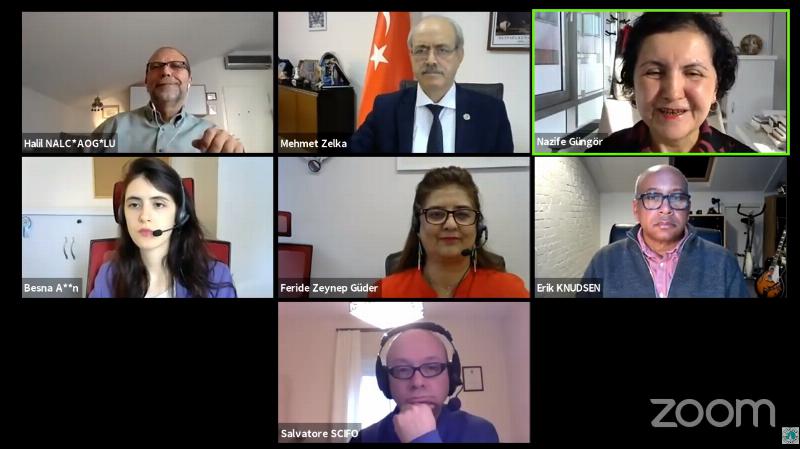
The 7th International Communication Days Communication Education in the Digital Age Symposium, organized by Üsküdar University Faculty of Communication, brings together experts in communication education from our country and around the world. Prof. Dr. Erik Knudsen from Central Lancashire University in England, Assoc. Dr. Salvatore Scifo from Bournemouth University, and Prof. Dr. Halil Nalçaoğlu from Istanbul Bilgi University participated as invited speakers in the symposium, which was held online as part of the measures taken due to the pandemic.
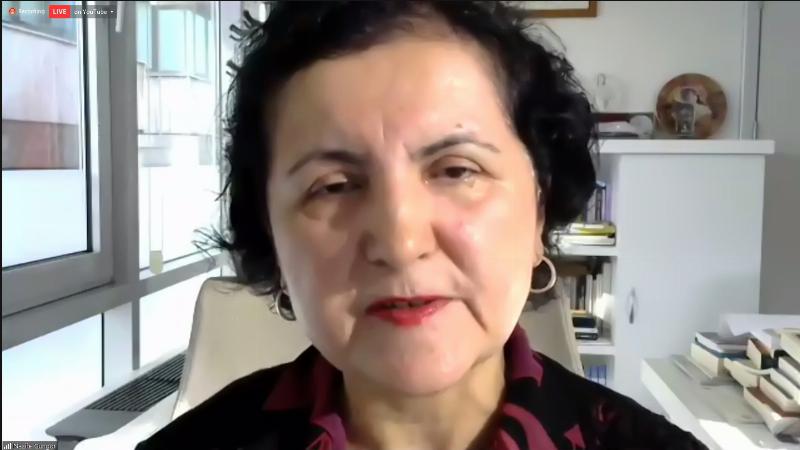
Prof. Dr. Nazife Güngör: “We became very familiar with the digital age due to the pandemic”
Prof. Dr. Nazife Güngör, Dean of Üsküdar University Faculty of Communication, stated in her opening speech that due to the current pandemic conditions, the digital world is now present in every aspect of our lives. Güngör noted that they did not expect the pandemic when they planned to organize the digital education symposium, saying, “Within a few months, we found ourselves in the midst of the pandemic. When we suddenly transitioned to online education, we saw that the digital age arrived not evolutionarily, but in a truly revolutionary way. It suddenly became integrated into our lives. It was already there; we were discussing generational differences. We were talking about Generation Z, their differences, attitudes, and behaviors. We were talking about how digital technologies differentiate individuals, people, and society. We were already talking about the effects it created on culture, society, and every dimension of life. However, it plunged into the middle of life so suddenly that we began to format and change our entire lifestyle, from education to home life, according to digital technology. We understood much more strongly that we are in the digital age and digital technologies are affecting us.”
Prof. Dr. Nazife Güngör: “Communication education must also adapt to this change”
Prof. Dr. Nazife Güngör stated that as institutions providing communication education, they feel the touches of the digital age much more strongly, and change in communication education is inevitable. She said, “We primarily train professionals for the communication sector. We are witnessing the rapid evolution of the media industry. In our student days, there was traditional press. We talked about printing presses. We observed how printing presses worked, but today, at the point we have reached, there is no trace of them. We talked about darkrooms for photo printing; now we are facing a media sector dominated by the virtual world. Therefore, when the way of working changes, and the way the profession is performed changes, then the method of training personnel for that sector must also rapidly change in the institutions that provide this education.”
Prof. Dr. Nazife Güngör: “Needs must be well-defined to use technology effectively”
Stating, “Since the forms of communication are changing, the style of communication education must also change,” Prof. Dr. Nazife Güngör added, “Then there is an urgent need for changes in communication education. There is a need to revise communication faculty curricula, guide teaching staff, and completely transform the communication education model with digital technology. This change is happening both globally and in our country. However, for this change to be meaningfully programmed, addressed with all its dynamics and dimensions, and rationally and correctly adapted to this process, institutions providing communication education need to discuss it on these platforms. It is necessary to talk about and discuss what will be done on such platforms through these scientific congresses and symposiums. If we do not identify these needs well, if we do not determine the direction of technology and guide education accordingly, then as individuals and as a society, we will become the object of technology that we invented and developed, not its subject. Technology will dominate us. The world and humanity will be crushed under technology. Therefore, education programs must be properly structured for humans to use technology, their own creation, for their own benefit.”
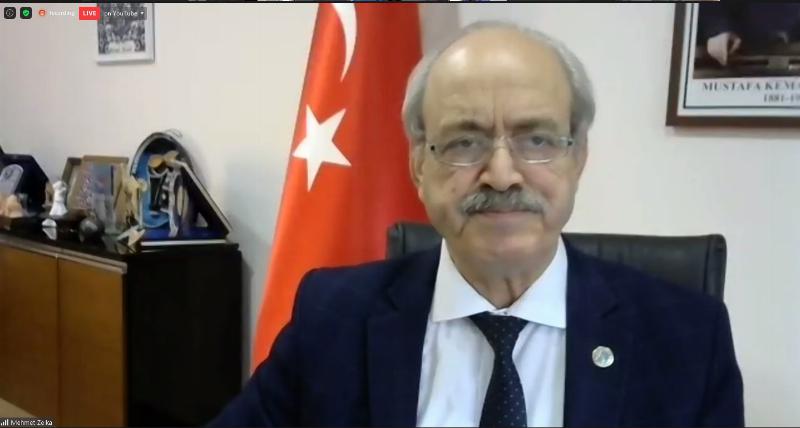
Prof. Dr. Mehmet Zelka: “We made an additional investment of 500 thousand dollars during the pandemic period”
Prof. Dr. Mehmet Zelka, Acting Rector of Üsküdar University, stated that digital transformation is one of the most striking topics of our time in a world changing faster than ever. Noting that global expenditures for digitalization, which has been pursued since the 90s, totaled 1.25 trillion dollars in 2019 and are expected to reach 2.2 trillion dollars in 2020, Prof. Dr. Mehmet Zelka said, “These figures can be expressed as a serious indicator of the importance of digitalization. Furthermore, the ongoing pandemic process has shown how tremendous an impact digitalization has on our lives. At the beginning of this process, despite our infrastructure being suitable, we at Üsküdar University felt the need to make an additional investment of 500 thousand dollars to manage the process better. Our university’s variable expenses in this area amount to 1 million dollars annually.” Prof. Dr. Mehmet Zelka added that 35 sessions with 190 speakers would take place during the comprehensive three-day scientific event and that the symposium was extensive and rich in communication content.
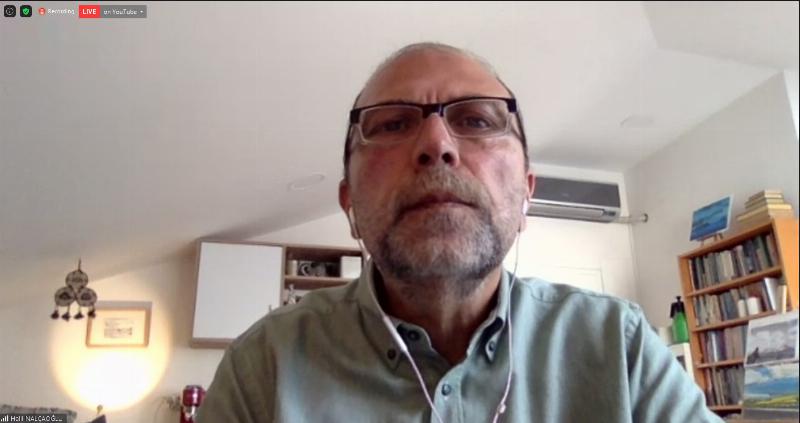
Prof. Dr. Halil Nalçaoğlu: “At the heart of content creation is storytelling”
Following the opening speeches, the invited speakers delivered their presentations. Speaking in the session moderated by Assoc. Dr. Feride Zeynep Güler from Üsküdar University Faculty of Communication, Prof. Dr. Halil Nalçaoğlu, Dean of Bilgi University Faculty of Communication, shared important details from his presentation titled “Tips for Those Thinking About the Future of Communication Education in the Digital Age.” Prof. Dr. Halil Nalçaoğlu said, “Storytelling is indeed a very important topic. At the heart of content creation is also storytelling. With the radical transformation of storytelling technologies in our age, it should be noted that a transformation can occur not only in story content but also in the mental structures that tell these stories. Those who see themselves in communication education in the future, especially young people, are probably wondering what communication education will evolve into in the coming years. As someone who has been involved in communication education for over 30 years, I often ponder what the future of the education we will provide should be in such a rapidly changing world, especially in the world of digital transformation. Of course, with the advantage of over 30 years, I also have the chance to look back at the past. I get to see what was done, what was not done, and what could not be done.”
Prof. Dr. Halil Nalçaoğlu: “Communication education at a crossroads”
Nalçaoğlu stated that his experience as the head of the Communication Education Evaluation and Accreditation Board for the past 2 years has given him a strong insight into the current structure of communication education in Turkey. He said, “Within this whole perspective, I frankly think that as a communication educator today, we are at a crossroads. This crossroads is like this: either we leave everything as it is and go with the natural flow of life where it takes us, or we make a strategic decision, conduct a comprehensive evaluation of the education we continue to provide, and strive to give this education a new direction. My administrative experience has also been spent in an effort to transform existing patterns and structures.”
Assoc. Dr. Salvatore Scifo: “Online courses gained importance during the pandemic”
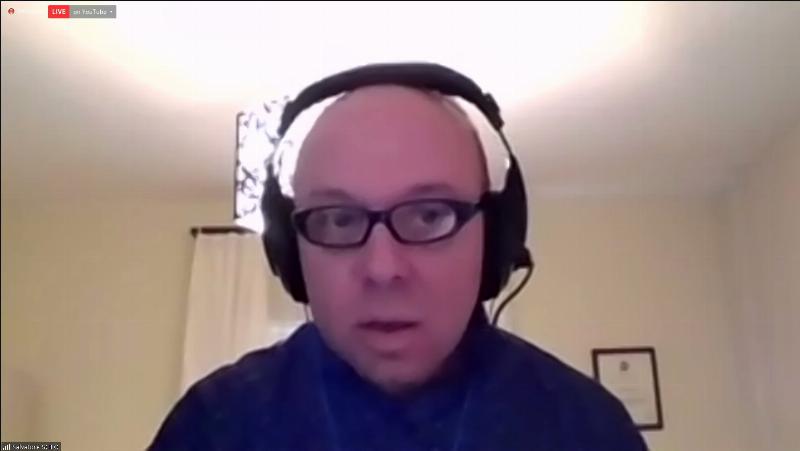
Assoc. Dr. Salvatore Scifo from Bournemouth University, in his speech titled “Connections and Interdisciplinary Communication and Media in the 2020s,” discussed current concepts and topics in media communication. Assoc. Dr. Salvatore Scifo stated that digital education and online courses gained importance during the pandemic, and these shared resources could be followed not only by students but also by a certain segment of society and even from different parts of the world, explaining with examples how education could reach wider audiences.
Assoc. Dr. Salvatore Scifo: “The concept of ‘Post-Pandemic University’ emerged”
Assoc. Dr. Salvatore Scifo said: “Thanks to the pandemic, we had the opportunity to learn more quickly what people were experiencing through videos, online messages, and caricatures. As a result, the curriculum also changed and enriched. Furthermore, people's communication networks developed, allowing them to reach different experts and speakers through a global network. These screen-based educations brought about a change in mindset, and forgetting the classroom and campus logic, the common sharing of learning design gained even more importance. A new system design in education was realized with dynamic applications and mutual sharing. This led to the emergence of the ‘Post-Pandemic University’ concept. This concept revealed that in the digital environment, inequalities and inadequacies are not as strong in achieving the goal of leaving no one behind. With the 3D pedagogy created by the objectives of ‘Decolonize, Democratize-Diversify’ and the United Nations Sustainable Development Goals, there is an opportunity to redesign global knowledge networks and open knowledge repositories both within and outside universities, and to diversify learning environments.”
Prof. Dr. Erik Knudsen: “We can help people by using storytelling”
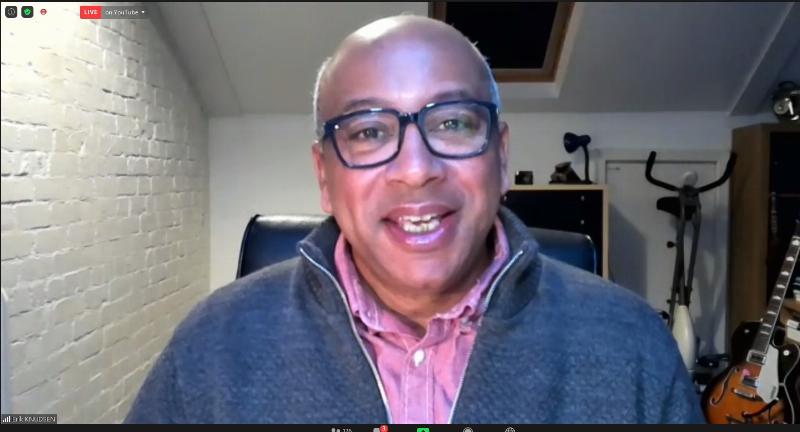
Prof. Dr. Erik Knudsen, Professor of Media Practices and Director of the Faculty of Culture and Creative Industries Research at the University of Central Lancashire, UK, addressed the topic of personal voice in his speech titled “Finding Your Personal Voice in Filmmaking.” Prof. Dr. Erik Knudsen said, “Of course, the importance of language in the film you make is immense. I call this the participatory feeling in film narration. We tell our stories by passing through feelings and emotions. Classical stories no longer convey these emotions. The importance of the storytelling structure is much greater. It needs to be adorned with participatory emotions, such as belonging, longing, or love. At some point, storytelling can play a huge role in people's healing. How will you find your expressive voice as a storyteller? Filmmaking is not just a tool for entertainment; it can be used, just like the written world, in a process of change to help create a better world.”
Communication education in digital education was discussed in all its aspects
On the first day of the symposium, sessions titled “Journalism Education and Accreditation in the Digital Age,” “Communication Education and Sector Requirements in the Digital Age,” “Pandemic Crisis and Online Education,” “Art, Technology, and Digitalization,” “Communicator of the Digital Age,” “New Approaches in Communication, News, and Ethics,” “New Media Education,” “Communication Education,” “Advertising Education in the Digital Age,” “Transformation of Television,” “Digital Transformation and Cinema Relationship,” and “Interpersonal Relationships in the Digital Age” were held.
On the second day of the symposium, Prof. Dr. Maureen Ellis and journalist-researcher Emre Kızılkaya will be invited speakers. Sessions titled “Specialization in Journalism,” “Media Literacy,” “Art and Virtual Reality in the Digital Age,” “Social Media, Communication, and Society,” “Social Media Usage,” “Digitalization, Media, Language, and New Reality,” “Cinema and Ideology,” “New Approaches in Digitalization, Advertising, and Public Relations,” “Advertising, Brand, Consumption,” “Advertising and Marketing Practices in the Digital Age,” “Transformation in Press, Publishing, and Journalism,” and “New Digital Platforms in Communication Education” will take place.
On the last day of the symposium, Prof. Dr. Peyami Çelikcan from İstinye University and Prof. Dr. Oya Tokgöz, Retired Faculty Member from Ankara University, will give speeches, moderated by Prof. Dr. Süleyman İrvan from Üsküdar University Faculty of Communication. The symposium, which will include sessions titled “Digital Game,” “Digitalization and the Transformation of the Culture Industry,” “Public Relations Education and Accreditation,” “Public Relations Practices in the Digital Age,” “Digitalization and the Transformation of Media,” and “Digitalization and the New Generation,” will conclude with the closing speech of Üsküdar University Founding Rector, Prof. Dr. Nevzat Tarhan.
Program booklet:
https://ifig.uskudar.edu.tr/uploads/content/files/ifig-2020program-kitapcigi-v8-12ekim.pdf
Share
Request a Call
Other News
- The book that read today's digital threats in 2014: Being a Conscious Family
- Experts warn: 'Instead of memorizing letters, teach pencil grip, scissor use, and coloring'
- School fear and school love both start in the family!
- Family is not merely transforming, it is being battered under a serious assault
- Artificial intelligence opens the door to early diagnosis in autism!