


No new students will be admitted to the Occupational Health and Safety Program for the 2026-2027 academic year.
Language of Instruction: Turkish, Preparatory School: Optional, Score Type: YGS-2
What is the Occupational Health and Safety Program?
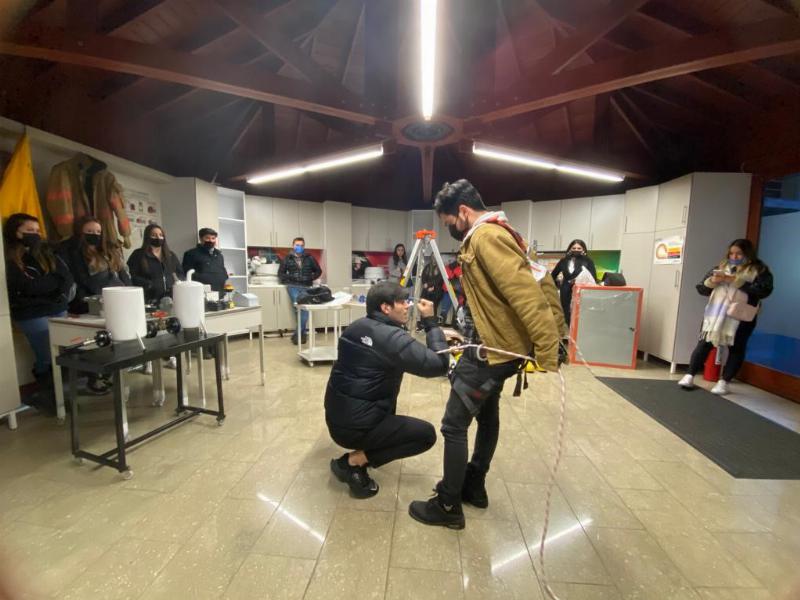
With industrialization, technological advancements, and changing working conditions, protecting employee health and safety has become one of the most critical needs today. Following the Occupational Health and Safety Law No. 6331, the need for qualified human resources in the field of occupational health and safety in both public and private sectors has increased significantly.
The Üsküdar University Occupational Health and Safety Associate Degree Program aims to train its students as fully equipped Occupational Health and Safety Technicians in prevention of occupational accidents and occupational diseases, identification of risks, and development of a safe working culture. The program supports theoretical education with practical laboratory work, sector collaborations, and field experiences.
Career Opportunities
Our graduates can work as Occupational Health and Safety Technicians in public institutions, Joint Health and Safety Units (OSGB), industrial establishments, construction projects, healthcare institutions, educational institutions, and the energy, logistics, and service sectors. In addition, provided that they meet the necessary conditions within the scope of the relevant legislation, they can pursue their careers toward becoming Occupational Safety Experts.
Expected Qualifications of an Occupational Health and Safety Technician:
- Possessing a sense of responsibility,
- Having analytical and solution-oriented thinking skills,
- Being attentive with strong observational skills,
- Being able to make quick and accurate decisions,
- Having effective communication skills,
- Being prone to teamwork,
- Being capable of working in a planned and disciplined manner,
- Being able to make correct decisions under stress,
- Following technological developments,
- Being open to continuous learning and self-development.
Undergraduate Programs for Transfer via DGS:
- Occupational Health and Safety (4-Year)
- Emergency and Disaster Management (4-Year)
- Healthcare Management
- Business Management / Business Administration
- Social Work
- Double Major Program (ÇAP) Opportunities:
- Emergency and Disaster Management
- Environmental Health
- Biomedical Device Technologies
- Health Institutions Management
- Social Security
- Health Information Systems Techniques
Let's Build the Safe Working Culture of the Future Together
Occupational Health and Safety is not merely a profession, but a strategic field of expertise centered around protecting human life. The Üsküdar University Occupational Health and Safety Associate Degree Program aims to educate its students as qualified professionals who are socially responsible, meet the needs of the sector, and will contribute to the dissemination of a safe working culture.


