

The consequences of the earthquakes in Kahramanmaraş have brought to the agenda the measures that need to be taken in possible earthquakes. Experts state that by preparing individually and socially, the transformation of earthquakes into disasters can be prevented, and they recommend that YOTA (Non-Structural Hazard Mitigation) work be carried out. Emergency and Disaster Management Specialist Ayşe Aydemir Yıldırım said, “What we mean by non-structural hazards are the items in our home. We can do YOTA work in our home by safely placing our belongings and fixing them.”
Content
YOTA Work Should Be Done in Every Home for Possible Earthquake Preparation
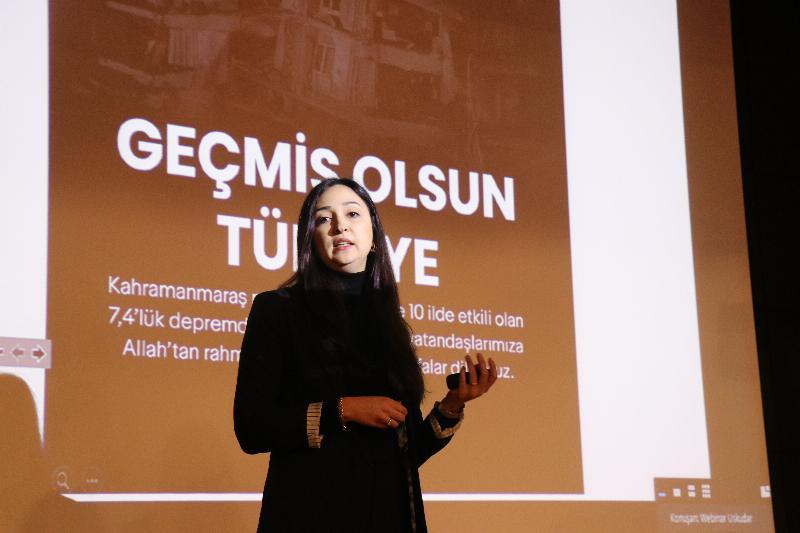
Lecturer Ayşe Aydemir Yıldırım of the Emergency and Disaster Management Program at Üsküdar Üniversitesi Vocational School of Health Services (SHMYO) said that the transformation of earthquakes into disasters can be prevented with precautions taken before possible earthquakes.
This earthquake will not be the biggest disaster we have experienced
Emergency and Disaster Management Specialist Ayşe Aydemir Yıldırım noted that lessons must be learned from the recent disasters as soon as possible, and a transition to a risk-focused disaster management system is necessary, stating, “In the past, we used to talk about the Erzincan earthquake as the biggest disaster we experienced in Turkey. It was magnitude 7.9, and approximately 33,000 people lost their lives in the Erzincan earthquake. Then we experienced the 1999 Marmara earthquake, and approximately 18,000 people lost their lives, and a large number of our buildings collapsed. Now, the Kahramanmaraş earthquake, which is the biggest disaster we have experienced in Turkey throughout the Republican era, has occurred. Unfortunately, I must say that this will not be the biggest disaster we experience. As we all know, we are expecting a major Istanbul earthquake. Therefore, we must learn lessons from these disasters as soon as possible, heal our wounds, and transition to a risk-focused disaster management system.”
We can prevent earthquakes from turning into disasters
Emergency Aid and Disaster Management Specialist Ayşe Aydemir Yıldırım noted that earthquakes cannot be prevented, but their transformation into disasters can be, stating, “Earthquakes are natural phenomena whose occurrence cannot be prevented. Unfortunately, we cannot predict when, where, or what magnitude an earthquake will occur. Despite all technological advancements, early warning for earthquake disasters is unfortunately not yet possible. Therefore, we must be prepared as if an earthquake could happen at any moment. Not every earthquake is a disaster. For us to categorize earthquakes as disasters, very serious consequences must occur. Earthquakes that result in deaths and injuries, building collapses, or severe damage to buildings are considered disasters. We cannot prevent these earthquakes from occurring, but we can prevent them from turning into disasters. We can only achieve this by preparing individually and socially.”
We have no preparation
Yıldırım underlined that experts state the probability of a major Istanbul earthquake occurring is currently 62 percent, and added that there is no individual or societal preparation. Yıldırım stated that the longest fault line is the North Anatolian Fault, which extends to Istanbul, and said, “We last experienced the 1999 Marmara earthquake, and geological engineers state that these earthquakes recur every 30 years. 22 years have passed since the '99 earthquake. A major earthquake hasn't happened; 8 years remain… Currently, geological engineers estimate that the probability of an earthquake in Istanbul right now, this very minute, is 62 percent. That is a very high rate. We know this, experts say it, but are we preparing? Unfortunately, we have no preparation, neither individually nor socially.”
We need to become conscious as a society and move into a preparation process
Yıldırım noted that according to the post-earthquake forecast analyses prepared by Kandilli Observatory, an earthquake of magnitude 7 to 7.5 is expected in the Marmara Sea, stating, “According to the forecast scenario prepared by Kandilli Observatory, if an earthquake of magnitude 7.5 occurs, around 50-60 thousand heavily damaged buildings will collapse in Istanbul. There will be an estimated 500-600 thousand homeless people, 70-90 thousand casualties along with seriously injured individuals, problems in infrastructure systems such as electricity, water, and natural gas, and an estimated material loss of 50 billion dollars. Furthermore, it is estimated that approximately 1 million search and rescue personnel will be needed if a major earthquake occurs in Istanbul. Unfortunately, there are not 1 million search and rescue personnel in Turkey, and when we look at it, search and rescue workers are also potential disaster victims. We need to raise awareness individually and as a society and rapidly move into a preparation process without leaving the work to them.”
YOTA work should be done
Emergency Aid and Disaster Management Specialist Ayşe Aydemir Yıldırım drew attention to what needs to be done before a possible earthquake, saying, “There are things we can do before an earthquake. We can prepare for an earthquake by activities such as preparing a disaster bag, checking if the building is sound, having it checked by experts, preparing a family disaster plan, organizing drills, and participating in drills. At the same time, we can safely place our belongings in our homes and conduct damage reduction work against hazards by securing items that pose a risk. In this context, I recommend YOTA work. YOTA work is; Non-Structural Hazard Mitigation work. What I mean by non-structural hazards are the items within our home. We can carry out such YOTA work in our home by safely arranging our belongings and fixing them.”
Everyone should learn to survive for three days
Yıldırım noted that the first 72 hours of an earthquake are referred to as golden hours in disaster management, during which everyone has the possibility of being on their own, and said that everyone should take precautions to survive for three days.
Ayşe Aydemir Yıldırım noted that when an earthquake occurs, it is not possible for search and rescue teams, AFAD, and healthcare workers to reach everyone, stating, “During the golden hours, everyone is on their own. Therefore, everyone will learn to survive for three days. Furthermore, preparing a disaster bag is very valuable. You must include enough food, water, and first aid supplies in your disaster bag to survive for the first three days. In the disaster bag; if you have a child, you can include activity materials for them, and create a hygiene kit containing items like wet wipes, toilet paper, toothbrush, and toothpaste. A flashlight, batteries, and a radio must be included. Water and food sufficient for 72 hours should be placed. Here, you can opt for long-lasting canned foods that will provide you with energy. Spare keys and health records should also be included. Seasonally appropriate clothes and a blanket must also be put in the disaster bag. It is important to update the disaster bag every 6 months and change clothing. Cash must be included. A first aid kit is very, very important in the disaster bag. We can also prepare our disaster bag by including a whistle, protective materials, and a family plan.”
Basic behavior to be adopted during an earthquake: “Drop, Cover, Hold On”
Yıldırım stated that attempting to evacuate during an earthquake puts human lives at risk, saying, “During an earthquake, we need to calmly perform the 'Drop, Cover, Hold On' action without panicking. Before an earthquake, we need to identify safe spots, such as next to a sofa, table, or our bed, then drop, cover our head and neck, and hold on with one hand to prevent falling. In other words, the 'Drop, Cover, Hold On' action is the fundamental behavior to adopt during an earthquake. It is also known as the fetal position. By making ourselves smaller, we essentially reduce our target. When an earthquake occurs, we absolutely will not run, we will not panic, and we will stay away from doors, windows, and stairs, because stairs are the first places to collapse when an earthquake happens. They have no load-bearing capacity. Therefore, attempting to evacuate means risking our lives.”
Precautions should also be taken against aftershocks
Emergency and Disaster Management Specialist Ayşe Aydemir Yıldırım pointed out that aftershocks sometimes last for months, even years, stating, “After an earthquake, we need to check if there are any injuries to ourselves or those around us. We have already put the first aid kit in the disaster bag. With the first aid supplies we included, we need to provide first aid to ourselves and those around us. Aftershocks continue after an earthquake. Aftershocks sometimes last for months, even years. We must certainly be cautious against aftershocks. We will definitely follow emergency instructions from a battery-powered radio. We will listen to warnings. After the disaster, we need to stay away from collapsed electricity poles, trees, and high-rise buildings, and please do not jam phone lines. People are worried about their acquaintances, but this makes the job of the disaster victims and the working search and rescue personnel more difficult.”
Share
Update Date: March 01, 2026
Creation Date: March 02, 2023
Request a Call
Other News
- The book that read today's digital threats in 2014: Being a Conscious Family
- Experts warn: 'Instead of memorizing letters, teach pencil grip, scissor use, and coloring'
- School fear and school love both start in the family!
- Family is not merely transforming, it is being battered under a serious assault
- Artificial intelligence opens the door to early diagnosis in autism!