

Üsküdar Üniversitesi and its practice partner NPİSTANBUL Beyin Hastanesi are part of the International Brain Research Consortium (IBRC), where leading universities worldwide aim to conduct scientific collaboration. The consortium includes Stanford University in the United States, Icahn School of Medicine (New York), University of Ottawa in Canada, and University of Tehran from Iran. The consortium, which will conduct neuroscience-focused studies, will prioritize neuroimaging methods, medical big data analysis (using collected data), and biomarker detection.
Content
World's Esteemed Universities and Research Centers Work for Brain Research
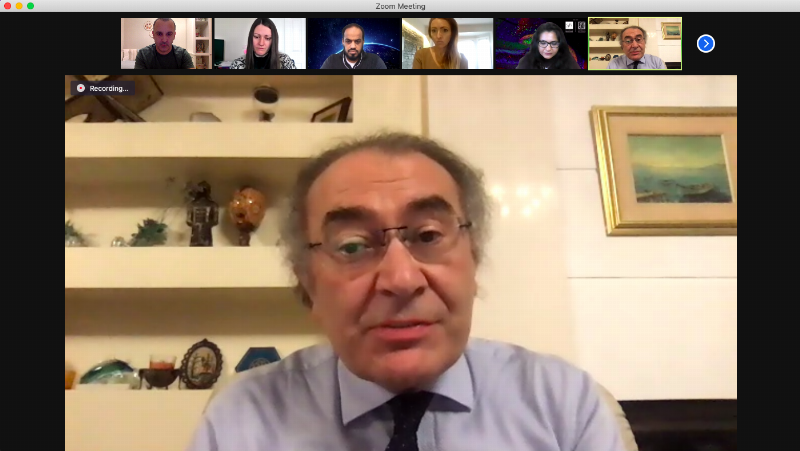
After the meeting where collaboration topics were discussed with consortium members, including Üsküdar Üniversitesi Founding Rector, psychiatrist Prof. Dr. Nevzat Tarhan, Üsküdar Üniversitesi Faculty of Engineering and Natural Sciences, Head of Software Engineering Department, Assoc. Prof. Dr. Türker Tekin Ergüzel, provided information regarding the International Brain Research Consortium (IBRC) activities.
Leading universities worldwide are collaborating
"IBRC is an academic collaboration naturally formed with the 10 years of experience of Üsküdar Üniversitesi and the 22 years of experience of its practice partner NPİSTANBUL Beyin Hastanesi, in addition to its academic staff, neuroscience research, and international recognition. With the Memorandum of Understanding (MOU) signed through consensus, researchers from VA Palo Alto/Stanford University School of Medicine (USA), Mount Sinai Icahn School of Medicine (USA), University of Ottawa (Canada), and Atieh Clinical Neuroscience Center / University of Tehran (Iran) have reached an agreement to conduct academic collaboration together with our university and hospital within the consortium. The consortium currently consists of 6 independent research centers/universities and allows the participation of new members, provided that all existing member research centers / universities in the consensus document approve."

Researcher exchange will be possible
The studies to be carried out within the IBRC partnership will include research articles, conference participations, jointly-participated projects, and researcher exchange. Additionally, they aim to increase the consortium partners' data collection opportunities and researcher resources, their capability to analyze collected data, and their capacity to collaboratively generate knowledge / develop methods.
Priority research areas: neuroimaging and neuromodulation
Although researchers from the consortium member universities are employed at different universities, over the past 3 years, through academic collaborations, a developing database will be created within the framework of priority research areas such as neuroimaging, neuromodulation, behavior, and clinical research. This database will include brain phenotypes (brain volumetric measurements, cortical thickness, microstructural white matter, task-based brain activations, functional connectivity, and EEG/MRI-based biomarkers), along with demographic, diagnostic, behavioral, and symptomatology data.
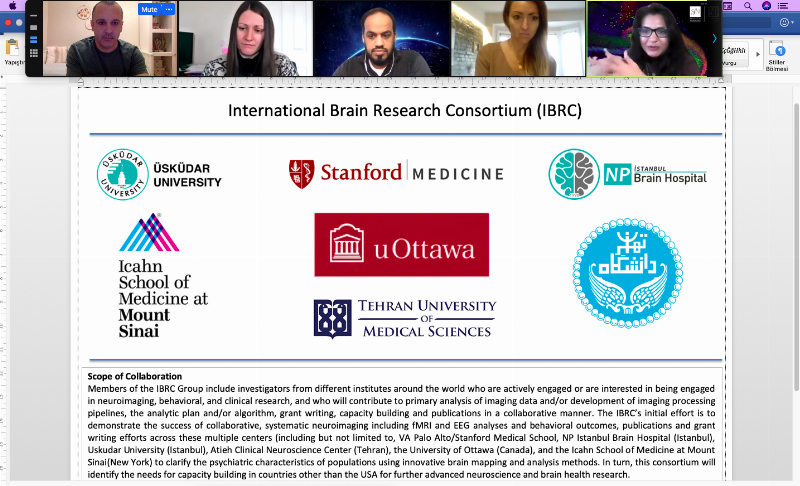
Analysis of collected big data will be conducted at Üsküdar Üniversitesi
The data collected by research centers will be simultaneously processed in this database using machine learning algorithms for preliminary diagnosis, classification, and biomarker discovery processes. The analysis of the big data collected within the IBRC using deep learning algorithms will be entirely carried out by Üsküdar Üniversitesi, while the determination of the study focus, data collection process, data storage, and clinical evaluation of findings will be conducted by the consortium partners.
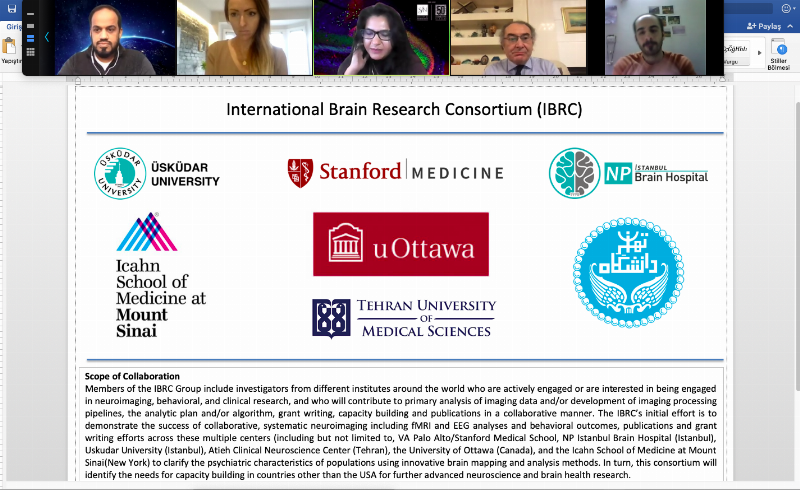
First analysis conducted on depression
Assoc. Prof. Dr. Türker Tekin Ergüzel stated that the primary goal of the consortium is to combine systematic neuroimaging analyses such as research, fMRI, and EEG analysis from independent research centers to open up different and new areas of study for researchers, and to share this accumulated knowledge through researcher exchange programs. He added, "The consortium, which will also study the psychiatric characteristics of populations using innovative brain mapping and analysis methods, has completed its first analysis with findings on response performance differences due to gender in TMS responses of male and female patients diagnosed with depression."
Consortium members have responsibilities
Assoc. Prof. Dr. Türker Tekin Ergüzel noted that IBRC member research centers will develop analysis procedures for areas they prioritize and will contribute to, and will conduct brain phenotype analyses using big data processing methods. He stated, "The storage and organization, protection, ownership, analysis of the collected big data, and the distribution of the resulting scientific knowledge have been signed under the consensus of the partners in the agreement document. To succeed in these steps, IBRC's scientific initiative and policies will be followed and overseen by the consortium members. Consortium members are responsible for timing, the implementation and monitoring of ethical guidelines, and the regular publication of research results."
Opportunity for postgraduate students to participate
Assoc. Prof. Dr. Türker Tekin Ergüzel, Director of the Institute of Health Sciences, stated that neuroscience postgraduate students can also take part in these studies as members of IBRC. He said, "Within our university, our researcher students working in these fields are studying in our Neuroscience Master's, Neuromarketing Master's, Neuroscience PhD, and Molecular Neuroscience PhD programs. Researchers from the consortium member research centers / universities will conduct teleconferences about their work with our students in seminar courses every semester. Students who wish to deepen their research will be able to participate in our studies with their theses within the consortium."
Share
Update Date: February 26, 2026
Creation Date: November 25, 2020
Request a Call
Other News
- Experts warn: 'Instead of memorizing letters, teach pencil grip, scissor use, and coloring'
- School fear and school love both start in the family!
- Family is not merely transforming, it is being battered under a serious assault
- Artificial intelligence opens the door to early diagnosis in autism!
- Artificial intelligence doesn't end engineering, it transforms it!