

Stating that those who previously spoke of climate change, global warming, and global pollution were only seen as idealists, Psychiatrist Prof. Dr. Nevzat Tarhan said, “Now, these individuals should be seen as realists, not idealists.” Highlighting that humans must be both compassionate and just when approaching nature, Prof. Dr. Tarhan noted that the balance of compassion and justice, and respect for nature, has been disrupted by modernism and the capitalist system. Tarhan added that selfishness, which he defined as the most important disease of this century, is a disease that destroys nature.
Content
Workshop on 'Mizan' Concept in Islamic Thought Held
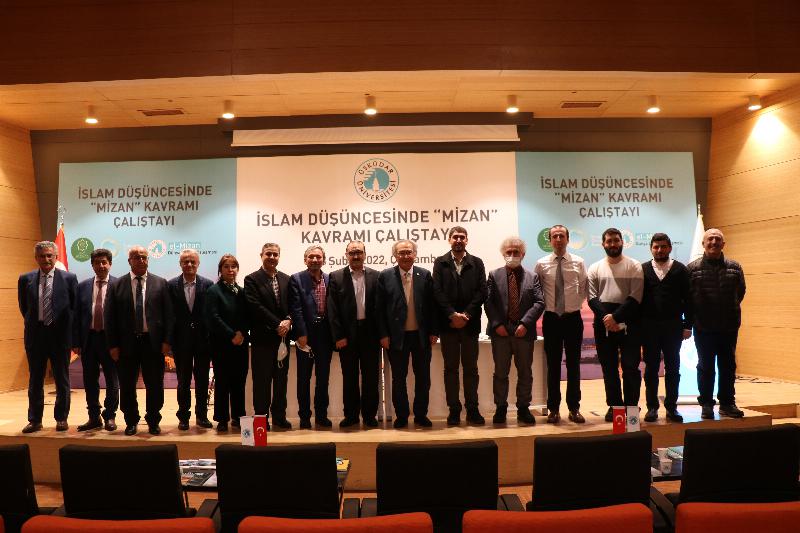
At the 'Mizan' Concept in Islamic Thought Workshop, organized by the Faculty of Humanities and Social Sciences of Üsküdar Üniversitesi, the concept of mizan was evaluated by experts from various universities across Turkey.
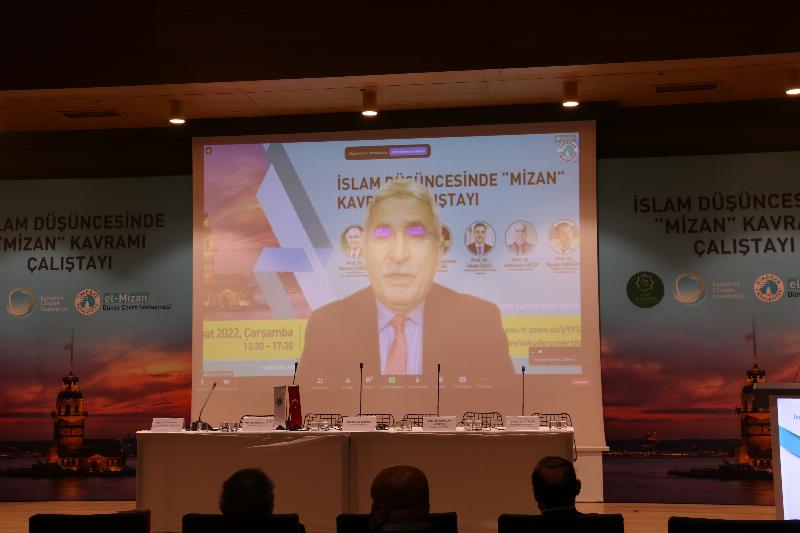
Prof. Dr. İbrahim Özdemir: “Mizan is one of the main concepts of the Quran”
The opening speech of the workshop, held at the Nermin Tarhan Conference Hall on the Central Campus of Üsküdar Üniversitesi, was given by Prof. Dr. İbrahim Özdemir, Dean of the Faculty of Humanities and Social Sciences at Üsküdar Üniversitesi. Prof. Dr. İbrahim Özdemir, who participated in the workshop online, stated in his opening speech that it was held concurrently with the ongoing international meeting of the UN Environment Programme in Nairobi.
Özdemir, touching upon the reasons for choosing mizan as the topic for the workshop, said, “The reason we chose the concept of mizan is that mizan is one of the main concepts of the Quran. Mizan appears 9 times in the Quran. In Surah Ar-Rahman, the importance of mizan is emphasized 4 consecutive times. It is as if it is engraved in our minds. Thus, since the Quran was first revealed, it has encouraged Muslims to 'read' (recite) and thus read nature itself.”
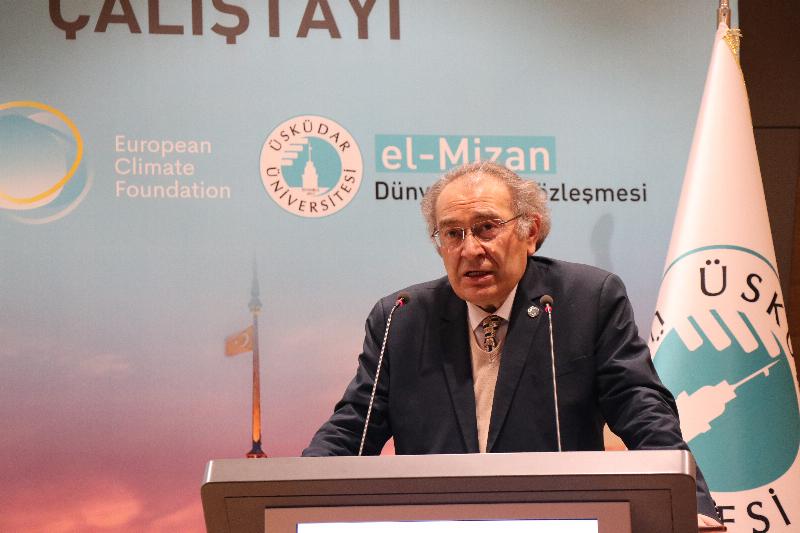
Prof. Dr. Nevzat Tarhan: “Humanity is disrupting the balance of nature”
Prof. Dr. Nevzat Tarhan, Founding Rector of Üsküdar Üniversitesi and Chairman of the Board of Trustees, made evaluations on ecological psychology in his opening speech.
Prof. Dr. Nevzat Tarhan, drawing attention to the serious extent of human recklessness towards nature at the world's current juncture, said, “The most common situation we encounter in nature is that forests are on the verge of extinction. On the other hand, there is global warming and melting glaciers. Water resources have significantly decreased. Droughts occur in some places, and floods in others. Natural disasters have seriously increased in nature compared to the previous century. This means that the homeostatic balance in nature, once disrupted from one point, erupts as a disease from another. Humanity is disrupting that balance.”
Prof. Dr. Nevzat Tarhan: “Work not established within a social and cultural context will not last”
Prof. Dr. Nevzat Tarhan, drawing attention to the fact that those who previously spoke of climate change, global warming, and global pollution were only seen as idealists, said, “Now, these individuals should be seen as realists, not idealists. This study, which combines environmentalism in the sense of 'Al-Mizan' with our cultural and belief resources, is very valuable because if you cannot establish the social and cultural context of a good work you do, that work will not succeed. Therefore, we can say that establishing the cultural context of this work through our resources concerning 'Al-Mizan', meaning the presence of a measure and balance in the universe and bringing it to the forefront, is very important as a message to humanity which disrupts this balance.”
Prof. Dr. Nevzat Tarhan: “We cannot treat without a correct diagnosis”
Prof. Dr. Nevzat Tarhan, emphasizing that we are in a crucial time to address global warming, climate change, and deforestation, said, “The United Nations also has a resolution on this matter, and Turkey has signed the agreement. Now, there is a Ministry of Environment, Urbanization and Climate Change. Within this framework, we cannot treat without asking the question 'Why has the environment deteriorated?' and without making a correct diagnosis. Why hasn't there been such a great deterioration until now, but it is happening now? There is always technical information like the ozone layer depletion, atmospheric warming, and the emergence and accumulation of greenhouse gases in cities.”
Prof. Dr. Nevzat Tarhan: “There is serious electromagnetic pollution”
Prof. Dr. Nevzat Tarhan also drew attention to the serious, unnoticed electromagnetic pollution today, stating, “This pollution also needs to be addressed as an agenda item within environmental pollution. Electromagnetic pollution is invisible. Electromagnetic particles and waves circulate in our environment. Their presence at a certain density is acceptable within health limits. When it exceeds a certain level, it starts to cause harm, just like dust. Among us are our esteemed professors Prof. Dr. Osman Çerezci and Prof. Dr. Selim Şeker, who conduct important studies in this field. They also demonstrate this. Dust particles floating in the air are natural in a normal environment, but not in an operating room. That should be a clean room, with zero particles, and not even a single microbe should circulate in the air because it causes harm.”
Prof. Dr. Nevzat Tarhan: “The relationship between human, space, and nature is very important”
Tarhan stated that there is a fundamental scientific measure regarding global pollution, adding, “If we don't protect it, we will cause the greatest harm to our grandchildren. Perhaps we won't feel it very closely, but our children and grandchildren will feel it much more. We must not let our children say, 'Shame on our grandparents.' For this, human behavior is very important. The relationship between human, space, and nature, which influences human behavior, is very important. This relationship needs to be established correctly. There is a balance of human, nature, and nurture. What we call nature is the naturally formed environment, and then there is the artificial environment and urbanization, which is defined as nurture. When we say environment, we often only understand nurture, meaning the artificial environment. We perceive the environment as the one in the city where we live. However, there is also a natural environment. Human behavior and decisions change this.”
Prof. Dr. Nevzat Tarhan: “Humans should question the harm they inflict on the environment”
Prof. Dr. Nevzat Tarhan stated that bees are pollinating creatures and continued his words as follows:
“Pollination in nature can only be done by wind and bees. Wind alone is not enough; a bee visits about 400 flowers a day to return to its hive and provides incredible fertilization. The result of mathematical modeling on what happens to the world when bees disappear, and what happens when humans disappear, is thought-provoking. It was concluded that if bees disappear, the entire world will become a desert within approximately 50 years, and no greenery will remain. Due to the lack of pollen and fertilization, the world consumes itself within 50 years. If humans disappear, it was concluded that the world would become like Chernobyl within 50 years. Chernobyl happened in 1986, and no human has entered there since. Currently, the walls of the buildings there are covered in greenery. Without human intervention, Chernobyl has become more beautiful. Humans are not a product of nature; they are guests in this world. The purpose of human existence in the world is also different. Humans need to question the harm they cause to their environment and the world.”
Prof. Dr. Nevzat Tarhan: “The Age of Enlightenment harmed nature.”
Prof. Dr. Nevzat Tarhan, emphasizing that the Age of Enlightenment unknowingly harmed nature, said, “Currently, we are experiencing the negative consequences of the Age of Enlightenment. Historically, philosophical discourses with the approach of 'nature is our rival' developed. By saying nature is our rival, the philosophy of destroying nature was created, asserting that we must defeat and dominate it. Instead of the philosophy that respected nature, a movement emerged that claimed the right to destroy and devastate nature. As a result of that movement, we began to treat nature harshly. However, in our civilization's geography and in Asia, there is respect for nature. Cities are green inside. There are no trees in old European cities. For example, there isn't a single tree in Toledo, but there are trees in the areas developed around it later. Old European cities are treeless, but Ottoman cities are lush green. This is an important sign showing the cultural dimension of a civilization's respect for greenery. The three enemies of the forest are the axe, fire, and goat. The cause of these three enemies is humans, so we must use these three correctly.”
Prof. Dr. Nevzat Tarhan: “The disease of selfishness is the most significant disease destroying nature.”
Prof. Dr. Nevzat Tarhan stated that forest management is also related to the basic principles of resource management, saying, “When managing a monetary resource, input and output control are first performed according to need, the pool is expanded, and healthy placement suitable for the goal is achieved. Only then does intelligent spending occur. In Arabic, the word 'iqtisad' (economy) is derived from the root 'maqsad' (purpose). If a resource is to be managed, the purpose must first be determined. The relationship between human and environment is also very important. The relationship with the environment also needs to be approached with the logic of resource management. Just as we intelligently manage monetary and social resources, we must also manage our relationship with the environment. If we cannot establish meaningful relationships with the environment, then we cannot be nature-friendly and we will reflect our selfishness. The most important disease of this century is actually selfishness. The disease of selfishness is the most significant disease destroying nature. Hunting for pleasure and taking animals to confine them in zoos is disrespect for nature and against animal rights. Many things need to be re-evaluated.”
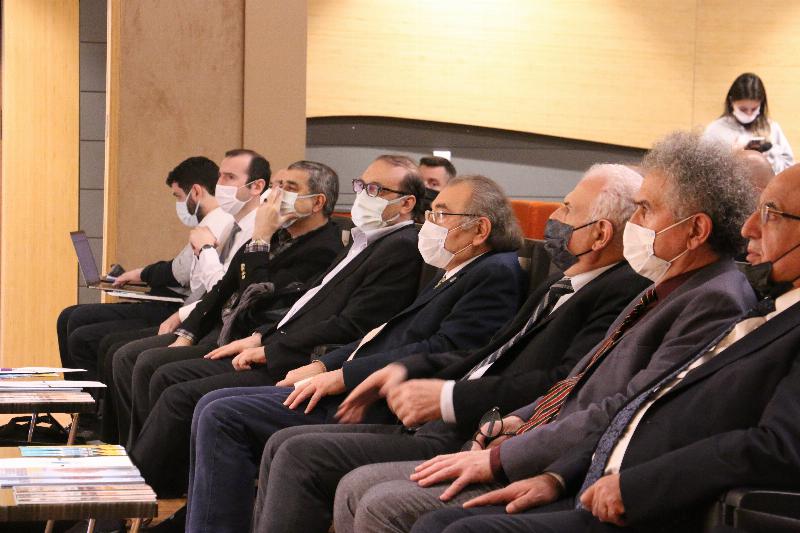
Prof. Dr. Nevzat Tarhan: “The relationship with the environment is not less important than the relationship with money.”
Tarhan stated that the name of Prophet Adam's daughter was İklima, and the word 'iklim' (climate) is derived from it, adding, “We have a culture that values the environment. We must not lose this culture and reactivate it. Humans are born behaviorally premature into the world, but animals are born having already learned. A duck can swim as soon as it is born. Humans, on the other hand, only become capable of self-management at the age of 15 and start walking at age 1. Humans are born to learn. Therefore, environmental awareness and relationships with the environment must also be taught in education. The relationship with the environment is not less important than the relationship with money. The capitalist system sees money as the most important value. However, the environment is also a very important value. Even though it is just beginning to be understood, this is an important chance for the world. This opportunity must be utilized well. As Üsküdar Üniversitesi, we have achieved a first in this regard. The 'Al-Mizan' study, supported under a United Nations project, is an international endorsement of this success. We have been given the opportunity to lead in this area in the Islamic world. We aim to present the information gathered from the 'Al-Mizan' symposium to the scientific community by publishing it as a book. Without mental transformation, environmental transformation cannot occur. First, the question marks in people's minds need to be addressed.”
Prof. Dr. Nevzat Tarhan: “Humans must be both compassionate and just when approaching nature”
Prof. Dr. Nevzat Tarhan stated that there are two types of relationships in a human's interaction with the environment: “Firstly, with space and their immediate surroundings, and secondly, with nature. In both, humans possess the concepts of justice and compassion. In psychology, this also refers to love and discipline. The dimension of love and discipline is important in a person's behavior. Its reflection in society is in the form of justice and compassion. When approaching nature, one must be both compassionate and just. When there is justice, there is a measure. Being just means neither too much nor too little. Being able to do what is necessary. Being able to use nature as much as necessary, to do as much as necessary. Modernism and the capitalist system have seriously disrupted justice and measure. They have disrupted the balance of compassion and justice. They have disrupted respect for nature.”
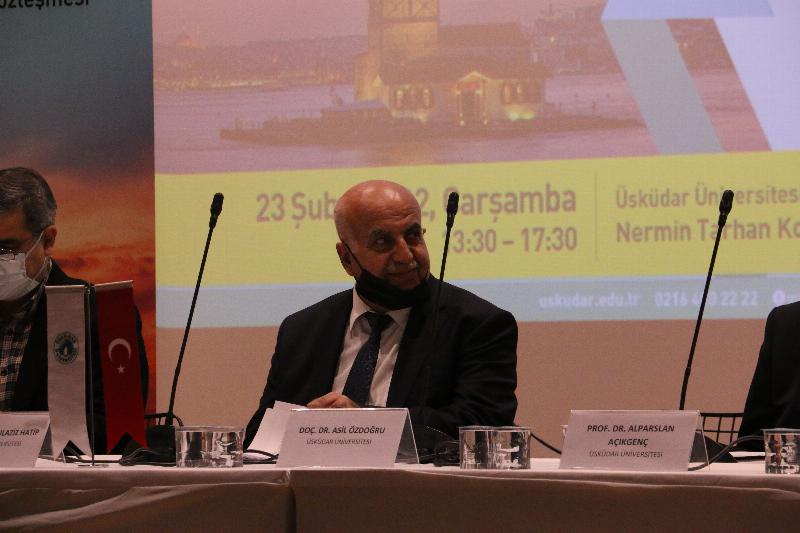
Following the opening speeches, the workshop proceeded under the moderation of Assoc. Prof. Dr. Asil Özdoğru, a faculty member of the Psychology Department at Üsküdar Üniversitesi.
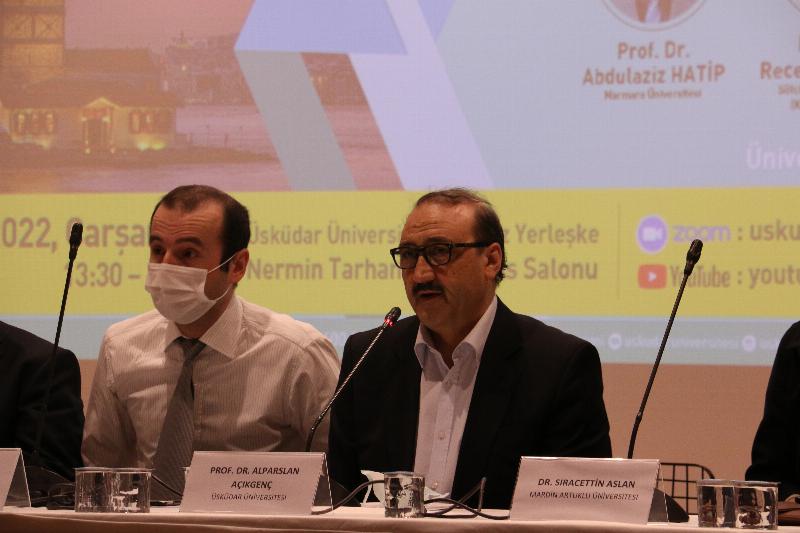
Prof. Dr. Alparslan Açıkgenç evaluated the concept of mizan in philosophical tradition
Prof. Dr. Alparslan Açıkgenç, a faculty member of the Philosophy Department at Üsküdar Üniversitesi, discussed the concept of mizan in Islamic civilization and Chinese civilization in his presentation titled “Mizan in Philosophical Tradition.” Prof. Dr. Alparslan Açıkgenç said, “If there is no mizan, meaning no element of balance in existence, there is no life. Mizan is perceived as the soul of life. Action, which is a voluntary process similar to speech, necessitates mizan. This is a purposeful activity presupposed by a willing agent who possesses the power of speech or logical utterance (nutuk). Balance is primarily expressed by the balance that the Quran establishes between the life of the hereafter and the life of this world. Mizan, which involves a living process, is derived from the root 'wazana'. 'Wazana' means to weigh in Arabic.” Prof. Dr. Alparslan Açıkgenç stated that the concepts of yin and yang in Chinese philosophy correspond to the concept of mizan.
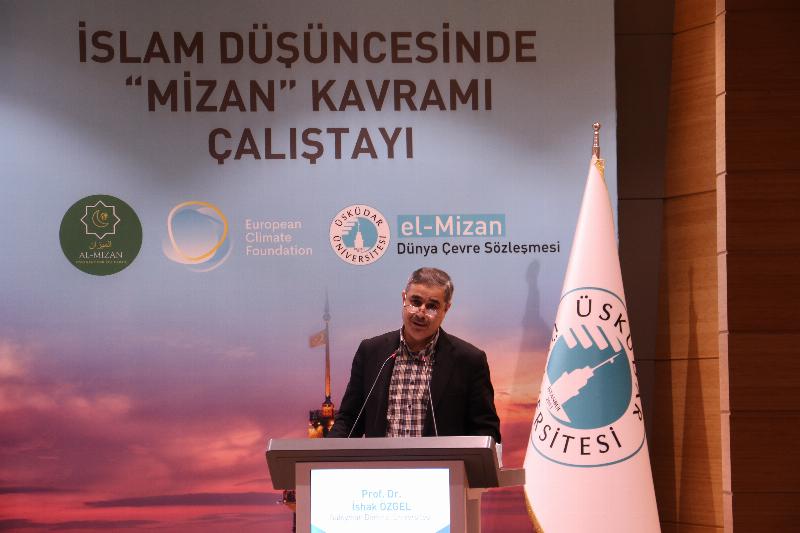
Prof. Dr. İshak Özgel: “Mizan has been used in 4 main contexts in the Holy Quran”
Prof. Dr. İshak Özgel from Süleyman Demirel University, in his presentation titled “The Concept of Mizan in the Quran,” said, “If the environment is viewed merely as a habitat where we can live and breathe, humanity becomes outraged when damage or harm occurs. The purpose of using the concept of mizan is this: there are two scales, and it means that what is on one scale is balanced with what is on the other. The word mizan and its roots have been used in the Holy Quran in 4 main contexts. First; that religion, i.e., the revelation sent with the prophets, contained mizan and was named as such; second; that if there is creation, there is mizan in everything; third; that the behaviors a human must exhibit to demonstrate their personality, their humanity, in their relationships with other humans, must contain mizan; and fourth is that deeds will be weighed with mizan in the hereafter. These 4 topics provide clues on how mizan should be viewed. We see mizan being used in matters of religion, the universe, humanity, and the afterlife.”
Prof. Dr. Abdulaziz Hatip: “Islam is mercy in every respect and a civilization of compassion”
Prof. Dr. Abdulaziz Hatip from Marmara University, in his paper titled “Divine Mizan and the Relationship of Faith in the Universe,” stated that the element of balance is always emphasized in the verses related to mizan in the Holy Quran. Prof. Dr. Abdulaziz Hatip, emphasizing the value and importance Islam places on the environment, said, “Islam is mercy in every respect. It is a civilization of compassion. Animals have not been deprived of its compassion. In it, mercy and good treatment towards animals are not left merely as words but are bound by specific rules. In this regard, the Islamic civilization is unparalleled.”
Prof. Dr. Recep Ardoğan, discussed the concept of mizan in contemporary Islamic thought
Prof. Dr. Recep Ardoğan from Kahramanmaraş Sütçü İmam University, in his presentation on “The Concept of Mizan in Contemporary Islamic Thought,” said, “Although the concept of 'kul hakkı' (rights of God's servants) in Islam first reminds us of the concept of human rights, we can also say that the concept of 'kul hakkı' encompasses not only the rights of living people but also the rights of future generations, and not only humans but also other living beings on our planet.” Prof. Dr. Recep Ardoğan also stated, giving examples from various verses in the Holy Quran, that the word mizan carries the meanings of justice, the afterlife, weight, and scale.
Dr. Sıracettin Aslan examined Al-Khazini's work Mizan'ul Hikma
Dr. Sıracettin Aslan from Mardin Artuklu University gave examples from the work “Mizan’ül-Hikme” by the Islamic scientist Al-Khazini in his presentation titled “Human, Nature, and Mizan in Islamic Scientific Tradition.” Dr. Sıracettin Aslan said, “Right at the beginning of the work, attention is drawn to the ontological connections between wisdom, knowledge, justice, the afterlife, the world, order, religion, and virtues. Al-Khazini states that achieving virtues is possible through wisdom.”
The workshop, broadcast live on ÜÜ TV and Üsküdar Üniversitesi's official YouTube account, concluded with participants taking a group photo.
Share
Update Date: February 28, 2026
Creation Date: February 24, 2022
Request a Call
Other News
- Cooperation protocol signed between Üsküdar University and Şerife Bacı Foundation
- Be careful about the thought, “It’s just once, nothing will happen”!
- Üsküdar University became a member of the International Association of Universities (IAU)!
- Prof. Nevzat Tarhan: “Protecting a child is not just about putting an obstacle in front of them on the screen!”
- Prof. Deniz Ülke Kaynak: “We are still in the conflict management phase!”