

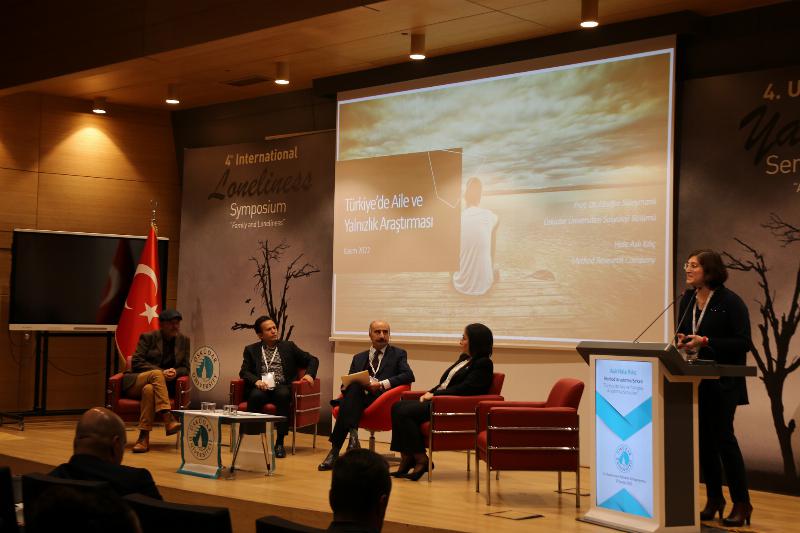
The 'Family and Loneliness Research in Turkey', conducted by Üsküdar Üniversitesi within the scope of the 4th International Loneliness Symposium under the coordination of Prof. Dr. Ebulfez Süleymanlı, drew attention with its interesting results. According to the research findings, an increase in feelings of loneliness was observed in both men and women. 40% of women and 26% of men stated that they often felt lonely. At this point, it was noteworthy that women felt twice as lonely compared to 2019. The feeling of loneliness among women, which was 20% in 2019, reached 40% in 2022. The research also showed that the feeling of loneliness decreased with age. 40% of young people aged 18-24, and 26% of individuals over 55, stated that they often felt lonely. When the feeling of loneliness was examined based on geographical regions, it was observed that 40% of residents in Southeast Anatolia frequently felt lonely. Experts interpreting the research results stated that the weakening of secure social ties within the family causes experiences of loneliness to emerge.
Content
Women and Youth Feel More Lonely
Feelings of loneliness in women doubled!
40% of young people feel “often lonely”
The region feeling the most lonely is Southeast Anatolia!
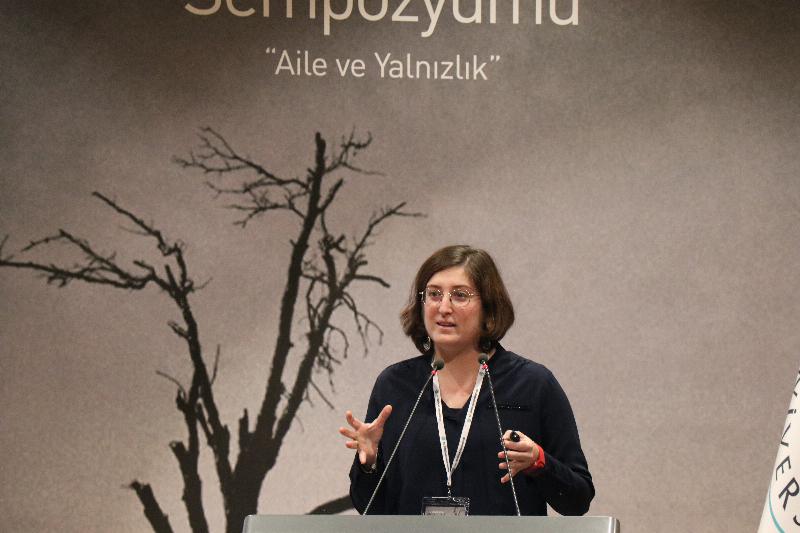
The results of the "Family and Loneliness Research in Turkey", conducted before the 4th International Loneliness Symposium organized this year by Üsküdar Üniversitesi with the theme "Family and Loneliness", have been announced. The research findings were shared with the public on the first day of the symposium by Hale Aslı Kılıç, Marketing Director of Method Research Company.
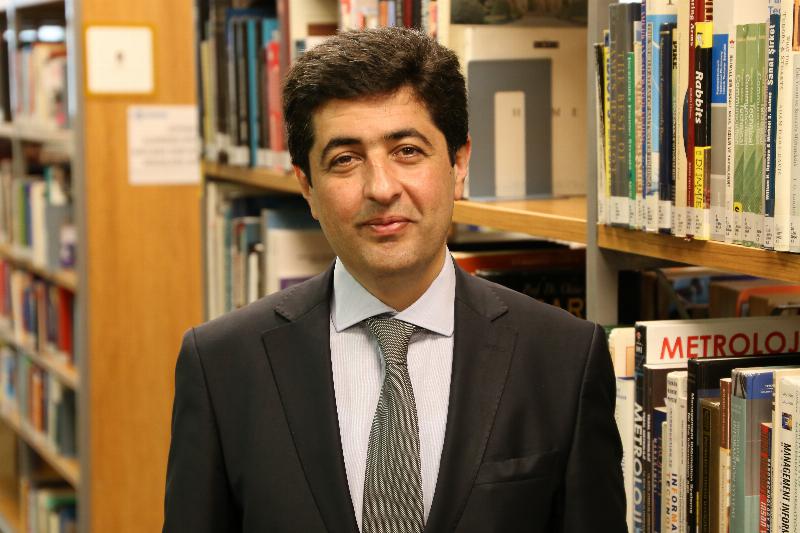
Under the leadership of Prof. Dr. Ebulfez Süleymanlı, faculty member of Üsküdar Üniversitesi Sociology Department, and Hale Aslı Kılıç, Marketing Director of Method Research Company, a comprehensive study was carried out across Turkey. The study aimed to determine the effect of loneliness on the family, and within this framework, people's perception of loneliness, how lonely they feel, the effects of feeling lonely on the individual, and activities undertaken when feeling lonely were examined in detail.
6,100 people from 81 provinces participated in the research
A total of 6,100 people aged 18-70 from 81 provinces of Turkey participated in the online survey conducted in November 2022. Overall, data was obtained with a 95% confidence level and a 1.25% margin of error. Weighting was performed on a geographical and demographic basis to ensure the data reflected the general population of Turkey.
Looking at the geographical, gender, and age distribution of the examined research data, participants from Marmara constituted 38%, Central Anatolia 14%, Aegean 12%, Mediterranean 12%, Eastern Anatolia 9%, Southeastern Anatolia 8%, and Black Sea 7%.
52% of the participants were women, and 48% were men. The age distribution of the participants was 18% for 18-24 years old, 29% for 25-34 years old, 28% for 35-44 years old, 19% for 45-54 years old, and 6% for over 55 years old.
Feelings of loneliness increased compared to previous years
While 34% of participants stated that they often (frequently + always) felt lonely, 30% felt lonely sometimes, and 36% stated that they did not feel lonely (rarely + never). When these results were compared with research conducted in 2019 and 2021, a significant increase in feelings of loneliness was observed.
Women and youth feel more lonely
An increase in feelings of loneliness was observed in both men and women. According to the research, 40% of women and 26% of men stated that they often felt lonely. At this point, it was noteworthy that women felt twice as lonely compared to 2019. The feeling of loneliness among women, which was 20% in 2019, was observed to have reached 40% in 2022.
Young people feel more lonely
When these results are examined by age group, it is seen that the feeling of loneliness decreases with age. 40% of young people aged 18-24, and 26% of individuals over 55, stated that they often felt lonely. When the change in feelings of loneliness across age groups compared to 2021 was examined, an increase in feelings of loneliness was observed in all groups over 25 years old compared to 2021.
We get married to alleviate loneliness, but…
When the perception of loneliness was examined according to marital status and family structure, it was observed that 38% of individuals living alone often felt lonely. The feeling of loneliness for those sharing a home with friends to alleviate this feeling dropped to 34%. For married individuals, this phenomenon decreased to 24%. However, it was determined that as couples have children, and as responsibilities and problems increase, spouses drift apart, and the loneliness returns to 33%.
When disagreements reach an impasse, and with separation, transitioning to a life with children, the feeling of loneliness remained at the same level as when living with a spouse and children, i.e., 33%. At this point, the fact that having or not having a spouse in families with children resulted in almost the same feeling of loneliness was considered a negative finding.
According to the results, when children leave the family, the level of loneliness was observed to return to the situation of living alone as a single person, which is 38%.
The loneliest region geographically: Southeast Anatolia
When the feeling of loneliness was examined based on geographical regions, it was observed that 40% of residents in Southeast Anatolia frequently felt lonely. This region was followed by Central Anatolia and the Black Sea Regions with 39%. The Marmara Region with 29% and the Eastern Anatolia Region with 30% were identified as the regions with the lowest feelings of loneliness.
Feelings of loneliness decreased as income level increased
The research found that income level is one of the important criteria affecting a person's feeling of loneliness in terms of socializing and communicating. It was observed that 44% of the group defining themselves as middle class and poor, and 30% of the rich and upper-middle-class group, often felt lonely. According to the research, which revealed a significant difference, those in the affluent class tried to alleviate their loneliness by meeting friends in restaurants, cafes, and shopping malls when they were alone, while the middle class and poor groups spent time at home and remained lonely.
Loneliness evoked contradictory meanings
Participants in the research were asked to express in three words what loneliness evoked in them. The most prominent word among these was "Peace" at 10%. The concept of "Peace," which conveyed a positive meaning, was followed by negative concepts such as "Unhappiness" at 5% and "Sadness" at 5%. In total, 72% of participants predominantly defined loneliness as a negative emotion, while a lower percentage, 28% of participants, defined it as a positive emotion.
How did the pandemic period affect loneliness?
In response to the question, "Was there any change in how lonely you felt during the pandemic period?", 24% of participants stated that they felt more lonely during that period, while 15% indicated that their feeling of loneliness decreased during the pandemic process.
While the loneliness of young people living in dorms before the pandemic decreased when they returned home, young people longing for their friends felt more lonely. Especially highly educated individuals and singles who normally interacted with friends outdoors began to feel more lonely during the pandemic. Men, individuals over 55, retirees, professionals, and widowed/divorced individuals reported no change in their feelings of loneliness during the pandemic, more so than other groups.
We spend time at home when we are alone
A significant portion of participants, 70%, intensely spent time at home when alone; 56% of participants spent time on the internet. 37% of participants reported sleeping, 36% dedicated themselves to cleaning and meal preparation, and 30% read books.
The research statistically showed that loneliness levels were lower for those who went out with friends to shopping malls/markets or for walks, visited NGOs/associations, went to watch matches/stadiums, visited loved ones, or hosted guests, in order to feel less lonely.
We need someone to confide in
23% of the interviewed individuals stated that they often could not find someone to confide in. 61% of participants said they confided in their friends, 33% in their siblings, and 29% in their spouses. The importance of having a circle of friends and siblings was also observed here. The research results revealed that half of married couples confided in a friend, and half in their spouse. Thus, the necessity for spouses to understand each other and be each other's confidant and friend in marriage emerged. Indeed, 68% of individuals who could not find someone to confide in stated that they often felt lonely. Furthermore, 21% of individuals said they confided in their mother, 6% in their father, and 13% in their children. The results indicated that family communication also needs to be improved.
We are alone in crowds
Participants were also asked how often they were alone. 38% of individuals stated never (never + rarely), 23% sometimes, and 40% often (frequently + always) felt alone. Even among participants who stated they were never alone and always surrounded by people, 13% reported feeling lonely often, and 28% reported feeling lonely sometimes. The results showed that feelings of loneliness are experienced even when surrounded by people.
Loneliness brings unhappiness
In the research conducted in 2019, it was observed that those who felt lonely felt 2.5 times more unhappy than those who did not; in 2022, this ratio increased to a 3.5-fold difference. While 70% of those who did not feel lonely stated they were happy with their lives, only 19% of those who frequently felt lonely reported being happy. However, 43% of those who felt unhappy when alone stated they were happy with their lives, while 57% of those who felt happy when alone expressed being happy with their lives.
The desire to socialize in virtual environments makes people even lonelier
Prof. Dr. Ebulfez Süleymanlı, faculty member of Üsküdar Üniversitesi Sociology Department, and Hale Aslı Kılıç, Marketing Director of Method Research Company, stated that when the research results are evaluated generally, the concept of loneliness in family life emerges as an important issue today, adding:
“The lifestyle brought about by urbanization, the confinement of individuals to personal boundaries by modern life, digitalization, and the decrease in sharing and solidarity lead to the weakening of secure social ties within the family and, over time, to experiences of loneliness. The distance between individuals in the family, coupled with the decrease in friendships and kinship relations during the pandemic, has also strengthened feelings of loneliness. Socialization tools outside the family prove insufficient in meeting an individual's emotional needs such as love, trust, attachment, and belonging, thereby increasing the individual's feeling of loneliness. Even individuals living under the same roof with a family can feel lonelier when they cannot establish strong and secure social ties with other family members. Furthermore, individuals attempting to alleviate loneliness within the new social circles created by social networks, by locking themselves onto smartphones as a solution, can become even more isolated. The family's influence on the individual is important not in terms of the number of members, but in terms of the intensity of relationships among members, and weakening relationships within the family group affect the individual. A healthy rate of family communication, the intensity of trust in the family environment, enables individuals to hold onto life and overcome feelings of loneliness. In this context, strengthening family trust and relationships emerges as an important necessity.”
Share
Request a Call
Other News
- The book that read today's digital threats in 2014: Being a Conscious Family
- Experts warn: 'Instead of memorizing letters, teach pencil grip, scissor use, and coloring'
- School fear and school love both start in the family!
- Family is not merely transforming, it is being battered under a serious assault
- Artificial intelligence opens the door to early diagnosis in autism!