

Experts emphasize the importance of an 'Integrated Disaster Management System' that includes the public, private sector, and the populace in major natural disasters like earthquakes, stating that this was experienced during the Kahramanmaraş earthquake. Experts note that the state alone cannot meet the needs of disaster victims and that NGOs and society must play a role at every stage of the disaster management process. They also highlight that during the Maras-centered earthquake, the public kept the spirit of solidarity alive throughout the country by sharing all their material and moral resources with each other.
Content
Why 'Integrated Disaster Management System'?
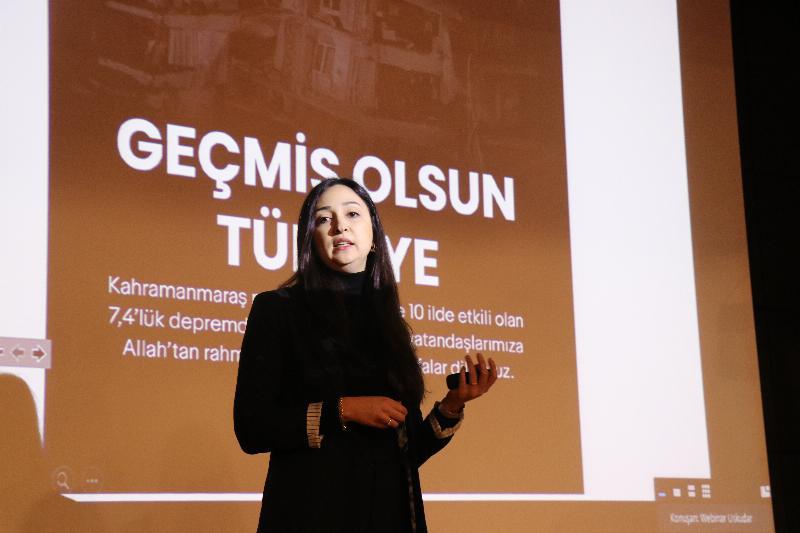
The Turkish people reflected the spirit of solidarity throughout the country...
Lecturer Ayşe Aydemir from the Emergency and Disaster Management Program at Üsküdar Üniversitesi Vocational School of Health Services made evaluations emphasizing the importance of support that society and non-governmental organizations can provide in disaster management.
Disaster management also includes community participation
Emergency Aid and Disaster Management Specialist Ayşe Aydemir stated that disasters are defined as natural or human-made events that cause physical, social, and economic losses for people, disrupt or interrupt daily life, and cannot be coped with using local resources. She added, "It is a visible fact that the loss of life and property resulting from natural or human-made disasters experienced today is on a very large scale. At this point, the concept of 'Disaster Management' encompasses the processes of planning, coordinating, and managing damage reduction, preparedness, response, and recovery activities against all hazards. The Integrated Disaster Management System is a disaster management system that includes all pre-disaster, during-disaster, and post-disaster efforts by the public, private sector, and the populace. In other words, we can actually define it as a disaster management system that includes not only institutions and organizations but also society."
Society demonstrated its impact in disasters
Emergency Aid and Disaster Management Specialist Ayşe Aydemir stated that during the Kahramanmaraş earthquakes that occurred on February 6, 2023, it was personally experienced how effective society can be in disasters, and she continued her words as follows:
"As in the earthquakes and other disasters we experienced in the past, the first responders in this disaster were the local people living in the affected region. The local people made every effort to survive with their own means. In such a major disaster, the public showed tremendous effort to cling to their family members, neighbors, and loved ones. Search and rescue efforts and aid to disaster victims quickly began to be delivered in the disaster zones. The biggest known truth is that fighting disasters with the potential to affect everyone regionally or locally now requires an all-out effort. The effective use of all available resources and activities aimed at raising awareness are also extremely important in the disaster management process."
The most important assisting element for the public sector should be the populace
Emergency Aid and Disaster Management Specialist Ayşe Aydemir, emphasizing that efforts were insufficient in the last earthquake disaster, said, "In the process of this earthquake, it is clear that when, where, and of what magnitude a disaster will occur is unknown, that disasters threaten human life, and therefore, in the work carried out, the public sector alone cannot fulfill this function. The most important element to assist public authority in many activities, from creating disaster risk perception to using existing resources, from training activities to intervention and recovery efforts, should be the civilian populace. At the same time, non-governmental organizations, which include activities carried out by people entirely on a voluntary basis or in an organized manner to help disaster victims in these disasters, are an important resource in the fight against disasters."
NGOs have an important role in providing support
Emergency Aid and Disaster Management Specialist Ayşe Aydemir stated that non-governmental organizations have an important role in providing support for disasters that harm the social structure and cause economic collapse. She said, "Non-governmental organizations are involved in the disaster management process with the aim of finding solutions to problems that arise entirely from the free will of individuals, without any material or moral expectations, for individuals who have experienced disasters. In non-governmental organizations, 'voluntarism' is fundamental, and sincerity and sacrifice are valued. For this reason, the efforts put forth by volunteers will be equally numerous and meaningful. The evaluation of non-governmental organizations for solutions to all kinds of social problems in our country is an important issue."
Number of NGOs increased after the '99 earthquake
Emergency Aid and Disaster Management Specialist Ayşe Aydemir pointed out that especially after the 1999 earthquake, there was a significant increase in the number of non-governmental organizations and their members in our country. She stated, "One of the most significant effects of the 1999 earthquake was the increased awareness of NGOs. The inadequacy of the existing public administration alone during the earthquake revealed the importance and necessity of public participation. Of course, the state alone cannot meet the needs of disaster victims. Therefore, it is extremely important for NGOs and society to play a role at every stage of the disaster management process, and for joint efforts with public institutions to be planned and carried out. The efforts put forth by the public and non-governmental organizations until the relevant public institutions reached the disaster victims covered many issues, from human rescue activities to nutrition, from transportation to shelter."
The earthquake reminded us of our human values
Aydemir underlined that during the Kahramanmaraş earthquakes, there was a very serious social solidarity that we all witnessed, which moved us and reminded us of our human values. She said, "The Turkish people kept the spirit of solidarity alive throughout the country by sharing all their material and moral resources with each other. To send to the disaster area, people set aside their food, water, money, clothes, and a small child his toy, and made efforts to deliver them to the disaster victims. With the catastrophe we experienced here, we actually saw how strong we are as a country."
Share
Update Date: March 01, 2026
Creation Date: February 20, 2023
Request a Call
Other News
- The book that read today's digital threats in 2014: Being a Conscious Family
- Experts warn: 'Instead of memorizing letters, teach pencil grip, scissor use, and coloring'
- School fear and school love both start in the family!
- Family is not merely transforming, it is being battered under a serious assault
- Artificial intelligence opens the door to early diagnosis in autism!