

It's the world's happiest country, yet suicides are increasing every day. In Finland, where living standards and incomes are far ahead of many countries, violence and suicides have increased with the Pandemic. While people in the country are canceling their appointments not to strain the healthcare system, they are trying to prevent suicides with 'How are you?' campaigns. Üsküdar Üniversitesi Head of Philosophy Department Prof. Dr. İbrahim Özdemir penned this article...
Content
Why Are Suicides Increasing in the World's Happiest Country?
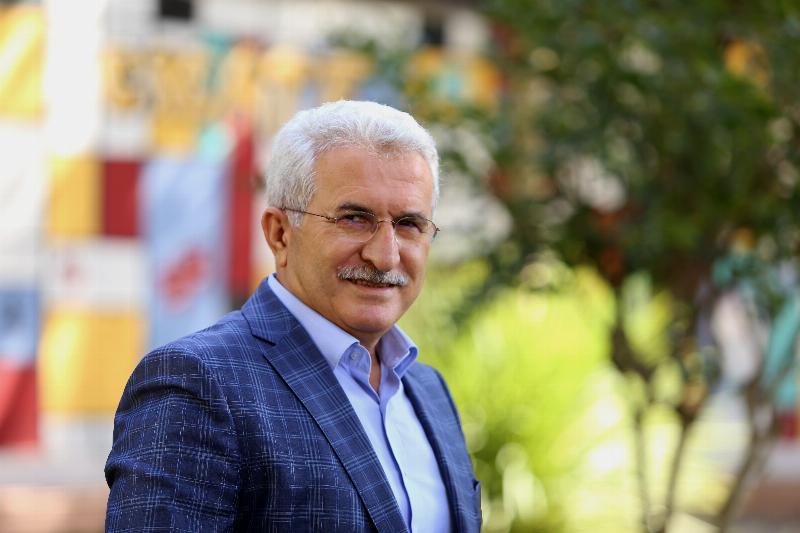
Here is that article:
Since returning from Finland, the two questions I've been asked most frequently are:
Why is Finland the happiest country in the world?
Why is the suicide rate high in Finland?
I wrote the story of why they are happy for PsikoHayat Dergisi, published by Üsküdar Üniversitesi. (http://www.psikohayat.com/images/sayilar/pdf/21.pdf)
As for suicides, that's another dimension of life.
Suicide rates are high not only in Finland but also in Scandinavian countries. Suicides in Finland are higher than the EU average.
There are many reasons for this: loneliness, the constantly foggy, overcast, and dark winter weather. A truly oppressive climate that lasts from November to March, and sometimes even April.
This is also why most suicides occur in January, February, and March. People are virtually exhausted. Statistics confirm this.
"We hardly saw any sun in December," a friend added.
Suicides, which began to rise in the 2000s, had started to decrease with the measures taken.
Finland's preparation of a Suicide Prevention Strategy for 2019-2030 has been very effective.
The pandemic further increased loneliness...
However, during the COVID-19 crisis in Finland, there was again an increase in suicides. Health officials suspect that those in need of mental health care were unable to access it.
With the closure of sports centers, cafes, and many places where people socialize, people came face to face with their loneliness.
According to police data, the number of suspected suicides in March and April 2020 showed an approximate increase compared to the same period last year.
According to local authorities, the most dramatic increase in suicides was observed in the Central Finland region in March and April. In this region, suicides doubled.
They canceled their appointments not to strain the healthcare system...
An interesting situation was that very few people sought help during the crisis.
In Finland, far fewer people than normal sought help for psychiatric treatment during the summer months.
According to Hanna-Mari Alanen, Director of Psychiatric Care at Tampere University Central Hospital in the Pirkanmaa region, "Psychiatric care clinics were eerily quiet." "Doctors started asking each other where all the patients were."
A similar situation was observed in healthcare facilities across the country and in the rest of the world.
The situation was later understood:
Individuals were canceling their medical appointments because they did not want to burden the healthcare system or feared contracting a coronavirus infection.
Domestic violence increased...
Another phenomenon encountered during the pandemic was the increase in domestic violence.
Law enforcement agencies across the country also reported an increase in domestic violence in the first three months of this year. Complaints from homes increased by more than 3,000.
The World Health Organization (WHO) had issued a warning about the threat of a mental health crisis caused and to be caused by the coronavirus pandemic, affecting and continuing to affect millions worldwide. Apparently, this warning was not taken seriously enough. Or the measures taken were insufficient.
Last March, Mieli opened suicide prevention centers in the cities of Helsinki and Kuopio, and the organization launched a campaign last autumn to combat suicide.
The 'How are you?' campaign to prevent suicide...
The association's "How are you?" campaign, which began in the autumn, aims to help people learn to identify signs that a friend or family member may be thinking of harming themselves or worse.
The program encourages people to ask those they are concerned about this simple question: "How are you?"
Mieli offers support and assistance in Finnish, Swedish, English, Arabic, and other languages to individuals who need help and support for mental health problems, are contemplating suicide, or know someone who might be.
Individuals can contact Mieli's SOS Crisis Center by phone.
However, during the pandemic, there are problems with accessing these services.
Authorities cannot meet the high demand. Or they cannot provide adequate answers.
The statements of a young person who experienced three months of very severe depression are very telling:
"I was finally hospitalized.
My life was utterly miserable.
I had no job, was isolated from my friends and family, I was truly in a bad state.
Then I fell into a six-month depression, which left me utterly helpless.
I wanted to end my life.
I researched my condition and concluded that I was probably bipolar.
So I went to the relevant healthcare institution for help.
The care service provided to me by the care unit was almost entirely based on medication. I refused this.
I had a series of meetings with the consulting psychiatrist, nurses, and care team. No one asked me about the quality of my diet, nor did they question my alcohol consumption (about 40 liters of beer a week).
They didn't suggest I exercise a bit.
I was not advised to visit my friends and hang out with them.
They only wanted to know if I was suicidal and offered me only medication — lithium — to help me.
My impression was that these professionals were actually afraid of my illness and did not have enough understanding and knowledge to offer me real help."
Meaninglessness in life can lead to suicide...
As seen, this young person's biggest problem is the lack of meaning in their life. Often, as believed, a high level of material welfare may not be enough.
The famous existential neurologist and psychiatrist Viktor Frankl had drawn attention to this in his book Man's Search for Meaning.
A survey conducted on 60 students who attempted suicide at an American university caught his attention. 85% of these students cited "life seeming meaningless" as the reason for their suicide attempts.
Even more important for Frankl was that 93% of these students who found life meaningless "had active social lives, high academic performance, and good relationships with their families."
Share
Update Date: February 27, 2026
Creation Date: January 14, 2021
Request a Call
Other News
- The book that read today's digital threats in 2014: Being a Conscious Family
- Experts warn: 'Instead of memorizing letters, teach pencil grip, scissor use, and coloring'
- School fear and school love both start in the family!
- Family is not merely transforming, it is being battered under a serious assault
- Artificial intelligence opens the door to early diagnosis in autism!