

Experts, drawing attention to the fact that the intense use of social media by children brings many disadvantages, underline the concept of digital age of majority. Stating that no consensus has yet been reached on the digital age of majority, which is set at 13 in some countries and 16 in others, experts add that children could take responsibility if the digital age of majority is determined. Assoc. Prof. Dr. Aylin Tutgun Ünal notes that it is not right to deprive children of digital media opportunities.
Content
What should be the digital age of majority?
Should children's digital media use be restricted?
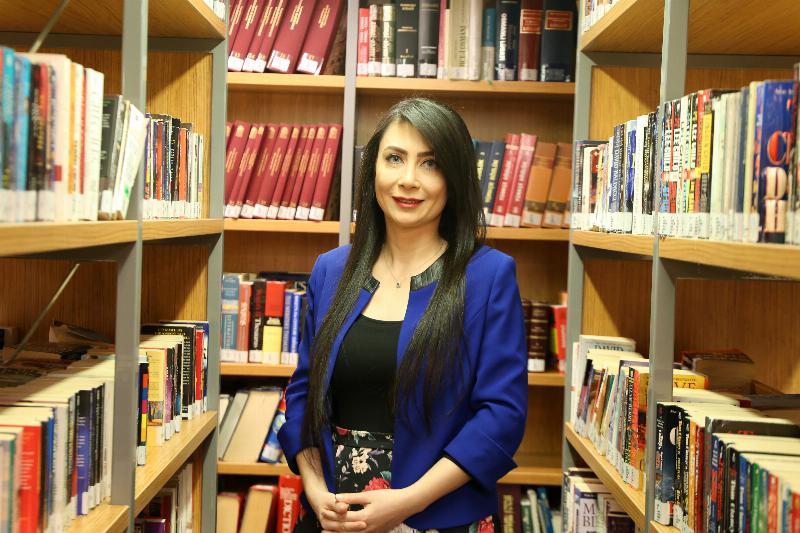
Assoc. Prof. Dr. Aylin Tutgun Ünal from Üsküdar Üniversitesi, Faculty of Communication, Department of New Media and Journalism, made an assessment on the digital age of majority.
If the digital age of majority is determined, children can take responsibility
Assoc. Prof. Dr. Aylin Tutgun Ünal stated that, as mentioned in UNICEF's 2017 report titled “The State of the World's Children 2017: Children in a Digital World,” every child should be able to benefit equally from the advantages of digital platforms and protect themselves from their threats, adding, “Children's rights, such as participation in social media and the opportunity for self-expression, are provided under the ‘Digital Age of Majority’ policy in various countries.”
The digital age of majority varies in each country
Assoc. Prof. Dr. Aylin Tutgun Ünal said, “In countries such as Belgium, Denmark, Estonia, Finland, and the United Kingdom, the digital age of majority is 13; while in countries like Germany, Hungary, Ireland, and Romania, it is accepted as 16. However, despite standardization efforts by certain countries, there is no specific international standard yet. Accordingly, if the digital age of majority is accepted as at least 13, ensuring the digital media use and related control and supervision of younger children is the responsibility of their parents.”
Digital platforms contain attention-grabbing elements
Assoc. Prof. Dr. Aylin Tutgun Ünal noted that digital media contains attention-grabbing elements for children, stating, “Moving images, photos, and videos particularly attract interest on interactive digital platforms such as social media. Attracting attention is also a part of education. Learning begins with attention and becomes permanent through stages of interest, confidence, and satisfaction. We also call this the ARCS (Attention-Relevance-Confidence-Satisfaction) motivation model. Drawing attention to content and making it permanent is possible in this way. When attention is not provided, things seen or heard remain in short-term memory and are forgotten after a while without reaching long-term memory. Therefore, it is important to incorporate digital platforms containing attention-grabbing elements into the learning of children and adults.”
Standardization efforts are needed for social media
Assoc. Prof. Dr. Aylin Tutgun Ünal stated that if used beneficially, social media can be used for educational purposes by incorporating memorable elements. She added, “It has many advantages such as following news, accessing educational content, communicating with distant people who are difficult or impossible to reach in daily life, and even language learning. Of course, to benefit from the positive aspects of these platforms, digital media literacy skills are necessary. Especially considering the threatening aspects for children, it becomes clear that certain standardization efforts, such as age of use, are needed.”
Parents also need to possess digital media literacy skills
Assoc. Prof. Dr. Aylin Tutgun Ünal pointed out the importance of parents having digital media literacy skills, as children's encounter and experience with information technologies are under parental control, stating, “Parents are the first to transfer these skills to children. Within the scope of digital media literacy, individuals of all ages are expected to possess a number of skills such as digital media usage duration, verifying correct information, protection from disinformation, identifying fake accounts, appropriately selecting and publishing content, adhering to ethical rules, being aware of emotional contagion, and protecting from negative content.”
Depriving them of digital media opportunities is not right!
Stating, “It is not right to deprive children of digital media under today's conditions,” Assoc. Prof. Dr. Aylin Tutgun Ünal said the following:
“If the digital age of majority and related policies are determined, children can be enabled to benefit from digital media opportunities. If digital media literacy skill acquisition is targeted in the Information Technologies course within the primary education curriculum, children can be prepared to take responsibility for digital media use. The Digital Age of Majority, on the other hand, can be determined by a legal framework in our country, and only if applicable policies are provided and informative efforts for cultural dissemination are expanded, will children be able to benefit from digital media platforms in a healthy way.”
YouTube can pose a danger for children under 13
Assoc. Prof. Dr. Aylin Tutgun Ünal, stating that children under the age of 13 widely use the YouTube platform worldwide, concluded her words as follows:
“When research is examined, YouTube usage ranks first among 9-18 year olds in Sweden. In the UK, it is stated that 81% of children aged 8-11 use YouTube. In a study conducted with Swedish children aged 9-12 through group interviews and observation, it was found that children construct an identity for themselves based on a YouTuber they follow, meaning the followed influencer is effective in determining the child's identity. This situation actually shows that it is still too early for children under 13 to take responsibility for social media use and protect themselves from harmful content. Embodying the personalities of influencers instead of their own personality traits can pose a danger for children.”
Share
Update Date: March 01, 2026
Creation Date: October 10, 2022
Request a Call
Other News
- The book that read today's digital threats in 2014: Being a Conscious Family
- Experts warn: 'Instead of memorizing letters, teach pencil grip, scissor use, and coloring'
- School fear and school love both start in the family!
- Family is not merely transforming, it is being battered under a serious assault
- Artificial intelligence opens the door to early diagnosis in autism!