

Psychiatrist Prof. Dr. Nevzat Tarhan noted that teachers are one of the most important role models in a child's life after their parents, drawing attention to the reasons why first teachers, in particular, are never forgotten. Prof. Dr. Nevzat Tarhan stated, 'An educator must first succeed in entering the heart, not the mind,' adding, 'Because people forget what they hear, and remember what they understand later and with difficulty. But they never forget what they experience and feel. This is what lasting learning is.' According to Tarhan, an educational model that includes love and provides education in a disciplined and enjoyable way should be adopted.
Content
What is the secret to lasting learning?
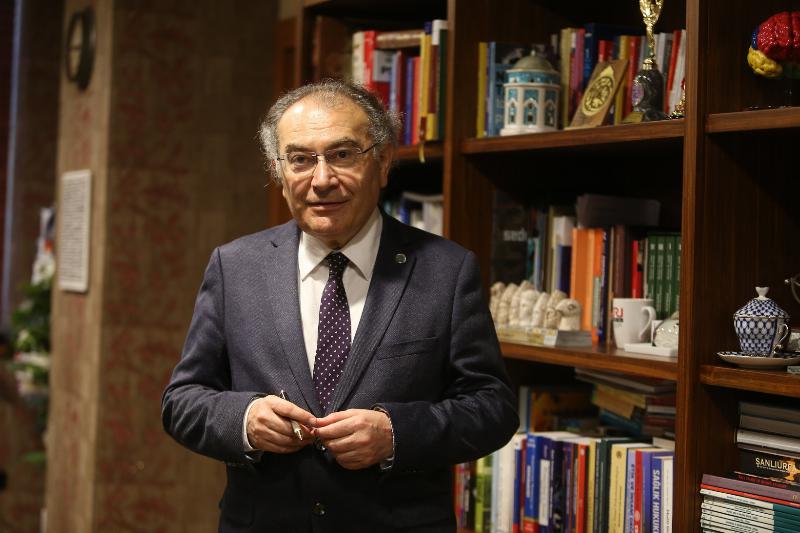
Suggestions from Tarhan to make education enjoyable and ensure lasting learning…
Üsküdar Üniversitesi Founding Rector, Psychiatrist Prof. Dr. Nevzat Tarhan, drew attention to the impact of teachers on a child's development and mental health in a statement made on November 24th, Teachers' Day.
Teachers are the lifeblood of education
Prof. Dr. Nevzat Tarhan noted that teachers are one of the most important role models in a child's life, saying, 'An educator must first succeed in entering the heart, not the mind, because people forget what they hear, and remember what they understand later and with difficulty. But they never forget what they experience and feel. This is what lasting learning is. It is important to adopt an educational model that includes love; provides education in a disciplined and enjoyable way, and activates not only the thinking brain but also the feeling brain of our students. For this reason, we describe teachers as 'the lifeblood of education.'' Tarhan noted that teaching is not just a profession, but also an art, saying, 'Just as a seedling is given life-giving water when planted, a teacher gives a child life-giving water at school. They help them hold onto life.'
The ideal teacher enters the heart, not the mind
Tarhan stated that methods combining mind and emotion lead to lasting learning, and that a teacher entering the student's heart, not their mind, makes learning more permanent. Tarhan said, 'At the top of the learning pyramid are only what you hear. You hear in class, you listen, and then you forget. Towards the middle of the pyramid are what you understand from what you hear. What you understand becomes more lasting, but if you don't repeat it, you lose it too. But then there are what a person experiences and feels. They never forget those. There's no need for repetition. The brain records permanently when emotions are involved. That's why educators, don't try to enter the students' minds, their brains; try to enter their hearts. The ideal teacher doesn't enter the mind, but the heart. When they enter the heart, that teacher becomes the student's hero. They record everything they say. The best leadership is to set a good example. So, for a student to learn the lesson, the teacher must set a good example in class, and the student must love them. If they love the lesson, they learn well. So, what should be done for them to love the lesson? The child loving the teacher helps a lot. If they love the teacher, the child also loves the lesson. They learn more easily. What should the teacher do for the child to love the lesson? The teacher must love the student. When the teacher loves the student, the student also loves the lesson, loves the teacher, and learns.'
A child asking questions to the teacher develops their self-confidence
Prof. Dr. Nevzat Tarhan noted that teachers hold a special place in a child's self-confidence development, saying, 'In 2014, when the Iranian mathematician Prof. Dr. Maryam Mirzakhani, the first woman to win the Fields Medal, considered the Nobel Prize of Mathematics, was asked about the reason for her success, she smiled and said, 'I'll tell you, but you won't believe it. I owe this award to my mother.' Surprised by this answer, they asked for the reason. She replied: 'Mothers and fathers, when a child returns from school, they ask the child: 'What did the teacher ask? What did you answer?' But my mother didn't do that. She would ask me, 'What did you ask the teacher?' That is, it is important for the child to ask the right question to their teacher. Here, Mirzakhani's mother's approach is one that enhances the child's self-confidence and academic self-efficacy. It's a motivation-boosting approach. When the child goes to school, they think about what to ask their teacher. The child here doesn't shy away, thinking, 'I hope the teacher doesn't ask me.' On the contrary, they think, 'What should I ask?' So, this is a self-confidence-boosting approach. This attitude leads the person to their Nobel. Something seemingly simple profoundly influenced her life. Therefore, the teacher's attitude, along with parental attitudes, is very important.''
Our primary school teacher is the one who plants the seed of our developing soul
Emphasizing the importance of the teacher's identity and personality in a child's academic success, Prof. Dr. Nevzat Tarhan said, 'Especially in primary school, the teacher is the child's hero. They are the first personality in the outside world after parents. Our primary school teachers, in particular, are the ones who planted the seeds of our lives and our developing souls. Most of us never forget our first teacher. They are the most important person who guides us. For this reason, teaching is truly a sacred duty.'
Teachers should be pilot captains for students
Underlining that teachers should act as pilot captains for young people to learn about life, Tarhan said, 'While teaching is a profession from the teacher's perspective, from the student's perspective, the teacher is virtually a life guide. Teaching in primary school is more important. Students emulate three things about their teacher. One is the lesson they teach, another is the characteristics of their personality, meaning their character, and finally, their social relationships. Adolescence, in particular, is the period when questions like 'Who am I, what should I learn, for whom?' are asked. In mistakes made during this period, young people will learn about life by observing the teacher's reaction. That's why we say it's not about taking them aside and correcting them, but about taking them alongside us and walking together; this is leadership. So, teachers will be pilot captains. Parents are the same way. What is a 'pilot captain'? The captain operates the ship. They are responsible. The pilot captain teaches life by telling them, 'If you do this, this will happen; if you do that, that will happen.' Parents or teachers will be pilot captains.''
Teachers should be trust-inspiring leaders
Prof. Dr. Nevzat Tarhan advised educators to use teaching methods based on trust rather than intimidation, emphasizing that persuasion and making learning enjoyable are more suitable for the 21st century. Tarhan said, 'A teacher is a class leader. The most beautiful leadership will be emotional leadership. This is psychological superiority, not hierarchical, authoritarian leadership. It's not leadership that teaches by intimidation, but leadership that teaches by inspiring trust. When love increases, fear decreases, and trust increases. Where there is fear, there is a silent discipline. When the teacher is not there, everyone disperses. In old cultures, education was provided through pressure, threats, intimidation, and suppression. That method is not an ideal method now, nor is it suitable for this era. It's not a 21st-century skill either. Currently, an educated person should use methods of persuasion, convincing, and making learning enjoyable.'
Tarhan noted that the greatest investment in a child is not the information imparted, but the value placed on them, saying, 'The most important thing for a child is to feel loved and to understand this. When children have problems, it's necessary to talk to them and learn the real reason. If a teacher shouts at a child who isn't listening in class, scolding them, 'Why are you zoning out?', the child won't learn anything. But if the teacher goes to them and approaches them by saying, 'You weren't like this. Why are you quiet, is there anything we can do?', the child will suddenly feel a sense of belonging. The role of logical intelligence in success is 20%, while the role of other multiple intelligences is 80%. Emotional intelligence, especially social intelligence, accounts for 80% of this role. Therefore, we need to activate not only the children's thinking brain but also their feeling brain. Our ancestors called this the unity of mind and heart.''
Share
Update Date: February 26, 2026
Creation Date: November 22, 2022
Request a Call
Other News
- The book that read today's digital threats in 2014: Being a Conscious Family
- Experts warn: 'Instead of memorizing letters, teach pencil grip, scissor use, and coloring'
- School fear and school love both start in the family!
- Family is not merely transforming, it is being battered under a serious assault
- Artificial intelligence opens the door to early diagnosis in autism!