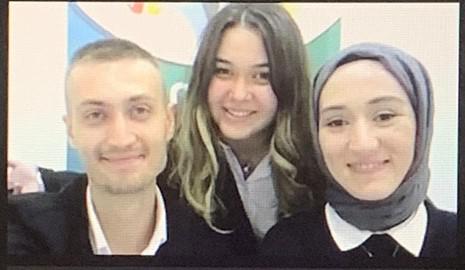
The ‘VI. Multidisciplinary Approach to Specific Learning Difficulties Symposium’ was organized by the Dyslexia and Occupational Therapy Club with the support of Üsküdar Üniversitesi Faculty of Health Sciences, Occupational Therapy Department. Many experts in the field attended the symposium, held with the theme ‘Multidisciplinary Approach to Specific Learning Difficulties’. Speaking at the opening of the symposium, Prof. Dr. Sevda Asqarova, Head of the Occupational Therapy Department at Üsküdar Üniversitesi Faculty of Health Sciences, stated that with the decrease in social interaction during the pandemic, the importance of occupational therapy and dyslexia has increased, and that improving the quality of education in these areas is among their biggest goals.
Content
VI. Multidisciplinary Approach to Specific Learning Difficulties Symposium Held
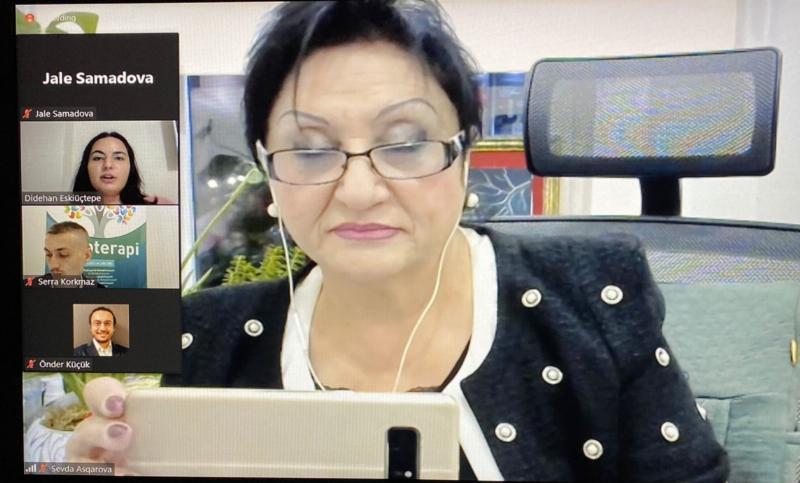
Prof. Dr. Sevda Asqarova; “I wish for a broadcast full of science”
In the opening speech of the online symposium, moderated by Üsküdar Üniversitesi Dyslexia and Occupational Therapy Club President Serra Korkmaz, and Vice Presidents Sertaç Geren and Erva Nur Kurt, Prof. Dr. Sevda Asqarova expressed her good wishes: “We will be together again on a beautiful day. I welcome all my esteemed professors, participating colleagues, and dear students. We are delighted to realize the 6th Multidisciplinary Approach to Specific Learning Difficulties Symposium, made special by your participation, with you all today. I thank you all for your contributions and wish you a broadcast full of science.”
Dyslexia and Occupational Therapy Club Members; “Organizing this symposium since our first year gives us pride and happiness”
Expressing their happiness about the symposiums they have held since the club's opening, Üsküdar Üniversitesi Dyslexia and Occupational Therapy Club Members said: “The Multidisciplinary Approach to Specific Learning Difficulties Symposium has become a tradition. Organizing this symposium since our first year gives us pride and happiness.”
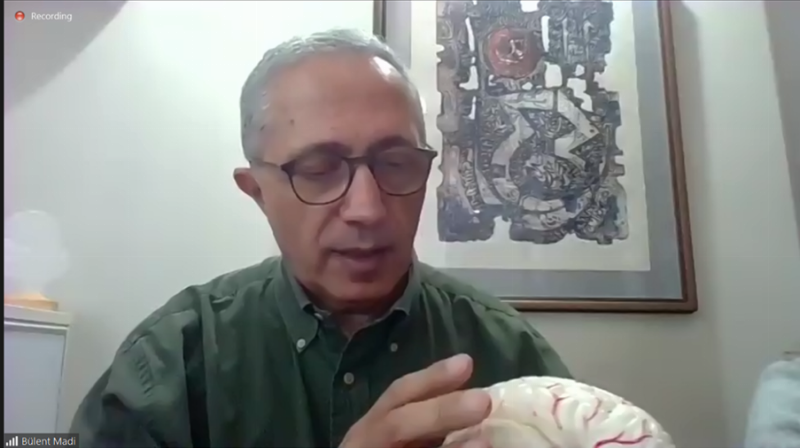
Neurology Specialist Dr. Bülent Madi; “Art and music are indispensable elements for a child to succeed in all developmental areas”
Neurology Specialist Dr. Bülent Madi delivered his speech focusing on the question ‘How does learning occur in the brain?’: “Development follows motor movement development, social, emotional, cognitive development, and the body's internal system. Motor movement development begins in the womb, connected with aesthetic life, enhancing life and quality of life by understanding these. In specific learning difficulties, the cerebellum is primarily and specifically examined. This is because it is one of the first areas to develop in early childhood and is related to balance and cognitive timing. It makes sense for occupational therapists to use music in learning. It contributes to the brain entirely in the academic field. While these studies are conducted multidisciplinary, interdisciplinary work is recommended. Art and music are indispensable elements for a child to succeed in all developmental areas.”
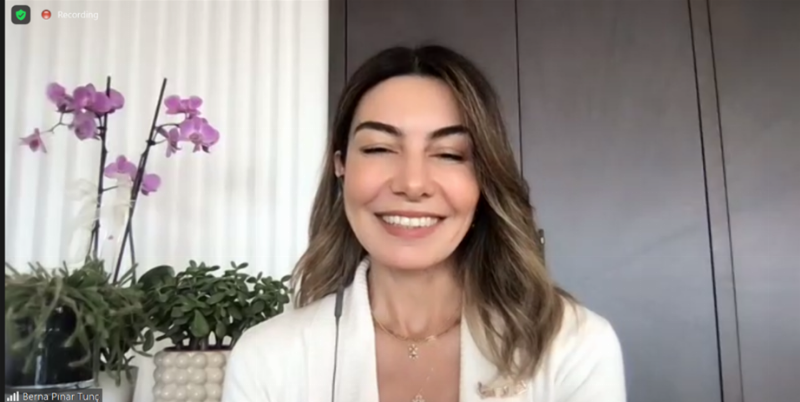
Lecturer Berna Pınar Tunç; “Dyslexia is not a disability, but a diversity”
Emphasizing that not every individual with dyslexia is the same, Üsküdar Üniversitesi Occupational Therapy Department Lecturer Berna Pınar Tunç stated: “Every individual should be accepted as special and unique. We should monitor individuals by following their developmental areas, not by focusing on their deficiencies. Our brains, like our fingerprints, are unique to each of us. In fact, every individual with dyslexia is different from one another. Dyslexia is not a disability, but a diversity. As occupational therapists, we should aim to make what dyslexic individuals cannot do, achievable, by focusing on what they can do, rather than what they cannot. Just like Tagore's saying, ‘If you cry because you missed the sun, you won't see the stars.’ ”
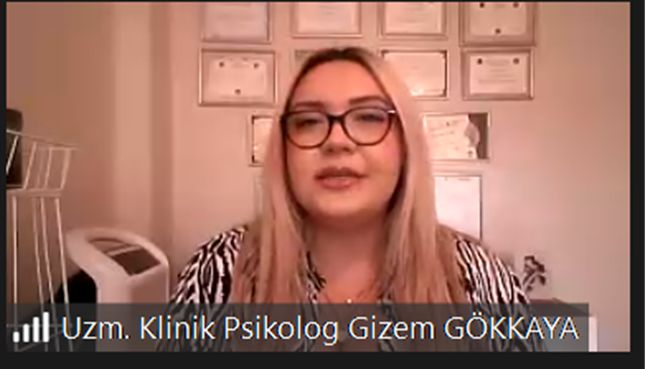
Expert Clinical Psychologist Gizem Gökkaya; “Learning difficulty is a condition with observed academic, social, and psychological effects”
Expert Clinical Psychologist Gizem Gökkaya drew attention to the problems faced by individuals with specific learning difficulties in social life and discussed their psychological effects: “Specific learning difficulty is generally a topic addressed when it is noticed by the child's class teacher during primary school. Looking at the problems children face in social life, we can give examples such as family and social life problems, the concept of social learning and the use of technology, academic life, and peer bullying in social life. Learning difficulty is a condition noticed in early ages, with academic, social, and psychological effects observed in the individual. Acting in cooperation throughout this process supports the healthy development of the child, who is a candidate for adulthood. We hope that awareness of specific learning difficulties will increase day by day.”
Speech and Language Therapist İrem Bağçeci; “Children who have difficulty reading also experience difficulties in language skills”
Speech and Language Therapist İrem Bağçeci made evaluations on the topic of ‘The role of a speech and language therapist in individuals with dyslexia’: “Language delay and language disorders are observed in dyslexia. Children who have difficulty reading also experience difficulties in language skills. We should support children's communication skills and social skills by supporting their strong sensory and emotional pathways. Receptive and expressive language assessment, phonological awareness, letter awareness, word recognition, reading fluency, and reading comprehension play a big role in the assessment. Creating an intervention plan is a team effort.”
Lecturer İsa Kör; “Children should be given opportunities to form meaningful social relationships in their social life”
Üsküdar Üniversitesi Occupational Therapy Department Lecturer İsa Kör, evaluating the question ‘Is it a learning difficulty or a lack of interest?’ said: “To classify individuals as having a learning difficulty, they must have academic deficiencies that cannot be explained by perceptual or motor difficulties, intellectual disability, emotional disturbance, or environmental challenges. The main point we should focus on here is self-efficacy. Research has observed connections between Attention Deficit Hyperactivity Disorder (ADHD) and Specific Learning Difficulty (SLD) through genetic interaction. We must give importance to activities where children can discover themselves and develop their self-esteem and self-identity. Children should be given opportunities to form meaningful social relationships in their social life, and their roles within the family should be diversified.”
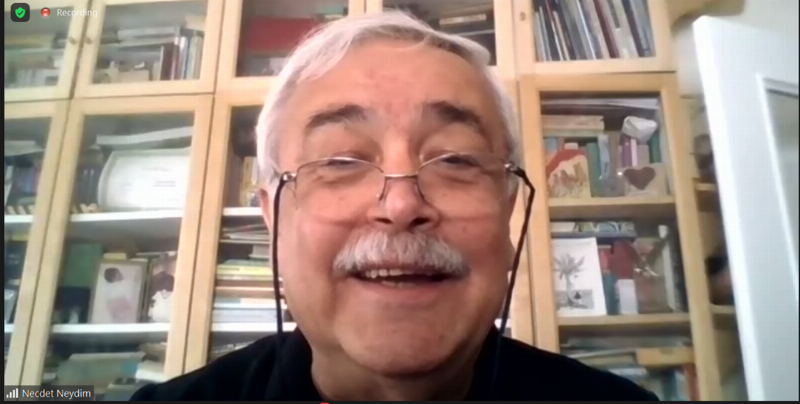
Prof. Dr. Necdet Neydim; “If you approach children with frightening, trauma-inducing texts, linguistic development in those children will be hindered”
Prof. Dr. Necdet Neydim, drawing attention to the effect of literature on linguistic development in children, said: “I want to draw attention to reaching children who have not been 'subjectified'. If parents see themselves as a companion accompanying the child in their life, we accept the children as subjects. If you approach children with frightening, trauma-inducing texts, without considering what the child can linguify or what is appropriate for the child's perspective, linguistic development in those children will be hindered. I believe that by allowing them to create their own space and discover what they can do, children will overcome their speech problems much differently.”
Expert Psychological Counselor Ömer Cimem; “They do not have mental problems, they are not mentally disabled”
Expert Psychological Counselor Ömer Cimem explained the term ‘Specific Learning Difficulty’: “It is very pleasing that occupational therapy integrates many fields, internalizing a multidisciplinary approach. We say specific learning difficulty because we know that every child experiencing this is diagnosed with different and numerous reasons based on their own characteristics. Everyone working in this field needs to recognize and evaluate each child. These children do not have mental problems; they are not mentally disabled. I believe that special education teachers should primarily work with occupational therapists. I think that the process should be worked with a team where everyone is familiar with the characteristics of children in this situation, knows their teammates, develops a common language, and ethical guidance is provided.”
Lecturer Elif Konar Özkan; “Fairy tales and stories have a curative, healing, and therapeutic effect”
Üsküdar Üniversitesi Child Development Department Lecturer Elif Konar Özkan, drawing attention to the effect of fairy tales on children, said: “I am more interested in the therapeutic aspect of fairy tales. We can say that traveling in the land of fairy tales nourishes childhood. A child's need is experience. Showing things that can happen in life through fairy tales and stories provides a defense mechanism against possible threats and helps gain cognitive flexibility. Fairy tales and stories have a curative, healing, and therapeutic effect.”

Occupational Therapist Zeynep Belin Arıkan; “Specific learning difficulty is also seen in adults”
Occupational Therapist Zeynep Belin Arıkan, emphasizing that specific learning difficulty is not only seen in children, said: “In my presentation, I will talk about individuals with specific learning difficulty. I say individual because specific learning difficulty is also observed in adults. The 1960s were a turning point for specific learning difficulty because awareness increased. We cannot call everyone who reads incorrectly dyslexic, because incorrect reading can also stem from academic failure. A specialist should be consulted to differentiate between academic failure and dyslexia. After a doctor's diagnosis, we, as occupational therapists, continue the process with a treatment program.”
Lecturer Ömer Yiğit; “It is a situation difficult to accept, easy to reject”
Üsküdar Üniversitesi Occupational Therapy Department Lecturer Ömer Yiğit stated that the diagnosis of specific learning difficulty is perceived as a negative situation by families: “The content of projects organized by Local Governments is also very important. For the last 5 years, there have been very good studies on special learning. Many of them exceed the training of special education rehabilitation centers. I am currently the institution director at the Accessible Life Center, a project we undertook in 2017. There are experts in every field there. In the field of sensory integration and occupational therapy, we work with Üsküdar Üniversitesi Occupational Therapy Department, which specializes in this area. Experts and successful individuals in their field need to work in local governments. Because specific learning difficulty is a situation that is difficult for families to accept and easy to reject. For this reason, it is a diagnosis that is very often postponed. Families generally perceive this situation as bad, not accepting it, thinking it will pass in a few years. But in recent screenings, families are being correctly informed.”
Psychologist Tanıl Gökçe; “The earlier dyslexia is diagnosed and intervened, the faster the individual shows development”
Psychologist Tanıl Gökçe emphasized the importance of early diagnosis in children: “Early diagnosis is very important in dyslexia. In connection with the criteria in DSM-V, we know that dyslexia involves problems with oral reading speed, fluency, and reading comprehension, along with reading disorder. When diagnostic criteria are examined and the diagnostic process is considered, the diagnosis of dyslexia, like many other diagnoses, is symptomatic. Like many other diagnoses, intervention occurs when symptoms appear. The earlier dyslexia is diagnosed and intervened, the faster the individual shows development. This can especially be the case in kindergartens and nurseries for the purpose of suspicion. I think there are things occupational therapy can do in these places. Can we intervene before symptoms appear? Can we observe them? I think this is the important point.”
Expert Occupational Therapist Sedanur Yılmaz; “The child needs to be observed very carefully during this process”
Expert Occupational Therapist Sedanur Yılmaz evaluated dyslexia by explaining its basic meaning: “If we consider the word 'dyslexia', 'dys' means difficulty, and 'lexia' means word. Dyslexia can be explained as a child's reading achievement being below expectations for their age, education, and intelligence. In children with dyslexia, certain difficulties with reading are observed, as well as problems in visual and auditory perception skills and motor coordination. During this process, the child needs to be observed very carefully. Subsequently, providing the correct education in these directions will be beneficial for the child. The cerebellum processes balance and coordination of movement. Balance problems are observed in children with dyslexia. A well-developed vestibular system ensures the integration of messages received from both sides of the body. We can also explain the impediment to the development of gross and fine motor skills in children with dyslexia in this way. Working with multiple sensory stimuli can further increase their slow processing speeds.”
Special Education Specialist, Speech and Language Therapist Gülşen Işık; “We need to help every child reach their highest performance”
Special Education Specialist, Speech and Language Therapist Gülşen Işık emphasized the importance of early literacy for children: “I want to talk about the areas where individuals with dyslexia experience difficulties. They cannot establish letter-sound relationships, struggle with word reading, and do not understand what they read. They have difficulty distinguishing similar sounds. They may experience rapid automatic processing difficulties. Early literacy is not about teaching reading and writing, nor about writing on paper. Early literacy is actually about having the readiness, necessary knowledge, skills, and attitude for the sub-skills of reading ability. Early literacy begins at birth and ends in primary school. Let's look at verbal language knowledge; verbal language knowledge includes receptive and expressive language. Therefore, early literacy in the preschool period is very beneficial for children with dyslexia, and it is also very important for children showing typical development. Because every child has a maximum potential. We actually need to help every child reach their highest performance, which is why early literacy is as important for typically developing children as it is for children with dyslexia.”
Occupational Therapist Amine Kalkan; “The problems of children with Specific Learning Difficulty perfectly align with occupational therapy”
Occupational Therapist Amine Kalkan elaborated on the field of occupational therapy and its effect on specific learning difficulties: “Research indicates that children's motor skills develop alongside sensory processing. Abilities such as body perception, bilateral hand use, and hand preference are achieved through the integration of these fundamental senses. Occupational therapy, in the context of Specific Learning Difficulty, is a person-centered discipline that promotes health and well-being through meaningful and purposeful activities tailored to individuals' personal characteristics. Within occupational therapy intervention approaches, there are two main perspectives: enabling individuals to independently engage in daily living activities and participate appropriately in their social environment. In this context, the problems experienced by children with Specific Learning Difficulty (SLD) perfectly align with the working areas of the occupational therapy profession. When examining the work of occupational therapists in this field, a wide range of applications is observed, extending from basic motor, sensory, and cognitive problem areas to problems related to children's participation.”
Lecturer Shahram Mohseni; “An occupational therapist should adopt a cognitive-behavioral approach to address this issue”
Üsküdar Üniversitesi Occupational Therapy Department Lecturer Shahram Mohseni discussed the role of occupational therapists in the dyslexia process: “Self-regulation is important in the life of a child with a learning disorder. An occupational therapist should adopt a cognitive-behavioral approach to address this issue. The goal here is to teach them how to make their bodies feel completely right so they can participate in and focus on learning tasks. An occupational therapist can intervene by teaching a child with dyslexia to think backward to find a solution to a task, to break down a large task into smaller ones, and by teaching them how to physically and mentally prepare for a task in advance, using things like a visual schedule for the week. Early planning reduces anxiety and last-minute time pressure. It helps achieve better results in the task. Prepared to-do lists also assist with follow-up. An occupational therapist will address visual perception skills to evaluate the child's ability to form letters and shapes.”
Occupational Therapist Furkan Cangi; “Good executive functions are more important than intelligence for academic success”
Occupational Therapist Furkan Cangi emphasized the importance of executive functions in children: “We define the concept of working memory as processes involving planning, such as continuing and sustaining situations occurring simultaneously, and mentally controlling information. Working memory is a type of skill that uses mental representations, establishing the connection between what came before and what comes next. Working memory plays a significant role in skills like reading and writing. Executive functions are very fundamental for children to demonstrate good academic performance when they start school, because we expect the following from a child: to follow rules and apply parameters well. We observe that children who apply these well are successful in school. With executive functions, we can understand whether a child is ready for school or not. Good executive functions are more important than intelligence for academic success.”

Dyslexia Learning Difficulty Association Board Chairman Atıf Tokar; “The child changes a lot after receiving education”
Atıf Tokar, Chairman of the Dyslexia Learning Difficulty Association, spoke about the effect of education on dyslexia: “The main element of education for children with dyslexia is occupational therapy. Occupational therapy is the remedy for children with dyslexia. If you want to make a difference in the lives of children with dyslexia, you must provide education. If you want to provide education, you must be an occupational therapist, a speech and language specialist, or a special educator. These three individuals can reach my child. Classroom teachers and psychologists get involved afterward. The child changes a lot after receiving education.”

Occupational Therapist Sena Albay; “Occupational therapists have an important role”
Occupational Therapist Sena Albay stated that dyslexia also affects motor problems in children: “In dyslexia, fine motor problems such as difficulties in writing, using a spoon, and buttoning, gross motor activity problems such as jumping, running, and rolling, as well as balance and coordination problems are frequently observed. Occupational therapists have an important role in these difficulties, generally referred to as motor function problems. Occupational therapists increase the participation and independence of children experiencing problems in these areas through individualized occupational therapy interventions, such as physical activities and cognitive studies combined with physical activities.”
Expert Dr. Önder Küçük, Child and Adolescent Psychiatrist; “Dyslexia treatment is planned individually for each person”
Child and Adolescent Psychiatrist Expert Dr. Önder Küçük made evaluations on dyslexia from a clinical perspective: “Parents who carefully observe children in the preschool period, or families who seek expert help by preferring professional control, ensure that dyslexia is diagnosed early. These children are aware of a change in themselves, but since it has not yet been noticed by family and teachers, this situation leads them to feel the need to isolate themselves. Children with dyslexia cannot form emotional and social bonds and cannot adapt to their environment. Dyslexia treatment is planned individually for each person.”

Occupational Therapist Didehan Eskiüçtepe; “Behaviors can be examined academically in two categories”
Occupational Therapist Didehan Eskiüçtepe, explaining the medical factors in the causes of dyslexia and its examination stages, said: “There are three models on the causes of dyslexia: Phonological, Magnocellular, and Cerebellar Deficit hypotheses. The most widely accepted theory is the Phonological Deficit Theory. The relationships between writing, academic success, and dyslexia have been examined from the past to the present. Visual motor integration, fine motor skills, spelling, writing, reading, and mathematical processing abilities are generally observed to be the primary affected areas in dyslexia. Other factors affecting quality writing and academic success are self-assessment, self-efficacy, and self-awareness. Behaviors that can be observed during the preschool and school periods can be examined academically in two categories. Delayed speech, confusing syllabic sounds, delays in hand preference, difficulty with concepts of time and direction, especially difficulty with abstract concepts, difficulties in sustaining attention and memory, and failure in written exams compared to oral exams are other observed behaviors.”
Occupational Therapist Hüdayi Yılmaz; “Parental awareness of dyslexia is very important”
Occupational Therapist Hüdayi Yılmaz drew attention to the impact of parental behavior on the treatment process: “Parental awareness of dyslexia is very important. In the pre-diagnosis, diagnosis, and post-treatment periods, parents' internal and external psychological attitudes, as well as their attitudes towards the child, are issues that need to be addressed. They need to be examined separately. There are many tasks for us in each process.”
The symposium ended after Prof. Dr. Sevda Asqarova presented the certificates of appreciation and delivered the closing speeches.