

At the Different Perspectives on Vaccine Hesitancy and Vaccine Symposium, vaccines and their effects were discussed in a multidisciplinary context. The symposium, which addressed individuals' approaches to vaccination, drew attention to the rate of vaccine hesitancy. The program emphasized that vaccines are a form of "training for the immune system" and also covered how the social media management of the vaccination process should be conducted.
Content
Vaccines discussed at the “Different Perspectives on Vaccine Hesitancy and Vaccine Symposium”
Üsküdar University Founding Rector Prof. Dr. Nevzat Tarhan opened the "Different Perspectives on Vaccine Hesitancy and Vaccine Symposium," which was attended by Health Editor Çağla Üren, Dr. Ayşenur Özdil from the Public Health Department of Cerrahpaşa Faculty of Medicine (CTF), Dr. Ayhan Özşahin, Head of the Family Medicine Department at Üsküdar University Faculty of Medicine, and Assoc. Dr. Aylin Tutgun Ünal, Director of ÜSÇÖZÜM.
Medical faculty students showed great interest in the program held at the Avicenna Conference Hall of Üsküdar University Faculty of Medicine.
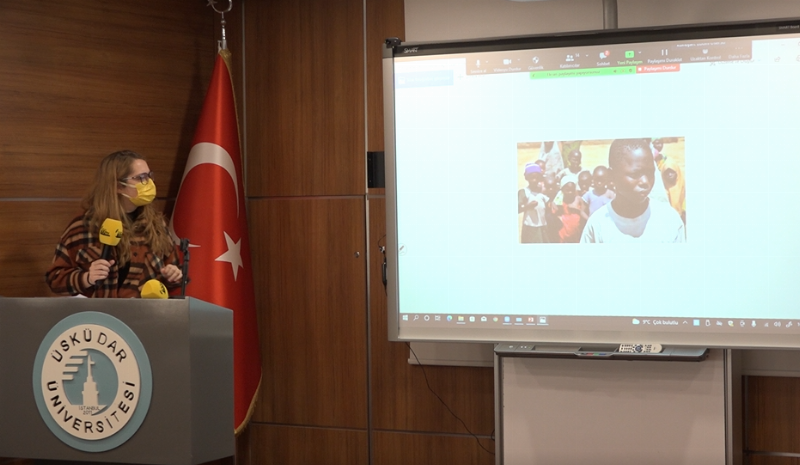
Çağla Üren; “Vaccines were claimed to cause neurological problems”
Health Editor Çağla Üren, among the speakers, discussed 'Myths of vaccine hesitancy from past to present'. Üren said, “We talked about how the anti-vaccine movement has existed since the invention of vaccines and has taken on various discourses over time. Lady Mary, wife of Edward Montagu, the British ambassador to the Ottoman Empire, observed the first vaccination practice in Istanbul in the 18th century and brought it to the West. However, the anti-vaccine movement was shaped by cultural prejudices and religious reasons. Shortly thereafter, Edward Jenner discovered the modern vaccine. The fact that the vaccine was made from cowpox brought with it strange claims that those who were vaccinated would gradually turn into cattle. In the 19th century, institutionalized vaccine hesitancy adopted the discourse of "rights and freedoms." The movement against mandatory vaccination took on modern discourses in the 20th century, and the claim that vaccines cause neurological problems emerged. Over time, the licenses of many leaders of the movement were revoked. However, despite this, in the 20th and 21st centuries, these claims resulted in pertussis and measles epidemics. Many figures who gained prominence at that time, including Robert F. Kennedy Jr., were also linked to disinformation against COVID-19 vaccines.”
Dr. Ayşenur Özdil; “The rate of those unwilling to get the COVID-19 vaccine is 8 percent, while those who are hesitant is 10 percent"
Dr. Ayşenur Özdil from the Department of Public Health at Cerrahpaşa Faculty of Medicine, discussed vaccine hesitancy and opposition today; “According to the WHO definition, vaccine hesitancy is a delay in acceptance or refusal of vaccination despite the availability of vaccination services. If there is a complete refusal of all vaccines, it is called vaccine opposition. Today, approximately 80% of internet users search for health information online. An analysis of YouTube videos related to immunization found that 32% of the videos were against vaccination, and these had more views and ratings than pro-vaccine videos. Another internet study found that anti-vaccine sentiments obtained by viewing websites persisted five months later and led these individuals to vaccinate their children less than recommended. The rapid and very recent development of COVID-19 vaccines, and the lack of sufficient opportunities to gather information on their side effects, have made some people doubt the safety of vaccines. A study covering Turkey and various countries found that the rate of those unwilling to get the COVID-19 vaccine in Turkey was approximately 8 percent, while those who were hesitant was approximately 10 percent (June 2021, Ourworldindata, IPSOS). To overcome vaccine hesitancy, we need good communication at the individual level, a non-stigmatizing, multi-faceted approach at the national level, education for healthcare professionals on the subject, and public awareness campaigns via TV, radio, billboards, and the internet.”
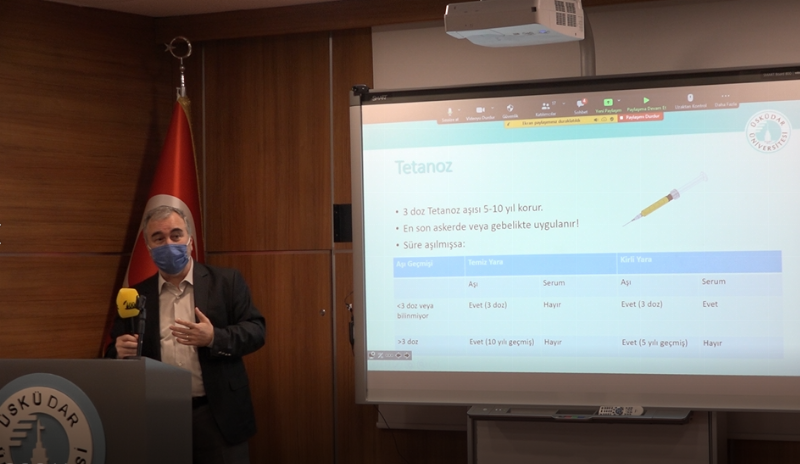
Dr. Lecturer Ayhan Özşahin; “Vaccination is essentially a training given to our immune system”
Dr. Ayhan Özşahin, a Lecturer at Üsküdar University Faculty of Medicine, discussed the reasons for the rapid increase in the world's population and its connection to vaccines. Özşahin said, “Throughout history, the human population in the world increased at a slow pace, reaching 1 billion for the first time around 1850. Then, in just about 150 years, it exceeded 8.5 billion. The development and widespread use of vaccines have played a major role among the reasons for such a rapid increase in population in recent times. In our country, the infant mortality rate, which was 112 per thousand in 1975, is now at 9 per thousand. The impact of the expanded vaccination campaign launched in 1985 on this miraculous development is undeniable. It is clear that the discovery and widespread use of vaccines have changed the fate of humanity. The vaccine, which protects us from deadly diseases, is not a treatment method. Vaccination is essentially a training given to our immune system. The immune system, when exposed to microbes in a controlled manner, learns the method of combat and records it in its memory. In this way, it has become possible to effectively protect against many diseases. Today, vaccination services are offered with two different approaches. There are vaccines administered according to a standard schedule throughout childhood from birth, and especially in adulthood, vaccines administered according to differing needs. Vaccine production methods have also diversified under the influence of developing science and technology. Live, inactivated, toxoid, viral vector, and the newly added mRNA vaccines have contributed to today's success. Against the newly encountered COVID-19 disease, vaccines have also been developed using three different methods through high-tempo work. This time, the medical world has had the opportunity to observe the effects of vaccines developed with different techniques against the same disease and their interaction in repeated vaccinations. We are happy to see that our country has not lagged behind in this race in the scientific world.”
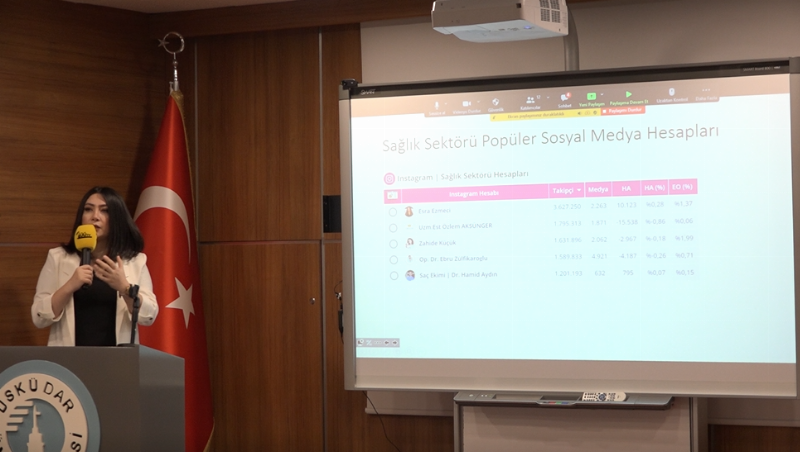
Assoc. Dr. Aylin Tutgun Ünal; “Digital communication replaced public communication”
Assoc. Dr. Aylin Tutgun Ünal, a Lecturer at Üsküdar University Faculty of Communication, who participated with her presentation on 'Vaccine Advocacy Strategies and Social Media Management', emphasized the importance of social media management. Ünal said, “Digital communication has replaced public communication, which is a type of communication used by individuals who need to deliver messages to large audiences. If the coronavirus pandemic engulfing the world had occurred in the 20th century, the public would have been addressed through limited interactions such as face-to-face rallies or televised speeches, and information would have been predominantly one-sided. The 21st century, as the age of new media, provided interactive environments. Now, with social media, public communication has given way to digital communication. In digital environments; since messages can be conveyed to large audiences in written, verbal, and visual forms using a device with internet connection, such as a mobile phone, via a software interface, there is a need to develop strategies for vaccination using effective communication techniques on social media.”
“Content aimed at making vaccines likable can appeal to youth who learn while having fun”
Assoc. Dr. Aylin Tutgun Ünal stated that to ensure effective communication on social media, social media literacy skills must be known and utilized well, adding, “When vaccine advocacy strategies are combined with social media literacy skills, the likelihood of yielding good results will be high. There is now a youth who wants to participate in every decision and cares about their opinions being considered. It is important to realize that young people's social media usage is more effective than other generations and to ensure their participation in efforts aimed at making vaccines likable. There are numerous social media usage studies that can provide clues for such efforts. Accordingly, through an efficient target audience analysis, when it is understood which age group is on which social media platform and what type of content they prefer, this information can guide future work on vaccines. For example; content aimed at making vaccines likable for the Instagram-using group can be provided through short videos, public service announcements, and shares by influencers with a high number of followers. For the group accustomed to quickly viewing 14-second short content through the 'story' feature, content aimed at making vaccines likable can be increased. If content aimed at making vaccines likable is included in entertainment-oriented environments, it can appeal to young people who learn while having fun. These environments are referred to as 'edutainment' in education, a combination of the English words entertainment and education.”
Share
Update Date: February 28, 2026
Creation Date: February 02, 2022
Request a Call
Other News
- Social responsibility courses moved to the field
- Erasmus+ Orientation Week completed at Üsküdar
- Prof. Nevzat Tarhan: “Brain secretes ‘dark glue’ in social media lynchers!”
- Prof. Nevzat Tarhan: “Every segment of society should be able to say, ‘This constitution is my constitution!’”
- OHS releases guide for safe operation of industrial robots