

Üsküdar University, in collaboration with the Turkish Red Crescent, conducted impact analysis studies for the Psychosocial Support Program and Social Cohesion programs, which are carried out by the Turkish Red Crescent Children's Programs for disadvantaged children and youth.
Content
Collaboration Between Üsküdar University and Turkish Red Crescent
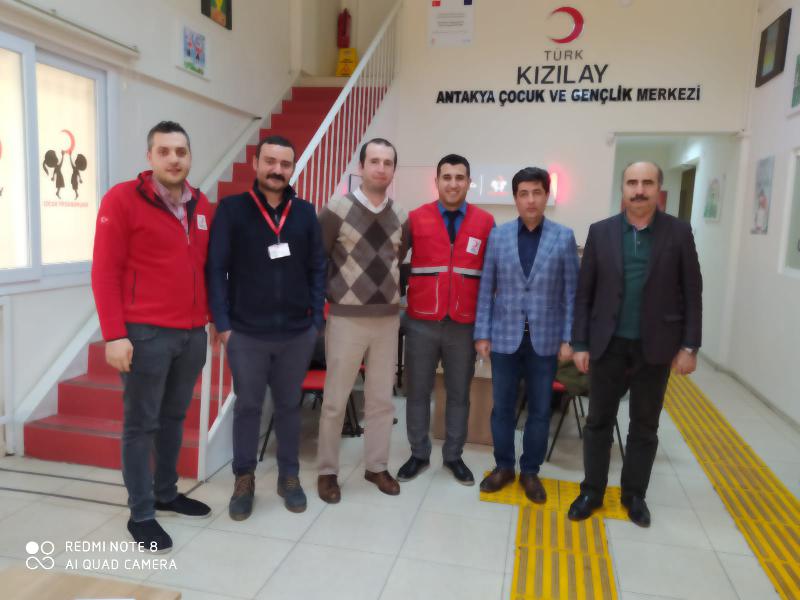
“Academicians evaluated the impact of Psychosocial Support Program activities”
In the studies that began with a field visit to Hatay in January 2020, Üsküdar University academicians Prof. Dr. Sırrı Akbaba, Prof. Dr. Ebulfez Süleymanlı, and Assoc. Prof. Dr. Asil Özdoğru took part in various observations and evaluations. In this context, the academicians evaluated the impact of Psychosocial Support Program activities, examined the work of countries and international organizations with successful examples in the social cohesion of migrants and refugees, and addressed the impact of the Social Cohesion program.
Academicians, who shared their work with the Turkish Red Crescent Children's Programs in a series of reports, met with the employees of the Turkish Red Crescent Children's Programs Coordination on Tuesday, May 25, 2021, in an online meeting. An information session on the results of the studies was held with a group of more than 50 people, consisting of Youth Workers, Psychologists, Social Service Specialists, Education Officers, and Coordination Team employees, with the participation of 73 Red Crescent personnel.
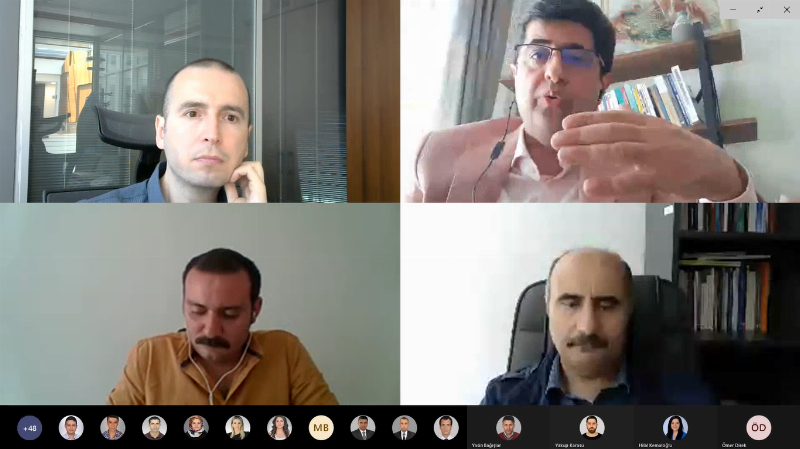
Prof. Dr. Süleymanlı: “Negative effects of forced migration are seen more in children”
In the first part of the session, Head of Üsküdar University Department of Sociology, Prof. Dr. Ebulfez Süleymanlı, took the floor. Süleymanlı stated that the negative effects of forced migration are seen more in children compared to adults; “When children and adolescents are exposed to sudden changes due to migration during a period when they are already undergoing both physical and psychological changes, their simultaneous struggle with these changes causes them to be more intensely affected by the negative impacts of migration. Children coming out of war also have to cope with many problems such as communication problems, culture shock, and feelings of exclusion. Many programs are implemented in different countries around the world to ensure that migrant children go through a healthier adaptation process. In this sense, especially three countries stand out with their practices.”
Assoc. Prof. Dr. Asil Özdoğru shared the changes observed as a result of the studies
In the second part of the session, Head of Psychology (Eng.) Department, Assoc. Prof. Dr. Asil Özdoğru, shared the impact analysis studies conducted for the Psychosocial Support Program and Social Cohesion Programs implemented by the Turkish Red Crescent Children's Programs, and the resulting report. Özdoğru stated that data was collected from children and young people using the program and their families, from the program's volunteer staff, and its implementing staff, and shared statistical data, conveying the positive changes observed in children and young people as a result of the evaluation studies.
Prof. Dr. Sırrı Akbaba: “Social cohesion needs to be complemented by personal adaptation”
In the third section, Vice-Rector of Üsküdar University, Prof. Dr. Sırrı Akbaba, took the floor. Stating that such valuable studies add value to everyone, Akbaba expressed that the alignment of researchers' and practitioners' views through impact analyses demonstrates the validity and reliability of the work carried out in the field. Furthermore, Akbaba stated that social cohesion needs to be complemented by personal adaptation, and that migrant communities added many cultural elements to themselves in their own countries and should add new differences to themselves in the countries they migrated to. He noted that the responsibility here falls on the implementers and that a healthy adaptation in the face of these differences can only be achieved through such beneficial programs. He concluded his speech by congratulating the Turkish Red Crescent employees for providing excellent service at this point.
In the question-and-answer and closing section of the meeting, the academicians extended their gratitude to the Turkish Red Crescent Children's Programs employees for their efforts and the opportunities they provided to children. Prof. Dr. Süleymanlı stated that during the impact analysis studies, they had the opportunity to observe the Youth Workers in the field, noting that the implementers' awareness and motivation were very high, and that the Turkish Red Crescent continued its programs without interruption during the pandemic. He conveyed his thanks to the Turkish Red Crescent Children's Programs for their work aimed at leaving hopeful futures for the next generations. The Turkish Red Crescent employees, in turn, expressed their happiness at seeing the positive effects of the programs they implemented on children and young people, voiced their satisfaction with receiving concrete outcomes from the studies conducted, and thanked the academicians for their contributions at this point.
Share
Update Date: February 27, 2026
Creation Date: May 27, 2021