

Üsküdar University, as in previous years, was the only Turkish university to represent Turkey at the Neuroscience G20 Summit this year. At the congress, held online due to coronavirus measures, the Covid-19 pandemic and its effects, which marked 2020, were discussed. Üsküdar University Founding Rector, Psychiatrist Prof. Dr. Nevzat Tarhan, stated that the greatest impact of the pandemic affecting the whole world will be isolation. Tarhan warned, “There will be an explosion of loneliness after the pandemic” and emphasized the need for precautions. Psychiatry Specialist Prof. Dr. Nesrin Dilbaz spoke about the global COH-FIT research; while Prof. Dr. Gökben Hızlı Sayar shared the results of the Coronaphobia research conducted in Turkey with the world.
Content
Üsküdar University represented Turkey at the 7th Neuroscience G20 Summit…

At the 7th Neuroscience G20 Summit, held to provide rapid clinical solutions for patients with neurological disorders in brain and spinal interventions, the globally effective Covid-19 pandemic and its effects on psychiatric and neurological diseases were discussed.
The opening speech of the 7th Neuroscience G20 Summit, held online this year within the scope of pandemic measures, was given by Babak Kateb, Founder and Chairman of the Board of the Society for Brain Mapping and Therapeutics (SBMT).
The effects of Covid-19 were discussed
Üsküdar University participated in the 7th Neuroscience G20 Summit as the sole university representing Turkey. Üsküdar University Founding Rector, Psychiatrist Prof. Dr. Nevzat Tarhan, stated in his speech titled “Covid-19 Pandemic Loneliness and Crisis Management” that the greatest impact of the pandemic would be isolation.
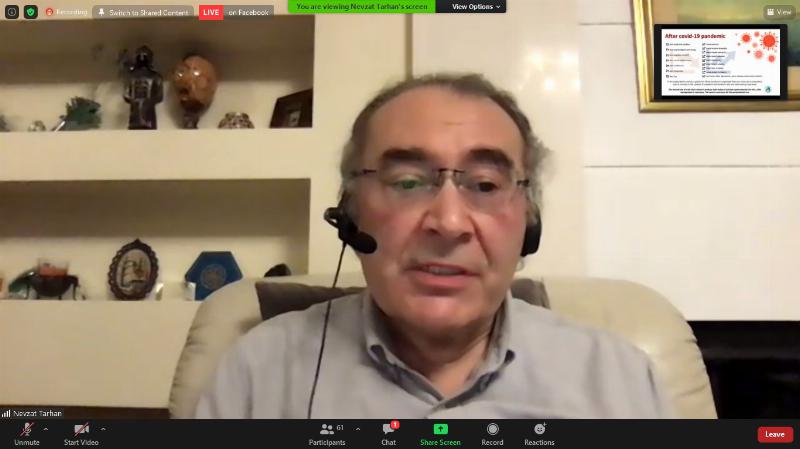
Prof. Dr. Nevzat Tarhan: “A loneliness explosion will occur after the pandemic”
Stating that the greatest impact of the pandemic affecting the whole world is loneliness, Prof. Dr. Nevzat Tarhan underlined that loneliness will explode after the pandemic.
Prof. Dr. Nevzat Tarhan: “Precautions should be taken for the post-pandemic period”
Prof. Dr. Nevzat Tarhan stated that a pandemic of psychiatric illnesses is expected in the post-pandemic period, saying, “Some precursors have also emerged, such as an increase in the number of outpatient and inpatient cases. The second rule of a crisis is that it does not spontaneously generate its own solutions. Crisis management is necessary for this. The same is necessary for the post-pandemic period.”
Prof. Dr. Nevzat Tarhan: “Loneliness is a global problem”
Prof. Dr. Nevzat Tarhan stated that despite increasing prosperity and social and economic mobility in the world, large segments of societies experience loneliness. He said, “Large houses, small families; high intelligence, fewer relationships; the inability to have a true friend despite hundreds of friends on social media emerges as today’s reality. Despite social and economic mobility, a large part of society experiences loneliness.”
Prof. Dr. Nevzat Tarhan: “40% of young people feel lonely”
Prof. Dr. Nevzat Tarhan stated that loneliness is a prominent topic in scientific research worldwide and pointed out the effects of loneliness on people with developing technology, reminding that a “Ministry of Loneliness” was established in the UK in 2018 after 8.5 million people lived alone in the country.
Prof. Dr. Nevzat Tarhan: “Contrary to expectations, young people are lonelier”
Referring to the study conducted jointly by Manchester University and the BBC in the UK, involving over 55,000 people, Prof. Dr. Nevzat Tarhan said, “The results of this study found the loneliness rate among those aged 16-24 to be 40%. This rate is 27% in older age groups. The result was contrary to expectations. It is generally expected that loneliness increases with aging. All assumptions were broken. Youth and adolescence is a period of socialization. It is a period where one needs to feel both connected to family and free. During this period, young people feel lonely. This situation poses a risk for the future of humanity. These individuals will feel even lonelier 40-50 years from now. Suicide rates are higher among these individuals.”

Prof. Dr. Nesrin Dilbaz shared Turkey's results of the COH-FIT research
Üsküdar University Faculty of Medicine Department of Mental Health and Diseases Faculty Member, NPİSTANBUL Brain Hospital AMATEM Coordinator and Psychiatry Specialist Prof. Dr. Nesrin Dilbaz, in her presentation titled “Fear and Anxiety in Turkey During the Covid-19 Process: Coranophobia Scale,” discussed the globally conducted COH-FIT study and the data obtained to measure the effects of the global Covid-19 pandemic.
Referring to the results in Turkey of the study conducted in over 40 countries worldwide by the World Psychiatric Association, the European Institute of Psychopharmacology, and the European Psychiatric Association, where Üsküdar University represented Turkey, Prof. Dr. Nesrin Dilbaz stated that so far, 100,000 people from around the world and over 2,000 people from Turkey have participated in the ongoing study.
Prof. Dr. Nesrin Dilbaz: “An increase in stress levels was observed”
Dilbaz noted that the study also aimed to measure the psychosocial effects of this period, stating, “Psychological effects were observed on stress, loneliness, anger, and altruism (helping others, etc.). More systematically, over one-third of participants reported an increase in stress levels related to the pandemic period and the previous two weeks; others indicated a decrease. No significant difference was found between different age and gender groups regarding stress decrease and increase.”
Prof. Dr. Nesrin Dilbaz: “Loneliness increased among adolescents”
Prof. Dr. Nesrin Dilbaz said, “Regarding loneliness, one-third of participants reported an increase related to the pandemic period and the previous two weeks, and only a very small number (<6%) reported a decrease.” She added, “Results did not show a significant difference between genders. The adolescent group, however, showed a disproportionate increase in loneliness (38%).”
There is also an increase in feelings of anger
Prof. Dr. Nesrin Dilbaz shared the following information: “For anger, 29% of participants reported an increase related to the pandemic period and the previous two weeks, and only a very small number (<9%) reported a decrease. The vast majority of participants (63%) reported very little or no change. Results did not show a significant difference between genders, but the adolescent group showed a disproportionate increase in anger (34%).
Helping behaviors increased
Regarding helping behaviors, approximately half of the participants showed improvement, while 50% stated that there was no change in their behaviors. No significant difference was found between the results of gender and age groups.”

Prof. Dr. Gökben Hızlı Sayar presented the Coronaphobia research in Turkey
Üsküdar University Institute of Social Sciences Director and NP Feneryolu Medical Center Psychiatry Specialist Prof. Dr. Gökben Hızlı Sayar, in her presentation titled ‘Post-traumatic Growth and Anxiety Sources Related to Covid-19,’ stated that Covid-19 has led to widespread social changes in Turkey, as it has worldwide, in addition to health problems, and evaluated the results of the Coronaphobia Research they conducted across Turkey in April 2020.
Prof. Dr. Gökben Hızlı Sayar: “The uncertainty of the process causes the most anxiety”
Prof. Dr. Gökben Hızlı Sayar said: “In this research, we aimed to determine the anxieties regarding the current process and the future, and the levels of psychological maturity related to the pandemic in society. Data collection was carried out using an online survey form between April 17-25, 2020. A total of 6,318 people from 81 provinces across Turkey, including 1,822 men and 4,496 women aged 18-79, participated in the research. Participants were asked about their anxieties related to the pandemic process. The most frequently reported anxieties are listed as follows: Uncertainty of the process: 49.6%; staying away from social relationships: 45.6%; the future of family members in case of death: 35.3%; concern about not being able to receive adequate health services: 31.3%; anxiety about experiencing economic problems: 30.8%; anxieties about disruption of education: 28.4%; mental state of family members: 27.6%.”
Prof. Dr. Gökben Hızlı Sayar: “The anxieties experienced by men and women were different”
Prof. Dr. Gökben Hızlı Sayar stated that anxieties such as experiencing economic problems, unemployment, being unable to maintain chemical addictions like cigarettes, drugs, or alcohol, being unable to maintain behavioral addictions like gambling, and not being able to perform religious duties as desired were more frequently observed in men compared to women. Sayar said, “Not being able to leave the house, experiencing tension with family members as a result of constant togetherness at home, experiencing scarcity, not being able to control eating and gaining weight, staying away from social relationships, and experiencing burnout due to increased housework are some anxieties more frequently observed in women.”
Prof. Dr. Gökben Hızlı Sayar: “Participants stated that they matured during this process”
Prof. Dr. Gökben Hızlı Sayar stated that within the scope of the research, participants were also presented with propositions related to psychological maturity and were asked how much they experienced these propositions during the pandemic process, noting that there were signs of maturity that participants reported experiencing moderately or largely. She said: “During the pandemic, I better understood the value of what I have: 74%; During the pandemic, the priority of things I value in life changed: 59%; During the pandemic, I better understood that I could cope with difficulties: 56%; During the pandemic, I learned to accept everything as it is: 56%; During the pandemic, my interest in spiritual matters increased: 49%; With the pandemic, I started to put more effort into my relationships: 48%.”
Prof. Dr. Gökben Hızlı Sayar: “Humanity must enter a serious process of maturity”
Stating that the frequency of all items related to psychological maturity was found to be higher in women than in men, Prof. Dr. Gökben Hızlı Sayar said, “On one hand, there is a sense of danger in the results of the research, but on the other hand, if we do not fall into despair and make the right choices, it is possible to emerge from this process with gains. Humanity must enter a serious psychological maturity process.”
In previous years, Üsküdar University was chosen as a project partner from Turkey for the Brain Initiative Project; Üsküdar University Founding Rector Prof. Dr. Nevzat Tarhan was also appointed to the Board of Directors of the Society for Brain Mapping and Therapeutics (SBMT), which operates in the field of brain research in the USA.
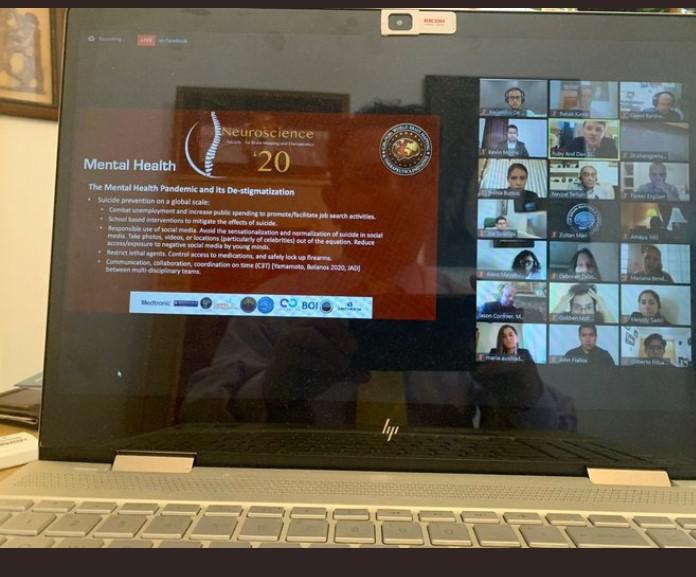
16 countries participated in the scientific summit
The 7th Neuroscience G20 Summit, hosted by Japan last year and held online this year due to Covid-19 measures, lasted two days. More than 50 expert speakers from Turkey, Australia, India, Iran, Mexico, Pakistan, Japan, China, Canada, the UK, Israel, Greece, Germany, Argentina, and France, primarily the United States, participated in the summit held in 8 sessions. The symposium’s concluding statement was announced at the end of the online G20 Summit.
Share
Request a Call
Other News
- The book that read today's digital threats in 2014: Being a Conscious Family
- Experts warn: 'Instead of memorizing letters, teach pencil grip, scissor use, and coloring'
- School fear and school love both start in the family!
- Family is not merely transforming, it is being battered under a serious assault
- Artificial intelligence opens the door to early diagnosis in autism!