

Üsküdar University Faculty of Medicine organized an event on “Disease Models and Programmed Cell Death.” The guest of the program was Prof. Dr. Matem Tunçdemir, Head of the Basic Sciences Department at Cerrahpaşa Faculty of Medicine.
Content
Üsküdar Medicine Hosts “Disease Models and Programmed Cell Death” Event
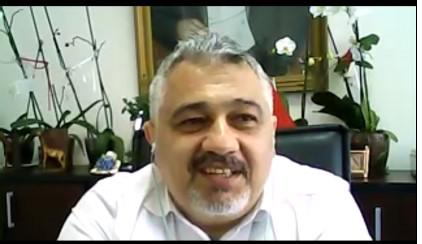
The program was moderated by Dr. Zozan Güleken, Lecturer at Üsküdar University Faculty of Medicine, Department of Physiology.
“Apoptosis is one of the main types of programmed cell death”
Referring to how cell death occurs, Tunçdemir stated: “Apoptosis is one of the main types of programmed cell death. Apoptosis has a number of general molecular mechanism characteristics. So, for apoptosis to occur, the activation of death receptors must happen first. After receiving a series of signals, certain members within the cell become involved, followed by the release of a cell within the mitochondria, and finally, DNA activation is required, which is an activation that causes disruptions in nuclear oncology. So what will trigger this? It is stated that apoptosis begins with the cell's own automatic activation or signals from the environment, while certain studies are ongoing. Examples of extracellular stimuli include a decrease in certain growth factors in the environment, such as colony-stimulating factors, neuron growth factor, some proteins or viruses, radiation, and drugs are among the positive stimuli.”
“Caspases are produced in two types during the process of apoptosis”
Referring to the role of caspases in cell death, Tunçdemir said: “Caspases are produced in two types during the process of apoptosis, depending on whether the signal to initiate apoptosis originates intracellularly or extracellularly. The first is extracellular receptors, and the second is apoptosis mediated by mitochondria within the cell. These signals activate the death receptors in the plasmas' minds and initiate the apoptotic process. They transmit the external signal internally by creating side interactions at the receptor, enabling the activation of caspases.”
Share
Update Date: February 27, 2026
Creation Date: March 04, 2021
Request a Call
Other News
- The book that read today's digital threats in 2014: Being a Conscious Family
- Experts warn: 'Instead of memorizing letters, teach pencil grip, scissor use, and coloring'
- School fear and school love both start in the family!
- Family is not merely transforming, it is being battered under a serious assault
- Artificial intelligence opens the door to early diagnosis in autism!