

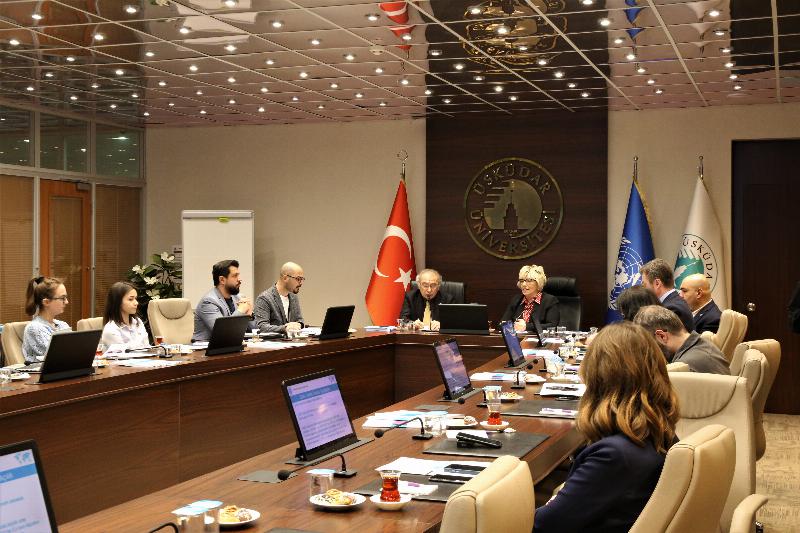
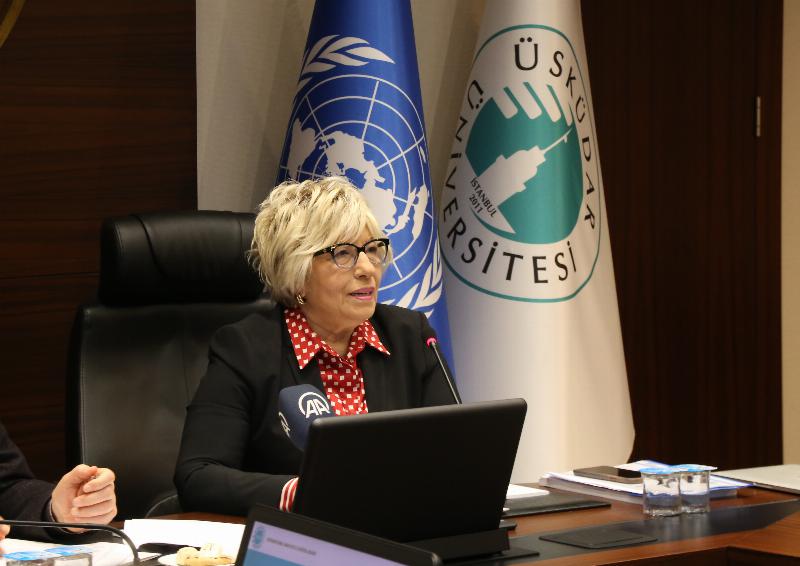
The United Nations International Narcotics Control Board (INCB) 2022 Report was announced simultaneously with the world by Üsküdar Üniversitesi Vice Rector, member of the United Nations (UN) International Narcotics Control Board for the periods 2005-2010, 2015-2022, and 2022-2027, and its former President, Prof. Dr. Sevil Atasoy.
Content
United Nations International Narcotics Control Board (INCB) 2022 Report announced!
The report particularly analyzed developments towards the legalization of non-medical cannabis use in some countries. The report stated that the use of electronic permits in the import and export of narcotics and psychotropics would facilitate monitoring, accelerating processes and reducing fraud. The report also drew attention to the increase in global access to painkiller opioids. It was noted that the use of painkiller opioids, which was 50,000 in 2001, reached approximately 250,000 in 2020.
The report stated that Turkey seized a record amount of heroin (22.2 tons) in 2021. A 79% increase in heroin seizures was detected compared to 2019. According to the report, Turkey is seeing a significant increase in methamphetamine seizures. 1 ton was seized in 2019, 4.1 tons in 2020, and 5.5 tons in 2021. In August 2021, 4.3 tons coming from Hong Kong, China, were seized at the Istanbul cargo terminal. Three major seizures were carried out in the first five months of 2022. In May 2022, 1,117 kg of liquid and crystal meth were seized in Istanbul. The report noted that diazepam use in Turkey increased by 100 percent.
Üsküdar Üniversitesi Founding Rector, Psychiatrist Prof. Dr. Nevzat Tarhan, stating that the increase in substance use primarily affects adolescents, said, “There is a significant increase in substance use statistics among adolescents. Cannabis use among those aged 12 and above has risen from 16.5 percent to 24.5 percent. It is particularly possible to say that there has been an increase since 2008. It peaked after 2012.” Tarhan underlined a 30 percent increase in hospital admissions for substance-related psychotic cases, adding, “Between 2010 and 2018, hospital admissions due to health problems related to addictions developed after global cannabis use increased 8-fold.” Stating that all statistics indicate that global policies regarding cannabis use should be reviewed, Tarhan warned, “Five times the sensitivity shown for cigarette use should be shown against cannabis use. Measures taken for cigarettes should also be taken for cannabis. States should allocate separate budgets for combating addiction. In summary, either policies should be changed, or a special budget should be allocated.” Tarhan also emphasized that while trying to escape a fly's bite, they are causing a snake's bite.
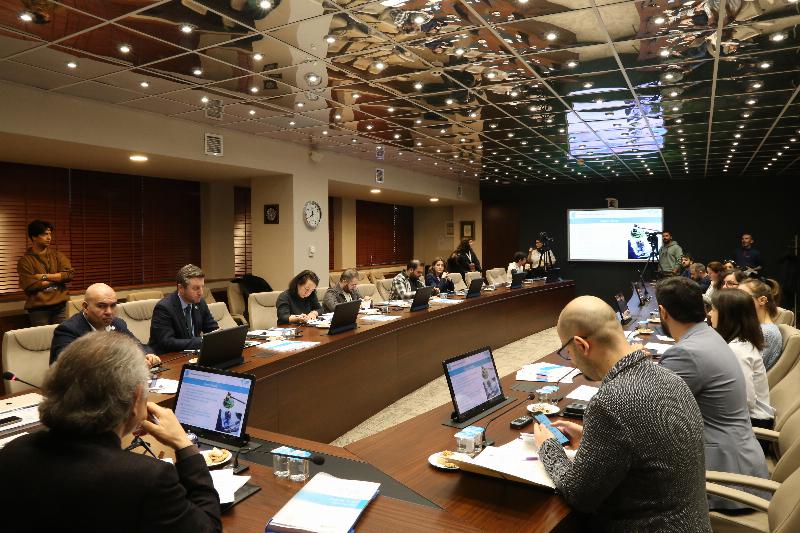
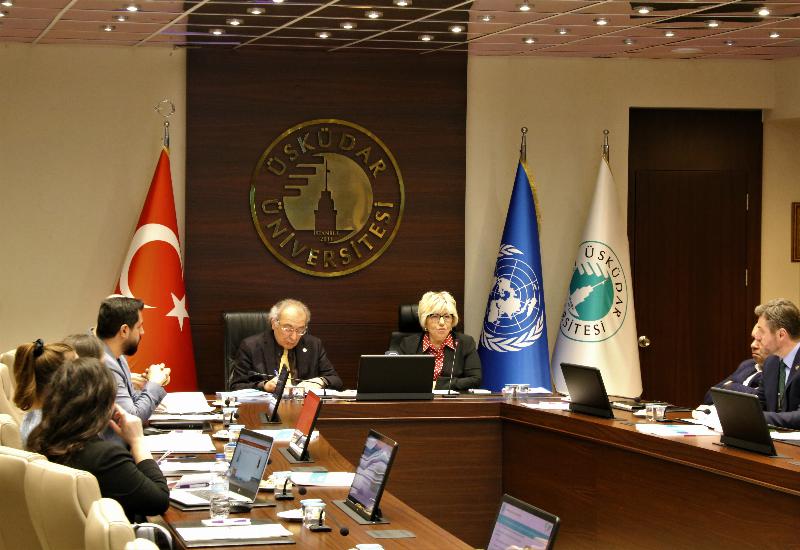
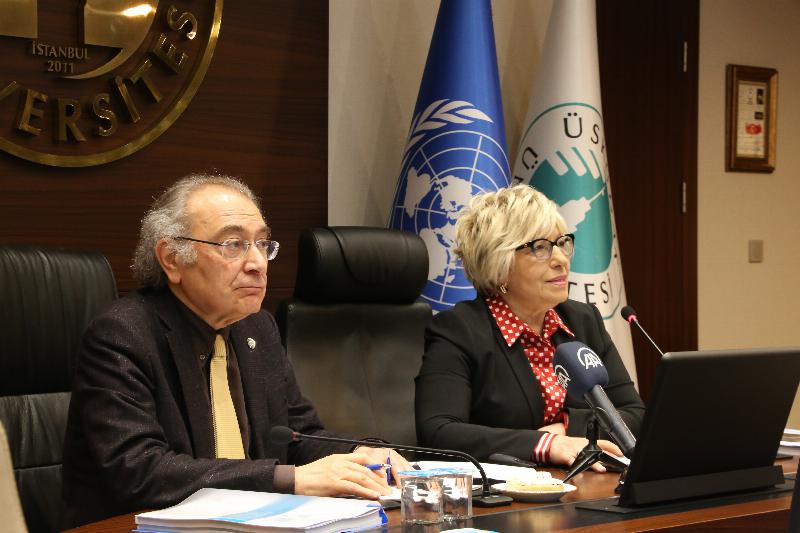
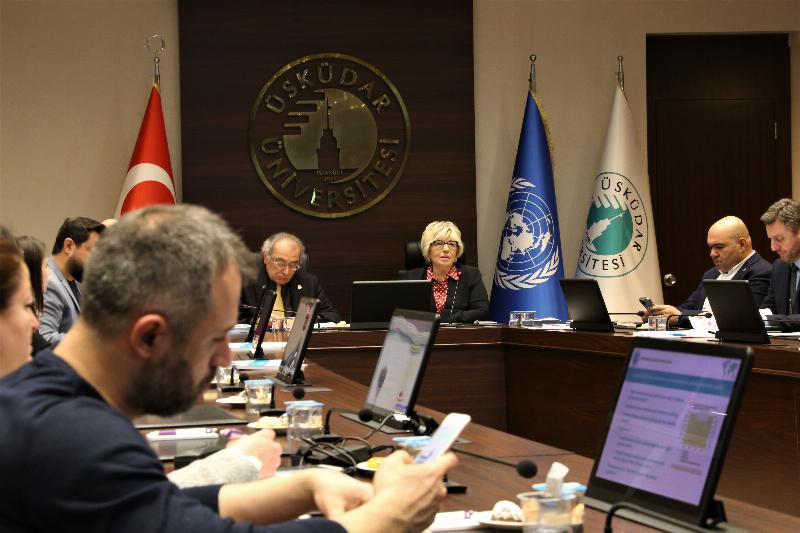
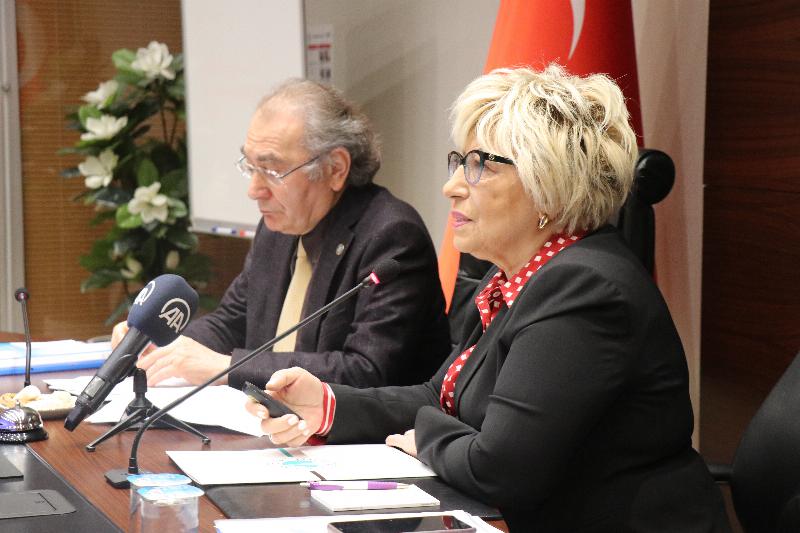
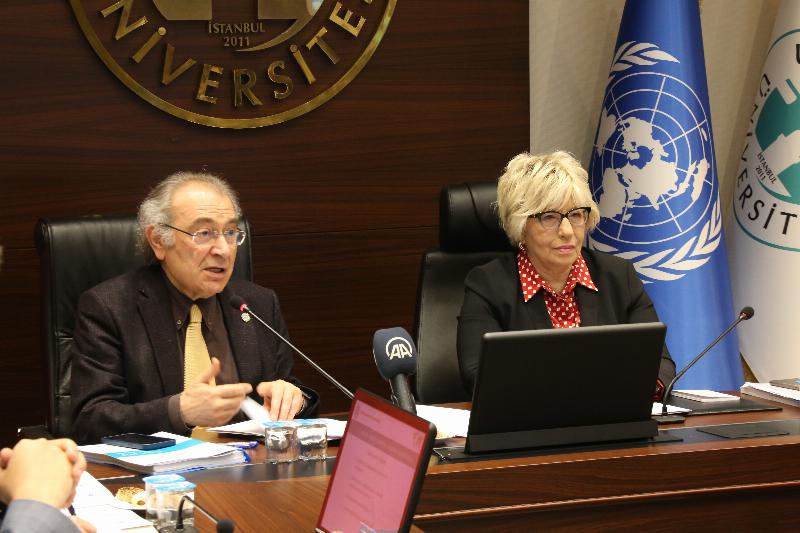
Üsküdar Üniversitesi Founding Rector, Psychiatrist Prof. Dr. Nevzat Tarhan, was also present at the press conference held in the Senate Hall of Üsküdar Üniversitesi Altunizade Campus.
Üsküdar Üniversitesi Vice Rector, member of the United Nations (UN) International Narcotics Control Board for the periods 2005-2010, 2015-2022, and 2022-2027, and its former President, Prof. Dr. Sevil Atasoy, announced the UN International Narcotics Control Board (INCB) 2022 reports simultaneously with the world.
The report was discussed in four sections
The 2022 Annual Report was discussed in four sections. In addition to the sections titled “Analysis of developments towards the legalization of non-medical cannabis use,” “Functioning of the international drug control system,” “Global issues and regional analysis,” and “Recommendations,” an additional section titled “No Patient Left Behind”: Ensuring access to controlled substances for medical and scientific purposes” was also included.
The logic of legalization was addressed
The section titled “Analysis of developments towards the legalization of non-medical cannabis use” addressed current problems faced by governments and society, political and legal developments concerning cannabis use and control, and the concept and logic of “legalization.”
Cannabis consumption and public health issues were discussed
The section discussing different models for the legalization of non-medical cannabis use and varying political approaches in light of drug control conventions included information on the effects of cannabis legalization, cannabis consumption, public health, road safety, illegal cannabis markets, and the economy.
This section noted that the conventions offer various opportunities to signatory countries in terms of protecting youth, improving public health, preventing unnecessary convictions, and combating illegal markets and related organized crime. It was stated that this approach is centered on the principle of proportionality, the establishment of better education, prevention, and treatment programs, social prevention, and the fight against organized crime through security measures, and that INCB supports governments in complying with the conventions.
New controlled substances
The report listed new controlled substances as narcotics, psychotropic substances, and precursor chemicals. Narcotics were listed as “brorphine” and “metonitazene,” psychotropic substances as “eutylone,” and precursor chemicals as “4-AP,” “1-boc-4-AP,” and “norfentanyl.”
Global issues were included
The “Global Issues” section of the report listed the threat posed by the increase in illicit cocaine production and trafficking, the emergence of new dangerous substances (non-fentanyl opioids), government-private sector cooperation on precursors, uncontrolled chemicals, and dangerous substances, mental health and access to controlled psychotropic substances, ensuring equal rights for substance users and preventing discrimination in prevention, treatment, and rehabilitation programs, the use of electronic methods in the import/export of internationally controlled narcotic substances, and the responsibility of transit countries in the legal trade of internationally controlled substances.
Attention was drawn to the increase in cocaine production and trafficking
The report, which highlighted the increase in cocaine production and trafficking, addressed factors such as the expansion of cultivation areas, potential associated cocaine production, new routes in increased trafficking, and shifts in production and consumption regions. The report emphasized the need for a coordinated fight at every point of the cocaine supply chain for secondary packaging in Europe, focusing on the reasons for increases in cultivation, production, trafficking, and consumption, appropriate precursor control, risk analysis in maritime trafficking, capacity building for port personnel, cooperation with the private sector in the supply chain, and the importance of combating illicit financial flows.
The I2ES system should be encouraged
The report stated that the use of electronic permits in the import and export of narcotics and psychotropics would facilitate monitoring, accelerating processes and reducing fraud. Emphasizing the need to encourage the International Import and Export Authorization System (I2ES), the report noted that COVID-19 increased its use and that some resorted to other methods outside I2ES, stating, “Different methods impede international trade and carry the risk of diversion to illicit channels. Governments must strictly use only I2ES, and national systems of governments must be compatible with convention and CND (Commission on Narcotic Drugs) decisions.”
Cooperation with the private sector and industry is essential
The report stated that quick responses are needed and cooperation with the private sector is essential, as the nature of trafficked substances and routes are rapidly changing. Emphasizing the importance of cooperation with industry, the report stated, “It is part of the 1988 Convention. Every sector that might be related to illicit production and distribution (especially machinery, equipment) should be included.” The report noted that there are beneficial practices and that INCB provides support with respect to resources and facilities related to this issue.
The report emphasized that mental health is an element of the UN’s Sustainable Development Goals, touching upon the situation in middle and and low-income countries and the disasters affecting all parts of the world, over-prescription and personal overuse, difficulties in monitoring psychotropic consumption, the importance of access to treatment and medication, and the inclusion of mental health in national health systems.
Remarkable increase in painkiller use!
The report also drew attention to the increase in global access to painkiller opioids. It was noted that the use of painkiller opioids, which was 50,000 in 2001, reached approximately 250,000 in 2020.
For what purpose is morphine used?
The report also included information on morphine use between 2001 and 2020. Accordingly, use for uncontrolled substance production was 1.6 percent, consumption for manufacturing Schedule III substances was 2.4 percent, use for the production of other narcotics was 3.9 percent, direct consumption was 9.5 percent, and use for codeine manufacturing was 82.6 percent.
INCB recommendations were also included in the report
The section of the report titled “2022 Precursors Report” included recommendations from the UN International Narcotics Control Board (INCB). The recommendations by INCB were listed as follows:
- Increasing operational capacity and cooperation to prevent diversion to illicit channels
• Increasing the level of information to protect legal markets and operators from traffickers
• Increasing "backtracking investigation" cooperation regarding stopped shipments
• Proactive information sharing aimed at preventing traffickers from using chemically similar substances
• Training on the investigation of precursor trafficking via the Internet
Turkey in the INCB 2022 Report
Diazepam use in Turkey increased by 100 percent!
Prof. Dr. Sevil Atasoy also touched upon information regarding Turkey in the INCB 2022 Report.
The report stated that diazepam use in Turkey increased by 100 percent.
Third in the world for opium raw material production
The report noted that in Turkey, data on the supply and demand of opiate raw materials showed a significant increase in morphine-rich poppy harvest, with Turkey ranking third globally in the production of morphine-rich opium raw material (69 tons) and being the country with the highest stock of morphine-rich opium raw material worldwide (303 tons).
The section noting concerns about methamphetamine production in Afghanistan stated that Iran and Turkey reported significant increases in seizures.
Officials from 14 countries received training
The report stated that officials from 14 countries in West Asia received training with INCB Learning e-modules, and these countries were Afghanistan, Armenia, Azerbaijan, Georgia, Iraq, Jordan, Lebanon, Pakistan, Qatar, Saudi Arabia, Tajikistan, Turkey, United Arab Emirates, and Yemen.
First global meeting on synthetic opioids held in Vienna
The report stated that the first global meeting of the GRIDS Program, aimed at increasing knowledge and capacity on synthetic opioids, took place in Vienna from August 1-15, 2022, with Turkey among the 140 professional participants. The 5th annual meeting of the GRIDS Program, aimed at increasing knowledge and operational capacity on dangerous synthetic substances and chemicals trafficked via courier and cargo services, was held in Vienna from September 6-9, 2022. Turkey was also among the 60 professional participants.
Turkey seized a record amount of heroin in 2021
The report stated that Turkey seized a record amount of heroin (22.2 tons) in 2021, noting that Covid-19 had little impact on the Balkan route. A 79% increase was detected compared to 2019.
According to the report, Turkey is seeing a significant increase in methamphetamine seizures. (1 ton in 2019, 4.1 tons in 2020, 5.5 tons in 2021) In August 2021, 4.3 tons from Hong Kong, China, were seized at the Istanbul cargo terminal. Three major seizures were carried out in the first five months of 2022. In May 2022, 1,117 kilograms of liquid and crystal meth were seized in Istanbul. The organization was dismantled.
Major narcotics operations carried out in 2022
The report also pointed to narcotics operations carried out in Turkey in 2022. It was noted that significant amounts of cocaine were trafficked from South America to Turkey, and that Turkey serves as a transit country for the Middle Eastern and European markets.
- In June 2022, 850 kg of cocaine hidden inside bananas was seized in a container prepared for shipment to Turkey at Ecuador’s Guayaquil port.
- In April 2022, 250 kg of cocaine sent from the same place in the same manner was seized at Mersin port. Turkey carried out numerous cocaine seizures.
- Cocaine destined for Turkey was seized in Ecuador, Malta, and West African countries.
According to the report, 1.96 tons of cocaine were seized in Turkey in 2020, and 2.8 tons in 2021.
Turkey reports methamphetamine as a serious public health problem
The report assessed that criminal organizations in Turkey likely shifted to cocaine due to a decrease in opiate prices. The report stated, “Turkey reports methamphetamine as a serious public health problem. There is both an increase in trafficking and an increase in methamphetamine-related deaths. 6.2% of substance-related deaths in 2018, and 31.2% in 2020, were due to methamphetamine.”
Substance use decreased during the pandemic
The report noted a decrease in MDMA, cocaine, and cannabis use during the full lockdown amidst Covid-19, returning to previous levels afterward. “In contrast, methamphetamine use increased during the full lockdown and continued to increase thereafter. There was an increase in legal pregabalin use. The market is shifting towards more easily accessible, cheaper substances. (From a study published in Turkey on February 11, 2022.)” these findings were included.
Heroin may have shifted to methamphetamine trafficking
The report stated, “In 2020, heroin seizures decreased in Balkan countries. In 2021, Bulgaria claims that transportation was carried out by sea. Methamphetamine trafficking may be occurring on the Balkan Route instead of heroin.” these findings were included.
Regarding morphine-rich poppy capsule concentrate (CPS), it was noted that producers include Australia, France, Spain, Turkey (69 tons), and consumers include Turkey (15,148 tons).
Turkey is second in the world
Data related to AMA (CPS) yield of morphine anhydride from morphine-rich poppy capsule concentrate also showed Turkey as the world's second-largest producer after France (48.4 tons). Globally, total exports decreased from 239 tons to 47 tons in 10 years, with Turkey exporting 5 tons. It was noted that morphine production from this product decreased globally, and this amount was 11 tons in Turkey.
During Covid-19, Turkey was noted as the world leader in remifentanil imports (14.5 kg), first in pethidine consumption (0.5 tons), and third globally in allobarbital requirement specification (70 kg).
Turkey is the only country in West Asia to seize illicit ephedrine
The report also drew attention to precursors used in the illicit manufacture of amphetamines, stating that ephedrine and pseudoephedrine are also used in methamphetamine production. The report noted that Turkey is the world's third-largest importer of legal pseudoephedrine, and the only country in West Asia to seize illicit ephedrine. In Europe, 2.6 million tablets of pseudoephedrine were seized in Bulgaria, with Turkey being their origin.
60% of acetic anhydride seized globally in 2021 was in Turkey
According to the report, 60% of acetic anhydride seized globally in 2021 was in Turkey, which is three times the amount in 2020 (36,300 liters). This year, 270 – 320 tons of pure heroin are expected to be produced in Afghanistan. This requires 270,000 – 800,000 liters of anhydride. Turkey is in a transit position between Europe and Afghanistan. Turkey also reported seizing acetyl chloride.
Üsküdar Üniversitesi Founding Rector, Psychiatrist Prof. Dr. Nevzat Tarhan, drew attention to the disadvantages of legalizing cannabis use, especially in some countries.
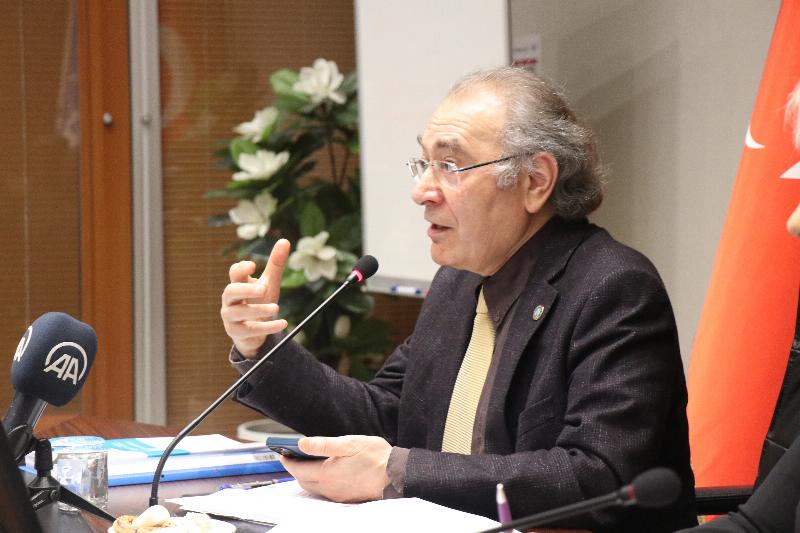
Prof. Dr. Nevzat Tarhan: “While trying to escape a fly’s bite, they are causing a snake’s bite”
Stating that the issue of cannabis is a reality of life, Prof. Dr. Nevzat Tarhan continued his words as follows:
“After the earthquake, life needs to normalize. Individually, the normalization process should be entered within 2-4 weeks. Otherwise, public mental health deteriorates. Substance and alcohol use increases in traumas. Illicit drug traffic may have decreased, but we can say that alcohol consumption has increased. The United Nations International Narcotics Control Board focused particularly on the issue of cannabis in this year's report. Expectations regarding the use of this substance globally turned out differently than planned. Efforts were made to have controlled use, especially to prevent illicit use. It was thought that monitoring would be easier if use was in specific locations and sellers were identified. Use became widespread in Northern Europe and America. However, this planning was not enough to reduce illicit use of the substance; on the contrary, it increased it even more. With controlled use, while trying to escape a fly's bite, they are causing a snake's bite.”
Prof. Dr. Nevzat Tarhan: “Not punishing use was perceived as legalization”
Prof. Dr. Nevzat Tarhan pointed out that while aiming to reduce criminal activities, the supply of cannabis in illegal markets increased even further, stating, “This situation contains a paradox. While intending to reduce the market and allow users to use openly, an effect was inadvertently created that popularized use. In the coming decades, the substance cannabis will once again be in the dock. Not punishing use was perceived as legalization in societies; it was understood as if it had been decriminalized. It is also becoming harder to convince those who say, ‘It's sold in pharmacies, why shouldn't I use it?’”
Prof. Dr. Nevzat Tarhan: “Cannabis use among those aged 12 and above increased by 8 percent”
Emphasizing that substance use is effective in increasing psychotic illnesses, Prof. Dr. Nevzat Tarhan said, “There is a serious increase in substance use statistics among adolescents. Cannabis use among those aged 12 and above has risen from 16.5 percent to 24.5 percent. There are also statistics showing an increase in the rate of suicide, self-poisoning, major depression, and depressive symptoms among adolescents worldwide. It is particularly possible to say that there has been an increase since 2008. It peaked after 2012. The increase in statistics related to adolescents is independent of the pandemic. Although official figures have not yet been released, as experts, we believe it has increased even further during the pandemic.”
Prof. Dr. Nevzat Tarhan: “Adolescents are in a high-risk group”
Noting that the increase in substance use primarily affects adolescents, Prof. Dr. Nevzat Tarhan said, “Adolescents are in a high-risk group. Adolescence is actually a period of searching for and finding one's identity. Emotions precede reason. In such a situation, they do things they like. They experiment with cannabis with their friends. Later, depression, suicide attempts, running away from home, and school absenteeism occur, and adolescents are, in a sense, wasted.”
Prof. Dr. Nevzat Tarhan: “Methamphetamine production and use are quite widespread in Turkey”
Underlining a 30 percent increase in hospital admissions for substance-related psychotic cases, Prof. Dr. Nevzat Tarhan said, “Between 2010 and 2018, hospital admissions due to health problems related to addictions developed after global cannabis use increased 8-fold. Admissions for psychotic disorders like schizophrenia related to cannabis use also increased 4-fold. Besides cannabis, there is another hidden partner. That is methamphetamine. Meth is widely produced synthetically and used in Turkey.”
Prof. Dr. Nevzat Tarhan: “States should allocate special budgets for drug addiction”
Psychiatrist Prof. Dr. Nevzat Tarhan, stating that vehicle accidents related to cannabis use have also increased, concluded his words as follows:
“All statistics show that global policies regarding cannabis use need to be reviewed. The cannabis industry is growing very rapidly. Concepts such as decriminalization or legalization were confused. The perception that medical use has been legalized has taken root, but new perception campaigns are needed to change this perception. Five times the sensitivity shown for cigarette use should be shown against cannabis use. Measures taken for cigarettes should also be taken for cannabis. A non-smoker can use cannabis. Its use in the form of electronic cigarettes is also a separate topic of discussion. Although criminal traffic decreased during the Covid period, we cannot say that this situation reduced substance use. If current policies are to continue, states must allocate separate budgets for combating addiction. In summary, either policies must be changed, or a special budget must be allocated.”
Share
Update Date: March 01, 2026
Creation Date: March 09, 2023
Request a Call
Other News
- The book that read today's digital threats in 2014: Being a Conscious Family
- Experts warn: 'Instead of memorizing letters, teach pencil grip, scissor use, and coloring'
- School fear and school love both start in the family!
- Family is not merely transforming, it is being battered under a serious assault
- Artificial intelligence opens the door to early diagnosis in autism!