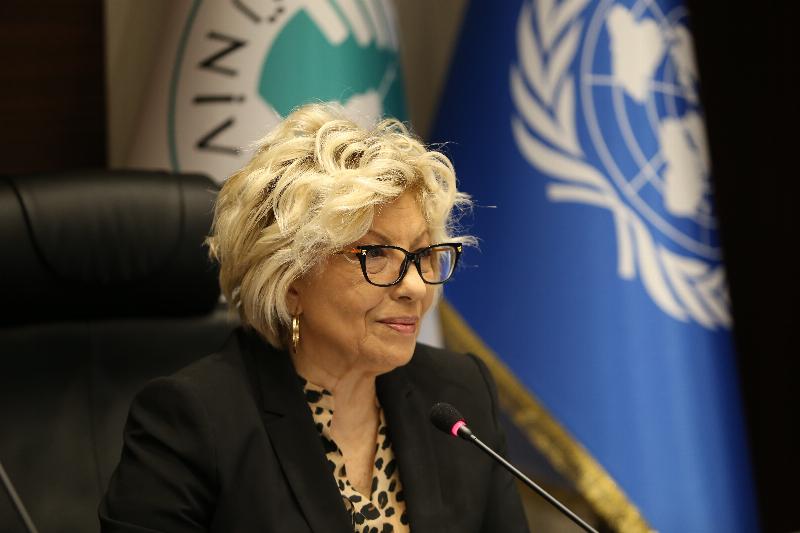
Prof. Dr. Sevil Atasoy, Vice-Rector of Üsküdar Üniversitesi, Member of the United Nations (UN) International Narcotics Control Board for the periods 2005-2010 and 2015-2027, and its former President, made the following statement simultaneously with the world:
Pandemic caused new challenges in the fight against drugs
The international community continued its fight against the coronavirus (COVID-19) pandemic in 2021. The pandemic, showing no signs of easing, continued to prolong the great suffering of people, place a heavy burden on national health systems, slow down countries' progress towards the Sustainable Development Goals, and create new challenges in achieving the objectives of (international) drug control conventions.
The International Narcotics Control Board (INCB) supports Member States in overcoming challenges that existed both before COVID-19 and those that emerged as a result of the COVID-19 pandemic regarding drug control. Examples of challenges arising from the COVID-19 pandemic were included in INCB's 2020 Annual Reports, which analyzed how the COVID-19 pandemic affected the global drug supply chain and the increased demand for controlled drugs to treat COVID-19 patients.
The INCB 2021 Reports address traditional topics such as how it supports Member States in achieving the goals of drug control conventions and making progress towards the Sustainable Development Goals. The reports also examine the availability of controlled drugs used in COVID-19 treatment.
Illicit financial movements of organized crime groups should be examined
The thematic section of the reports focuses on the relationship between illicit cash flows and drug trafficking, and the broader impacts of these developments on society. Since drug trafficking is a highly lucrative sector for organized crime groups and these groups rely on illicit cash flows to expand and sustain their illegal activities, the INCB believes that illicit financial movements should be given special attention and scrutiny. Illicit cash flows related to drug trafficking have a broad societal impact as they promote bribery, crime, corruption, and inequality, leading to political and social instability. Illicit cash flow can lead to the diversion of valuable resources intended for sustainable development to other purposes. Since illicit cash flow knows no borders or nationality, a joint effort is required to combat it. The INCB makes a number of recommendations to member states to address this problem.
Non-medical use of Cannabis is contrary to conventions
One of the topics covered in the Annual Reports is Cannabis (Hemp). Numerous member states decriminalized and exempted from punishment the non-medical use of cannabis. Many interpreted this situation as the legalization of non-medical cannabis use. However, the legalization of non-medical cannabis use is contrary to drug control conventions. In this context, the Annual Reports also examine the concepts of “legalization” and “decriminalization and exemption from punishment.”
Social media platforms pose significant risks
The reports discuss the role of the internet in drug use, particularly online drug sales, and how social media influences drug use. The Annual Reports also investigate how organized crime groups use the internet, e-commerce platforms, and the darknet to sell drugs. The Annual Reports reveal that social media not only encourages negative behaviors related to drug use but also offers users the opportunity to purchase cannabis, prescription painkillers, and other controlled substances on many platforms. This is of great importance not only because young people are the primary users of social media platforms but also because there is increasing evidence of a link between exposure to social media and drug use. Therefore, it is essential to address this issue not only for current users but also for future generations who will use social media platforms in their daily lives.
INCB continues to support member states in education
The INCB is committed to supporting member states in the implementation of drug control conventions. The INCB Learning and the INCB Global Rapid Interdiction of Dangerous Substances (GRIDS) Programme constitute important examples of this support. Despite the challenges posed by the COVID-19 pandemic, the INCB Learning programme was able to organize three online courses for 95 officials between November 2020 and November 2021. The GRIDS Programme continued to support Member States in many ways, including training and access to INCB tools. The INCB encourages Member States to utilize all available programs to achieve the objectives of the drug control conventions.
The main objective of the drug control conventions is to protect the health and welfare of humanity, and I am very proud of the efforts made by the INCB to achieve this objective during a time when our collective well-being is under threat. If we want to achieve the objectives of the drug control conventions and make progress towards the relevant Sustainable Development Goals, we need to act together at all levels of society.
International Narcotics Control Board
ILLICIT FINANCIAL FLOWS LINKED TO DRUG TRAFFICKING AND THEIR IMPACT ON DEVELOPMENT AND SECURITY ISSUES
Definition of illicit cash flows
Illicit cash flow resulting from drug trafficking poses a major threat to society in the form of corruption, bribery, organized crime, and inequality, and can lead to political and social instability. It increases the wealth of drug cartels and organized crime groups. Illicit cash flow leads to the diversion of resources to other channels instead of initiatives aimed at poverty reduction and social and economic development.
The term illicit financial flows encompasses money obtained from illegal acts such as drug trafficking, corruption, or tax evasion, or financial resources used for illegal purposes such as crime or the financing of terrorism.
Countries need to act together to stop illicit financial flows, as it becomes more difficult to track financial movements across international borders, access their original source, and hold their owners accountable. Developing countries, in particular, are estimated to lose millions of dollars each year due to organized crime groups.
Drug trafficking, financial flows, and cost to society
Drug trafficking is one of the most lucrative businesses for organized crime groups due to increasing drug use worldwide. According to the United Nations Office on Drugs and Crime (UNODC) 2021 World Drug Reports, approximately 275 million people worldwide used drugs in 2019. This represents a 22 percent increase compared to 2010. Cannabis remains the most commonly used drug worldwide, with an estimated 200 million users. Additionally, deaths from opioid use disorders increased by 41 percent globally during the same period.
Every stage of drugs must be addressed
Drug use and global drug trafficking impose a high cost on societies. Data also shows that countries with high levels of drug trafficking, cultivation, distribution, and consumption also have high levels of instability, violence, violent crime, and murder. To prevent negative impacts and the cost to people, it is essential to address all stages of drug trafficking, from cultivation and production to transport, distribution, and sale.
In addition to limiting the illicit drug supply, minimizing the profits drug traffickers gain from illicit financial flows is also of great importance. Financial transparency at the international level, strong laws to prevent money laundering, and cooperation among Governments to identify illicit financial flows are important elements in the fight against organized crime and drug trafficking.
Impact of illicit financial flows on developing countries
Illicit financial flows resulting from drug trafficking threaten the stability and security, as well as the political, economic, and social development of many countries. Illicit capital flow is particularly devastating for developing countries as it means the loss of hundreds of millions of US Dollars in much-needed tax revenues that would otherwise fund public initiatives and government programs.
In addition, illicit financial flows from developing countries often end up in banks in developed countries. The Pandora Papers in 2021, the FinCEN Files in 2020, the Paradise Papers in 2017, and the Panama Papers in 2016 reveal how illicit proceeds disrupt and undermine the international financial system and divert resources away from development.
Specifically, the 2021 Pandora Papers brought to the forefront the importance of corporate transparency by revealing information on offshore mechanisms used by politicians, high-level executives, and more than 130 billionaires from 45 countries to conceal financial information. Opaque corporate structures and the anonymity of account holders constitute a significant obstacle to the investigation and prosecution of crimes and the disclosure of illicit financial flows.
Impacts on the achievement of the Sustainable Development Goals
Billions of dollars are estimated to be transferred illicitly from developing countries to other countries each year. This erodes public resources and undermines efforts to generate the resources needed to achieve the Sustainable Development Goals by 2030. In fact, reducing illicit financial flows constitutes one of the targets (1.4).
Drug trafficking deepens inequality, poverty
Corruption and bribery resulting from drug trafficking enable illicit financial flows by diverting legal resources. This weakens good governance, hinders economic development, and deepens inequality, poverty, and environmental crisis.
Illicit financial flows are particularly high in Africa and damage the development of many countries. An estimated 88.6 billion US dollars, accounting for approximately 3.7 percent of the continent's gross national product, is lost each year due to illicit financial flows. This is almost equivalent to the total annual amount of official development assistance and foreign direct investment. Examining illicit financial flows must be a priority for Governments to be able to implement the Sustainable Development Goals and have the necessary funds and resources to address the health, social, and economic impacts of the COVID-19 pandemic.
Impact of new technologies on illicit financial flows
As globalization strengthens, the movement of money and capital becomes easier. Thanks to new technologies such as digital currencies, mobile payments, and e-wallet services, international fund transfers can be made more easily and quickly. However, they anonymize users and processes, creating new avenues for illicit financial flows. Organized crime groups use these technologies to launder money and maximize their profits.
New technologies create opportunities for organized crime groups
New technologies create new opportunities for organized crime groups competing for drug, arms, and human trafficking, while also posing new obstacles for authorities attempting to detect and monitor criminal activities. As the use of advanced information and communication technologies in financial services increases, so does the threat of illicit financial flows.
The INCB is conducting a series of global consultations with stakeholders to help governments combat illicit financial flows related to drug trafficking. The INCB also raises awareness among governments and private sector partners operating in financial services about the potential formation of illicit financial flows through the production and trade of dangerous substances, via its Global Rapid Interdiction of Dangerous Substances (GRIDS) Programme. The programme also encourages and supports voluntary cooperation efforts between Governments and financial service providers.
Recommendations
Since illicit financial flows transcend international borders, member states need to act together. The INCB makes a number of recommendations to countries to help combat illicit financial flows. Member states are advised to:
Establish specialized task forces at national and international levels for intelligence sharing, investigating illicit financial flows, and identifying organized crime networks.
Laws that ensure effective transparency and the imposition of appropriate penalties.
Further strengthen measures to combat money laundering.
Focus equally on drug supply and demand reduction strategies, including illicit financial flows.
Promote a culture of accountability and transparency that prevents corruption and the illicit economy by incorporating civic and moral values into educational curricula at an early stage.
Work with the private sector, civil society, and the public to raise awareness about the relationship between illicit financial flows and drug trafficking, and their negative impacts on stability and development.
Become parties to and implement all United Nations conventions relating to the fight against transnational organized crime, especially drug trafficking, illicit financial flows, and corruption.
Implementation of International Standards on Combating Money Laundering and the Financing of Terrorism
Take steps to prevent the misuse of emerging financial services and products such as e-wallets and digital currencies to combat the trafficking of dangerous substances.
GLOBAL ISSUES
Timely access to controlled substances for international humanitarian emergencies
The availability of and access to controlled substances is fundamental to providing quality care in emergencies. During the COVID-19 pandemic, the effectiveness of simplified control measures in emergencies has been tested.
To help member states improve their emergency preparedness, the INCB compiled and published the experiences of countries and humanitarian organizations in facilitating the timely supply of controlled substances in emergencies. The INCB encourages member states to review their existing national legislation and allow for greater flexibility in the international trade of controlled substances during emergencies.
The role of social media in promoting non-medical use of drugs
Social media platforms promote a range of negative behaviors, including facilitating and glamorizing non-medical drug use. Cannabis, prescription painkillers, and other controlled substances can be easily purchased on social media platforms. Young people are not only the primary users of social media platforms but also the group with high rates of drug use. The link between exposure to social media and drug use should prompt member states to take a more active role in regulating this area. The INCB recommends that social media companies monitor their platforms and implement their own regulations to limit advertisements and promotions for non-medical drug use.
COVID-19, narcotic drugs, and psychotropic substances
During the COVID-19 pandemic, the disruption in the production of some key substances used in pharmaceuticals affected the global supply chain in some producing countries. Border closures and physical distancing rules by some countries further complicated logistical issues.
Consolidated statistics on narcotic drugs for 2020 show an increase in consumption, production, and stockpiling in some countries, especially for fentanyl and its analogues. This trend is largely due to the increased need for painkillers for COVID-19 patients in intensive care units.
At the beginning of the pandemic, there were reports of unavailability of medicines containing midazolam in some parts of the world. Midazolam has proven to be very important in the treatment of severe COVID-19 cases. The unavailability was partly due to high demand and disruptions in delivery and transport caused by restrictions at borders due to COVID-19. In the later days of the pandemic, data provided by member states shows that the situation improved and countries successfully continued to import and export midazolam worldwide.
Regional differences persist in the consumption of controlled drugs used for pain management
Regional analyses of overall opioid analgesic consumption still reveal large differences between regions. While almost all opioid analgesic consumption is concentrated in developed regions such as Europe and North America, consumption in other parts of the world is often insufficient to meet the medical needs of the populations in those regions. The countries reporting the highest average opioid consumption for pain management in the period 2018-2020 were the United States, Germany, Austria, Israel, and Belgium, respectively.
At the global level, opiate raw materials used to produce narcotic drugs continue to remain sufficient to meet the reported global needs for 2021 and 2022. Differences in the availability of narcotic drugs between regions persist because many countries do not accurately estimate their medical needs for opioid analgesics or have limited access to them. The INCB emphasizes the importance of ensuring adequate availability for all countries and regions and calls on member states with more resources to assist states with fewer resources in providing access and availability to narcotic drugs.
Challenges with fentanyl and fentanyl analogues
Fentanyl and fentanyl analogues continue to increase the number of overdose deaths attributed to synthetic opioids in Canada and the United States. The problem is estimated to be more widespread as the role of fentanyl analogues in overdose deaths is often undetected and therefore underreported. Special toxicology tests are required to identify such analogues.
Fentanyl analogues are very potent and are often trafficked in small quantities and small packages. Sellers can profit by marketing fentanyl analogues on e-commerce platforms and the darknet to avoid detection by platform administrators.
The INCB maintains a list of more than 140 fentanyl-related substances that have no current medical, industrial, or other legitimate uses. The INCB urges member states and industry partners to use the list to prevent the production, marketing, transport, and monetization of the substances on the list.
Article 13 of the 1988 Convention offers great opportunities to monitor the development of illicit drug production
The rapid development of illicit drug production necessitates faster action for better implementation of article 13 of the 1988 Convention concerning equipment and materials used in illicit production.
The INCB held two expert group meetings on increasing the operational use of article 13. These meetings resulted in successful multilateral collaborations on preventing and investigating the diversion of special-use materials. The contributions of the experts were compiled by the INCB in an awareness-raising and guidance document to be reviewed in 2022 and then shared with the international community.
PRECURSORS 2021 REPORT
The control and regulatory framework for chemical precursors needs to be strengthened
According to a public survey conducted by the INCB in June 2021 regarding the implementation of provisions concerning chemical precursors by Governments, there are serious shortcomings in the national production, trade, and distribution of chemical precursors, including trade via the internet. Without such controls, traffickers can obtain chemical precursors from unaware traders. One-third of the Governments participating in the survey have not established national control systems for the control of substances listed in Tables I and II of the 1988 Convention.
Global action is needed to prevent the spread of non-scheduled chemicals and designer precursors due to the evolution of illicit drug production
Chemicals that are not listed in Tables I and II of the 1988 Convention and that can be used in illicit drug production instead of controlled precursors can now be found worldwide. Analysis of seizure data for designer precursors used in the illicit production of Amphetamine and Methamphetamine, and recently added to the lists, shows a significant decrease in seized quantities following their addition to the relevant international lists. During this period, alternative precursors not on the lists began to appear on the market.
The INCB supported various initiatives and consultations in 2021 to raise awareness about non-scheduled chemicals and designer precursors and to build consensus on global action. The INCB prepared a compilation containing approaches and measures to prevent the proliferation of non-scheduled and designer precursors to further strengthen the chemical substance control system.
Internet platforms continue to be used for the supply of precursor chemicals
In February 2021, the INCB carried out a targeted and time-limited operation named “Operation Acronym” with the participation of 34 Governments and four international organizations. This operation addressed the online trafficking of precursor substances and the challenges encountered in tracking these substances. The operation identified the use of secure virtual private networks and messaging services for the online supply of precursor chemicals. This result highlights the need for member states to focus on cybercrime investigations related to precursors and for close cooperation with internet service providers, email and social media services, and internet businesses. The INCB implements capacity-building initiatives to support the efforts of Member States.
Engagement with relevant sectors is of great importance
Due to the use of non-scheduled chemicals and designer precursors in illicit drug production, the chemical and pharmaceutical industries are vital in precursor control efforts. The INCB continues to support and promote initiatives in this area and has conducted a survey to compile global best practices and possible scenarios for industry cooperation on precursor substances.
The COVID-19 pandemic had little impact on the supply of precursor chemicals used in illicit drug production
>The amount of ephedrine reported seized at the global level confirms the downward trend observed in recent years. In contrast, the seized quantities of MAPA, the most recently added substance to Table I of the 1988 Convention, indicate a shift towards designer precursors. The same development applies to fentanyl, fentanyl-related substances, and methaqualone precursors. Seizure rates for potassium permanganate, the main precursor used in illicit cocaine production, and acetic anhydride, a key heroin precursor, show that they were not affected by COVID-19 restrictions.
INCB's Precursor Incident Communication System helps share information in real time
The INCB’s Precursor Incident Communication System (PICS) provides users with a platform that enables the secure sharing of information related to precursor trafficking in real time. PICS also provides information about precursors and drug manufacturing equipment under international control. In this way, even if the details and other information provided in the annual statistics of seized substances are insufficient, PICS can help authorities identify new trends, trafficking routes, and alternative precursors.
HIGHLIGHTED REGIONAL ISSUES IN THE INCB 2021 REPORT
AFRICA
According to UNODC, if current levels of drug use persist, an increase in the number of people who use drugs is expected in the coming decade due to population growth on the continent.
The number of States in Africa that permit legal cannabis cultivation for medical use continues to increase. While most of these countries aim only to export cannabis, others allow for the domestic use of cannabis for medical purposes.
AMERICA
Central America and the Caribbean
The International Organization for Migration (IOM) found no evidence that drug traffickers used human trafficking networks in Central America and Mexico.
Unavailability of narcotic drugs for medical use. In 2020, the availability of opioid analgesics used for medical purposes in Central America and the Caribbean was among the lowest of all regions.
Lack of data showing the prevalence of drug use. In most countries in the region, recent estimates of drug use prevalence are unavailable. The use of cannabis and cocaine, the proliferation of new psychoactive substances, and the use of unregulated controlled drugs continue to be a cause for concern.
North America
The number of deaths due to drug overdose continued to increase in Canada and the United States. In the United States, as of April 2021, there were an estimated 100,306 drug overdose deaths in the 12-month period, a 28.5 percent increase from the previous year. The estimated number of opioid-involved overdose deaths during that period increased from 56,064 to 75,673. Since the beginning of the COVID-19 pandemic, there has been an increase in opioid overdoses and deaths in Canada, primarily due to an increasingly toxic drug supply. The worsening overdose crisis in these countries is evident in the increases in the number of deaths involving psychostimulants such as methamphetamine.
Regulations related to cannabis continue to spread in North America. In Mexico, new regulations regarding the non-medical use of cannabis by adults are being reviewed based on a Supreme Court decision from June 2021. In the United States, despite cannabis being federally controlled, state-level laws were enacted in six more states in the previous year to permit the non-medical use and possession of cannabis by adults.
South America
Large quantities of cocaine and chemical precursors were seized. Organized crime groups in the region increased shipment volumes to illicit markets within and outside the region to compensate for financial losses experienced in the first few months of the COVID-19 pandemic. In Europe and Africa, authorities reported an increase in cocaine quantities originating from South America.
Despite COVID-19 restrictions, the number of routes and networks used by traffickers increased. Air and sea routes became the preferred method for transporting internationally controlled substances. Criminal organizations are observed trafficking cocaine from Bolivia using the Paraguay-Parana Waterway System, which consists of 3,400 km of uninterrupted river connections linking Argentina, Bolivia, Brazil, Paraguay, and Uruguay to the Atlantic Ocean. There was also an increase in the use of the internet, especially the “darknet” and social media, for drug sales. Drugs are sold online and distributed through postal and courier services.
Coca cultivation areas continue to decrease in Colombia, while Bolivia and Peru report an increase. The decrease in Colombia may be due to various reasons, including Government efforts. The increase in Bolivia and Peru may have been caused by the suspension of eradication efforts during COVID-19 restrictions, increased economic uncertainty, and political instability.
Governments in the region are preparing to establish a cannabis industry. An increasing number of Governments in the region are regulating the cultivation, production, and trade of cannabis for medical, scientific, and industrial purposes. Some Governments plan to establish cannabis industries to aid post-COVID-19 economic recovery efforts.
In addition to the increase in new psychoactive substances in the region, there was also an increase in ecstasy-like drugs. Argentina, Brazil, and Chile reported the largest ecstasy-like drug seizures between 2015 and 2019. Particularly alarming is the consumption rate among high school and university students. There are also reports of an increase in new psychoactive substances sold under the guise of different drugs.
ASIA
East and Southeast Asia
Illicit synthetic drug production, trafficking, and use continue; new drugs are emerging. The INCB is concerned about the increase in illicit production, trafficking, and use of synthetic drugs, particularly ketamine, methamphetamine, and synthetic cannabinoids. The drug problem has serious health, human rights, security, and economic consequences for countries in the region.
China began using a generic definition to control synthetic cannabinoids.
Following its decision in 2019 to list fentanyl-related substances as a group, which led to a sharp decrease in the use of these substances, China began using a generic definition to control synthetic cannabinoids in 2021.
Countries in East and Southeast Asia rank low in the availability of the most common opioid analgesics. Other countries in the region do not report adequately on the consumption of psychotropic substances. The Board reminds that narcotic drugs and psychotropic substances are not available in sufficient quantities in many countries in the region and emphasizes the importance of ensuring adequate availability and access to internationally controlled substances for medical use.
Data on drug use and demand for treatment are insufficient in many countries in the region. The INCB encourages member states in the region to prioritize collecting data on drug use trends and treatment demands to enable the development of evidence-based decisions in prevention and treatment and calls on bilateral partners, regional, and international organizations to support these efforts.
The INCB reiterates in the strongest possible terms its view that extra-legal interventions against drug-related crimes are a clear violation of drug control conventions, which require drug-related offenses to be addressed through criminal law and in strict adherence to internationally accepted standards of legal process. In light of relevant international conventions and protocols, and the resolutions of the General Assembly, the Economic and Social Council, and other United Nations bodies on the death penalty, the INCB calls on all States to consider abolishing the death penalty and commuting death sentences imposed for drug-related offenses to prison sentences.
South Asia
Pharmaceutical opioids continue to be seized in large quantities in the region. The most commonly seized substances are codeine and codeine-based cough syrups. This is followed by tramadol, an opioid not under international control, and fentanyl and methadone.
The global trend towards purchasing medicines online appears to be spreading to the region. Individuals engaging in this activity utilize “darknet” trading platforms and use cryptocurrencies to purchase drugs.
There is no information that COVID-19 restrictions led to more heroin seizures in the region. During the period of global economic slowdown amidst the pandemic, organized crime groups developed new strategies by using new drug trafficking methods such as containers and postal services, and by exploiting the darknet for transferring proceeds via cryptocurrency payments.
South Asia continues to have one of the highest rates of opium use in the world. According to UNODC, 1.1 percent of people aged 15 to 64 in the region use opium. According to 2019 statistics, there are 21.7 million annual heroin and opium users in Asia. This accounts for 70 percent of opium users worldwide, estimated at 31 million last year.
Pandemic made access to treatment difficult
COVID-19 restrictions posed a barrier to access to drug treatment in some countries in the region. Curfews and lack of access to healthcare services made it difficult for individuals from disadvantaged groups with substance use disorders to access treatment.
Technological advancements are helping to provide treatment services. In India, doctors receive online training for opioid agonist therapies. Internet-based educational materials on opioid disorders are being developed and made freely accessible to healthcare professionals.
The availability of narcotic drugs and psychotropic substances for medical and scientific use in the region is low. Countries in South Asia report low levels of consumption of such substances. The INCB reiterates the importance of ensuring adequate availability of internationally controlled substances for medical use, especially for pain management. The INCB reminds states in South Asia of the necessity of collecting data and statistics on drug use prevalence rates and providing this information regularly, and of providing affordable and accessible drug treatment services throughout their countries.
West Asia
Afghanistan maintains its leading position in illicit opium production. Afghanistan continues to be the country with the highest illicit opium production, with a potential production quantity of 6,800 tons in 2021. Although the total area of illicit opium cultivation decreased by 21 percent in 2021, opium production increased by 8 percent compared to the previous year.
Central Asian States continue to face increasing synthetic drug trafficking and abuse, including amphetamines, synthetic cannabinoids, and various other new psychoactive substances. Traffickers use the internet and social media to advertise and sell these substances. The increased demand for synthetic drugs in this region is believed to be due to reduced availability of cannabis and opiates during the pandemic.
EUROPE
Law enforcement agencies gain access to encrypted communication devices, revealing significant information about the activities of criminal groups. Various operations conducted by law enforcement agencies resulted in the seizure of encrypted communication devices used for criminal activities. Authorities were able to access encrypted devices and hundreds of millions of messages that provided valuable information to law enforcement about the activities of criminal groups. Thanks to this information, criminal activities in Europe and other regions were halted, large quantities of drugs and precursor chemicals were seized, and illicit laboratories were dismantled.
Legal environment expanding cannabis use for medical and scientific purposes. The European Court of Justice recently ruled that CBD derived from the cannabis plant should not be considered a drug under the 1961 or 1971 Conventions. Many States are already regulating their laws to align with this decision. Several European Union member States are enacting laws to expand the use of cannabis products for medical purposes. Many countries in the region are considering or taking steps to expand cannabis use for non-medical purposes, contrary to the 1961 Single Convention on Narcotic Drugs. The INCB reminds all parties to the 1961 Convention that, in accordance with article 4(c), the production, manufacture, export, import, distribution, trade, use, and possession of drugs are limited solely to medical and scientific purposes.
COVID-19 restrictions had a limited impact on illicit drug supply and demand. Despite COVID-19 restrictions in Europe, there was no decrease in synthetic drug production and cocaine levels. A shift from land to sea routes is observed, particularly for heroin trafficking from West Asia and cannabis resin from Morocco to Europe. Although drug use levels decreased at the beginning of the lockdown period, they increased when restrictions were lifted.
Drug use patterns in the region have also become more complex due to the presence and accessibility of different drugs. This increase in accessibility and variety leads to poly-drug use patterns, where individuals use multiple types of drugs simultaneously or different types of drugs in sequence. Another emerging trend is the non-medical use of benzodiazepines among high-risk drug users, prisoners, and other groups, sometimes in combination with opioids or alcohol.
OCEANIA
Transnational crimes, including drug trafficking, continue to increase in the Pacific islands. Organized crime groups use small boats to traffic drugs, particularly to Australia and New Zealand. Pacific Island States are also emerging as transit points for synthetic opioid trafficking to Australia, the United States, and European countries.
The majority of countries not party to drug control conventions are concentrated in Oceania. Seven of the 10 States not yet party to the 1961 Convention as amended are in Oceania. Eight of the 13 States not party to the 1971 Convention and four of the seven countries not party to the 1988 Convention are in Oceania.
New Zealand enacted the Drug and Substance Control Act (No. 2). This Act replaces the temporary law that came into force in December 2020 to permit drug and substance testing services during the 2020-2021 summer festival season.
The INCB GRIDS Programme provides training to OCO and its members across the Pacific as part of an agreement between INCB and the Oceania Customs Organisation (OCO) to facilitate the sharing of information and intelligence for customs officers.
National authorities in four countries are enrolling in INCB Learning e-modules. Drug control officials from Australia, Kiribati, New Zealand, and Papua New Guinea are registering for e-modules covering narcotic drugs, psychotropic substances, precursors, and the international drug control framework.
Low-dose CBD mixtures were reclassified from Schedule 4 to Schedule 3 in Australia. This change allows a maximum of 150 mg per day of such mixtures, approved by the Therapeutic Goods Administration, to be purchased over-the-counter from pharmacies for adult consumption.
Most drugs in Oceania are seized in Australia and New Zealand. However, drugs seized in neighboring Pacific Island States indicate that these countries are being used for drug trafficking to Australia and New Zealand.
Revival of the methamphetamine market in Australia. Wastewater analysis covering 56 percent of the Australian population in April 2021 showed a revival of the illicit methamphetamine market. The analysis also showed record lows in fentanyl and oxycodone consumption.
Decrease in methamphetamine use in New Zealand. Wastewater studies covering 75 percent of the population show that methamphetamine use decreased by 14 percent in the first quarter of 2021 compared to the previous quarter and by 30 percent compared to the same period in 2020.
Low availability of internationally controlled drugs for medical and scientific purposes in Pacific Island States. While opioid consumption levels in Oceania are among the highest in the world, particularly due to consumption in Australia and New Zealand, Pacific Island States show lower consumption levels.
INCB SUPPORTS MEMBER STATES
INCB GLOBAL RAPID INTERDICTION OF DANGEROUS SUBSTANCES (GRIDS) PROGRAMME
The GRIDS Programme, including the real-time communication platform IONICS, promotes information sharing by law enforcement agencies to prevent dangerous substances from reaching consumer markets. The number of shares through IONICS has continuously increased, with over 100,000 intelligence reports received and analyzed. This has enabled Member States to conduct investigations and analyses that led to the seizure of dangerous substances, the apprehension and prosecution of traffickers, and the dismantling of international drug trafficking networks.
The GRIDS Programme facilitates the holding of meetings based on information provided through communication platforms and other sources. This has strengthened investigations, increased operational capacities, and facilitated international cooperation. GRIDS's work on public-private partnerships has also led to the removal of hundreds of dangerous substance vendors from e-commerce platforms, thereby reducing the accessibility of dangerous substances for the end-user.
In 2020 and 2021, the GRIDS Programme organized six expert group meetings bringing together representatives of member states and leading global private sector partners from e-commerce platforms, e-wallet services, chemical reference standards companies, freight forwarders, private postal and express mail operators.
The GRIDS Programme supports Member States in intervening in the increasing circulation of synthetic opioids misused for non-medical purposes. The INCB list containing 152 fentanyl-related substances is a practical tool to prevent the diversion and trafficking of these substances and reduce their reach to potential end-users. Under the GRIDS programme, a second list of non-fentanyl opioids and other new psychoactive substances has been developed. The INCB invites all Governments and, through them, industry partners to voluntarily refrain from the production, marketing, export, import, or distribution of substances on these lists, as these substances have no legitimate purpose.
In 2021, the GRIDS Programme continued to provide online training to government officials worldwide on topics such as intelligence development, awareness of new psychoactive substances, and safe use and interdiction methods for opioids. A total of 750 officials representing 84 member states and international organizations participated remotely in these trainings.
Under Operation New Horizons, 164 officials representing 70 member states and four international partners (INTERPOL, Oceania Customs Organisation, Universal Postal Union, and WCO) met in 2021.
INCB Learning
In 2021, INCB Learning organized three online training seminars for 95 officials from 21 countries in South America, West Africa, and Southeast Asia and the Pacific. The majority of participants in these training sessions, 68 percent, were women.
INCB Learning developed its fourth e-module on the international drug control framework, available in English and Spanish. The e-modules are free of charge and available for use by authorized national authorities upon request at incb.learning@un.org.

