

Üsküdar Üniversitesi Transgenetic Cell Technologies and Epigenetics Application Research Center (TRGENMER) and Üsküdar University Stem Cell Studies Application and Research Center (ÜSKÖKMER) laboratories were opened with a ceremony.
Content
Turkey's two important laboratories, where rare disease and stem cell-based studies will be conducted, opened with a ceremony
Prof. Dr. Nevzat Tarhan: “Gene studies are gaining importance in the treatment of diseases”
Üsküdar Üniversitesi TRGENMER and ÜSKÖKMER laboratories, established to research many genetically-rooted diseases such as cancer, especially rare diseases, and to conduct genetic cell technologies and stem cell studies for their treatments, were opened with a ceremony. TRGENMER aims to produce diagnostic kits and treatments for diseases such as genetic diseases and cancer. Üsküdar Üniversitesi Founding Rector, Psychiatrist Prof. Dr. Nevzat Tarhan, drew attention to the importance of gene studies in many diseases such as rare diseases and psychiatric diseases. Prof. Dr. Nevzat Tarhan said, “Diagnosing the disease while the baby is still in the womb changes many things. For this, transgenetic studies are becoming increasingly important.” TRGENMER Director Dr. Lecturer Cihan Taştan announced that they received their first budget for SMA gene therapy and started studies for research, and that they will conduct their first preclinical laboratory studies at the end of this year. Academics from internationally renowned universities who participated in the panel held alongside the laboratory opening program also conveyed their wishes for collaboration and success in the laboratory studies.
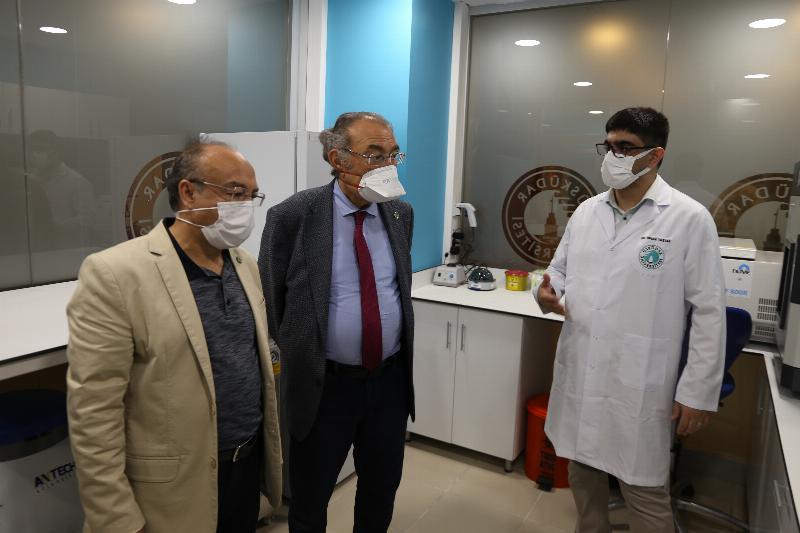
Two laboratories opened with a ceremony
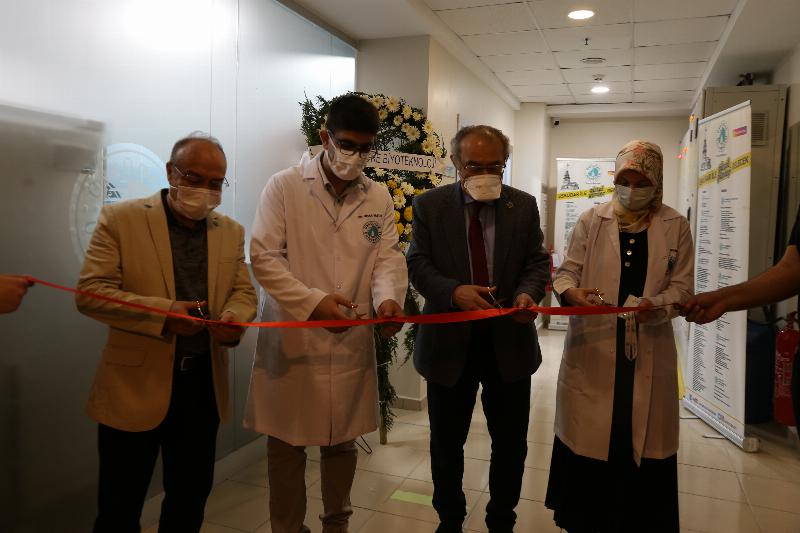
Two laboratories located within Üsküdar Üniversitesi Central Campus were opened with a ceremony. The opening of the laboratory was carried out by Üsküdar Üniversitesi Founding Rector Psychiatrist Prof. Dr. Nevzat Tarhan, Üsküdar Üniversitesi Vice Rector, Head of Molecular Biology and Genetics Department of Engineering and Natural Sciences Faculty, PARGE Coordinator Prof. Dr. Muhsin Konuk, ÜSKÖKMER Director Prof. Dr. Sevim Işık and TRGENMER Director Dr. Lecturer Cihan Taştan cutting the ribbon together.
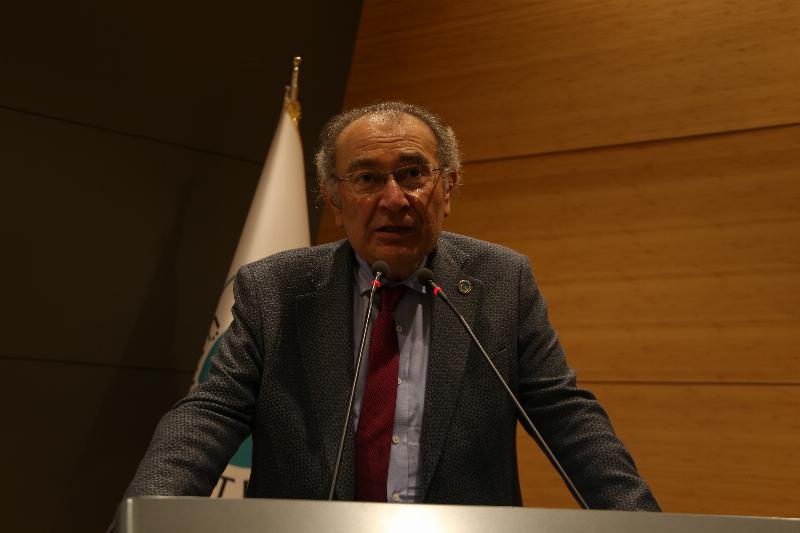
Prof. Dr. Nevzat Tarhan: “We took concrete steps, went beyond the dream, and realized it”
Following the opening of the laboratory, a panel was held at the Nermin Tarhan Conference Hall. Üsküdar Üniversitesi Founding Rector, Psychiatrist Prof. Dr. Nevzat Tarhan, who delivered the opening speech of the panel, stated that a great deal of effort was put into the formation of the TRGENMER and ÜSKÖKMER laboratories from start to finish and that a good infrastructure was created.
“The fact that our professors and students feel this excitement, their efforts to find new things here, also excites us,” said Prof. Dr. Nevzat Tarhan, adding, “Only then can results emerge. We took concrete steps, went beyond the dream, and realized it. We have both cell production and gene and virus laboratories. Even more important than infrastructure and physical investment was the accumulated knowledge. Without the expertise of our professors, we could not have taken such a step and succeeded. Seeing the vision, desire, and effort in our professors, it was up to us to take these concrete steps.”
We aimed to synthesize sciences together
Prof. Dr. Tarhan noted that thanks to these laboratories, it will now be easier to carry out TÜBİTAK, national agency projects, European Union, and Development Agency projects, and said the following:
“At the foundation of Üsküdar Üniversitesi, we had R&D focuses, and we built our founding philosophy upon them. We aimed to synthesize engineering, molecular genetics and biology sciences, health sciences, and behavioral sciences together. The world is moving in this direction. When we established it 10 years ago, there was a future for bioengineering in the world. In fact, we established the laboratory related to brain-computer interface back then. This was a dream at the time, but in science, there are first structured, filled dreams, and then steps. Productive thinking will be a purpose-oriented dream institution. After a purpose-oriented dream is established, dreams incubate. When they incubate, a bright idea suddenly emerges while one is busy with other tasks.”
Prof. Dr. Nevzat Tarhan: “All arrows point to gene therapies”
Tarhan pointed out that when the Genome Project was announced in 2003, several billion dollars were spent on the entire project, and that studies in this field will become easier as they become cheaper, adding that the importance of gene studies is understood more and more every day. Prof. Dr. Nevzat Tarhan said, “As a clinician, I deal with schizophrenia, bipolar disorder, autism, Alzheimer's, dementia, and Parkinson's. The cases that come to us always feel like the last stop. If they don't come to us at the final stage, they go abroad. There are difficult patients. Their treatments require meticulous care. There was a topic we struggled with greatly. In neuropsychiatry, when we encountered an autistic patient or a dementia patient, we felt helpless, unable to do anything. While researching what could be done before these diseases even started, all indicators pointed to genes. Being able to diagnose these diseases before birth or before they start walking changes many things regarding their treatment. For this, transgenetic studies are gaining increasing importance.”
Prof. Dr. Nevzat Tarhan: “We should allocate our energy to dreaming and producing”
“If a person experiences pleasure and excitement when entering a laboratory, they can produce innovations there,” said Prof. Dr. Nevzat Tarhan, adding, “I value my professors in academia being intelligent, hardworking, and honest. Only when they can come together in this way does teamwork emerge. Teamwork is when different people sit and work with similar modes of action for the same purpose. Teamwork is also a 21st-century skill. We are trying to do this. We should dedicate our energy to dreaming and producing. I would have loved to see today, which I dreamed of, in my youth, but it was destined for today.”
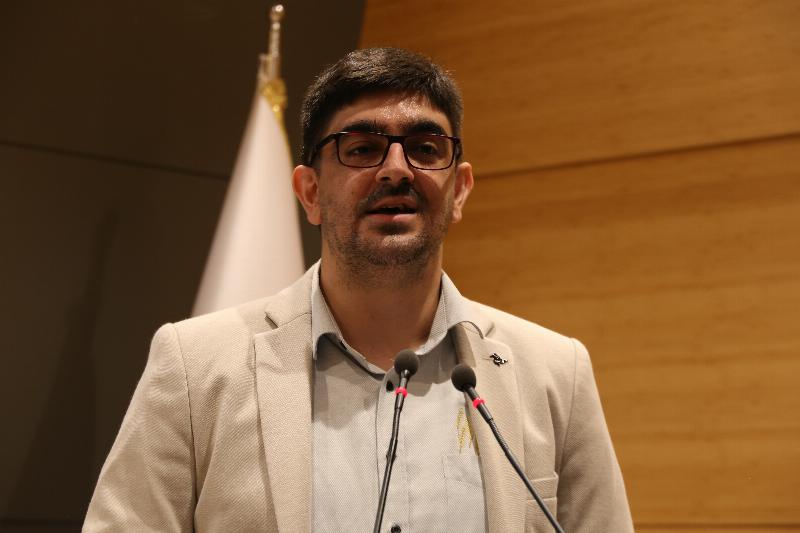
Dr. Lecturer Cihan Taştan: “We will be able to analyze all functions of a cell”
TRGENMER Director Dr. Lecturer Cihan Taştan expressed his gratitude especially to Prof. Dr. Nevzat Tarhan for his support in the establishment of the center, stating, “Being a visionary is very important, and acting upon this vision and actually producing is very valuable. In return for this action, we have a wonderful partnership with my dear Prof. Dr. Sevim Işık within the scope of a scientific research project. In this partnership, we combined two different laboratories and, in fact, established two centers in Turkey that will be able to analyze all functions of a cell, starting from DNA.”
Stating that TRGENMER was established in 2018 under the directorship of Assoc. Prof. Dr. Kaan Yılancıoğlu, Dr. Lecturer Cihan Taştan said, “The purpose of establishing this center is to produce both diagnostic kits and treatments for diseases such as genetic diseases and cancer. In other words, we have integrated many different mechanisms that will benefit our end-users or patients in need. In fact, Üsküdar Üniversitesi is a healthcare group and family. It is a complex ranging from our hospital to our university, and from our university to our research and application centers. Within this complex, TRGENMER and ÜSKÖKMER continue to implement many different products and projects that can be used in the treatment of our patients.”
Two pieces of good news from Dr. Lecturer Cihan Taştan
Announcing two pieces of good news as TRGENMER, Dr. Lecturer Cihan Taştan said, “We received our first budget for SMA gene therapy. We have now started studies for research and will conduct our first preclinical laboratory studies at the end of this year. On the other hand, CAR-T therapies, which will change the genetics of immune cells in cancer patients in the field of cancer immunotherapy, can be performed in only a limited number of universities in Turkey and the world. This is because it requires not only laboratory facilities but also know-how. Now, at Üsküdar Üniversitesi TRGENMER, with the support of TÜSEV, we will begin the work of our first half-million-dollar project.”
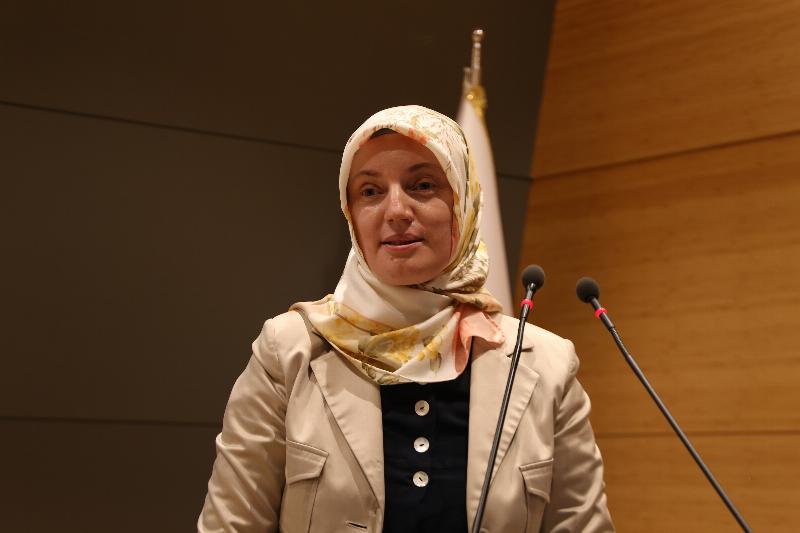
Prof. Dr. Sevim Işık: “R&D studies are aimed at stem cell-based personalized treatment”
ÜSKÖKMER Director Prof. Dr. Sevim Işık stated that they aim to carry out important studies in the center established in a short period, saying, “In November, it was decided by our university to support it as a BAP project. It was entirely covered by our university. A total of 2 million 600 thousand TL was invested only in equipment. It is commendable for the university to invest in such a research center during a difficult time like the pandemic. ÜSKÖKMER aims to be a center that plans to conduct R&D studies primarily on the early diagnosis, treatment, cell-based, and stem cell-based personalized treatment of neurological diseases, and to carry out production for human applications in this regard.”
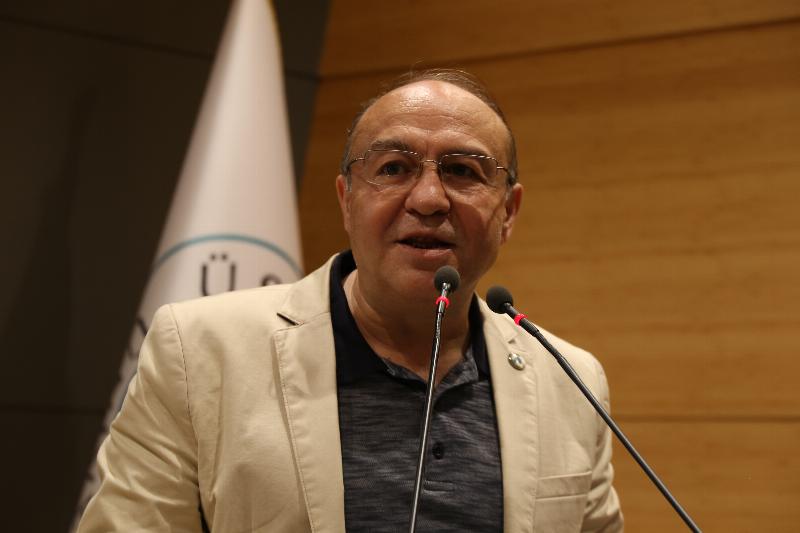
Prof. Dr. Muhsin Konuk: “We are at a turning point”
Üsküdar Üniversitesi Vice Rector, Head of Molecular Biology and Genetics Department of Engineering and Natural Sciences Faculty, PARGE Coordinator Prof. Dr. Muhsin Konuk, moderated the panel.
“We can say that today, when we opened the ÜSKÖKMER and TRGENMER laboratories, is one of the turning points for Üsküdar Üniversitesi,” said Prof. Dr. Muhsin Konuk, adding that when the Human Genome Project began in 1990 under the chairmanship of James Watson, stem cell research had actually come a long way. Studies on stem cells were in a more advanced state. Very different meanings were attributed to the Human Genome Project, and when this project started, studies related to stem cells and efforts for stem cell treatments were overshadowed. However, today we understand that neither gene therapy can exist without stem cells, nor stem cells without gene therapy.” Prof. Dr. Muhsin Konuk said, “Our students, as individuals of this country, must evaluate the opportunities given to them, become competitive with people doing the same work worldwide, and go one step further than them. This is the greatest responsibility the country places on the shoulders of its youth.”
Assoc. Prof. Dr. Serdar Ceylaner: We will either be service providers or service recipients”
Assoc. Prof. Dr. Serdar Ceylaner, a member of the European and Medical Specialists Union, Rare Diseases Committee, who participated in the panel via Zoom, stated that as a medical genetics specialist, he has spent his entire life examining, evaluating, clinically diagnosing rare diseases, and working for their treatments.
Ceylaner noted that rare diseases have two dimensions, one of which is a heavy human burden, and said, “Currently, there is no treatment we can produce, but these treatments are now close to us. We have specialists who use technology very well, and we need to activate them as soon as possible. The second dimension is that, unfortunately, our country faces rare diseases due to consanguineous marriages. SMA is not always a result of consanguineous marriage, but those who engage in consanguineous marriages encounter rare diseases more frequently. Another issue occupying the agenda with discussions is that we spend too much money on these. We have two options at this stage; either we spend a lot of money on this work, or we generate income from this work. We will either be service providers or service recipients.”
Prof. Dr. Arife Polat Düzgün: “We established the Rare Diseases Commission in the Turkish Grand National Assembly”
Prof. Dr. Arife Polat Düzgün, a Member of Parliament for the 27th Term and a Member of the Rare Diseases Commission, who participated in the panel online, stated that they established the Rare Diseases Commission in the Turkish Grand National Assembly because they observed the problems and difficulties of citizens regarding rare diseases, and provided information about the commission's work.
Prof. Dr. Arife Polat Düzgün, referring to the work they carried out in line with the report prepared by this commission, said the following:
“During our work, we established the Department of Autism, Mental Special Needs, and Rare Diseases. We attach importance to creating awareness about rare diseases. Currently, the entire public knows how difficult the treatment of rare diseases is, the need for research, and their importance. We will be very happy if a solution for one of the rare diseases can be found at Üsküdar Üniversitesi. In SMA, one of the most well-known rare diseases, the number of authorized centers for the administration of a drug with the active ingredient nusinersen sodium and the conduct of patient activities was 25. After our department was established, we increased the number of centers to 78 to ensure our citizens' access to health services. Since consanguineous marriages are very important for everyone and for us, we are continuing the pilot study for premarital SMA screening. These pilot studies will enable nationwide screening. In addition, a regulation regarding neurovascular diseases has been published. With this regulation, Neurovascular Disease Unit Centers will be opened nationwide. Efforts are underway to establish contact with all health facilities and academics regarding rare diseases and to create a nationwide disease study inventory within the scope of this issue. We hope that these data will achieve their purpose with the studies and research to be carried out.”
Prof. Dr. Serdar Bedii Omay from Emsey Hospital, who participated in the panel online, Biruni University Faculty of Pharmacy, Visiting Prof. University of California Irvine, Pharmaceutical Sciences Prof. Dr. Mehmet Şenel, Dr. Can Dinçer from Freiburg University, Germany, Dr. Pınar Ustaoğlu from Birmingham University, England, and from Westminster University, England
Dr. Pınar Uysal Oyganer also noted that the centers would provide significant support to the studies in this field.
Dr. Lecturer Cihan Taştan's mother Necla, father Yavuz Taştan, wife Halime Taştan, and daughter Zeynep Alya also attended the ceremony. The program, broadcast live on ÜÜTV, ended with a commemorative photo session.
Share
Update Date: February 27, 2026
Creation Date: June 24, 2021
Request a Call
Other News
- The book that read today's digital threats in 2014: Being a Conscious Family
- Experts warn: 'Instead of memorizing letters, teach pencil grip, scissor use, and coloring'
- School fear and school love both start in the family!
- Family is not merely transforming, it is being battered under a serious assault
- Artificial intelligence opens the door to early diagnosis in autism!