

Türkiye has been experiencing the pain of two separate earthquakes centered in Kahramanmaraş since February 6. While thousands of lives were lost in the earthquake affecting 10 provinces, the intensity of the traumas still continues. Üsküdar Üniversitesi Founding Rector, Psychiatrist Prof. Dr. Nevzat Tarhan, underlined that the intensity of the trauma still continues and that support making individuals feel safe is very important. Tarhan pointed out that if people flee or move away from the scene, especially if children are removed, a resolved trauma turns into an unresolved one. Tarhan stated that participating in the funeral ceremony of loved ones and experiencing the pain enables mental acceptance, and said, “After acceptance, it becomes easier to manage. When not accepted, trauma continues like an open wound. Therefore, it is beneficial to experience the trauma, even if not with all its details.”
Content
Trauma continues like an open wound when not accepted…
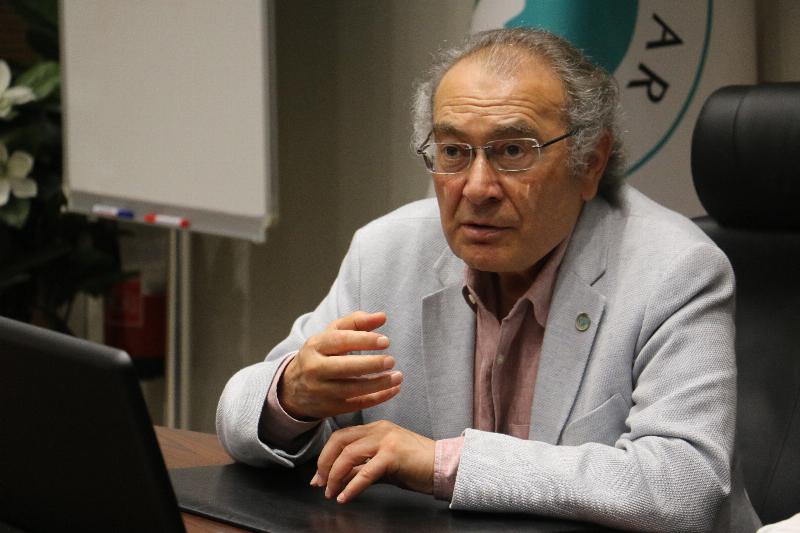
Üsküdar Üniversitesi Founding Rector Prof. Dr. Nevzat Tarhan underlined the great importance of support that makes people exposed to earthquake trauma feel safe during this period.
Intervention is essential for shocks lasting longer than three days!
Prof. Dr. Nevzat Tarhan, emphasizing in an interview given to the Müge Anlı ile Tatlı Sert Program broadcast on ATV that the shock period for those exposed to earthquake trauma is still ongoing, said, “It is still continuing even after 7-8 days. During this shock period, some individuals usually experience a feeling of emptiness. Some become aggressive, acting out. It depends on their personality. Some become passive and depressed. There are people experiencing these periods. With the arrival of aid, most of these shocks were overcome within 2-3 days. Medical help is already required if it lasts longer than 3 days.”
This grief must be experienced
Prof. Dr. Nevzat Tarhan, noting that the intensity of the wound continues during this period, said, “Since the intensity of the trauma continues, support that makes individuals feel safe is very important during such periods. Addressing and clarifying anxieties about the future is crucial. Being able to connect with close friends and family is very important. Funerals have begun. This is grief, and it must be experienced. One should not avoid it. If people flee or move away from the scene, especially if children are removed, a resolved trauma turns into an unresolved one. They cannot resolve the trauma in their minds. Participating in the ceremony and experiencing the pain enables mental acceptance. After acceptance, it becomes easier to manage. When not accepted, trauma continues like an open wound. Therefore, it is beneficial to experience the trauma, even if not with all its details.”
We recommend rapid normalization
Prof. Dr. Nevzat Tarhan, noting that secondary trauma still continues if trauma is discussed for 50 minutes out of 60, mentioned that they recommend rapid normalization for this reason. Tarhan said, “This situation, defined as secondary trauma, applies to people who have not directly experienced the trauma but have indirectly lost relatives in the trauma or live as if they were in it due to media influence, which was most evident during the September 11 events. Not only those living in that region, but the whole world continuously discussed that trauma. In such situations, if someone talks about trauma for 50 minutes out of 60, it means secondary trauma is continuing. For this, we recommend rapid normalization. After the initial mourning period ends, it is necessary to normalize quickly, otherwise secondary trauma will continue, functionality will be impaired, people will start to be unable to go to their homes and jobs, and mental health disorders will emerge significantly.”
News should be watched at specific times
Prof. Dr. Nevzat Tarhan warned that continuous news following during this period could cause secondary trauma, stating, “The person experiences mental states related to this. They are afraid to close their eyes. They have re-experiences, what we call flashbacks. They live as if the trauma happened an hour ago, not a week ago. They jump at the slightest sound. Sleep depth is disturbed. These traumas indicate the presence of secondary trauma. Therefore, regarding trauma, the person should say, ‘What is my responsibility? I will help, I will collect this,’ and then immediately return to routine. Sitting and watching television all day right now will cause secondary trauma in that person. Especially after a week, it is absolutely necessary to let it cool down. We need to watch the news at specific hours during the day and then return to our routine life. Otherwise, the trauma will get out of control after a while. If trauma victims know that they are safe and that all people in the country are providing immense help in this regard, their anxieties about the future will decrease during this period.”
The experienced trauma should be seen as an opportunity for the strengthening of social morality
Prof. Dr. Nevzat Tarhan stated that the trauma can currently be evaluated as an opportunity for the strengthening of social morality. Tarhan said; “We have post-traumatic growth scales. Just as there are individual traumas in a person's life, there can be natural disasters, traffic accidents, all kinds of fires; there is a post-traumatic maturity scale for all kinds of traumas. Here, the individual's perceptions and awareness are reviewed. Then, relationships and life philosophy are reviewed. In such situations, after experiencing this trauma, can the person say, ‘What did this teach me?’ If, after experiencing trauma, the person exhibits behaviors of what we call post-traumatic growth, such as ‘I will now give more importance to human relationships, I will treat people better. I will do more good things, I value spiritual values more,’ then the person emerges from the trauma with gains. We even call such situations ‘growth-promoting trauma.’ Trauma is experienced, a price is paid, but after the trauma passes, if the person responds to the trauma correctly, they develop. We can currently evaluate trauma as an opportunity for the strengthening of social morality. Because there are many religions, but morality is one. Almost all values are the same. For this reason, it is a serious opportunity to teach these moral values to society. TOKİ houses were not destroyed, but others were. This means there is a serious moral problem here. We should now make the biggest investment in post-traumatic growth in moral investment.”
Words that have a sparking effect are very dangerous right now
Tarhan, pointing out that decision-making executives have a very important role in uniting society to prevent a sparking effect, said; “In every society, in every person, there is a malevolent part within all of us. This malevolent part becomes traumatized in such situations. Some people become selfish, even to the extent of saying, ‘I'm angry with nature, I'm resentful, I won't even plant flowers anymore.’ This is natural. People react this way initially. We shouldn't generalize this, but our society currently saw roads blocked by trucks going to that region. Our people, as a large, mainstream group, approached this with great empathy. This is an opportunity. One should not generalize or make judgments based on radicals. Words that have a sparking effect are very dangerous right now. The current words are very influential. They are very susceptible to what we call grey propaganda. Rumors and various gossips have an effect. The solution against this is to be open and transparent. Someone who is open, transparent, and tells the truth breaks the game. Therefore, the psychological advantage lies with decision-makers, with executives. So, if decision-making executives used to think three times before speaking about uniting society, they should now think nine times before speaking, so as not to create a sparking effect.”
Holding a child's hand, even making them feel not alone, is enough
Prof. Dr. Nevzat Tarhan stated that children are shaped by their parents or people they trust, and if the people the child trusts remain calm, the child will also remain calm. Tarhan said, “Children up to 6-7 years old are different, and children after 6-7 years old are different. Children usually look at adults. If parents or trusted individuals panic, the child also panics. Especially for young children, if parents remain calm, the child also remains calm. For other children in such situations, they ask, ‘Why did this happen?’ In these cases, answers can be given to children in a language they understand, but currently, the most important thing is; not to silence the child by saying, ‘We'll talk about this later. This event has visible causes, invisible causes. There are material reasons, spiritual reasons. We will discuss these in detail.’ However, if we approach with too much judgment and blame when questioning, it will have a traumatic effect on the child's developing psyche. By saying, ‘This is something we cannot avoid, it is a reality of life. What should we do to prevent such a reality from reoccurring, from now on we will reorganize our lives as before the earthquake and after the earthquake,’ feelings of guilt and regret will not arise in the child. Approaches should be taken where they will not feel bad or lose motivation for life, but even holding their hand and making them feel they are not alone is enough. If adults are with the children, and the adults remain calm, the children will be at ease. It is highly probable that some relatives of the children taken into protection will emerge, but they may need help. There, the person replacing the mother, the caregivers, are constantly changing. There is no one for them to talk to, so social workers are certainly not enough in those places; psychological counseling is necessary for those children. As much as possible, the person should not change. There should be someone for them to bond with.”
Keeping the caregiver constant alleviates maternal deprivation as much as possible
Prof. Dr. Nevzat Tarhan noted that keeping the caregiver constant alleviates maternal deprivation as much as possible. Tarhan said; “For children aged 0-3, the ideal is a foster mother. A continuously consistent, stable relationship is needed. In our culture, caregivers approach children very warmly. If possible, in care homes, just as a mother goes to work, the same caregiver looks after the child during the day and goes home in the evening, but when leaving, says, ‘I'll come back in the morning.’ They leave with a farewell. If this happens, knowing that the person replacing the mother will come the next day, there will be no fear of abandonment or feeling of alienation from life. Keeping the caregiver constant alleviates maternal deprivation as much as possible. Children between 0-3 years old can gradually start going to nursery school after 3 years old. They can make friends there, but it is important to develop a secure attachment with someone they can bond with. If the child feels safe, they become aware of risky behaviors related to the future, start learning about life, and begin to engage with their environment. If they do not feel safe, the child withdraws. Therefore, to enable their safe behavior, it is absolutely necessary to support a social environment that can make them say, ‘The world is safe, life is safe.’”
Share
Request a Call
Other News
- The book that read today's digital threats in 2014: Being a Conscious Family
- Experts warn: 'Instead of memorizing letters, teach pencil grip, scissor use, and coloring'
- School fear and school love both start in the family!
- Family is not merely transforming, it is being battered under a serious assault
- Artificial intelligence opens the door to early diagnosis in autism!