

Prof. Dr. Nevzat Tarhan met with candidate teachers in Istanbul within the scope of the ‘Candidate Teacher Academy Trainings’. Emphasizing that the traumatic effects of natural disasters such as earthquakes and floods may continue for some time, Tarhan stated that teachers have important roles in overcoming this process. Stating the importance of giving a sense of hope to children and young people during this period, Tarhan noted that the imaginative worlds of children from the earthquake region should be kept alive. Tarhan used the expressions, “Let them talk, let them dream, let them live in a climate of possibility. Let them discover themselves, discover the future, let them dream. Let's give them opportunities to talk, write, and draw. This way, we help them overcome trauma.”
Content
They should be allowed to dream to overcome their traumas!
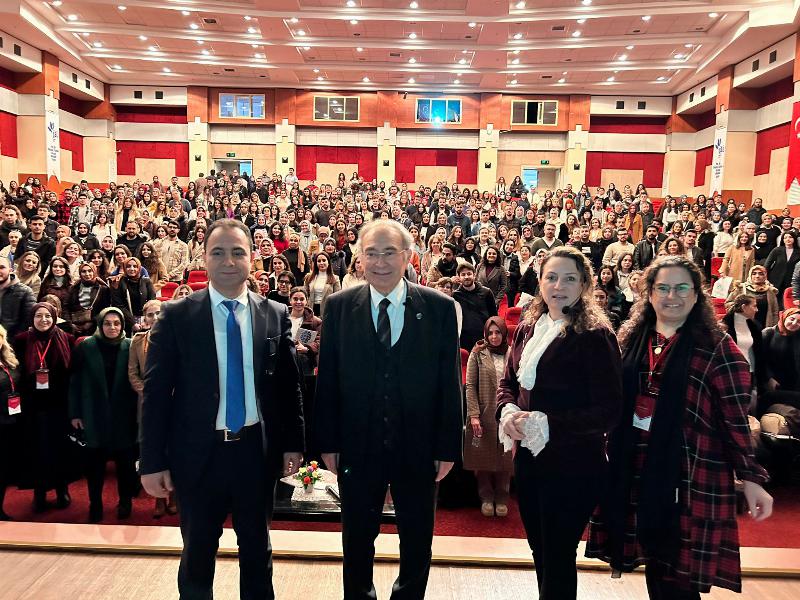
Prof. Dr. Nevzat Tarhan: “The feeling of hope is effective in coping with trauma”
Üsküdar Üniversitesi Founding Rector, Psychiatrist Prof. Dr. Nevzat Tarhan, was a guest at the ‘Candidate Teacher Academy Trainings’ organized by the Istanbul Provincial Directorate of National Education. Tarhan, who met with candidate teachers in Istanbul, made evaluations regarding traumas and their effects on child development under the title “A Different Perspective on Earthquake Trauma”.
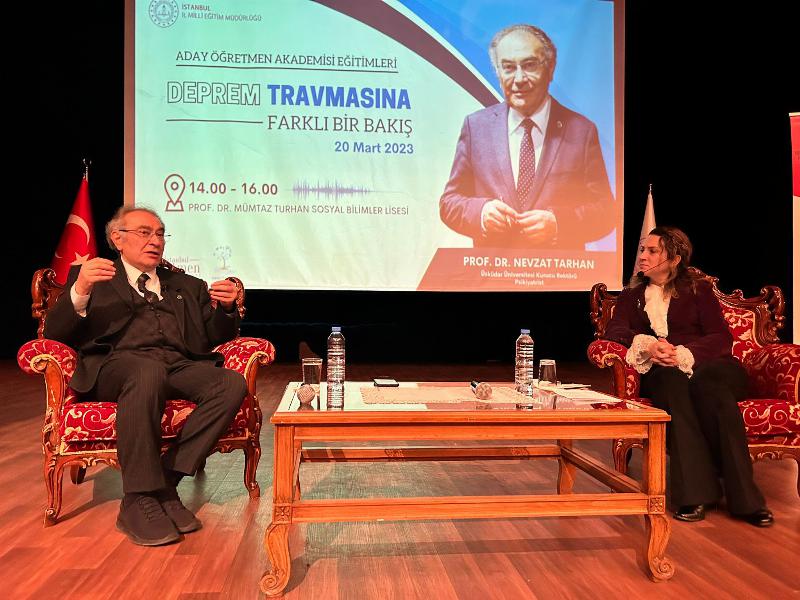
Childhood traumas disrupt the brain's system
Prof. Dr. Nevzat Tarhan noted that traumatic events experienced during childhood negatively affect a child's development, saying, “Trauma in humans is childhood trauma. A child is playing, a dog comes, the child gets scared of the dog, and then the child loses their speech. In our student years, when something like this happened, that is, when it was said that a child was afraid of a dog and then became a stutterer, our teachers would say that these were urban legends and had no scientific basis. But now it is understood that when that child experiences a sudden shock or fear, the neural circuit in the brain malfunctions. The connection between the word-producing area of the brain and the brain area that gives meaning to words is severed. The child produces words but cannot express them, getting stuck. You re-teach them, create a new network; that's what trauma is like. When an extreme shock is experienced in the brain, it short-circuits and disrupts the brain's network. Traumas can have a permanent effect on a person's developing psyche and can affect their future life.” he explained.
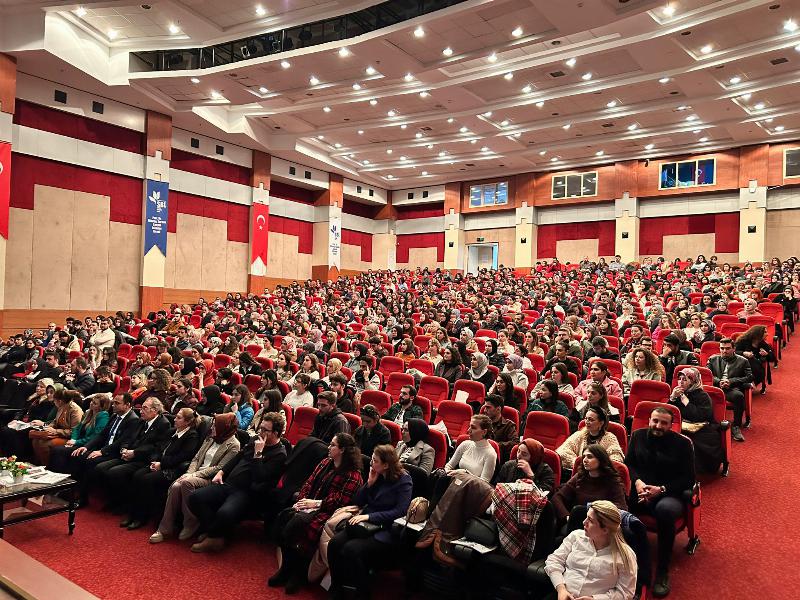
We will prepare for winter but await summer
Prof. Dr. Nevzat Tarhan, noting that the recent earthquake, which took place in the Prof. Dr. Mümtaz Turhan Social Sciences High School conference hall, caused a societal trauma, said, “This earthquake is also a societal trauma. Traumas, dangers, and crises have two dimensions: threat and opportunity. The threat dimension is always discussed, but there is also an opportunity dimension. Suffering occurs, but in the medium and long term, if the right position is taken, it turns into a gain. This is true for all life events. Quantum physicists study this. In fact, wrong is a part of perfect, a part of good. Therefore, without evils, illnesses, and accidents, humans cannot develop. For this reason, instead of complaining, we need to think about how to turn this into an opportunity, how to emerge from this with a gain. We call these 'developing traumas'. In post-traumatic growth, individuals evaluate themselves by saying, 'I have started to treat my loved ones better, I have started to attach more importance to spiritual values, I have started to appreciate what I have more.' We will consider the threat dimension of trauma, take our precautions, but we also need to consider the opportunity dimension and return to our normal lives and proceed in that manner. We will prepare for winter but await summer; otherwise, our mental health will deteriorate.” he warned.
Prof. Dr. Nevzat Tarhan, noting the importance of taking precautions to overcome the fear of earthquakes, said, “We cannot live with constant earthquake fear, like living in the same room with a snake. You will take your precautions against it in the short, medium, and long term. Then we will return our lives to normal; we will do this mentally. We need to quickly change our priorities. We will return to our daily routine, but we will definitely take precautions regarding earthquakes.”
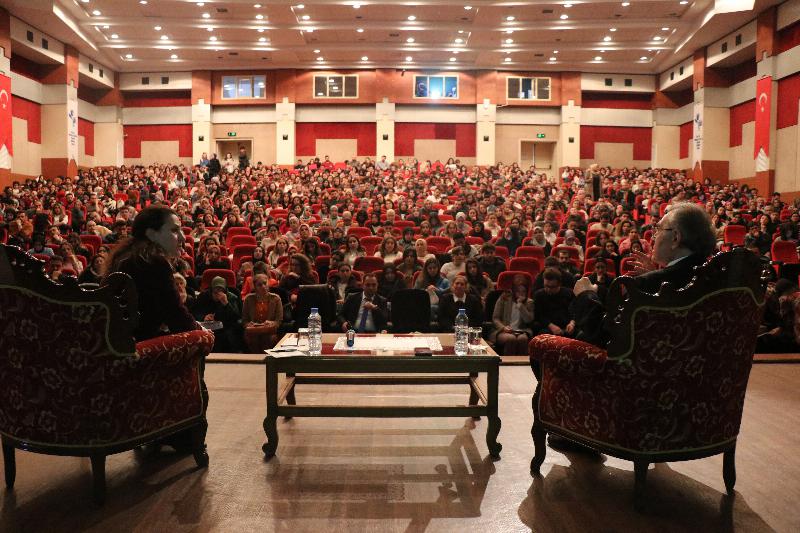
The behavioral language of teachers is very important
Prof. Dr. Nevzat Tarhan, pointing out the importance of parents' and teachers' attitudes in helping children cope with earthquake-related anxieties, said, “A child looks to their mother and father, and in the classroom, they look to the teacher. If the teacher evaluates this event in a healthy way and experiences it in a healthy way, the child relaxes. Therefore, behavioral language is more effective. Here, the behavioral language of educators is also very important. Especially when the topic of earthquakes comes up for children from the earthquake region, if a child asks questions, it is necessary to listen. Let the child express themselves, share their feelings. It is beneficial for guidance departments in schools to specifically follow up with students on this matter. The teacher's leadership in the classroom is also very important.”
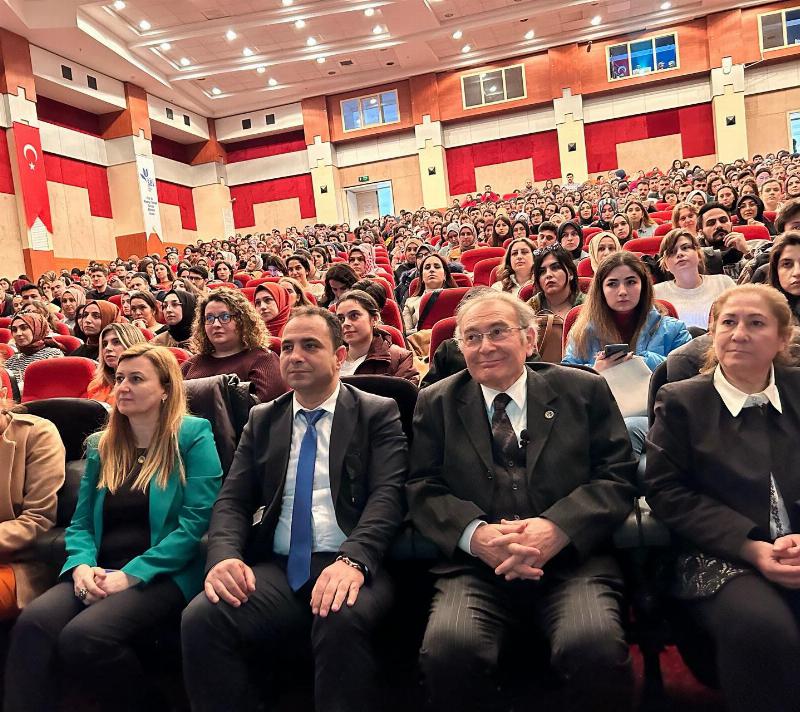
Hope should be given to children and young people
Prof. Dr. Nevzat Tarhan, noting that a sense of hope should be given to children and young people during this period, said, “The most important thing is not to give young people despair. The moment a person falls into despair, the brain gives up. There is no recovery when one falls into despair. We see this in patients as well. If a patient has lost the expectation of recovery and the feeling of hope, we say they have 'pulled the plug'. If there is an expectation of recovery and a feeling of hope, the brain helps. Therefore, in both children and young people, it is necessary to keep the feeling of hope alive to activate the brain.”
They should dream to overcome earthquake trauma
Tarhan, pointing out the importance of supporting children, especially those from the earthquake region, to keep their imaginative worlds alive, said, “Let them talk, let them dream, let them live in a climate of possibility. Within that climate, let them discover themselves, discover the future, let them dream. Let's give them opportunities to talk, write, and draw. Let them write plays or stories about the earthquake, turn their experiences related to the earthquake into a scenario according to their age, and in this way, we help them overcome the trauma. The talents of children from that region may even emerge. They can draw or express themselves in the field of literature.”
Tarhan stated that as a society, we should not fall into pessimism, and noted that especially in the first days of the earthquake, the younger generation voluntarily participated in sending aid to the earthquake region.
Social support is important in overcoming traumas
Prof. Dr. Nevzat Tarhan, noting that social support is also important in overcoming traumas, said, “Because our social support is very good, there is currently no explosive deterioration in mental health. The biggest reason for this is that as a society, we have managed to make those individuals feel that they are not alone. The state has taken serious steps to compensate and continues to do so. Due to such developments, a sense of trust has emerged among people. It is very important to maintain that trust in people. This situation reduces mental health problems.”
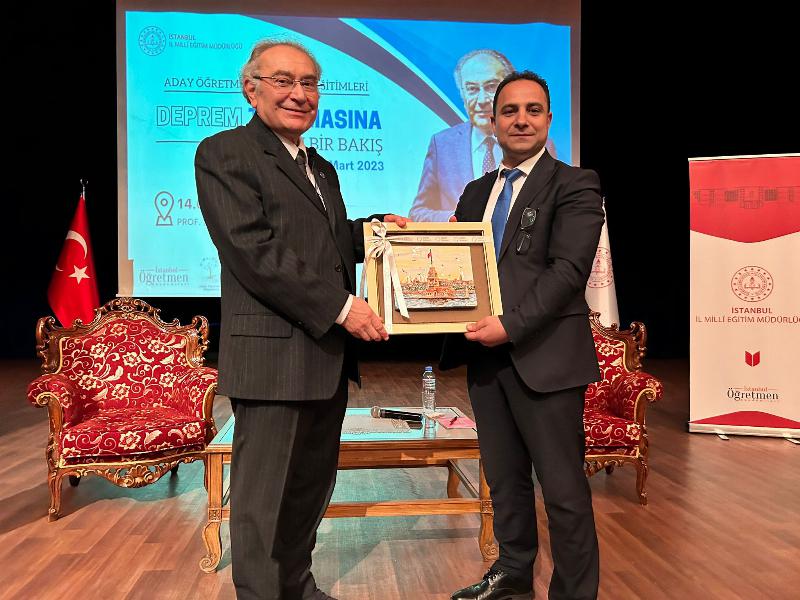
Uncertainty puts people under stress
Prof. Dr. Nevzat Tarhan stated that the thing that stresses people the most is uncertainty, saying, “Uncertainty is more dangerous than a bad possibility. If a person knows there is a cliff ahead, they take precautions. Living without knowing what will happen at any moment is a much greater source of stress. For this reason, people feel the need to resolve uncertainty and place it within a logical framework. This is also a trauma resolution. If you can take unresolved trauma, place it within a logical framework, and solve it, you solve it; if you can forgive, you forgive; if you cannot forgive, you accept it and understand that you cannot change it and do not have the power to. You define it this way, put it on a shelf, and continue your life normally.”
Thinking should be process-oriented, not outcome-oriented
Prof. Dr. Nevzat Tarhan, stating that thinking should be process-oriented, not outcome-oriented, in coping with anxiety, said, “We tell young people to think process-oriented, not outcome-oriented. Anatolian wisdom is very beautiful in this regard. Our ancestors said, 'Be ambitious in study, fatalistic in harvest.' Accept whatever comes out at harvest time, but work hard during study time. When you produce, work hard, show ambition. It should be like this. In situations where we lack the power, we will use the method of acceptance and management.
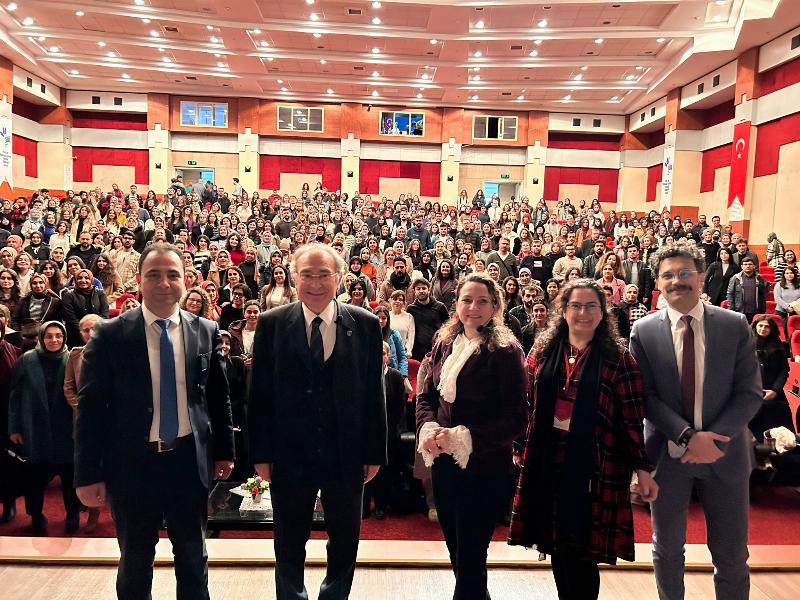
The wound should not be scratched, or it won't heal!
Prof. Dr. Nevzat Tarhan, also touching upon what can be done to cope with trauma, advised against constantly following earthquake news, suggesting it should be limited during the day. Tarhan said, “When we listen to the same things repeatedly beyond our need, it has the effect of scratching a wound. That is, it feels good at that moment, but it keeps the wound fresh. What happens if you scratch a wound? It never closes. In the brain, similarly, if you constantly scratch that trauma, the trauma continues. We apply the method of changing the focus of attention. Change the focus of your attention, change the focus of your interest. When a person changes their focus of interest, after a while, the brain slowly minimizes that trauma. You can continue your normal life.”
Prof. Dr. Nevzat Tarhan noted that the effects of trauma should decrease after eight weeks, stating that if the effects persist, a specialist should definitely be consulted.
Share
Request a Call
Other News
- Social responsibility courses moved to the field
- Erasmus+ Orientation Week completed at Üsküdar
- Prof. Nevzat Tarhan: “Brain secretes ‘dark glue’ in social media lynchers!”
- Prof. Nevzat Tarhan: “Every segment of society should be able to say, ‘This constitution is my constitution!’”
- OHS releases guide for safe operation of industrial robots