

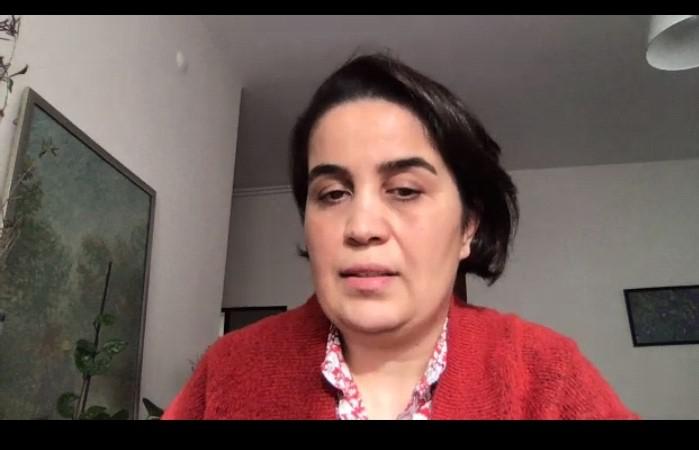
Uskudar University Faculty of Medicine Physiology Department organized the “Immune System and Immunity” program, where current developments regarding the functions of the immune system in the body and vaccine studies were discussed. Assoc. Prof. Dr. Vuslat Yılmaz, a faculty member of the Neuroimmunology Department at Istanbul University Aziz Sancar Institute of Experimental Medicine, participated as a speaker in the program held via Zoom. Assoc. Prof. Dr. Yılmaz made important evaluations regarding the immune system.
Content
The Unknown Aspect of the Immune System and Immunity Discussed
“The immune system is a complex system”
Yılmaz, stating that the immune system is the body's defense mechanism, said: “The immune system is the body's defense system. Its purpose is to protect the body against pathogenic microorganisms and to destroy dead, damaged, or abnormal cells. Our main goal is for 'the immune system to recognize, respond, and destroy.' However, another very important feature is that the immune system should not be reactive to its own tissues. It needs to recognize what is not part of us, while not recognizing our own other tissues in the body. It is systemic; it protects the entire body against an infectious agent in one place. The stage of recognizing the infectious agent occurs with a small number of cells, but the immune response can be carried out by a large number of cells. Many control mechanisms prevent the immune response from harming normal or healthy tissues. From this, we can understand how complicated the immune system is. It will neither recognize what is its own nor protect the entire body. This is quite a complex and somewhat difficult system.”
“The immune system works with antigens and receptors”
Yılmaz continued to explain the characteristics of the immune system: “When we talk about the immune system, we fundamentally need to understand the relationship between antigens and receptors. We can also call this a 'key and lock' relationship. A parasite, bacterium, or virus could be present. The antigenic structure existing on it needs to be recognized by the receptor on the cell in our body. If this compatibility occurs, then we can initiate the immune response. In other words, the antigenic structure must be foreign, and our receptor will detect it. Lymphoid organs are important because cells that cannot mature due to disorders in these organs cannot function, the body's defense system does not work properly, and even the simplest ailments can become serious enough to cause death.”
“In Coronavirus, symptoms appear within 4 to 5 days”
Yılmaz, touching upon the immune system's role in the pandemic, said: “The issue here reminds us of the most fundamental thing we learned in the pandemic or about coronavirus. Symptoms appear in 4-5 days. The emergence of these symptoms means that the innate immune system and adaptive immune system have been activated during this period. And if it has failed, you become sick; if it has succeeded and this system aims to eliminate a virus from your body, then you recover without showing symptoms and without getting sick. Therefore, these durations are important; we can ensure the virus is eradicated within this five-day period.”
“The primary goal of the vaccine is to produce antibodies”
Finally, Yılmaz, addressing vaccine studies related to coronavirus, stated: “The primary goal of the vaccine is to induce antibody production. When we administer the vaccine, we aim to make B cells produce antibodies, and those antibodies quickly work to kill the incoming virus.”
Share
Update Date: February 26, 2026
Creation Date: November 30, 2020
Request a Call
Other News
- Social responsibility courses moved to the field
- Erasmus+ Orientation Week completed at Üsküdar
- Prof. Nevzat Tarhan: “Brain secretes ‘dark glue’ in social media lynchers!”
- Prof. Nevzat Tarhan: “Every segment of society should be able to say, ‘This constitution is my constitution!’”
- OHS releases guide for safe operation of industrial robots