

Üsküdar Üniversitesi Founding Rector Psychiatrist Prof. Dr. Nevzat Tarhan, was the guest of the program 'Let's Talk About This Over Dinner', prepared and presented by Üsküdar University Faculty of Humanities and Social Sciences Dean and Rector's Advisor Prof. Dr. Deniz Ülke Arıboğan, and broadcast on Bein Gurme channel.
Content
The two dimensions of crises: 'Danger and gain'
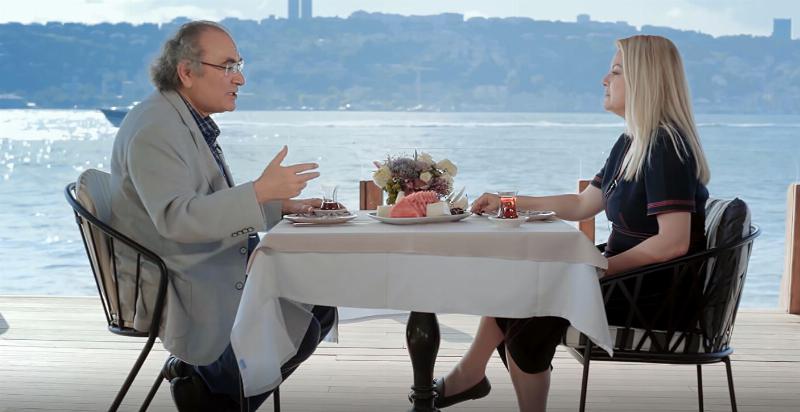
“We must do what we love to enjoy our work”
Tarhan, emphasizing the importance of doing one's job with love, said; “One should enjoy their work. To enjoy it, one must do what they love. Receiving feedback from one's work is a motivating factor. Believing in the work we do is another element. These motivate individuals even more. As physicians, for example, a patient comes, we somehow provide treatment, but we feel pleasure after that patient recovers and expresses satisfaction. The positive impact a patient's recovery has on a person, being able to achieve results, touching a person's soul, making someone leave happily… Especially in psychiatric illnesses, many are pessimistic, do not enjoy life, and are difficult diseases. The pleasure of achieving results with these patients truly motivates a person. This situation cannot be measured by monetary compensation; it is not done for money.” he stated.
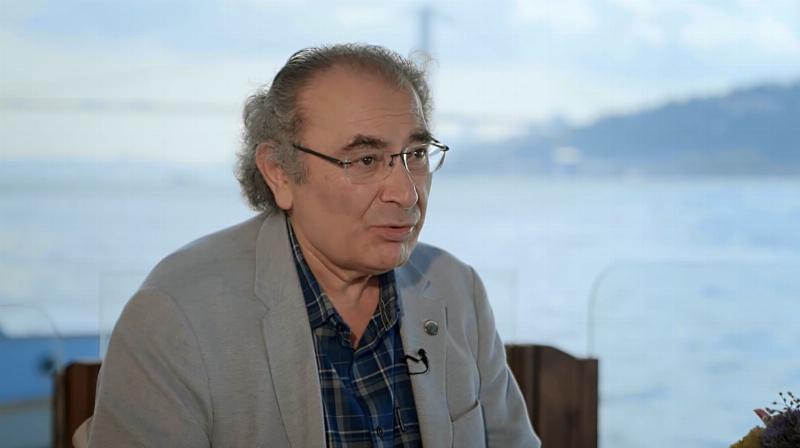
“The Covid-19 pandemic pushed us to question ourselves in three areas”
Tarhan, addressing the trauma dimension of the Covid-19 pandemic, said; “Covid-19 can be a trauma or a psychological maturation, depending on the individual's position. The pandemic is a trauma affecting both society and economy, as well as families and individuals. The Covid-19 pandemic pushed us to question ourselves in three areas. Firstly, our freedom was restricted. We are not even free to touch our mouths right now. We cannot even hug our loved ones; we have to live in a confined space. Our fast-paced life had to slow down. The human behavior of chasing pleasure had to change. There was a restriction in our freedom. We realized that our physical comfort was not as we wished, and was under threat, accompanied by the feeling of being intertwined with death. As we saw examples, we sort of lost our zest for life. The third effect caused individuals to question their life philosophy. Especially questions like feeling the proximity of death and asking more existential questions led intellectually high-level individuals to an intellectual crisis. People who lived as if they would never die suddenly felt their mortality.” he stated.
“Crises have two dimensions: Danger and gain”
Continuing his words, Tarhan pointed out that crises have two dimensions: danger and gain; “Crises have a dimension of danger and a dimension of gain. In the danger dimension, if a person panics and visualizes in their mind, 'What if the virus comes and infects my loved ones, or if someone I love goes into intensive care?', their peace of mind is disturbed. This situation is more common in individuals with high IQs. Because if a person with an IQ of 70-80 has 1000 words come to mind daily, a person with a high IQ has 5-10 thousand words pass through their mind. Words, concepts, emotions… If a person cannot manage these, they become overwhelmed. In such a situation, a person needs to use their mental potential correctly to manage fear. One should see the danger dimension of the situation and take precautions related to it. In such situations, we must trust science, public servants, and the system, and we should not see the virus as an enemy. We should not see the pandemic as an enemy; we should only maintain a distant relationship. We should re-evaluate this situation and continue with our routine tasks. If we thought about it for 5 minutes, we should return to our routine work for 25 minutes. If we do this, fear becomes controlled stress.” he said.
For the program video:
Share
Update Date: February 26, 2026
Creation Date: November 02, 2020
Request a Call
Other News
- The book that read today's digital threats in 2014: Being a Conscious Family
- Experts warn: 'Instead of memorizing letters, teach pencil grip, scissor use, and coloring'
- School fear and school love both start in the family!
- Family is not merely transforming, it is being battered under a serious assault
- Artificial intelligence opens the door to early diagnosis in autism!